Topics (384k) Articles (398k) Users (410) Discussions (242) Comments (383) Files (13k) New article

W. D. Salmon Jr. coauthored the 1957 report A hormonally controlled serum factor which stimulates sulfate incorporation by cartilage in vitro by W. D. Salmon Jr. and William Daughaday. The work helped motivate the idea that some effects of growth hormone are mediated by a factor carried in blood serum, rather than being explained solely by direct growth hormone action on every responding tissue.[ref]
The experimental distinction was between applying growth hormone directly to isolated cartilage and measuring the response to blood serum from an animal exposed to the hormone. Sulfate incorporation provided a measurable tissue response. In William Daughaday's retrospective account, this supported the circulating-mediator interpretation that developed into the somatomedin hypothesis and research on insulin-like growth factor 1. A tissue response establishes biological activity; it does not, on its own, establish the chemical identity or purity of a single molecule.[ref]
Growth hormone axis overview: somatomedin hypothesis by William Daughaday. retrospective account of the cartilage assay and serum-mediator interpretation
J. D. Hoff is an author of the 1983 study Hormonal dynamics at midcycle: a reevaluation by J. D. Hoff and others, which examined how hormones from the ovary and pituitary gland change around ovulation. Its contribution was a time-resolved comparison: samples from five participants were taken at two-hour intervals over five days, allowing changes in estradiol, progesterone, luteinizing hormone and follicle-stimulating hormone to be aligned around the onset of the luteinizing hormone surge.[ref]
Hormonal dynamics at midcycle: a reevaluation by J. D. Hoff and others. abstract, study design and timing reference
That alignment exposed relationships which a single measurement could miss: the surge began abruptly near peak estradiol, while the rise in progesterone had already begun. The experiment supplied a temporal picture of the hypothalamic–pituitary–ovarian axis; temporal association by itself does not prove which change caused another. The cited paper identifies Hoff by initials, which are retained here.
M. J. Dauncey is a researcher who developed methods for measuring human energy use with calorimetry. A 1978 study with collaborators described an instrument combining direct calorimetry with an open-circuit indirect calorimetry system for continuous observations lasting at least 24 hours.[ref]
A human calorimeter for the direct and indirect measurement of 24 h energy expenditure by M. J. Dauncey and others. Abstract: continuous heat-production/heat-loss measurements and combined methods
The direct system removed heat through a water-cooled heat exchanger. Control of the wall temperature minimized the mean temperature difference across the chamber walls. Evaporative heat loss was inferred from incoming and outgoing wet-and-dry-bulb temperatures together with air volumetric flow rates.[ref]
For a dimensional example, a steady heat-loss rate of over one hour corresponds to , or . These are illustrative values. Heat loss and metabolic heat production need not match instantaneously if the body is warming or cooling, which motivates measuring complementary quantities over a defined interval.
Juha P. Kokko investigated the segment-specific transport properties of the nephron. His experiments with isolated rabbit renal tubules examined how movement of sodium chloride and water contributes to the concentrating function of the kidney.[ref]
Sodium chloride and water transport in the descending limb of Henle by Juha P. Kokko. Byline and Abstract: isolated descending-limb experiments
In a 1970 study of the thin descending limb, raising the osmolality of the surrounding bath drew water out of the tubule. Concentration of the remaining fluid occurred mainly through water loss rather than substantial entry of sodium chloride. The preparation showed relatively high water permeability and low sodium permeability under the tested conditions.[ref]
Sodium chloride and water transport in the descending limb of Henle by Juha P. Kokko. Abstract: hyperosmotic bath, measured permeability and water-efflux interpretation
A later study with Antonino S. Rocha demonstrated a different combination in the thick ascending limb: salt removal with very little net water movement. Comparing the two segments makes their complementary functions clearer than describing the entire Loop of Henle as having one permeability.[ref]
For example, concentrating a solution by removing water and diluting it by removing sodium chloride are different operations. Distinct neighboring segments can perform these operations within the same nephron.
Antonino S. Rocha investigated transport in the kidney, including how the thick ascending limb of the Loop of Henle handles sodium chloride and water. A 1973 study with Juha P. Kokko tested isolated rabbit nephron segments under controlled perfusion conditions.[ref]
Sodium chloride and water transport in the medullary thick ascending limb of Henle. Evidence for active chloride transport by Antonino S. Rocha and Juha P. Kokko. Byline and Abstract: isolated medullary thick ascending limbs
Increasing the surrounding osmolality produced essentially no net fluid movement in the tested segments, whereas the outgoing tubular fluid became more dilute under suitable perfusion conditions. Measurements of sodium and chloride concentrations supported removal of sodium chloride from the lumen without an accompanying large water flux.[ref]
Sodium chloride and water transport in the medullary thick ascending limb of Henle. Evidence for active chloride transport by Antonino S. Rocha and Juha P. Kokko. Abstract: imposed osmotic gradients, near-zero net fluid transport and reduced effluent ion concentrations
The illuminating result is a separation of salt and water transport. Removing dissolved material while leaving most of the water behind can dilute tubular fluid and help build a concentrating environment around the tubule. The measured transport properties are distinct from identifying every molecular transporter responsible; the paper's historical chloride-pump interpretation should not be treated as a complete modern molecular account.
W. G. Zijlstra is the first author of a 1991 study with A. Buursma and W. P. Meeuwsen-van der Roest measuring visible and near-infrared reference spectra of human hemoglobin derivatives. The authors reported that small fetal/adult differences in molar absorption coefficient mattered for multicomponent analysis.[ref]
Absorption spectra of human fetal and adult oxyhemoglobin, de-oxyhemoglobin, carboxyhemoglobin, and methemoglobin by W. G. Zijlstra and others. Byline; Abstract, first two sentences
The work connects experimental optical measurements to the quantitative interpretation of blood samples.The central measurement distinction is between a chemical species and a total signal. Oxyhemoglobin, deoxyhemoglobin, carboxyhemoglobin and methemoglobin can all contribute to measured absorbance, while functional oxygen saturation uses only the first two in its denominator. A fitted total optical signal therefore needs chemical interpretation before it becomes an oxygen-transport quantity.
An original synthetic example makes that separation concrete. If inferred concentrations are , and with the remaining species absent, then functional oxygen saturation is , whereas fractional oxyhemoglobin is . Multiplying every concentration by two doubles the mixture's predicted absorbance at fixed path length under the Beer-Lambert law, but leaves both fractions unchanged.
Reference spectra thus help distinguish composition, concentration and denominator choice. This is the scientific role of the documented study; it should not be confused with directly measuring oxygen consumption, blood flow or cardiac output. Those quantities require additional observations and balance assumptions.
A. Buursma collaborated with W. G. Zijlstra and W. P. Meeuwsen-van der Roest on experimental reference spectra for hemoglobin derivatives. Their 1991 paper measured molar absorption coefficients for fetal and adult forms of the oxygenated, deoxygenated, carbon-monoxide-bound and oxidized derivatives.[ref]
Absorption spectra of human fetal and adult oxyhemoglobin, de-oxyhemoglobin, carboxyhemoglobin, and methemoglobin by W. G. Zijlstra and others. Byline and Abstract
Such measurements support quantitative optical analysis of mixtures, including co-oximetry.The measurement problem can be expressed through the Beer-Lambert law. For a transparent mixture with a known path length , a simple linear model at wavelength isHere is absorbance, are component concentrations and are reference molar absorption coefficients. The reference experiment provides coefficients; the later mixture experiment measures the . These are distinct roles in the analysis.
An original example illustrates why multiple independent readings are useful. With normalized coefficients, let and . Measurements imply . With only the first reading, both and fit. Additional readings help only when their coefficient rows supply linear independence; repeating the same equation more precisely does not identify both concentrations.
The example explains the importance of reliable reference coefficients without attributing an unreported individual laboratory task to A. Buursma. The verified scientific contribution is coauthorship of the experimental spectral dataset.
W. P. Meeuwsen-van der Roest coauthored a 1991 experimental study with W. G. Zijlstra and A. Buursma measuring the molar absorption coefficient of four derivatives of fetal hemoglobin and adult hemoglobin across 450–1000 nm. The work supplied spectral reference measurements relevant to separating oxyhemoglobin, deoxyhemoglobin, carboxyhemoglobin and methemoglobin by optical analysis.[ref]
The scientific point is that similar-looking spectra need not be interchangeable reference data. In co-oximetry, a model based on the Beer-Lambert law combines reference spectra to infer component concentrations. A small reference mismatch can alter the inferred mixture even when the measured absorbance is precise.
An original two-component example explains the sensitivity. Suppose two synthetic readings satisfyThen . If , an error of in changes the inferred by in the model's concentration units. Near-similarity of reference columns can therefore amplify small errors. These invented coefficients illustrate the inverse problem; they are not the paper's measured hemoglobin spectra.
Philip Drinker coauthored the 1929 tank-respirator report with Louis A. Shaw. Its apparatus enclosed the body in a sheet-metal tank with a rubber collar at the neck, leaving the head outside at atmospheric pressure. Changing the tank pressure could then expand and compress the chest wall.[ref]
An apparatus for the prolonged administration of artificial respiration: I. A design for adults and children by Philip Drinker and Louis A. Shaw. Printed pp. 230–231 and Figures 1–2: tank, collar and pressure boundary conditions
The scientific principle is a driving pressure difference across the respiratory system. In an original passive linear model, let be added lung volume, total resistive coefficient, total respiratory-system compliance, airway-opening pressure and body-surface pressure. About a specified mechanical equilibrium,A negative change at the body surface can create a positive filling drive even when the airway remains open to room air. The pump acts on the enclosure; the resulting boundary-condition difference drives air through the airway.
For a stipulated step cm HO, and , the time constant is s andThe initial volumetric flow rate is 1 L/s; after 0.50 s the added volume is about 0.316 L, still below the mechanical equilibrium increment 0.50 L. These are original model values, not measurements from Drinker's apparatus.
The equation also explains a limited equivalence: lowering body-surface pressure by a given amount or raising airway-opening pressure by that amount gives the same driving term in this model. It does not establish identical physiological effects in every respect. Upper-airway behavior, active muscles and departures from linear mechanics are absent from the calculation.
The report's importance lies in connecting an external mechanical apparatus to a sustained respiratory task with explicit pressure boundaries. The neck seal, accessible head and changing enclosure pressure describe how the intervention acts; independently observed gas movement and physiological responses establish what it achieves. The joint byline supports the coauthored contribution without assigning every construction or experimental step to one collaborator.
Louis A. Shaw, identified in Harvard's institutional timeline as Louis Agassiz Shaw, Jr., coauthored the early tank-respirator reports with Philip Drinker.[ref]
A timeline of Harvard’s history by Harvard University. 1928 entry naming Drinker and Louis Agassiz Shaw, Jr., at the School of Public Health
Their apparatus applied changing pressure around the body while the head remained outside, implementing negative-pressure ventilation rather than requiring the same pressure change at the airway.The second 1929 report, led in the published byline by Shaw, adapted the apparatus for small children and infants. It describes a metal enclosure, rubber neck collar, pump and valve arrangement, with a window for observation. Importantly, the report said the new apparatus had not yet been available for clinical use and cited laboratory tests on curarized cats. Those statements distinguish a reported experimental test from demonstrated clinical outcomes in the intended population.[ref]
An apparatus for the prolonged administration of artificial respiration: II. A design for small children and infants with an appliance for the administration of oxygen and carbon dioxide by Louis A. Shaw and Philip Drinker. Printed pp. 33–35: introductory qualification, enclosure and neck seal
A chamber seal is part of the mechanism. An original steady leakage model lets be suction magnitude relative to room pressure, the chamber-leak conductance and the pump's extraction volumetric flow rate over the modeled operating range. If leakage is linear,at steady state. With hypothetical L/s and , suction is 10 cm HO. Doubling the leak conductance at the same extraction rate reduces it to 5 cm HO. These are illustrative values, not apparatus specifications from the report.
This chamber-leak sensitivity in negative-pressure ventilation separates chamber pumping from pulmonary ventilation. Pumped air through a leaking enclosure is not automatically air passing through the subject's airway. In a further ideal passive mechanical equilibrium model with total respiratory-system compliance 0.01 L/(cm HO), those two driving pressures would produce added volumes 0.10 and 0.05 L. Measuring pump operation alone does not establish delivered lung volume.
The historical research therefore joined physiological reasoning with enclosure geometry, sealing and observation. A successful mechanical cycle tests that the apparatus changes its boundary conditions; independent physiological measurements are needed to establish what breathing assistance those changes provide.
Steven E. Schraffordt led a dissection study of the pudendal nerve and its terminal branches. Examination of 28 cadavers documented variations relevant to the motor supply of the external anal sphincter. In five specimens, interconnecting inferior rectal and perineal branches formed a local nerve plexus near the sphincters.[ref]
Anatomy of the pudendal nerve and its terminal branches: a cadaver study by Steven E. Schraffordt and others. 2004, abstract, Methods and Results
Adam L. Bartret led a radiological study testing whether variant sciatic nerve routes near the piriformis muscle were associated with piriformis syndrome. The researchers classified anatomy on 783 hip magnetic resonance imaging studies and compared recorded clinical diagnoses. Variants occurred in about 19% of hips, with no statistically significant diagnostic association in this cohort.[ref]
The study illustrates the distinction between identifying an anatomical variant and showing that it causes pain. A visible difference can be incidental; conversely, this observational result does not establish that every possible compression mechanism is absent.

Portrait of Adam L. Bartret
. Identified Stanford radiology residency portrait. Source.Joseph Goldberger investigated pellagra as a disease of inadequate nutrition when an infectious explanation was widely accepted. His work helped shift the question from which organism transmitted the disease to what was missing from the diet. He established a dietary explanation without isolating the specific protective nutrient; vitamin B3 was identified as the missing component later. [ref]
https://irp.nih.gov/catalyst/27/6/from-the-annals-of-nih-history. NIH historical account, dietary investigations and distinction from the 1937 identification of niacin
With G. A. Wheeler, Goldberger reported a 1915 experiment in which a restricted diet produced pellagra in at least six of eleven prisoners who completed the study. Their report compared the experimental group with other prisoners, considered differences in work and hygiene, and concluded that the restricted diet caused the disease.[ref]
Experimental Pellagra in the Human Subject Brought About by a Restricted Diet by Joseph Goldberger and G. A. Wheeler. printed pages 3338–3339, Controls, Results and Conclusion
The scientific lesson is to separate association, intervention and identification of a mechanism. Observing that a disease clusters among people eating similar foods suggests a hypothesis. Changing the diet tests that hypothesis more directly. Identifying the missing vitamin is a further chemical step, requiring evidence beyond the original feeding comparison.
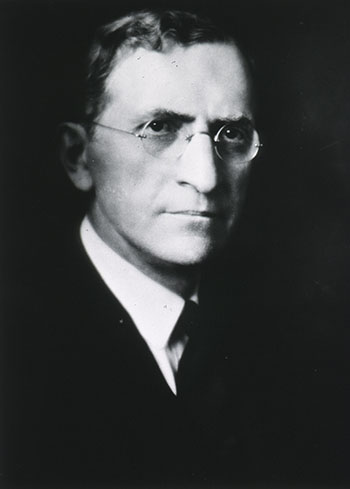
Joseph Goldberger
. Portrait credited to the National Library of Medicine in the NIH historical article.G. A. Wheeler coauthored a 1915 dietary experiment with Joseph Goldberger investigating the cause of pellagra. The study followed prisoners in Mississippi after placing them on a restricted diet dominated by cereal foods. Eleven remained in the experiment to its end; the authors reported symptoms sufficient for a diagnosis of pellagra in at least six. Other prisoners under observation did not develop comparable evidence of the disease.[ref]
Experimental Pellagra in the Human Subject Brought About by a Restricted Diet by Joseph Goldberger and G. A. Wheeler. printed pages 3336–3339, Experiment, Controls and Results
The comparison mattered because it changed food intake while observing people in the same broad setting. The findings supported a dietary explanation without identifying the particular missing nutrient. They should not be read as a population-wide disease probability: a small, selected group subjected to a particular intervention answers a narrower question. The report also records that participation followed an offer of a pardon, which is essential context for interpreting its use of the word “volunteer”.[ref]
Experimental Pellagra in the Human Subject Brought About by a Restricted Diet by Joseph Goldberger and G. A. Wheeler. page 3336, recruitment; page 3339, Conclusion
A. R. Grüntzig is the first author of the 1979 primary report on coronary angioplasty coauthored with A. Senning and W. E. Siegenthaler. The report describes introducing a catheter through a systemic artery and dilating a narrowed coronary artery by controlled inflation of a balloon catheter under local anaesthesia.[ref]
Nonoperative dilatation of coronary-artery stenosis: percutaneous transluminal coronary angioplasty by A. R. Grüntzig and others. Byline; Abstract, catheter apparatus and intervention
The apparatus links geometry and physiology: a distensible balloon changes a local narrowing, while measurements test the result. In the successful cases, the authors reported mean stenosis changing from to and mean coronary pressure difference from to .[ref]
Nonoperative dilatation of coronary-artery stenosis: percutaneous transluminal coronary angioplasty by A. R. Grüntzig and others. Abstract, successful-case stenosis and pressure measurements
These are paired observations within the reported successful group, not mean outcomes for every attempted procedure or a randomized comparison.The arithmetic distinguishes percentage points from relative changes. The reported stenosis values differ by 50 percentage points; relative to the initial value, the numerical reduction isFor the pressure difference, the analogous reduction is . The two calculations describe different observables and need not yield the same fraction. Neither calculation alone establishes a corresponding change in survival or overall health.
An ideal fluid-mechanical model helps motivate measuring pressure as well as geometry. For steady laminar flow through a uniform rigid tube, Hagen-Poiseuille equation givesAt fixed dynamic viscosity , length and volume flow rate , increasing radius by a factor reduces the modeled pressure difference to of its former value. This is an illustrative sensitivity calculation, not a reconstruction of a living coronary artery, whose geometry, wall motion and flow conditions are more complicated.
Grüntzig's joint report makes the mechanical intervention experimentally testable through multiple readouts. Interpreting those readouts still requires attention to failed attempts, complications, follow-up and selection. A physically effective local change and a favorable comparative clinical outcome are related hypotheses requiring different evidence.
W. E. Siegenthaler coauthored the 1979 primary evaluation of coronary angioplasty with A. R. Grüntzig and A. Senning. The published byline records these initials. The report combined a clinical case series with measurements of the narrowed vessel and its pressure drop, and explicitly called for a prospective randomized comparison with surgical and medical management.[ref]
Nonoperative dilatation of coronary-artery stenosis: percutaneous transluminal coronary angioplasty by A. R. Grüntzig and others. Byline; Abstract, measurements and final comparative-evaluation statement
This contribution illustrates a distinction between demonstrating that an intervention can change a physical obstruction and establishing how its outcomes compare with alternatives. A selected series can document feasibility and observed complications. It does not automatically supply the outcomes that the same patients would have had under another treatment.
The report's 32 technical successes among 50 treated patients give the observed fraction .[ref]
Nonoperative dilatation of coronary-artery stenosis: percutaneous transluminal coronary angioplasty by A. R. Grüntzig and others. Abstract, treated population and technical-success count
That denominator is the treated series, not every person with coronary artery disease or everyone considered for an intervention. Eligibility, selection and the definition of success determine what the fraction describes.An original case mix example shows why a comparison can change even if subgroup responses do not. Suppose a hypothetical endpoint occurs with probabilities and in two patient groups. A series containing from the first group has modeled ratewhereas a series containing only from that group has rate . The difference was created entirely by group composition in this model. It is not a treatment-effect estimate or a result attributed to Siegenthaler.
A clinical trial with a justified comparison addresses a different question from a selected feasibility series. Randomized experiment design helps control treatment assignment; follow-up and endpoint definitions still need scrutiny. Siegenthaler's jointly authored report is scientifically notable for presenting the initial clinical evidence while recognizing the further comparative evidence required.
Joann G. Elmore is a physician whose research examines variability in cancer diagnosis, including how consistently pathologists classify biopsy material. Her research group's description connects that work with statistics and machine learning for evaluating diagnostic decisions.[ref]
Joann G. Elmore research group at UCLA. “About Our Research Group”: cancer diagnosis, physician variability and statistical methods
In a 2017 primary study, Elmore and colleagues assembled 240 skin biopsy cases and gave participating pathologists sets of 36 or 48 cases. The design included a second interpretation of the same cases at least eight months later; 187 pathologists completed 8,976 interpretations in the first phase. Comparing an observer with their own later reading, with other observers and with a reference panel answers three different questions about statistical classification.[ref]
Pathologists' diagnosis of invasive melanoma and melanocytic proliferations: observer accuracy and reproducibility study by Joann G. Elmore and others. Abstract, Participants and Results; Methods, reference diagnoses; BMJ 357:j2813, DOI 10.1136/bmj.j2813
The distinction is within-observer agreement versus reference agreement. In an illustrative set of 20 cases, an observer might repeat 18 of their earlier classifications but agree with a reference classification on only 14: the two proportions are and . Repeating the same erroneous category increases the first proportion without improving the second. These are invented counts to explain the design, not results from Elmore's study. A consensus reference is an explicitly defined comparison standard; it does not make a panel infallible, and the diagnostic mix of a selected test set must be considered before interpreting an overall agreement percentage.

Mary Buckland, also known as Mary Morland, contributed to paleontology through fossil collecting and scientific illustration. Her drawings made anatomical details of specimens available for comparison by researchers who could not examine the original fossils directly.
The Geological Society's collections identify her drawings of a Megalosaurus jaw used with William Buckland's 1824 description, and views of a fossil rhinoceros skull published in Georges Cuvier's work. These are specific contributions to the visual evidence of comparative anatomy: orientation, preserved margins and visible structures have to be communicated accurately for a reader to assess a reconstruction. The illustration credit and the authorship of the accompanying paper are distinct historical claims.[ref]
Mary Buckland in the Geological Society collections. Scientific illustrator; Megalosaurus jaw and fossil rhinoceros skull illustrations credited to Mary Morland
Carlos G. Dotti was first author of the 1988 study following axon and dendrite formation in cultured hippocampal neurons. [ref]
The establishment of polarity by hippocampal neurons in culture by Carlos G. Dotti and others. 1988, byline and abstract: establishment of neuronal polarity
The approach made a general cell-biological problem concrete: one cell develops compartments with different structures and functions. Following development in culture allowed temporal evidence to be combined with molecular markers of compartment identity. Pinned article: Introduction to the OurBigBook Project
Welcome to the OurBigBook Project! Our goal is to create the perfect publishing platform for STEM subjects, and get university-level students to write the best free STEM tutorials ever.
Everyone is welcome to create an account and play with the site: ourbigbook.com/go/register. We belive that students themselves can write amazing tutorials, but teachers are welcome too. You can write about anything you want, it doesn't have to be STEM or even educational. Silly test content is very welcome and you won't be penalized in any way. Just keep it legal!
Intro to OurBigBook
. Source. We have two killer features:
- topics: topics group articles by different users with the same title, e.g. here is the topic for the "Fundamental Theorem of Calculus" ourbigbook.com/go/topic/fundamental-theorem-of-calculusArticles of different users are sorted by upvote within each article page. This feature is a bit like:
- a Wikipedia where each user can have their own version of each article
- a Q&A website like Stack Overflow, where multiple people can give their views on a given topic, and the best ones are sorted by upvote. Except you don't need to wait for someone to ask first, and any topic goes, no matter how narrow or broad
This feature makes it possible for readers to find better explanations of any topic created by other writers. And it allows writers to create an explanation in a place that readers might actually find it.
Figure 1. Screenshot of the "Derivative" topic page. View it live at: ourbigbook.com/go/topic/derivativeVideo 2. OurBigBook Web topics demo. Source. - local editing: you can store all your personal knowledge base content locally in a plaintext markup format that can be edited locally and published either:This way you can be sure that even if OurBigBook.com were to go down one day (which we have no plans to do as it is quite cheap to host!), your content will still be perfectly readable as a static site.
- to OurBigBook.com to get awesome multi-user features like topics and likes
- as HTML files to a static website, which you can host yourself for free on many external providers like GitHub Pages, and remain in full control

Figure 2. You can publish local OurBigBook lightweight markup files to either OurBigBook.com or as a static website.
Figure 3. Visual Studio Code extension installation.
Figure 5. . You can also edit articles on the Web editor without installing anything locally. Video 3. Edit locally and publish demo. Source. This shows editing OurBigBook Markup and publishing it using the Visual Studio Code extension. 
- Infinitely deep tables of contents:


All our software is open source and hosted at: github.com/ourbigbook/ourbigbook
Further documentation can be found at: docs.ourbigbook.com
Feel free to reach our to us for any help or suggestions: docs.ourbigbook.com/#contact