Topics (384k) Articles (398k) Users (410) Discussions (242) Comments (383) Files (13k) New article

Hans Lilholt is a materials scientist whose DTU profile identifies research on composite materials, their preparation and their physical and mechanical properties.[ref]
Hans Lilholt profile at DTU. Personal profile, materials and mechanical-properties research
He is a named contributor to the glass- and carbon-fibre tensile dataset, alongside Rajnish Kumar, Bo Madsen and Lars Pilgaard Mikkelsen.[ref]Single fiber tensile test - Glass and Carbon fibers by Rajnish Kumar and others. Full contributor list
With Bo Madsen and Rajnish Kumar, he coauthored a 2024 experimental study of the vibroscope method for estimating fibre cross-sectional area from vibration under tension. It compared three analysis procedures and used tensile stress-strain curves in assessing the area estimates.[ref]
Vibroscope method for determination of cross-sectional area of glass and carbon fibres – Experiments and analyses by Bo Madsen and others. Primary byline and public abstract, frequency measurements and comparison of analysis procedures
An original calculation shows why this metrology affects a strength claim. At fixed measured force, inferring an area produces inferred engineering stressA chosen two-percent area underestimate therefore gives about a 2.04-percent stress overestimate. This is an illustrative calculation, not a new measurement from that study. The area measurement and its analysis belong alongside the reported tensile result; a force record alone does not determine material stress.
Lars Pilgaard Mikkelsen is a researcher in the mechanics of composite materials. His DTU profile describes combining the finite element method with experimental characterization of polymer matrix composites, particularly their mechanical fatigue and compression response.[ref]
Lars Pilgaard Mikkelsen profile at DTU. Personal profile, fields of interest
He coauthored the 2020 study of glass fibres and carbon fibres with Rajnish Kumar, Hans Lilholt and Bo Madsen. The study compared modulus determinations from single-strand stress-strain measurements.[ref]
Understanding the mechanical response of glass and carbon fibres: stress-strain analysis and modulus determination by Rajnish Kumar and others. Institutional byline and public abstract
The associated dataset identifies him by the full name Lars Pilgaard Mikkelsen and lists him as a contributor; it supplies individual tensile records and separate machine compliance calculations.[ref]Single fiber tensile test - Glass and Carbon fibers by Rajnish Kumar and others. Contributor list and description of tensile/compliance files
The measurement distinction is important for mechanics models: crosshead displacement can include movement of the test apparatus as well as specimen extension. A simulation supplied with a modulus inferred from that combined displacement can inherit an apparatus-dependent response. The single-fibre tensile test explains a numerical correction example; retaining both the individual records and the correction assumptions makes that inference inspectable. This is joint experimental work, and the cited records do not assign every instrument or analysis step to one coauthor.
W. Craig Carter is a materials scientist at MIT whose research applies physical analysis and computation to the evolution of microstructure. His departmental profile identifies work on material properties, phase transitions, fracture and battery-electrode materials.[ref]
MIT's official course page identifies him as the instructor of its Fall2002 Thermodynamics of Materials course. The associated Unstable Solutions: MIT 3.00 Lecture 32 by W. C. Carter prints the byline W.C.Carter and develops the regular solution model, common-tangent construction and instability toward phase separation.[ref]
Unstable Solutions: MIT 3.00 Lecture 32 by W. C. Carter. Official course instructor entry and Lecture32 resource; printed pp217–223, equations32-9 and32-15–32-17
An original dimensionless version of the regular solution model makes one teaching point explicit. Let be mole fraction andIts curvature isAt equal composition , this becomes . For stipulated , the value is . A small symmetric split of composition into changes the average free energy by to leading order, which is negative here. The homogeneous state can therefore lower this model free energy through small composition fluctuations. This illustrates spinodal decomposition; it is a derivation in a chosen parameter convention, not a measurement of a named alloy.
The common-tangent construction separately determines equilibrium coexistence compositions. Carter's notes use these geometrical and thermodynamic conditions to distinguish stability questions from the eventual separated phases. His MIT faculty profile provides an institutional portrait.
Larry L. Hench (1938–2015) was a materials scientist known for developing bioactive glass: a biomaterial designed to form a bond with living bone. The National Academy of Engineering memorial records his name, dates and contribution to bioactive glasses and glass corrosion.[ref]
https://www.nationalacademies.org/read/25543/chapter/26. Memorial Tributes, volume 22, printed p. 149, Larry L. Hench
His own account explains the key experimental observation: early glass specimens implanted in rat femurs became bonded to bone. The scientific question was how the solid’s composition and its reactions with body fluid could create that interface. The proposed mechanism involved dissolution and formation of a mineral-rich surface layer, followed by biological attachment.[ref]
The Story of Bioglass by Larry Hench. Printed pp. 10–14, original observations and interfacial reaction sequence
The earlier joint paper compared solubility and interfacial hydroxyapatite crystallization studies with implant histology and ultrastructure.[ref]This work changed the design question from simply finding a strong solid to understanding a solid–tissue system. A bond at the interface and sufficient bulk strength are distinct properties: a strong implant can still detach at its surface, while a bonded but weak material can fail internally. Testing where a loaded specimen separates helps distinguish these possibilities. That distinction connects Hench’s experimental approach to biocompatibility, biomechanics and tissue engineering.
Bill Clyne is a materials scientist whose research and teaching connect the mechanics of composite materials and coatings with experimental characterization and numerical modelling. His professional-society profile records his appointment to a Cambridge chair in Mechanics of Materials in 1999 and identifies thermo-mechanical behavior, processing and fine-scale mechanical measurements among his research interests.[ref]
Clyne is also credited with Boban Tanovic on the MATTER composite-mechanics teaching resource. It explains how load sharing depends on geometry: aligned phases can be idealized with equal strain along the reinforcement, while the equal-stress slab model gives a different estimate for transverse response. The resource expressly cautions that real transverse stress fields are more complicated than that slab model.[ref]
Mechanics of Composite Materials by Bill Clyne and Boban Tanovic. Load Transfer, axial and transverse stiffness sections
This teaching contribution makes an important modelling distinction accessible. Measuring a constituent’s Young's modulus does not determine a whole composite material’s modulus without information about reinforcement geometry, bonding and direction of loading. Comparing the longitudinal rule of mixtures and isostress rule of mixtures is an explicit example of how assumptions enter a useful calculation, rather than merely supplying two unrelated formulas.
Boban Tanovic contributed to the MATTER educational software for materials science. The project’s user guide names him in its Design and Development Team; the mechanics module credits Tanovic alongside Bill Clyne.[ref][ref]
Mechanics of Composite Materials by Bill Clyne and Boban Tanovic. Module heading and credits
The module turns composite material models into interactive comparisons. Its load-transfer section contrasts the equal-strain longitudinal rule of mixtures with the equal-stress isostress rule of mixtures, letting a learner vary constituent moduli and proportions. The educational point is scientifically useful: two predictions can differ because they impose different geometries and load-sharing assumptions, even with the same constituent data.[ref]
Mechanics of Composite Materials by Bill Clyne and Boban Tanovic. Load Transfer, model comparisons and parameter exploration
For instance, an illustrative mixture with equal volumes of phases having Young's moduli and gives in the ideal equal-strain case but about in the ideal equal-stress case. Changing a model assumption changes the answer; interacting with such a comparison helps distinguish a model prediction from a measured material property.
Ai Taniguchi is a linguist specializing in formal semantics and pragmatics. Her University of Toronto Mississauga profile describes research on kinds of meaning beyond an utterance's literal main assertion, including social meaning and how context changes interpretation.[ref]
This distinguishes what a sentence directly asserts from information conveyed through its use and context. Formal models make those proposed differences explicit enough to compare against linguistic examples. She is a coauthor of Essentials of Linguistics (2nd edition) by Catherine Anderson and others and uses comics and visual art for public communication about linguistics, as documented in the same institutional profile.

Nathan Sanders studies phonetics, phonology and patterns across languages, including physical constraints on sign language. His research homepage explicitly connects this work to mathematical and statistical models, as well as the perception and mechanics of signed production.[ref]
He is a coauthor of Essentials of Linguistics (2nd edition) by Catherine Anderson and others, whose treatment includes both spoken and signed articulation. This connection matters scientifically: the organization of language can be compared across modalities while the physical signals and articulators differ. His homepage also describes teaching tools and games intended to make linguistic analysis accessible, alongside research on sound patterns and their change.

Margaret Grant studies sentence comprehension through experimental investigations of interpretation and ambiguity. Her Simon Fraser University profile identifies a 2013 dissertation on the interpretation of comparative constructions, and research connecting psycholinguistics with linguistic theory.[ref]
The central distinction is between a grammatical description of a sentence and the process by which a listener or reader arrives at an interpretation. Experimental evidence can constrain an account of that process without assuming that every theoretically possible analysis is used equally in real time. She is a coauthor of Essentials of Linguistics (2nd edition) by Catherine Anderson and others.

Julianne Doner is a linguist working on comparative syntax and the organization of clauses. Her author homepage describes a dissertation comparing data from more than two dozen languages in more than ten language families, asking which grammatical properties occur together and how to account for their differences.[ref]
Research homepage by Julianne Doner. About Me; Comparative Syntax; Clausal Architecture
The comparison distinguishes a proposed universal pattern from a pattern found only in a narrow sample of related languages. Her account also considers whether structural organization can follow from more general principles rather than being stipulated independently for each case. She completed her doctorate in 2019 and is a coauthor of Essentials of Linguistics (2nd edition) by Catherine Anderson and others.

Derek Denis is a linguist studying language change and variation, particularly Canadian English. His University of Toronto Mississauga profile describes using archival oral-history recordings to investigate earlier Ontario English and studying how Toronto's multilingual communities contribute to emerging speech patterns.[ref]
Derek Denis in the University of Toronto Mississauga directory. research biography and selected publications
The recordings make the comparison empirical: observed pronunciations and usages can be related to speakers and historical settings rather than inferred solely from spelling. His work in sociolinguistics asks how innovations arise and spread. A listed study of Toronto vowels connects that question to measurable sound patterns. He is a coauthor of Essentials of Linguistics (2nd edition) by Catherine Anderson and others.

Bronwyn Bjorkman is a linguist whose research connects linguistic morphology, syntax and semantics. Her Queen's University profile identifies a particular focus on grammatical tense and grammatical aspect: how word forms and sentence structure express temporal relationships. It also describes work on the representation and manipulation of grammatical information.[ref]
This work separates the form of an expression from the interpretation it receives, rather than assuming that a grammatical ending has the same function in every language. She received her doctorate from the Massachusetts Institute of Technology in 2011 and is a coauthor of Essentials of Linguistics (2nd edition) by Catherine Anderson and others.

Catherine Anderson is a linguist at McMaster University who authored Essentials of Linguistics by Catherine Anderson and coauthored its expanded second edition. The first edition makes introductory phonetics concrete through articulator descriptions, consonant classification and the distinction between sounds and writing.[ref]
Essentials of Linguistics by Catherine Anderson. §2.6, Classifying Consonants; publisher author credit
Her institutional profile records a doctorate in linguistics from Northwestern University and describes work on teaching and accessibility in university learning.[ref]
Catherine Anderson in McMaster Experts. Overview and Background
Her textbook contribution supplies a route from everyday speech to explicit categories such as place of articulation, manner of articulation and voicing.
Michael K. Tanenhaus is a researcher in psycholinguistics associated with the University of Rochester. Its directory identifies his interests in language and reading comprehension and his emeritus appointment in brain and cognitive sciences and linguistics.[ref]
Michael Tanenhaus in the University of Rochester directory. Tanenhaus, Michael K., appointment and research interests
With Michael Spivey, Kathleen M. Eberhard and Julie Sedivy, he developed experiments connecting eye tracking to interpretation of spoken instructions. Their 1995 study used real objects and a head-mounted tracker; varying the visible referents altered how a temporarily ambiguous instruction was interpreted.[ref]
Integration of Visual and Linguistic Information in Spoken Language Comprehension by Michael K. Tanenhaus and others. apparatus and one/two-referent conditions, pp.1632–1634
This visual world paradigm makes the time course of sentence comprehension experimentally accessible. A fixation is evidence about allocation of attention during a controlled task; it must be interpreted through the alternatives available to the participant.
https://www.sas.rochester.edu/bcs/people/index.html. University of Rochester directory
.Michael J. Spivey-Knowlton, who publishes as Michael Spivey, studies interactions among language, vision and action. His curriculum vitae links the earlier publication name to his later work, and the University of California, Merced describes his use of both eye tracking and mouse tracking to investigate ongoing interpretation.[ref]
Curriculum Vitae by Michael Spivey. publication list, earlier Spivey-Knowlton and later Spivey bylines
[ref]Recording a continuous pointing trajectory supplies evidence that a final button choice loses. In an illustrative task, two trials could end at the same correct target while one movement initially curves toward a competitor. Comparing the trajectories then raises a testable question about competing interpretations. The movement remains an indirect behavioral measure: motor demands and display geometry must also be considered. His work connects such measurements with computational explanations of how multiple information sources contribute during sentence comprehension.

https://cin.ucmerced.edu/people/michael-spivey. UC Merced neuroscience directory
.Kathleen M. Eberhard studies psycholinguistics, especially the production of language and coordination during conversation. Her Notre Dame profile identifies research on subject-verb grammatical agreement, including a theoretical account and computational model published in 2005. It also documents her contribution to the visual world paradigm, which times listeners' fixations to objects during spoken comprehension.[ref]
Kathleen Eberhard at the University of Notre Dame. Biography and Representative Publications
These questions make grammar experimentally observable. For an illustrative production task, compare a singular head followed by a singular modifier with the same head followed by a plural modifier, while holding the intended grammatical agreement fixed. Errors and response timing can help discriminate accounts of how speakers build the utterance. This is a schematic experimental contrast, not a numerical result attributed to her work. Her institutional research statement also connects language production to bilingualism and the coordination of understanding in dialogue.
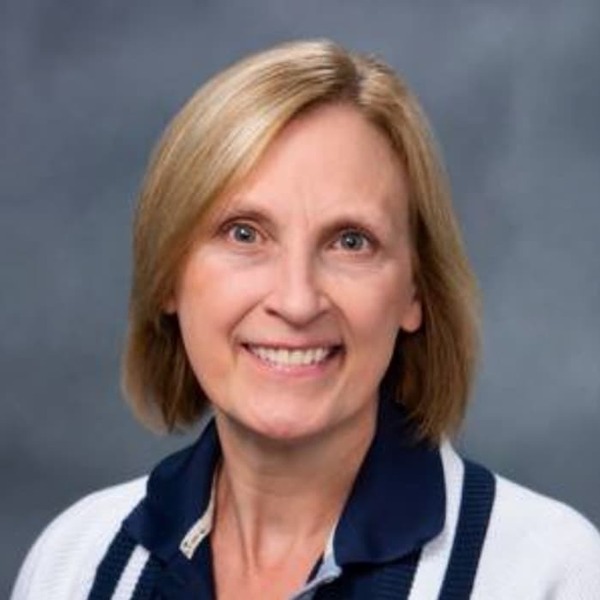
https://psychology.nd.edu/people/faculty/kathleen-eberhard/. Notre Dame faculty profile
.Julie C. Sedivy is a linguist and writer who studies how people understand and use language. Her account of her scientific work identifies a doctorate at the University of Rochester, research using eye tracking to study spoken comprehension, and subsequent teaching at Brown University. Her textbook writing presents psycholinguistics through connections between experimental findings and ordinary language use.[ref]
She coauthored the 1995 study linking visual context to online interpretation of spoken instructions.[ref]
Integration of Visual and Linguistic Information in Spoken Language Comprehension by Michael K. Tanenhaus and others. byline, pp.1632–1634
The methodological connection is useful: fixations timed against an unfolding utterance can distinguish interpretations that lead to the same eventual response. Such a measurement needs carefully chosen alternatives and contexts before it supports a claim about sentence comprehension.
https://juliesedivy.com/. Julie Sedivy’s official homepage
.Sky Onosson is a linguist whose research connects phonetics, phonology and quantitative analysis of language variation. His research statement emphasizes the changing acoustic structure of vowels, including diphthongs, and the use of the R for modeling and visualization.[ref]
His 2018 dissertation investigated Canadian raising by comparing vowel duration and formant trajectories across Canadian and two American dialect groups.[ref]
An Acoustic Study of Canadian Raising in Three Dialects of North American English by Sky Onosson. Abstract, printed p.iii
Comparing a trajectory instead of only one instant helps distinguish a vowel's changing quality from the effects of duration. His work consequently treats time alignment as part of the scientific analysis, rather than assuming that measurements at a single relative time capture every contrast.Homepage: onosson.github.io/
Bernard Comrie is a linguist specializing in linguistic typology and historical comparisons of languages. His research includes grammatical tense, grammatical voice and numeral systems, with fieldwork in geographically distant communities. His own account emphasizes examining many different kinds of language when assessing generalizations.[ref]
Research profile by Bernard Comrie. Specialization and autobiographical research statement
A simple methodological example shows why this matters. English can form a passive voice construction such as
The pump was repaired. Finding that construction in one language establishes a possibility, while a claim about all languages requires much wider evidence and explicit criteria for recognizing the relevant construction. This illustrates the difference between a description and a proposed cross-language generalization.Bernard Comrie co-developed the Leipzig Glossing Rules by Bernard Comrie and others with Martin Haspelmath and Balthasar Bickel. The conventions expose how a proposed analysis segments and labels an expression, helping other researchers evaluate it.[ref]
Leipzig Glossing Rules by Bernard Comrie and others. About the rules and developer credit

Portrait of Bernard Comrie
. Named headshot linked from his official institutional profile.Martin Haspelmath is a linguist whose comparative research concerns diversity and recurring patterns in grammatical and lexical systems. He coedited the World Atlas of Language Structures, an important resource for linguistic typology, and studies how properties can be compared across languages.[ref]
Research profile by Martin Haspelmath. About me, comparative research and World Atlas of Language Structures coeditorship
The scientific challenge goes beyond collecting familiar grammatical labels. In an original toy comparison, suppose two descriptions use different names for constructions that both express a possessor. A cross-language count needs an explicit criterion for deciding whether their relevant properties match. Conversely, identical labels do not guarantee equivalent structures. A useful lexical database or grammatical comparison separates documented observations from the analyst's coding decisions.
Martin Haspelmath developed the Leipzig Glossing Rules by Bernard Comrie and others with Bernard Comrie and Balthasar Bickel. A standardized display of morphemes and their glosses helps readers inspect the evidence behind a comparative claim; it does not by itself establish that claim.[ref]
Leipzig Glossing Rules by Bernard Comrie and others. About the rules and basic principles of interlinear glossing
Pinned article: Introduction to the OurBigBook Project
Welcome to the OurBigBook Project! Our goal is to create the perfect publishing platform for STEM subjects, and get university-level students to write the best free STEM tutorials ever.
Everyone is welcome to create an account and play with the site: ourbigbook.com/go/register. We belive that students themselves can write amazing tutorials, but teachers are welcome too. You can write about anything you want, it doesn't have to be STEM or even educational. Silly test content is very welcome and you won't be penalized in any way. Just keep it legal!
Intro to OurBigBook
. Source. We have two killer features:
- topics: topics group articles by different users with the same title, e.g. here is the topic for the "Fundamental Theorem of Calculus" ourbigbook.com/go/topic/fundamental-theorem-of-calculusArticles of different users are sorted by upvote within each article page. This feature is a bit like:
- a Wikipedia where each user can have their own version of each article
- a Q&A website like Stack Overflow, where multiple people can give their views on a given topic, and the best ones are sorted by upvote. Except you don't need to wait for someone to ask first, and any topic goes, no matter how narrow or broad
This feature makes it possible for readers to find better explanations of any topic created by other writers. And it allows writers to create an explanation in a place that readers might actually find it.
Figure 1. Screenshot of the "Derivative" topic page. View it live at: ourbigbook.com/go/topic/derivativeVideo 2. OurBigBook Web topics demo. Source. - local editing: you can store all your personal knowledge base content locally in a plaintext markup format that can be edited locally and published either:This way you can be sure that even if OurBigBook.com were to go down one day (which we have no plans to do as it is quite cheap to host!), your content will still be perfectly readable as a static site.
- to OurBigBook.com to get awesome multi-user features like topics and likes
- as HTML files to a static website, which you can host yourself for free on many external providers like GitHub Pages, and remain in full control

Figure 2. You can publish local OurBigBook lightweight markup files to either OurBigBook.com or as a static website.
Figure 3. Visual Studio Code extension installation.
Figure 5. . You can also edit articles on the Web editor without installing anything locally. Video 3. Edit locally and publish demo. Source. This shows editing OurBigBook Markup and publishing it using the Visual Studio Code extension. 
- Infinitely deep tables of contents:


All our software is open source and hosted at: github.com/ourbigbook/ourbigbook
Further documentation can be found at: docs.ourbigbook.com
Feel free to reach our to us for any help or suggestions: docs.ourbigbook.com/#contact