Topics (384k) Articles (398k) Users (410) Discussions (242) Comments (383) Files (13k) New article

Sara van de Geer develops the mathematical theory of high-dimensional statistics. Her Statistical Theory for High-Dimensional Models by Sara van de Geer studies prediction bounds for the Lasso and Square-root Lasso, and inference after correcting shrinkage bias.[ref]
The distinction is useful: an estimator that predicts well may still bias an individual coefficient toward zero. A de-sparsified estimator adds a correction whose leading error can have an approximately normal distribution. Bounds on the remaining error, together with sparsity and design assumptions, then justify confidence intervals. The same notes connect generic chaining and concentration inequalities with control of random-process suprema.[ref]
Alexandre Belloni works across optimization, econometrics and high-dimensional statistics. His Chicago Booth profile describes research connecting statistical inference with decisions under limited information.[ref]
With Victor Chernozhukov and Lie Wang, he formulated the Square-root Lasso as a convex conic optimization problem. This connects a statistically pivotal tuning rule with algorithms for convex optimization, giving a computable sparse regression estimator without a preliminary estimate of noise scale.[ref]
Square-Root Lasso: Pivotal Recovery of Sparse Signals via Conic Programming by Alexandre Belloni and others. Abstract and section 1, optimization formulation
Victor Chernozhukov works on econometrics and statistical inference with machine learning. With Alexandre Belloni and Lie Wang, he developed the Square-root Lasso, whose penalty calibration does not require knowing the noise scale.[ref]
He also coauthored work on double machine learning. Predicting an outcome accurately does not by itself estimate a causal effect accurately: errors in fitted nuisance functions can bias the target parameter. An orthogonal estimating equation reduces first-order sensitivity to those errors, while cross-fitting separates training observations from score evaluation. Valid confidence intervals still require the paper's identification and convergence assumptions.[ref]
Lie Wang coauthored the Square-root Lasso paper with Alexandre Belloni and Victor Chernozhukov. Their estimator combines a root-mean-square residual loss with an penalty. Its tuning rule avoids requiring advance knowledge of the noise standard deviation, making sparse linear regression feasible when the number of candidate predictors exceeds the number of observations.[ref]
Square-Root Lasso: Pivotal Recovery of Sparse Signals via Conic Programming by Alexandre Belloni and others. Section 1, equations 8–11; exact author byline
Nathaniel E. Helwig develops statistical methods at the intersection of psychology and computational statistics. His University of Minnesota research biography emphasizes multivariate and nonparametric statistics for complex observations.[ref]
His Generalized Linear Models in R by Nathaniel E. Helwig explains how a link function connects a response's conditional expected value with a linear predictor. For logistic regression, the predictor represents log odds; for Poisson regression, a logarithmic link ensures a positive fitted mean. This separates the model for the mean from the response's probability distribution, while making deviance and dispersion part of model assessment.[ref]
Generalized Linear Models in R by Nathaniel E. Helwig. Section 1 and logistic/Poisson examples; the notes explicitly credit their textbook basis
Lajos Horváth works on mathematical statistics, time series and econometrics. His University of Utah profile identifies these research interests.[ref]
https://www.math.utah.edu/directory/people-info/horvath.php. Institutional research profile
His joint paper with Piotr Kokoszka and Ron Reeder studies comparisons of mean curves in a functional time series. Its Hilbert space formulation yields Gaussian limits and a test based on the distance between two estimated mean functions, retaining dependence within each sample.[ref]

Lajos Horváth
. Portrait identified by the University of Utah mathematics directory. Source.Piotr Kokoszka studies functional data analysis, time series and spatial statistical methods. His Colorado State University homepage describes inference for observations that can themselves be curves.[ref]
With Lajos Horváth and Ron Reeder, he developed estimation and statistical hypothesis testing for mean curves under temporal dependence. Averaging many curves requires a covariance accounting for correlation between successive observations; treating the curves as independent can misstate uncertainty.[ref]
Estimation of the Mean of Functional Time Series and a Two-Sample Problem by Lajos Horváth and others. Sections 2–3, asymptotic covariance and two-sample procedure
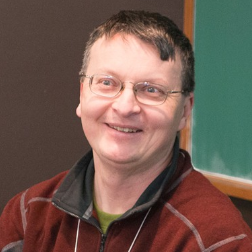
Piotr Kokoszka
. Portrait identified by the author's Colorado State University homepage. Source.Ron Reeder coauthored Estimation of the Mean of Functional Time Series and a Two-Sample Problem by Lajos Horváth and others with Lajos Horváth and Piotr Kokoszka. Their problem treats successive daily curves as observations of a functional time series. The paper develops a normal approximation for their mean and a comparison of two mean curves that allows dependence across days.[ref]
Estimation of the Mean of Functional Time Series and a Two-Sample Problem by Lajos Horváth and others. Abstract and sections 2–3; original byline verifies Ron Reeder
Bruce W. Turnbull works on survival analysis and the statistical monitoring of clinical trials. His Cornell profile connects research on statistical methods with the practical problem of deciding what accumulating trial data justify.[ref]
His 1974 paper studied nonparametric estimation when event times are subject to both left censoring and right censoring. A time known only to precede a threshold and one known only to exceed a threshold convey different information about the same survival function. Retaining those inequalities makes incomplete observations useful without substituting an invented event time.[ref]
Nonparametric Estimation of a Survivorship Function with Doubly Censored Data by Bruce W. Turnbull. Publisher abstract: left- and right-censored response times
Peter Bartlett studies the foundations of machine learning, statistical learning theory and reinforcement learning. His Berkeley research description emphasizes the joint demands of computational efficiency and statistical performance, including prediction with complex outputs and sequential decisions.[ref]
https://statistics.berkeley.edu/people/peter-bartlett. Institutional research statement
His Introduction to Time Series Analysis, Lecture 20 by Peter Bartlett gives a concrete lesson about estimation. The raw periodogram can have an approximately correct expected value while its variance remains substantial as the sample grows. For Gaussian white noise, an interior-frequency periodogram ordinate is distributed as a scaled chi-squared distribution with two degrees of freedom. Spectral smoothing is therefore doing statistical work, rather than merely making a graph look smoother.[ref]
Introduction to Time Series Analysis, Lecture 20 by Peter Bartlett. Slides 2–9, periodogram asymptotics and Gaussian white-noise calculation

Peter Bartlett
. Portrait identified by the UC Berkeley Department of Statistics profile. Source.Germán Rodríguez works on statistical methods for population research. His Princeton teaching and research site connects generalized linear models, survival analysis and demographic questions about event timing. The site's biographical note identifies his training in biostatistics and his work in population research.[ref]
His Survival Models by Germán Rodríguez explains how survival functions and hazard functions encode the same event-time distribution in different ways. With right censoring, an event observed at contributes density , whereas an observation ending without an event contributes . Writing the contribution as , with event indicator , makes that distinction explicit. These likelihood conventions let incomplete follow-up inform estimation without treating a censored time as an observed failure.[ref]
Terry Therneau is a statistician working on survival analysis and statistical software. His Mayo Clinic profile identifies continuous-time multi-state models for time-to-event data as a focus, connecting statistical methods with the analysis of transitions between observed states.[ref]
https://www.mayo.edu/research/faculty/therneau-terry-m-ph-d/bio-00025991. Institutional profile: survival analysis and multistate time-to-event models
His A package for survival analysis in R by Terry Therneau documents tools for Cox proportional-hazards models and the handling of censoring. A censored observation still conveys information: a subject observed without an event through time contributes a survival probability through , rather than being discarded. The software's treatment of risk sets and tied event times makes the statistical model's assumptions part of the computation.[ref]
A package for survival analysis in R by Terry Therneau. Sections 1.4 and 3.1; section 5.1 on ties and partial likelihood

Fabrice Baudoin studies stochastic calculus and differential geometry, using diffusion processes and heat kernels to obtain functional inequalities. His Aarhus University research profile describes this exchange: geometric information can bound a diffusion, while probabilistic methods can reveal properties of the underlying space.[ref]
https://pure.au.dk/portal/en/persons/fbaudoin%40math.au.dk/. Institutional research statement
His lecture Itō's representation theorem by Fabrice Baudoin illustrates the role of a precise information structure. For the completed natural filtration of Brownian motion, a square-integrable terminal random variable can be written as its expected value plus a stochastic integral. This yields a continuous version of each square-integrable martingale in that filtration. His exposition develops the Brownian martingale representation theorem through its filtration and square-integrability assumptions.[ref]

Fabrice Baudoin
. Portrait identified by the author's Aarhus University profile. Source.Gregory F. Lawler studies random walks, Brownian motion and Schramm–Loewner evolution, with connections to statistical physics and complex analysis. His University of Chicago research profile emphasizes paths such as loop-erased random walks and their relation to uniform spanning trees.[ref]
Lawler and Wendelin Werner developed the Brownian loop soup, using a conformally invariant measure on planar Brownian loops to build a Poisson point process of loops.[ref]
The Brownian loop soup by Gregory F. Lawler and Wendelin Werner. Introduction and section 4
His Notes on the Bessel Process by Gregory F. Lawler provide another route from paths to geometry: a Bessel process describes radial diffusion, with its dimension parameter controlling whether the origin is reached. The boundary behavior matters when extending the process beyond its first zero.[ref]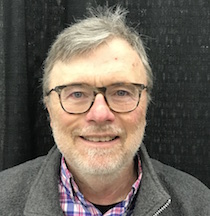
Wendelin Werner studies random geometric objects arising in probability theory and statistical physics, especially planar paths and their behavior under conformal maps. His work connects Brownian motion and Schramm–Loewner evolution with the geometry of random curves. His personal page identifies him at the University of Cambridge.[ref]
With Gregory F. Lawler, Werner constructed the Brownian loop soup from a measure on unrooted planar Brownian loops. Sampling loops by a Poisson point process turns an invariant measure into a random collection of paths. The construction provides a way to add Brownian loops to a simple curve and study conformally invariant random geometry.[ref]
The Brownian loop soup by Gregory F. Lawler and Wendelin Werner. Introduction and section 4, Brownian loop measure and loop-soup construction
Frank Kelly works on probability theory, stochastic networks and the mathematical organization of shared resources. His research connects queueing theory with optimization: local decisions about service, admission or price can determine a network's aggregate performance. His institutional research record describes these interests.[ref]
With Elena Yudovina, Kelly wrote Stochastic Networks by Frank Kelly and Elena Yudovina. Its treatment of loss networks shows how detailed balance can produce an explicit equilibrium occupancy law, while congestion control uses resource prices to coordinate competing demands. These are complementary uses of mathematics: predicting congestion and designing rules that improve it.[ref]
Stochastic Networks by Frank Kelly and Elena Yudovina. Sections 1.3 and 3.1 on loss occupancy; chapter 7 on congestion control
Elena Yudovina is a mathematician whose work includes the theory of stochastic networks. With Frank Kelly, she wrote Stochastic Networks by Frank Kelly and Elena Yudovina, connecting queueing theory, loss networks, congestion control and distributed optimization. The author's book page verifies the joint authorship and 2014 publication.[ref]
https://www.statslab.cam.ac.uk/~fpk1/BOOKS/sn.html. Author's book page: authors and publication record
A central question is how local service or routing rules affect an entire network. The book's M/M/1 queue illustrates the danger of operating near capacity: with arrival rate , service rate and , mean queue population is . Modest changes in load can therefore cause large changes in delay.[ref]
Stochastic Networks by Frank Kelly and Elena Yudovina. Section 2.1, M/M/1 equilibrium; overview of queueing, loss and congestion-control models
Craig L. Zirbel is a mathematician whose research connects probability theory with applications including RNA geometry and stochastic fluid motion. Bowling Green State University's faculty page identifies him as professor emeritus in mathematics and statistics and lists random measures, mass transport, and RNA structure and sequence variability among his interests.[ref]
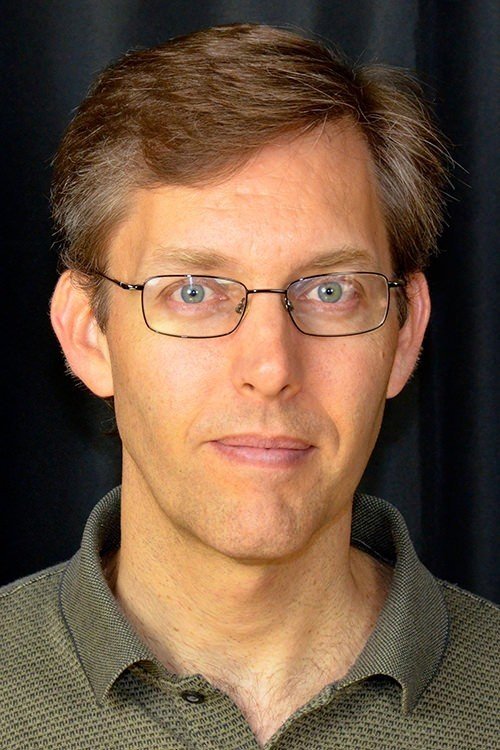
Craig L. Zirbel, portrait supplied on his university faculty page
. With Jesse Stombaugh, Eric Westhof and Neocles B. Leontis, he coauthored the 2009 study Frequency and isostericity of RNA base pairs by Jesse Stombaugh and others. It introduces the RNA IsoDiscrepancy Index and uses structural comparisons to investigate which base-pair substitutions preserve local geometry. This connects geometric annotation with comparisons of sequence variation, rather than treating nucleotide identities alone as a complete structural description.[ref]
Frequency and isostericity of RNA base pairs by Jesse Stombaugh and others. Abstract; definition and validation of the index
One mathematical task in that study is choosing an observed representative from several instances of a base-pair type. The authors compare instances and select the row with the smallest sum of discrepancies. An original miniature example uses the symmetric comparison-cost matrixIts row sums are 5, 4 and 7, so the second instance is the representative minimizing total comparison cost. These are chosen teaching values, not reported measurements of an RNA structure. The rule selects an observed instance; it does not require constructing an average set of atomic coordinates.[ref]
Frequency and isostericity of RNA base pairs by Jesse Stombaugh and others. Methods, selection of base-pair exemplars using the minimum row sum
Such a geometric representative is not necessarily the lowest-free energy structure, nor does a small discrepancy prove identical biological function. The example shows how an explicit comparison rule turns structural data into a reproducible choice, while leaving the physical interpretation to the measurement and molecular context.
Rajnish Kumar is a researcher in mechanical testing of composite materials. His institutional profile identifies him within DTU's composites manufacturing and testing group and gives ORCID 0000-0002-1243-9585, distinguishing this materials researcher from namesakes.[ref]
He was first and corresponding author of the 2020 glass- and carbon-fibre study with Lars Pilgaard Mikkelsen, Hans Lilholt and Bo Madsen. Their semi-automated single-fibre tensile test examined stress-strain-based modulus determinations. The public abstract reports an approximately strain-independent true-stress-based tangent modulus for the tested glass fibres, while the tested carbon fibres showed a tendency for that modulus to increase with strain.[ref]
Understanding the mechanical response of glass and carbon fibres: stress-strain analysis and modulus determination by Rajnish Kumar and others. Primary byline, corresponding-author mark and abstract, tangent-modulus findings
That distinction explains why one fitted Young's modulus need not summarize an entire stress-strain curve. A local slope and a slope fitted over a finite strain interval answer different questions; their definitions must accompany a comparison. The result concerns the tested specimens and the stated analysis, rather than every glass or carbon fibre. The associated dataset names Kumar as a contributor and preserves individual records and compliance calculations, allowing those measurement assumptions to be examined.[ref]
Single fiber tensile test - Glass and Carbon fibers by Rajnish Kumar and others. Contributor list and description of records and compliance files
Bo Madsen studies the physical and mechanical behaviour of composite materials. His DTU profile relates experiments and analytical modelling to microstructure, volumetric composition and manufacturing conditions.[ref]
Bo Madsen profile at DTU. Personal profile, field of interest
He is also a named contributor to the shared glass- and carbon-fibre tensile dataset.[ref]Single fiber tensile test - Glass and Carbon fibers by Rajnish Kumar and others. Full contributor list
In 2024 he was first and corresponding author of an experimental vibroscope study with Rajnish Kumar and Hans Lilholt. The apparatus uses frequency measurements on a fibre under tension to infer its cross-sectional area. The paper compared simple, direct and iterative analysis procedures, and reported distributions of individual fibre areas rather than treating all strands as geometrically identical.[ref]
Vibroscope method for determination of cross-sectional area of glass and carbon fibres – Experiments and analyses by Bo Madsen and others. Institutional primary byline, corresponding-author mark and public abstract
This method addresses a practical difficulty in a single-fibre tensile test: the area needed to convert force into engineering stress may be difficult to determine from an image of one apparent diameter. Comparing independently inferred areas with the resulting stress-strain curves tests more than a force sensor alone. It also keeps geometric variation between material fibres separate from differences in the material's constitutive response. The work is a collaboration; the byline does not imply that Madsen alone performed every measurement.
Pinned article: Introduction to the OurBigBook Project
Welcome to the OurBigBook Project! Our goal is to create the perfect publishing platform for STEM subjects, and get university-level students to write the best free STEM tutorials ever.
Everyone is welcome to create an account and play with the site: ourbigbook.com/go/register. We belive that students themselves can write amazing tutorials, but teachers are welcome too. You can write about anything you want, it doesn't have to be STEM or even educational. Silly test content is very welcome and you won't be penalized in any way. Just keep it legal!
Intro to OurBigBook
. Source. We have two killer features:
- topics: topics group articles by different users with the same title, e.g. here is the topic for the "Fundamental Theorem of Calculus" ourbigbook.com/go/topic/fundamental-theorem-of-calculusArticles of different users are sorted by upvote within each article page. This feature is a bit like:
- a Wikipedia where each user can have their own version of each article
- a Q&A website like Stack Overflow, where multiple people can give their views on a given topic, and the best ones are sorted by upvote. Except you don't need to wait for someone to ask first, and any topic goes, no matter how narrow or broad
This feature makes it possible for readers to find better explanations of any topic created by other writers. And it allows writers to create an explanation in a place that readers might actually find it.
Figure 1. Screenshot of the "Derivative" topic page. View it live at: ourbigbook.com/go/topic/derivativeVideo 2. OurBigBook Web topics demo. Source. - local editing: you can store all your personal knowledge base content locally in a plaintext markup format that can be edited locally and published either:This way you can be sure that even if OurBigBook.com were to go down one day (which we have no plans to do as it is quite cheap to host!), your content will still be perfectly readable as a static site.
- to OurBigBook.com to get awesome multi-user features like topics and likes
- as HTML files to a static website, which you can host yourself for free on many external providers like GitHub Pages, and remain in full control

Figure 2. You can publish local OurBigBook lightweight markup files to either OurBigBook.com or as a static website.
Figure 3. Visual Studio Code extension installation.
Figure 5. . You can also edit articles on the Web editor without installing anything locally. Video 3. Edit locally and publish demo. Source. This shows editing OurBigBook Markup and publishing it using the Visual Studio Code extension. 
- Infinitely deep tables of contents:


All our software is open source and hosted at: github.com/ourbigbook/ourbigbook
Further documentation can be found at: docs.ourbigbook.com
Feel free to reach our to us for any help or suggestions: docs.ourbigbook.com/#contact