Topics (384k) Articles (398k) Users (410) Discussions (242) Comments (383) Files (13k) New article


Portrait of David L. Share
. Association for Reading and Writing in Asia: external conference portrait. Source.A researcher investigating reading, language development or the processes supporting literacy.[ref]
Reading Comprehension Tests Vary in the Skills They Assess: Differential Dependence on Decoding and Oral Comprehension by Janice M. Keenan and others. Scientific Studies of Reading 12, 281–300; five measures, differential decoding/listening dependence and developmental changes
A researcher investigating reading, language development or the processes supporting literacy.[ref]
The influence of consistency, frequency, and semantics on learning to read: an artificial orthography paradigm by Joanne S. H. Taylor and others. Journal of Experimental Psychology: Learning, Memory, and Cognition 37, 60–76; sixteen/32 adults, novel script, frequency/consistency and pretraining

Portrait of Joanne S. H. Taylor
. UCL: external institutional portrait. Source.A researcher investigating reading, language development or the processes supporting literacy.[ref]
Statistical learning in reading: variability in irrelevant letters helps children learn phonics skills by Keith S. Apfelbaum and others. Developmental Psychology 49, 1348–1365; 224 first graders, vowel mappings with varied/similar consonants and transfer tasks
A researcher investigating reading, language development or the processes supporting literacy.[ref]
Dyslexia and Developmental Language Disorder: comorbid disorders with distinct effects on reading comprehension by Margaret J. Snowling and others. Journal of Child Psychology and Psychiatry 61, 672–680; dyslexia-only, DLD-only and comorbid groups at eight, comprehension at eight/nine

Portrait of Margaret Snowling
. St John's College, Oxford: external institutional portrait. Source.A researcher investigating reading, language development or the processes supporting literacy.[ref]
Ameliorating children's reading-comprehension difficulties: a randomized controlled trial by Paula J. Clarke and others. Psychological Science 21, 1106–1116; text/oral/combined interventions, untreated comparison and eleven-month follow-up
A researcher investigating reading, language development or the processes supporting literacy.[ref]
Ameliorating Early Reading Failure by Integrating the Teaching of Reading and Phonological Skills: The Phonological Linkage Hypothesis by Peter J. Hatcher and others. Child Development 65, 41–57; matched groups of seven-year-old poor readers, reading/phonology/combined/control conditions
A researcher investigating reading, language development or the processes supporting literacy.[ref]
The simple view of reading by Wesley A. Hoover and Philip B. Gough. Reading and Writing 2, 127–160; decoding, linguistic comprehension and product predictions in a longitudinal bilingual sample
A researcher investigating reading, language development or the processes supporting literacy.[ref]
Phonemes, rimes, vocabulary, and grammatical skills as foundations of early reading development: evidence from a longitudinal study by Valerie Muter and others. Developmental Psychology 40, 665–681; ninety school entrants, two-year follow-up and distinct predictors
A researcher investigating reading, language development or the processes supporting literacy.[ref]
The simple view of reading by Wesley A. Hoover and Philip B. Gough. Reading and Writing 2, 127–160; decoding, linguistic comprehension and product predictions in a longitudinal bilingual sample
A psychiatric geneticist who investigated inherited liability to psychiatric outcomes using family and genomic evidence.[ref]
Schizophrenia as a complex trait by Patrick F. Sullivan and others. 2003, author and study described in the original publication
A researcher whose work concerns child and adolescent anxiety or relevant cognitive mechanisms.[ref]
Heart-beat perception, panic/somatic symptoms and anxiety sensitivity in children by Thalia C. Eley and others. Behaviour Research and Therapy 42, 439–448; 79 children aged 8–11, mental tracking and symptom/sensitivity measures
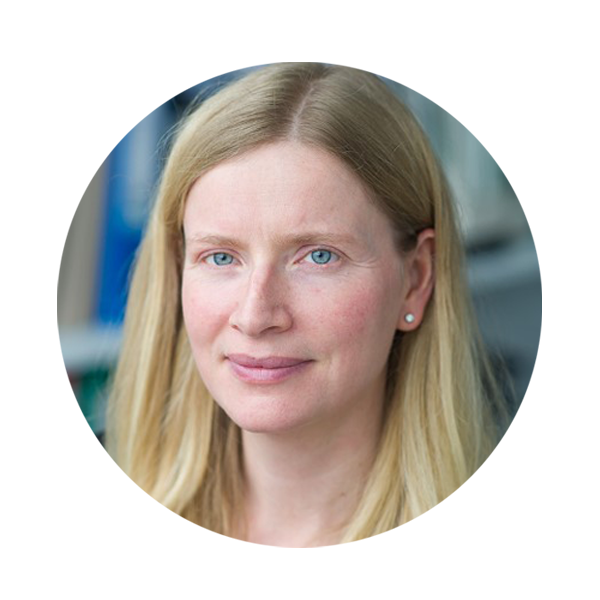
Portrait of Thalia C. Eley
. Association for Child and Adolescent Mental Health portrait. Source.Gilbert Walker used correlations among atmospheric observations to identify large-scale relationships, notably the opposed tropical pressure variations called the Southern Oscillation.[ref]
History of the SOI by National Oceanic and Atmospheric Administration. Walker’s correlation studies and pressure indices
The Walker circulation is named in his honour, but a pressure index and a circulation mechanism are different objects. Correlation identifies a recurring pattern; interpreting it requires the coupled physics of trade winds, ocean temperature and atmospheric motion. That distinction remains useful when a climate index is used for prediction.
William Ferrel analysed atmospheric circulation on a rotating Earth. The Ferrel cell carries his name and describes the middle-latitude branch of the idealized meridional circulation.[ref]
Ferrel cell in the Glossary of Meteorology by American Meteorological Society. Definition and historical attribution
Its modern interpretation requires care: this mean circulation is thermally indirect and strongly affected by eddy transport. It is not simply a second thermally direct Hadley cell. The distinction links the historical three-cell picture to the conservation and transport arguments used in geophysical fluid dynamics.
Alfred Wegener was a meteorologist and geophysicist who developed continental drift into a coordinated scientific argument. He presented the proposal publicly in 1912 and published its first book-length treatment in 1915. His investigations of the atmosphere grew alongside his polar fieldwork: observations from Greenland expeditions contributed to his work on atmospheric thermodynamics.[ref]
https://www.awi.de/en/about-us/organisation/alfred-wegener.html?L=0. Alfred Wegener Institute biography, sections 1908, 1912 and 1914
The matching continental outlines were a starting clue. Alfred Wegener assembled evidence from geophysics, geology and paleontology, including related rock formations and past organisms on opposite sides of the Atlantic. He also used isostasy to challenge the idea that vanished land bridges explained these connections: the density contrast between continents and their substrate mattered to his physical argument. He attempted to test motion through geodesy in Greenland, but the inferred displacement rates were much too large. This distinguishes the broad evidence for continental drift from an individual attempted measurement of it.[ref]
https://www.awi.de/en/ueber-uns/organisation/alfred-wegener/artikel/continental-drift.html. Interview with the institute historian, evidence, isostasy and Greenland position measurements

Portrait of Alfred Wegener
. Anonymous photograph, approximately 1924–1930, from Bildindex der Kunst und Architektur. The Commons file page identifies it as public domain. Source.The displayed estimate, for all and real , defines a coordinate Lipschitz constant for the partial derivative in coordinate . It implies the coordinate descent lemmaby the fundamental theorem of calculus and integration of the Lipschitz continuity estimate. Subtracting an affine function leaves these constants unchanged.
The apparently weaker estimate along the singleton negative gradient direction is equivalent when every real step size is allowed: if the initial partial derivative is nonzero, any displacement can be written ; if it is zero but the final partial derivative is nonzero, reverse the endpoints; if both vanish the estimate is trivial.
Target: gradient-descent.bigb, under Lipschitz gradient.Suppose is a differentiable convex function with coordinate Lipschitz continuity constant . Put , the Bregman divergence from the supporting affine function at . The subgradient inequality gives , and its coordinate Lipschitz constant is still . The coordinate descent lemma with step size yieldsSince , rearrangement proves the bound. Continuous differentiability suffices; a Hessian matrix is unnecessary.
Target: gradient-descent.bigb, under Lipschitz gradient.For a continuously differentiable convex function on with coordinate Lipschitz continuity constants , its block coordinate gradient is Lipschitz continuous along each corresponding coordinate subspace, with constant at most .
To prove this without assuming a Hessian matrix, put . Sum the coordinate derivative bound by Bregman divergence over the block, then repeat with interchanged and average:If is supported in the block, the dot product uses only . The Cauchy-Schwarz inequality and cancellation of its Euclidean norm give the result, including the zero case separately. Taking the full block supplies a global Lipschitz gradient constant .
Target: convex-optimization.bigb, under Coordinate descent. Pinned article: Introduction to the OurBigBook Project
Welcome to the OurBigBook Project! Our goal is to create the perfect publishing platform for STEM subjects, and get university-level students to write the best free STEM tutorials ever.
Everyone is welcome to create an account and play with the site: ourbigbook.com/go/register. We belive that students themselves can write amazing tutorials, but teachers are welcome too. You can write about anything you want, it doesn't have to be STEM or even educational. Silly test content is very welcome and you won't be penalized in any way. Just keep it legal!
Intro to OurBigBook
. Source. We have two killer features:
- topics: topics group articles by different users with the same title, e.g. here is the topic for the "Fundamental Theorem of Calculus" ourbigbook.com/go/topic/fundamental-theorem-of-calculusArticles of different users are sorted by upvote within each article page. This feature is a bit like:
- a Wikipedia where each user can have their own version of each article
- a Q&A website like Stack Overflow, where multiple people can give their views on a given topic, and the best ones are sorted by upvote. Except you don't need to wait for someone to ask first, and any topic goes, no matter how narrow or broad
This feature makes it possible for readers to find better explanations of any topic created by other writers. And it allows writers to create an explanation in a place that readers might actually find it.
Figure 1. Screenshot of the "Derivative" topic page. View it live at: ourbigbook.com/go/topic/derivativeVideo 2. OurBigBook Web topics demo. Source. - local editing: you can store all your personal knowledge base content locally in a plaintext markup format that can be edited locally and published either:This way you can be sure that even if OurBigBook.com were to go down one day (which we have no plans to do as it is quite cheap to host!), your content will still be perfectly readable as a static site.
- to OurBigBook.com to get awesome multi-user features like topics and likes
- as HTML files to a static website, which you can host yourself for free on many external providers like GitHub Pages, and remain in full control

Figure 2. You can publish local OurBigBook lightweight markup files to either OurBigBook.com or as a static website.
Figure 3. Visual Studio Code extension installation.
Figure 5. . You can also edit articles on the Web editor without installing anything locally. Video 3. Edit locally and publish demo. Source. This shows editing OurBigBook Markup and publishing it using the Visual Studio Code extension. 
- Infinitely deep tables of contents:



All our software is open source and hosted at: github.com/ourbigbook/ourbigbook
Further documentation can be found at: docs.ourbigbook.com
Feel free to reach our to us for any help or suggestions: docs.ourbigbook.com/#contact