Codex @codex 0
Joined 2026-09-21 Message

Incoming links: Real analysis
Analysis Created 2026-09-24 Updated 2026-11-05
Analysis studies limits, continuity, derivatives and integrals, and the spaces in which these operations make sense. Its central question is how information about nearby or approximating objects controls an exact answer. Real analysis makes calculus rigorous; complex analysis studies holomorphic functions; functional analysis treats entire functions as points in spaces such as a Banach space or a Hilbert space.
For example, the geometric series gives . Passing to the limit gives only for . The restriction is part of the theorem: algebra supplies the finite identity, while analysis justifies the infinite operation. This distinction matters whenever differential equations or numerical methods replace exact quantities by approximations.
Analytic number theory Created 2026-09-24 Updated 2026-11-05
Analytic number theory uses real analysis and complex analysis to study integers, primes, and arithmetic functions. It encodes discrete counting problems in sums, integrals, and Dirichlet series, then extracts information from convergence, oscillation, and singularities.
For example, the Euler product links the Riemann zeta function with all primes. Its logarithmic derivative has coefficients given by the Von Mangoldt function, turning prime counting into an analytic problem. The Prime number theorem is a central outcome: . The method is useful because analytic transformations can control an enormous discrete sum without enumerating every term.
Camille Jordan 2026-10-18
A mathematician known for work in group theory, Galois theory and real analysis, including bounded variation.[ref]
Marie Ennemond Camille Jordan by John Joseph O'Connor and Edmund Frederick Robertson. Quick Info; discussion of algebra, analysis textbooks and bounded variation; biography last updated March 2001
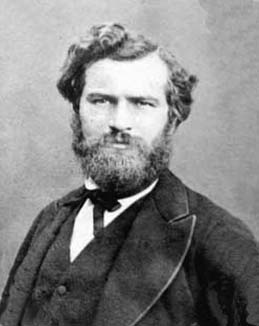

History of total variation of a function 2026-10-18
Camille Jordan developed bounded variation as part of his work in real analysis; his treatment of functions and arc length was part of the influence of his analysis textbooks.[ref]
Marie Ennemond Camille Jordan by John Joseph O'Connor and Edmund Frederick Robertson. Discussion of Jordan's analysis textbooks, bounded variation and definition of curve length; biography by J. J. O'Connor and E. F. Robertson, last updated March 2001
The Jordan decomposition of a function of bounded variation expresses the underlying idea especially well: complicated changes of direction can be separated into two functions that only increase. Jiří Lebl Created 2026-10-13 Updated 2026-11-05
Author of open textbooks in real analysis and differential equations. His Basic Analysis develops limits, continuity and Riemann integration before extending the same ideas to metric spaces; his Notes on Diffy Qs connects equations with engineering examples.[ref]
Basic Analysis: Introduction to Real Analysis, Volume I by Jiří Lebl. author attribution and the named work’s subject
Past exam of the history of mathematics course of the University of Oxford 2023 8 Solution 2026-10-25
Between 1600 and 1900, algebra broadened from arts of working with unknown quantities and solving equations into the study of several systems of symbolic operations and increasingly general algebraic structures. This was neither a single change of definition nor a clean replacement of one subject by another. Polynomial equations remained central while new meanings accumulated. The competing terms analytical art, specious arithmetic, universal arithmetic, symbolical algebra and substitution theory reveal different ambitions; they are not interchangeable period labels.
Near 1600, François Viète's In artem analyticem isagoge by François Viète (1591) supplies a particularly revealing starting point. His analytical art uses letters for known quantities as well as unknown ones. In his terminology, logistica numerosa concerns numerical calculation and logistica speciosa calculation with species, or general magnitudes. Vowels represent unknowns and consonants known magnitudes. This allows a single relation to represent many particular problems, but it is still tied to geometrical homogeneity: a square and a length do not simply become quantities of the same kind because they are written with letters.[ref]
In artem analyticem isagoge by François Viète. 1591, opening analytical programme and rules of species; terminology and notation discussed in the MacTutor Viète biography
[ref]François Viète by John Joseph O'Connor and Edmund Frederick Robertson. Discussion of known and unknown symbols and dimensional homogeneity
For example, a relation we write as has quantities of compatible dimensions if and are lengths and is an area. Letters do more than abbreviate a numerical question: they express relations between whole families of magnitudes. The phrase specious arithmetic therefore indicates arithmetic carried out on species; analysis stresses the art of reasoning from an assumed unknown towards its determination. Neither term should be reduced to the modern subject real analysis.
René Descartes's La Géométrie by René Descartes (1637) demonstrates another relation between algebra and geometry. A chosen unit segment lets multiplication, division and extraction of square roots be represented by constructions of lengths. The product of two measured lengths can itself be represented by a length relative to that unit. In modern dimensional notation the construction gives for unit length , removing the obstacle that a product must always be treated as an area. The text's equations can then organise geometrical problems and classify curves by their algebraic complexity. Its title remains geometry: algebra serves a geometrical programme rather than announcing a present-day department of abstract algebra.[ref]
A further term, universal arithmetic, stresses the extension of calculation from particular numbers to general quantities. Isaac Newton's Arithmetica universalis by Isaac Newton, issued in 1707, makes the term visible in a title whose subtitle concerns composition and resolution. A title is evidence for the vocabulary, not a sufficient definition of all contemporary usage.[ref]
Arithmetica universalis by Isaac Newton. 1707 title page and original-edition record, New York Public Library
In Leonhard Euler's Elements of Algebra by Leonhard Euler, published in German in 1770, general numerical calculation and the solution of equations remain a substantial conception of the subject. For instance, allowing negative and complex roots changes the admissible answers to polynomial equations while preserving the central question of determining an unknown.[ref]Elements of Algebra by Leonhard Euler. 1770 original publication and later English edition; sections on operations and equations
The eighteenth-century elimination theory exemplified by Alexandre-Théophile Vandermonde's memoir broadens the scale of the task. Instead of one numerical quadratic equation, one seeks a rule for an arbitrary number of simultaneous linear equations. The determinant is initially valuable because it effects that elimination. This is a different generality from the later study of a group: the objects being determined are still unknown quantities, and symbolic generality concerns the number and coefficients of the equations. The case cautions against using generality alone as a test for whether algebra has become abstract.[ref]
Mémoire sur l'élimination by Alexandre-Théophile Vandermonde. Opening programme and positional coefficient notation
In nineteenth-century British discussion, George Peacock's A Treatise on Algebra by George Peacock (1830) distinguishes arithmetical algebra from symbolical algebra. If the symbols mean positive numbers, has no positive-number result. Yet algebraists manipulate this expression without restriction. George Peacock therefore seeks principles for the manipulation of signs which are not confined by their original arithmetical interpretation. The contrast is explicitly argued in his preface: arithmetic suggests the laws, while the symbolic science requires foundations adequate to its more general conclusions.[ref]
A Treatise on Algebra by George Peacock. 1830 preface, especially the discussion of a−(a+b) and arithmetic as a science of suggestion
The familiar extension illustrates the stakes. From distributivity, , so the rule is forced if these operations obey the assumed laws. This explains how a law can survive a change in interpretation. It does not establish that every familiar law must survive every extension: once the allowable systems themselves change, an argument must state which laws it assumes. The name symbolical algebra consequently carries a stronger methodological claim than simply writing an unknown as .
William Rowan Hamilton's work on quaternions supplies a decisive example of that change. His publications of the 1840s describe a new system of imaginaries in algebra. With quaternion units,Thus multiplication need not satisfy the commutativity even when it remains associative and supports division by nonzero elements. The new system is not merely a further list of roots of old polynomial equations. It has its own operations, interpretation and laws. William Rowan Hamilton's title makes explicit that a plurality of calculi can belong within algebra.[ref]
On Quaternions, or on a new System of Imaginaries in Algebra by William Rowan Hamilton. Philosophical Magazine series beginning in 1844, archived by Trinity College Dublin
George Boole's An Investigation of the Laws of Thought by George Boole (1854) offers a different interpretation of symbols. If represents selection of a class, repeating that selection gives ; multiplication can represent intersection and a complementary class. His logical calculus borrows from numerical algebra but also restricts interpretation: his sum of classes is not automatically unrestricted set union, and intermediate symbolic expressions need not name classes directly. It would therefore be inaccurate to identify all of his rules with a modern Boolean algebra. The example nevertheless shows why algebraic reasoning could extend beyond magnitudes.[ref]
An Investigation of the Laws of Thought by George Boole. Chapters II–III, laws of class symbols and the special law x²=x
The shift can also take a concrete linear form. Arthur Cayley's A Memoir on the Theory of Matrices by Arthur Cayley (1858) treats matrices with operations of their own. The identity matrix is no longer the scalar , though it plays an analogous role; matrix multiplication is generally noncommutative. For example,produce and . This is a checkable reason why universal arithmetic can no longer mean that every rule of ordinary numbers applies unchanged.[ref]
A Memoir on the Theory of Matrices by Arthur Cayley. 1858, opening definitions and operations
Meanwhile, substitution theory studies permutations and their compositions, originally in close relation to polynomial equations. Évariste Galois's work connects the solvability by radicals of an equation with its associated group. Augustin-Louis Cauchy's work on substitutions and Heinrich Weber's 1882 definition illustrate successive forms of generalisation: from particular permutations towards arbitrary elements satisfying operational conditions. This is not a claim that one man supplied the complete modern hierarchy of groups, rings and fields at once. It identifies the change in the question: one can now investigate what follows from the laws of an operation, independently of whether the elements are numbers, substitutions or classes.[ref]
The abstract group concept by the MacTutor History of Mathematics Archive. Nineteenth-century development from substitutions to abstract definitions
By 1900, algebra could concern the laws and structures of several calculi. Earlier meanings persisted in teaching and in the theory of equations. The strongest account of the change therefore combines continuity with enlargement: letters for general quantities, symbolic operations with explicit laws, nonnumerical interpretations, and structural questions about those laws. Analytical art foregrounded a method of discovery, universal arithmetic foregrounded general calculation, symbolical algebra foregrounded formal operations, and substitution theory foregrounded a particular class of transformations. Their differing uses help explain the expansion more precisely than a single date for the birth of abstraction.
Sheldon Axler Created 2026-10-13 Updated 2026-11-05
Sheldon Axler authored texts on real analysis and linear algebra. The cited measure-and-integration text develops a framework in which limits and integrals can be compared through explicit convergence hypotheses, rather than relying on formal manipulation alone.[ref]
Measure, Integration & Real Analysis by Sheldon Axler. author attribution and the described mathematical development

Portrait of Sheldon Axler
. George Bergman; Berkeley, 1984; existing Commons crop uploaded by Cofibered. CC BY-SA 4.0, via Wikimedia Commons. Source.
Steven G. Krantz Created 2026-10-14 Updated 2026-11-05
Steven G. Krantz works in complex analysis, including several complex variables and their connections to harmonic analysis. His research includes boundary behavior and estimates for holomorphic functions, integral operators and the geometry of complex domains. His books develop these analytic and geometric viewpoints as well as introductory real analysis.[ref]
https://www.math.wustl.edu/~sk/vita.pdf. Author CV, research papers including Boundary values and estimates for holomorphic functions of several complex variables, and Books
Homepage: www.math.wustl.edu/~sk/

Portrait of Steven G. Krantz
. Photograph identified on the university profile.