Ciro Santilli @cirosantilli 40
Joined 2022-11-02 Message

Incoming links: OurBigBook
Home Updated 2026-10-18
Check out: **OurBigBook.com**, the best way to publish your scientific knowledge. It's an open source note taking system that can publish from lightweight markup files in your computer both to a multi-user mind melding dynamic website, or as a static website. It's like Wikipedia + GitHub + Stack Overflow + Obsidian mashed up. Source code: **github.com/ourbigbook/ourbigbook**.
Sponsor me to work on this project. For 1M USD I will quit my job and work on OurBigBook full time for three more years to try and kickstart The Higher Education Revolution. Status: ~44k / 400k USD. At 4M USD I retire/tenure and work on open STEM forever. How to donate: Section "Sponsor Ciro Santilli's work on OurBigBook.com".
I first quit my job 1st June 2024 to work on the project for 1 year after I reached my initial 100k goal mostly via a 1000 Monero donation.
Mission: to live in a world where you can learn university-level mathematics, physics, chemistry, biology and engineering from perfect free open source books that anyone can write to get famous. More rationale: Section "OurBigBook.com"
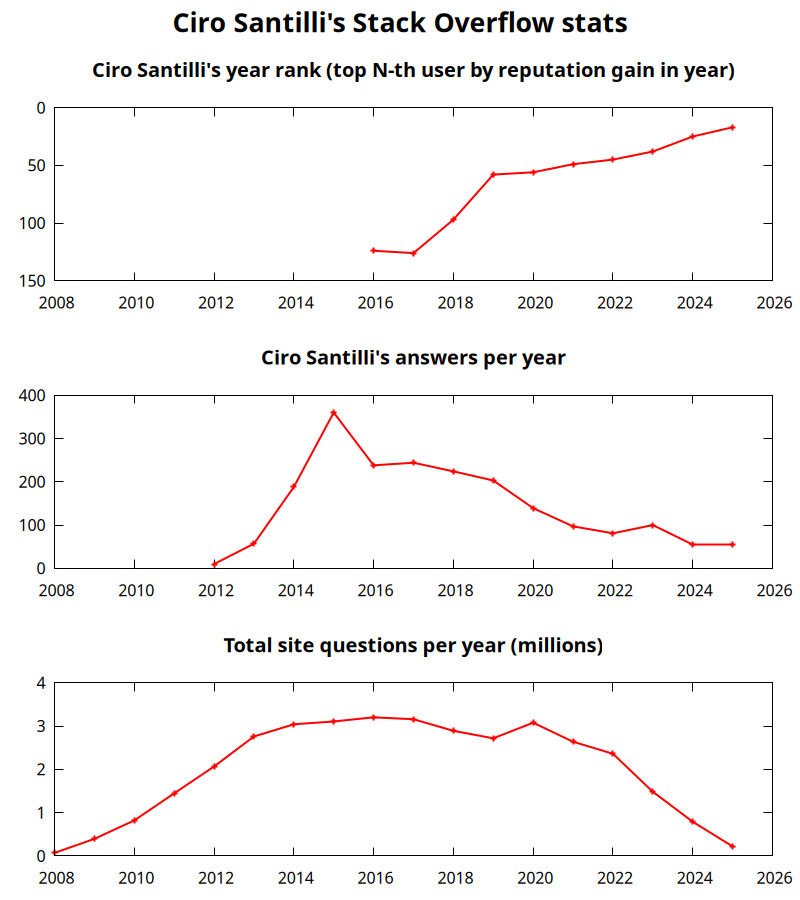
Explaining things is my superpower, e.g. I was top user #17 on Stack Overflow in 2025[ref][ref] and I have a few 1k+ star educational GitHub repositories[ref][ref][ref][ref]. Now I want to bring that level of awesomeness to masters level Mathematics and Physics. But I can't do it alone! So I created OurBigBook.com to allow everyone to work together towards the perfect book of everything.
My life's goal is to bring hardcore university-level STEM open educational content to all ages. Sponsor me at github.com/sponsors/cirosantilli starting from 1$/month so I can work full time on it. Further information: Section "Sponsor Ciro Santilli's work on OurBigBook.com". Achieving what I call "free gifted education" is my Nirvana.
This website is written in OurBigBook Markup, and it is published on both cirosantilli.com (static website), outbigbook.om/cirosantilli (multi-user OurBigBook Web instance) and github.com/cirosantilli/cirosantilli.github.io-md (censorship resistant Markdown render directly on github.com). Its source code is located at: github.com/cirosantilli/cirosantilli.github.io and also at
cirosantilli.com/_dir and it is licensed under CC BY-SA 4.0 unless otherwise noted.To contact Ciro, see: Section "How to contact Ciro Santilli". He likes to talk with random people of the Internet.
GitHub | Stack Overflow | LinkedIn | YouTube | Twitter | Wikipedia | Zhihu 知乎 | Weibo 微博 | Other accounts

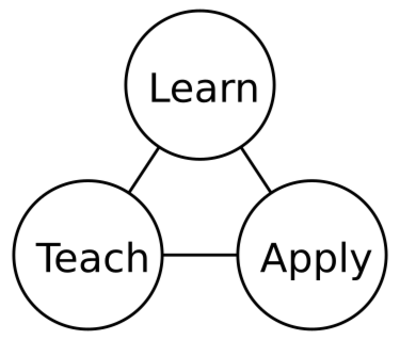
Besides that, I'm also a freedom of speech slacktivist and recreational cyclist. I like Chinese traditional music and classic Brazilian pop. Opinions are my own, but they could be yours too. Tax the rich.
Let's create an educational system with:
- no distinction between university and high school, students just go as fast as they can to what they really want without stupid university entry exams
- fully open source learning material
- on-demand examinations that anyone can easily take without prerequisites
- granular entry selection only for space in specific laboratories or participation in specific novel research projects
I offer:
- online private tutoring for:
- any STEM university course
- passionate younger STEM students (any age) who want to learn university level material and beyond. Can your kid be the next Fields Medalist or Nobel Prize winner? I'm here to help, especially if you are filthy rich! I focus moving students forward as fast as they want on and on producing useful novel tutorials and results
Let your child be my Emile, and me be their Adolfo Amidei, and let's see how far they can go! I will help take your child:and achieve their ambitious STEM goals!- into the best universities
- into the best PhD programs
- educational consulting for institutions looking to improve their STEM courses
- do you know that course or teacher that consistently gets bad reviews every year? I'll work with the teacher to turn the problem around!
- are you looking to create a consistent open educational resources offering to increase your institutions internationally visibility? I can help with that too.
My approach is to:For minors, parents are welcome to join video calls, and all interactions with the student will be recorded and made available to parents.
- propose interesting research projects. The starting point is always deciding the end goal: Section "Backward design"
- learn what is needed to do the project together with the student(s)
- publish any novel results or tutorials/tools produced freely licensed online, and encourage the student to do the same (Section "Let students learn by teaching", digital garden)
I have a proven track of explaining complex concepts in an interesting and useful way. I work for the learner. Teaching statement at: Section "How to teach". Pricing to be discussed. Contact details at: Section "How to contact Ciro Santilli".
I am particularly excited about pointing people to the potential next big things, my top picks these days are:I am also generally interested in:
- quantum computing
- AGI research, in particular AI code generation, automated theorem proving and robotics
- assorted molecular biology technologies
- 20th century physics, notably AMO and condensed matter
- the history of science, and in particular trying to look at seminal papers of a field

The problem with education by Ciro Santilli
. In this video Ciro Santilli exposes his fundamental philosophy regarding why Education is broken. This philosophy was the key motivation behind the failed OurBigBook Project. Source.Introduction to the OurBigBook Project
. Source. OurBigBook Web topics demo
. The OurBigBook topic feature allows users to "merge their minds" in a "sort by upvote"-stack overflow-like manner for each subject. This is the killer feature of OurBigBook Web. More information at: docs.ourbigbook.com/ourbigbook-web-topics. Source.OurBigBook dynamic article tree demo
. The OurBigBook dynamic tree feature allows any of your headers to be the toplevel h1 header of a page, while still displaying its descendants. SEO loves this, and it also allows users to always get their content on the correct granularity. More information at: docs.ourbigbook.com/ourbigbook-web-dynamic-article-tree. Source.OurBigBook local editing and publishing demo
. With OurBigBook you can store your content as plaintext files in a Lightweight markup, and then publish that to either OurBigBook.com to get awesome multi-user features, or as a static website where you are in full control. More information at: docs.ourbigbook.com/publish-your-content. Source.Top Down 2D continuous game with Urho3D C++ SDL and Box2D for Reinforcement learning by Ciro Santilli (2018)
More information: Section "Ciro's 2D reinforcement learning games". This is Ciro's underwhelming stab at the fundamental question: Can AGI be trained in simulations?. This project could be taken much further. Source.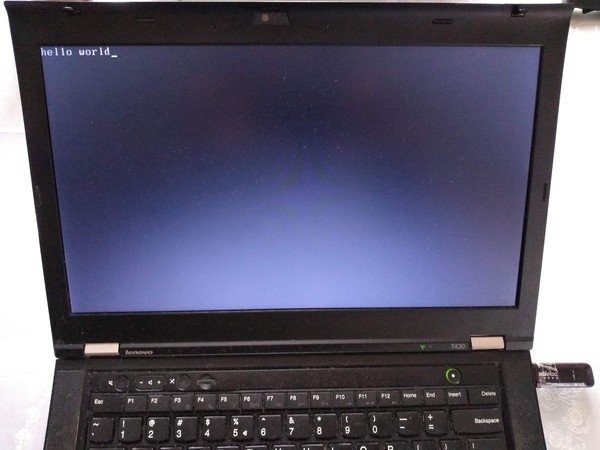
 -------------------------------------
|  Force of Will               3 U U  |
|  ---------------------------------  |
| |                  ////////////   | |
| |                ////() ()\////\  | |
| |               ///_\ (--) \///\  | |
| |        )      ////  \_____///\\ | |
| |       ) \      /   /   /    /   | |
| |    ) /   \     |   |  /   _/    | |
| |   ) \  (  (   /   / /   / \     | |
| |  / ) ( )  / (    )/(    )  \    | |
| |  \(_)/(_)/  /UUUU \  \\\/   |   | |
| .---------------------------------. |
| Interrupt                           |
| ,---------------------------------, |
| | You may pay 1 life and remove a | |
| | blue card in your hand from the | |
| | game instead of paying Force of | |
| | Will's casting cost.  Effects   | |
| | that prevent or redirect damage | |
| | cannot be used to counter this  | |
| | loss of life.                   | |
| | Counter target spell.           | |
| `---------------------------------` |
|                                     l
| Illus.  Terese Nelsen               |
 -------------------------------------
Code 1. .
Artist unknown, uploaded December 2014. Part of Section "Cool data embedded in the Bitcoin blockchain" where Ciro Santilli maintains a curated list of such interesting inscriptions.
This was a small project done by Ciro for artistic purposes that received some attention due to the incredible hype surrounding cryptocurrencies at the time. Ciro Santilli's views on cryptocurrencies are summarized at: Section "Are cryptocurrencies useful?".

YellowRobot.jpgJPG image fully embedded in the Bitcoin blockchain depicting some kind of cut material art depicting a yellow robot, inscribed on January 29, 2017.
Ciro Santilli found this image and others during his research for Section "Cool data embedded in the Bitcoin blockchain" by searching for image fingerprints on every transaction payload of the blockchain with a script.
The image was uploaded by EMBII, co-creator of the AtomSea & EMBII upload mechanism, which was responsible for a large part of the image inscriptions in the Bitcoin blockchain.
The associated message reads:This is one of Ciro Santilli's favorite AtomSea & EMBII uploads, as it perfectly encapsules the "medium as an art form" approach to blockchain art, where even non-novel works can be recontextualized into something interesting, here depicting an opposition between the ephemeral and the immutable.
Chiharu [EMBII's Japanese wife] and I found this little yellow robot while exploring Chicago. It will be covered by tar or eventually removed but this tribute will remain. N 41.880778 E -87.629210
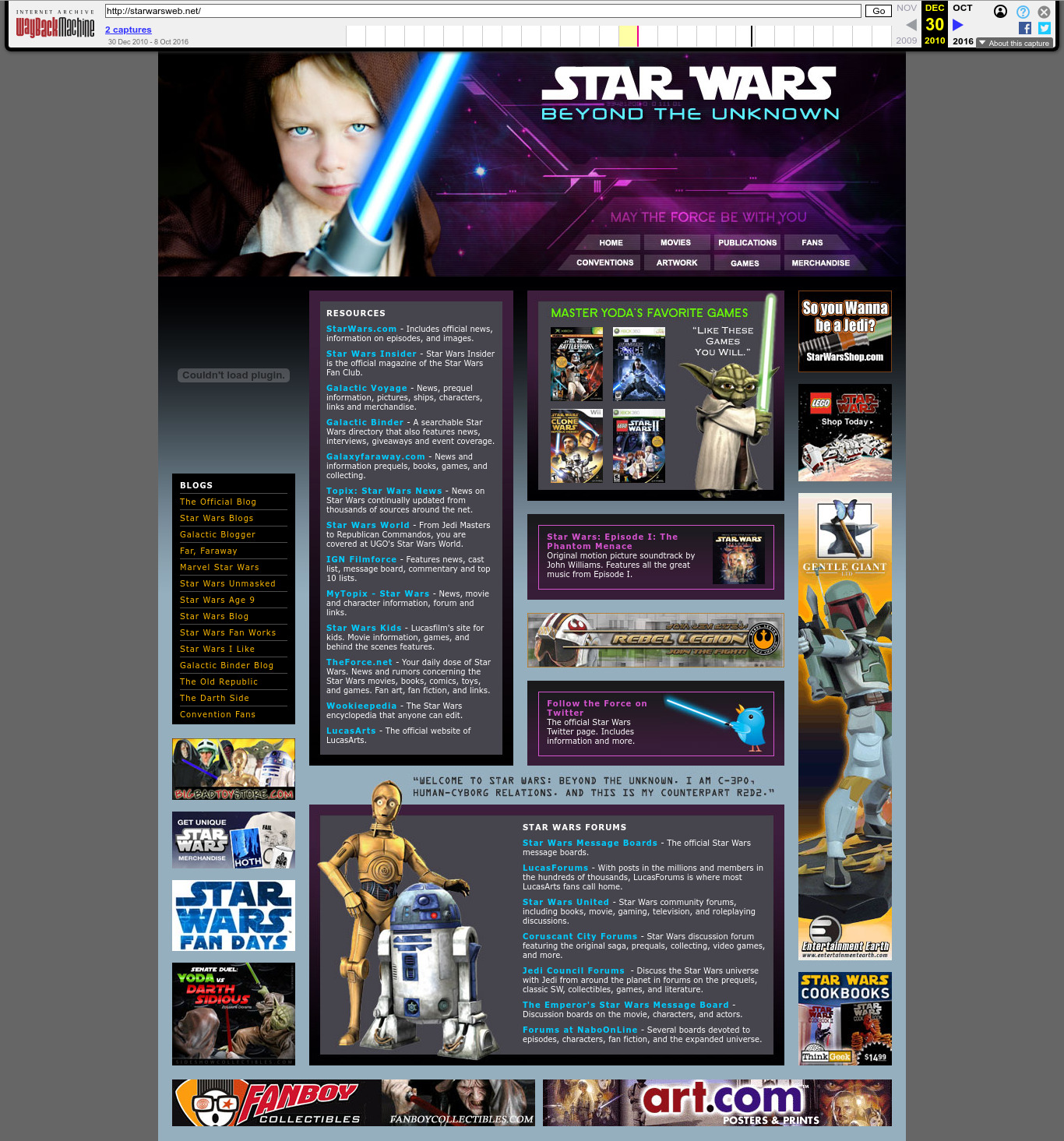
2010 Wayback Machine archive of starwarsweb.net
.This website was used as one of the CIA 2010 covert communication websites, a covert system the CIA used to communicate with its assets. More details at: Section "CIA 2010 covert communication websites".
Ciro Santilli had some naughty OSINT fun finding some of the websites of this defunct network in 2023 after he heard about the 2022 Reuters report on the matter, which for the first time gave away 7 concrete websites out of a claimed 885 total found. As of November 2023, Ciro had found about 350 of them.
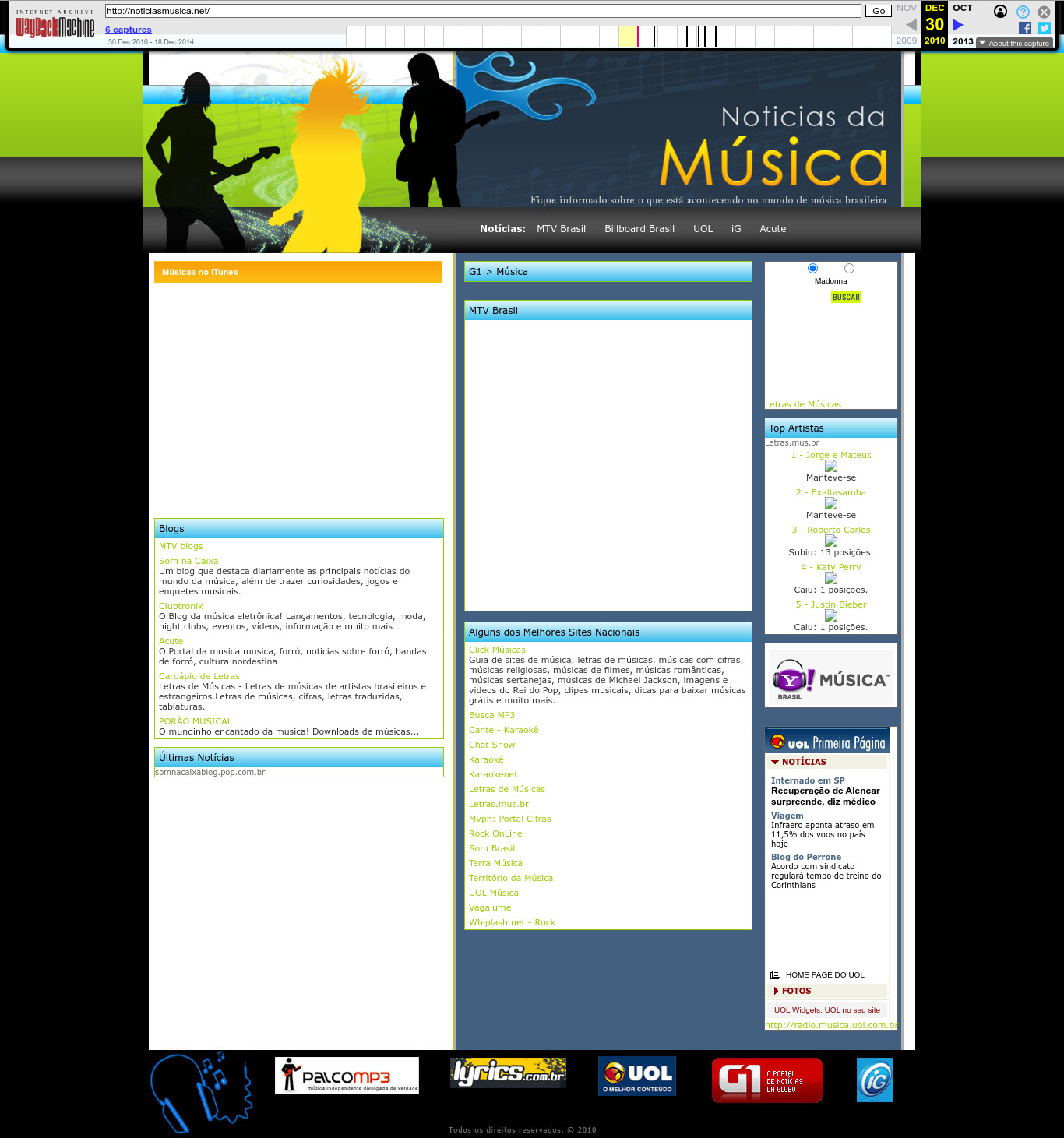
2010 Wayback Machine archive of noticiasmusica.net
.This is another website that was used as one of the CIA 2010 covert communication websites. This website is written in Brazilian Portuguese, and therefore suggests that the CIA had assets in Brazil at the time, and thus was spying on a "fellow democracy".
Although Snowden's revelations made it extremely obvious to the world that the USA spies upon everyone outside of the Five Eyes, including fellow democracies, it is rare to have such a direct a concrete proof of it visible live right on the Wayback Machine. Other targeted democracies include France, Germany, Italy and Spain. More details at: USA spying on its own allies.
This investigative report by Ciro Santilli was featured on the Daily Mail after 404 Media reported on it in 2025.

Diagram of the fundamental theorem on homomorphisms by Ciro Santilli (2020)
Shows the relationship between group homomorphisms and normal subgroups.
Used in the Stack Exchange answer to What is the intuition behind normal subgroups? One of Section "The best articles by Ciro Santilli".

Spacetime diagram illustrating how faster-than-light travel implies time travel by Ciro Santilli (2021)
Used in the Stack Exchange answer to Does faster than light travel imply travelling back in time?. One of Section "The best articles by Ciro Santilli".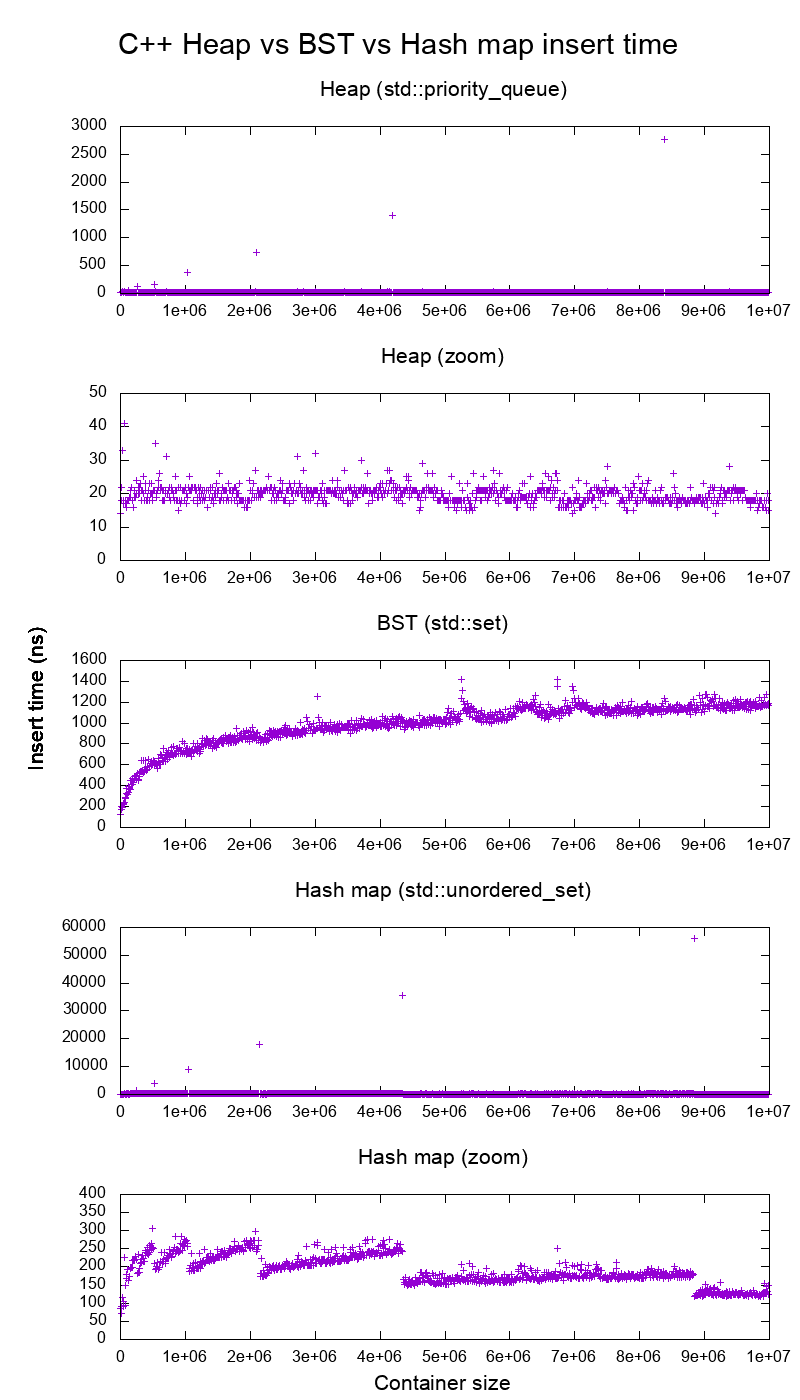
Average insertion time into heaps, binary search tree and hash maps of the C++ standard library by Ciro Santilli (2015)
Used in the Stack Overflow answer to Heap vs Binary Search Tree (BST). One of Section "The best articles by Ciro Santilli". Source.
Top view of an open Oxford Nanopore MinION
. This is Ciro Santilli's hand on the Wikipedia article: en.wikipedia.org/wiki/Oxford_Nanopore_Technologies. He put it there after working a bit on Section "How to use an Oxford Nanopore MinION to extract DNA from river water and determine which bacteria live in it" :-) And he would love to document more experiments like that one Section "Videos of all key physics experiments", but opportunities are extremely rare. Source.A quick 2D continuous AI game prototype for reinforcement learning written in Matter.js, you can view it on a separate page at cirosantilli.com/-/raw/js/matterjs/examples.html#top-down-asdw-fixed-viewport. This is a for-fun-only prototype for Ciro's 2D reinforcement learning games, C++ or maybe Python (for the deep learning ecosystem) seems inevitable for a serious version of such a project. But it is cute how much you can do with a few lines of Matter.js!
HTML snippet:
<iframe src="-/raw/js/matterjs/examples.html#top-down-asdw-fixed-viewport" width="1000" height="850"></iframe> Forester Created 2024-10-12 Updated 2025-07-16
Intro/docs: www.jonmsterling.com/jms-005P.xml. It is very hard to find information in that system however, largely because they don't seem to have a proper recursive cross file table of contents.
This is the project with the closest philosophy to OurBigBook that Ciro Santilli has ever found. It just tends to be even more idealistic than, OurBigBook in general, which is insane!
"Docs" at: www.jonmsterling.com/foreign-forester-jms-005P.xml Sample repo at: github.com/jonsterling/forest but all parts of interest are in submodules on the authors private Git server.
Example:
- sample source file: git.sr.ht/~jonsterling/public-trees/tree/2356f52303c588fadc2136ffaa168e9e5fbe346c/item/jms-005P.tree
- appears rendered at: www.jonmsterling.com/foreign-forester-jms-005P.xml
Author's main social media account seems to be: mathstodon.xyz/@jonmsterling e.g. mathstodon.xyz/@jonmsterling/111359099228291730 His home page:
They have
\Include like OurBigBook, nice: www.jonmsterling.com/jms-007L.xml, but OMG that name \transclude{xxx-NNNN}!! It seems to be possible to have human readable IDs too if you want: www.jonmsterling.com/foreign-forester-armaëlguéneau.xml is under trees/public/roladex/armaëlguéneau.tree.Headers have open/close:OurBigBook considered this, but went with
\subtree[jms-00YG]{}parent= instead finally to avoid huge lists of close parenthesis at the end of deep nodes.One really cool thing is that the headers render internal links as clickable, which brings it all closer to the "knowledge base as a formal ontology" approach.
The markup has relatively few insane constructs, notably you need explicit open paragraphs everywhere
\p{}?! OMG, too idealistic, not enough pragmatism. There are however a few insane constructs:The markup is documented at: www.jonmsterling.com/foreign-forester-jms-007N.xml
Jon has some very good theory of personal knowledge base, rationalizing several points that Ciro Santilli had in his mind but hadn't fully put into words, which is quite cool.
OCaml dependency is not so bad, but it relies on actually LaTeX for maths, which is bad. Maybe using JavaScript for OurBigBook wasn't such a bad choice after all, KaTeX just works.
Viewing the generated output HTML directly requires
security.fileuri.strict_origin_policy which is sad, but using a local server solves it. So it appears to actually pull pieces together with JavaScript? Also output files have .xml extension, the idealism! They are reconsidering that though: www.jonmsterling.com/foreign-forester-jms-005P.xml#tree-8720.The Ctrl+K article dropdown search navigation is quite cool.
\rel and \meta allows for arbitrary ontologies between nodes as semantic triples. But they suffer from one fatal flaw: the relations are headers in themselves. We often want to explain why a relation is true, give intuition to it, and refer to it from other nodes. This is obviously how the brain works: relations are nodes just like objects.They do appear to be putting full trees on every toplevel regardless how deep and with JavaScript turned off e.g.:
which is cool but will take lots of storage. In OurBigBook Ciro Santilli only does that on OurBigBook Web where each page can be dynamically generated.
History of Facebook Updated 2025-09-09
Facebook's original niche was college, and that was cool. Then it became this more diluted and irrelevant thing. If only they had added knowledge sharing to it, OurBigBook would have been done then and there.
From 2005: Four young internet entrepreneurs by CBS Sunday Morning
. Source. MacArthur Fellows Program Created 2025-06-12 Updated 2025-12-02
Holy fuck what a eye watering amount, $800k over 5 years as of 2025, this is exactly what Ciro Santilli would need to push forward OurBigBook! He also fits the requirements quite well, as a "creative person". For Americans or US residents only though, sad. Outdated requirement given the Internet age.
Obsidian (software) Updated 2025-07-16
Good:
- WYSIWYG
- Extended-Markdown-based
- help.obsidian.md/Getting+started/Sync+your+notes+across+devices they do have a device sync mechanism
- it watches the filesystem and if you change anything it gets automatically updated on UI
- help.obsidian.md/links#Link+to+a+block+in+a+note you can set (forcibly scoped) IDs to blocks. But it's not exposed on WYSIWYG?
Bad:
- forced ID scoping on the tree as usual
- no browser-only editor, it's just a local app apparently:
- obsidian.md/publish they have a publish function, but you can't see the generated websites with JavaScript turned off. And they charge you 8 dollars / month for that shit. Lol.
- block elements like images and tables cannot have captions?
- they kind of have synonyms: help.obsidian.md/aliases but does it work on source code?

OurBigBook.com Updated 2025-10-27
The website is the reference instance of OurBigBook Web, which is part of the OurBigBook Project, the other main part of the project are software that users can run locally to publish their content such as the OurBigBook CLI.
The project documentation is present at: docs.ourbigbook.com#ourbigbook-web-user-manual
Intro to the OurBigBook Project
. Source. 

OurBigBook's weird specialization towards the weird overly niche interests of its creator Ciro Santilli, notably "I want to create the perfect documentation for every atom in the universe, is undoubtedly partly to blame for the project's failure to gain even a single user outside of its own creator.
OurBigBook.com Knowledge graph editors Updated 2025-07-16
A list of reviews of such systems is maintained at:
This is the class of existing software the perhaps comes the closest to OurBigBook, in particular systems such as:
- Roam Research and its open source clone Foam
- Forester
While we believe that OurBigBook can hold its own against most of them as a personal knowledge base, there is one feature which we believe truly distinguishes OurBigBook from all others in a big way: trustless mind meld with the OurBigBook topic feature, which no other system seems to have.
Many such systems are also no publishing focused enough, and are more focused only in maintaining people's private knowledge bases. Some of them don't even have publishing at all, or its complicated. While publishing is optional in OurBigBook, it is a crucial feature and extremely well supported.
Saylor Academy Updated 2025-07-16
This is an interesting initiative which has some similarities to Ciro Santilli's OurBigBook project.
The fatal flaw of the initiative in Ciro Santilli's opinion is the lack of user-generated content. We will never get there without UGC and algorithms, never.
Also as of 2021, it mostly useless business courses: learn.saylor.org unfortunately.
But it has several redeeming factors which Ciro Santilli aproves of:
- exam as a service-like
- they have a GitHub: github.com/saylordotorgo
The founder Michael J. Saylor looks a bit crooked, Rich people who create charitable prizes are often crooked comes to mind. But maybe he's just weird.
Michael Saylor interview by Lex Fridman (2022)
Source. At the timestamp:What statement... maybe he's actually not crooked, maybe it was just an accounting mistake... God, why.
When I go, all my assets will flow into a foundation, and the foundation's mission is to make education free for everybody forever.
If only Ciro Santilli knew how to contact him and convince him that his current approach is innefective and that Ciro has something better! Michael, please Google into this page some day, Ciro Santilli needs funding for OurBigBook.com. A hopeless Tweet at: twitter.com/cirosantilli/status/1548350114623660035. Also tried to hit his
[email protected]. Sponsor Ciro Santilli's work on OurBigBook.com Updated 2026-10-18
Ciro Santilli is actively looking for donations and contracts so he can continue to work full time on OurBigBook.com sustainably, and develop free hardcore university-level STEM education for all ages!
For 1M USD I will quit my job to work on OurBigBook for three more years to try and kickstart The Higher Education Revolution. Status: ~44k / 1M USD. MacArthur fellowship wink. At 4M USD I retire and work on open STEM forever.
I first quit my job 1st June 2024 to work on the project for 1 year after I reached my initial 100k goal mostly via a 1000 Monero donation. In this first year I improved project tech, but didn't go and solve university courses to create super targeted content, and didn't obtain a single contributing user except myself, see a summary at Section "OurBigBook Project Update March 2025". Day job total compensation as of August 2026 for reference: 205k USD/year. This may be inflated by the AI bubble. I try to keep the value up to date on LinkedIn: www.linkedin.com/in/cirosantilli/
For a followup, it would be an interesting experiment to spend on year full time solving as many courses as I can from a world class university in the city where I live in the UK, and adding that as content to the platform to see if that would attract interest, and reaching out directly to course takers at their university environment to try and help them. I intended to do that in year one but my got distracted by tech. It is quite possible that no one has ever done that before in history: a highly motivated technical person with the time and opportunity to do one single thing: help top university students learn their STEM courses better and have more fun doing so. I have in particular identified one course where this would be particularly feasible: the mathematics course, given that much of their course materials, and also their building are quite open. I do sometimes wonder if doing this would be just a waste of my life. But part of me tells me it could generate big interest and is worth a try. It would also be fun for you to watch me continue to commit career seppuku.
At 4M USD I retire and work on open STEM projects forever. At these timelines, I can't guarantee it will be specifically on education technology specifically all the way, but I guarantee that whatever it is it will be open and extremely well explained as usual.
It's necessary to be slightly underemployed if you are to do something significant - James Watson
Total donations to date ~144k USD. Donation breakdown:More details: Section "Accounting method"
- 2024-03-18: $126,352 (!!!): anonymous 1000 Monero donation to self-custody wallet. Further comments: Section "1000 Monero donation"
- 2024-03-13: $1,375: anonymous 10 Monero donation to self-custody wallet
- 2023-11-20: $14.563: anonymous 100 Monero donation to Binance wallet
- 2023-09: $810: anonymous 0.032 Bitcoin donation to Coinbase wallet
- subscriptions up to 2024-01: $143,795
Note to potential anonymous crypto donors: I live in the UK, and after some fun back and forth that included Barclays freezing my account for one week at one point, Barclays finally decided that they do not allow me to receive further anonymous donations. And I'm pretty sure that the same would happen on any other British bank sooner or later. Therefore, while I continue to accept anonymous donations, they will not count towards my "if I get X I do Y"-type donation goals, since I can't reliably spend that money. If you want to donate in crypto, and clearly give me your real identity and an explanation of how you got the money, then that is fine, it can count. Just be warned that I will need to give that information to my bank and clear it with them beforehand, and if they are still not happy with it, I'll just give it all back. Your identity does not have to be publicly disclosed, only the dates and amounts. But my bank has to know. Now, if you still want to donate a "retirement level amount" and treat me as a guinea pig in "find the best country for money laundering", well, go for it. But I make no promises! I don't want my children to grow up in shitcountries.
How to give:And if you have a different preferred payment mechanism not listed above, please contact Ciro, and he will set it up.
- one time donations:
- cryptocurrency: note that Ciro is not a regular crypto user, so you might want to make a smaller test donation and confirm that it worked by contacting Ciro before going for colossal amounts (one can dream):
- Monero address: 4A1KK4uyLQX7EBgN7uFgUeGt6PPksi91e87xobNq7bT2j4V6LqZHKnkGJTUuCC7TjDNnKpxDd8b9DeNBpSxim8wpSczQvzf. Secret view key: 7ccaf885ff5540b0ff18927e6ac5da30130afb1eaee09ad95d3c4536a6337e0f. This is a self-custody wallet on a "clean" dedicated Monero laptop connected the Internet. I check for incoming transactions from my dirty main laptop via a view-only wallet each weekend. The cash out method used is latest simplest thing that wasn't yet blocked in my country on a given week, the last time that was centralized swappers[ref]. The fact that the cash out method changes weekly confirms that Monero privacy hadn't yet been broken by countries and that Monero is still one of the most useful cryptocurrencies: Section "Are cryptocurrencies useful?". For transparency, I announce all non-trivial transactions on social media, and the full list of transactions can be seen by anyone with the secret view key provided. I previously had different addresses, so pre-existing donations on older addresses will not be visible there.
- Bitcoin address: 3KRk7f2JgekF6x7QBqPHdZ3pPDuMdY3eWR. This is a Coinbase wallet, off-chain transactions with no transaction fees accepted from other Coinbase users. This method has been tested, I have been able to receive funds from this address in 2023. Fees: non-fixed trading fees[ref] + 0% withdrawal fee on top of any Bitcoin network for on-chain transactions[ref]
- Ethereum address: 0x44cF8C9C015F46d3b2Df730b6492823FD7A91044. Test transaction recommended.
- **Solana** address: DjdaGawoVFdqxJEqpBGsSWuR4G4MVFNiNkAEu89HuKcE. Test transaction recommended.
- **USDC** address: 0x1dFABf2cdE6384f6Fdd4e6Dae3B9FA2d323e6F95
- TransferWise tag: wise.com/pay/me/cirod3. No fees apparently? Love it!
- PayPal: paypal.me/cirosantilli. Note that dots in Gmail address are ignored, and it is perfectly normal if the email you see has some extra dots in it. Fees: 2.9% + 0.30 GBP[ref].
- bank transfer: prove you are rich and you can have my bank details :-)
- cryptocurrency: note that Ciro is not a regular crypto user, so you might want to make a smaller test donation and confirm that it worked by contacting Ciro before going for colossal amounts (one can dream):
- monthly subscriptions of 1$/month or more on either:Symbolic 1 dollar/month donation are extremely welcome to signal your interest! This way if a certain critical mass of sponsors is ever reached (~100?), Ciro can start to more actively asking slightly higher amounts to really try to achieve full time self sufficiency.
- GitHub Sponsors: github.com/sponsors/cirosantilli. Fees: 0% for individuals, up to 6% for organizations[ref]
- Patreon: www.patreon.com/cirosantilli. Fees: 8% pro plan + 1% PayPal withdrawal capped at 20 USD[ref]. We are waiting to reach the cap to withdraw!
- larger grants/contracts from filthy rich individuals or organizations: contact Ciro as mentioned at: Section "How to contact Ciro Santilli" to discuss.Ciro is interested in contracts/voluntary work that would be compatible/synergic with the OurBigBook.com project. Some possibilities include:
- interacting directly with classes of university students to help them learn the class subject, while at the same time spreading the university knowledge outside of the university walls
- one-to-one mentoring of individuals of any age that are looking to make an impact in the world, and not just pass their exams
- fixing specific bugs in related projects Ciro has experience in. These could be either via one-off contracts, or on platforms such as:
Ciro's current ambitions require him to remain in developed countries, because Ciro wants to document advanced science and technology by liaising with top universities, and there is not nearly as much high technology in poor countries. Remaining in developed countries is also a required due to family reasons.
If you would like public acknowledgement for your support, Ciro will very gladly give it, just let Ciro know how you'd prefer it. Due to Ciro Santilli's campaign for freedom of speech in China, many supporters have chosen to be anonymous, and that is totally fine, not everyone is interested in politics, or has a situation where going public is acceptable, so we don't have a standard setup yet, let's build it together. A acknowledgement section at the bottom of this page would be a minimum, but I for larger donations we could add a your advertisement in a locations such as:
- near the top of of the accounts controlled by Ciro Santilli, e.g. one of Ciro Santilli's Twitter accounts, github.com/cirosantilli or stackoverflow.com/users/895245
- near the top of cirosantilli.com
The problem with education by Ciro Santilli
. In this video Ciro Santilli exposes his fundamental philosophy regarding why Education is broken. This philosophy was the key motivation behind the failed OurBigBook Project. Source.Intro to the OurBigBook Project
. Source. 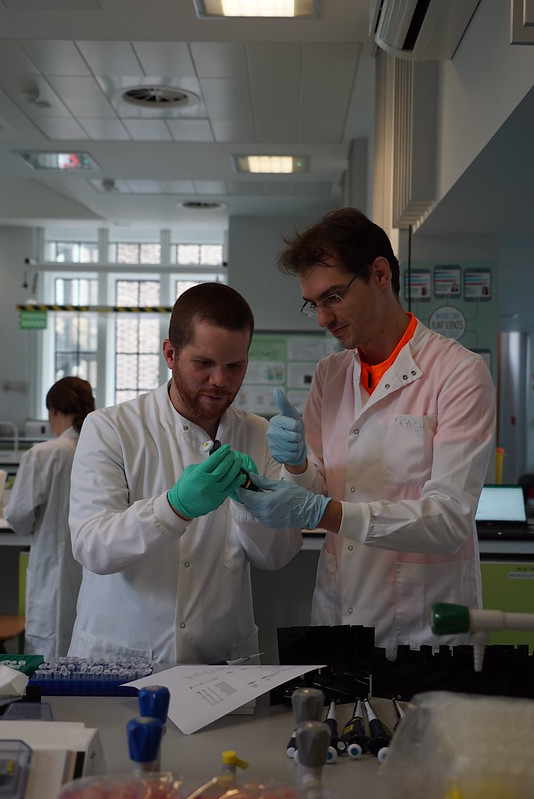
Although totally disqualified for it, Ciro would really like to understand and explain cool scientific experiments in insane detail much as he does with computer software, related:
Maybe if he ever gets enough credibility, such opportunities would actually materialize. It could be a bit like Periodic Videos, but for molecular biology and physics, and backed by OurBigBook text/tree with minimal openly licensed videos. The fact that such opportunities are essentially impossible outside of the boredom of the university system is something we should really change about education.
Sponsor Ciro Santilli's work on OurBigBook.com Progress updates Updated 2025-11-21
Ciro Santilli wants to make sure that you get clear highlights of what your donation money is going into!Sponsors also receive the "Ciro's Edit" email newsletter if desired, which contains similar updates to the above, but delivered directly to their inbox.
Suitable Technologies Created 2024-08-02 Updated 2025-07-16
Scott Hassan's shitty telepresence robot startup. Looking at the demos it is so painfully obvious why they failed, that feeble tall screen on wheels. But hindsight is 20/20... It is almost as bad as OurBigBook.
The most notable usage of the product is Snowden Snowbot, which is sad, the product name seems to have been "Beam". Who would use that if not for theatrics with an exilee when everyone already has a screen in front of their face all the time?[ref]
At least this phase produced some of the only videos of Hassan in existence such as:He's got a perfect american accent, so likely not a first generation immigrant.
Trillium Notes Updated 2025-07-16
Originally at github.com/zadam/trilium, then after development stopped the community took it up at: github.com/TriliumNext/Notes.
Tree based organization at last. Infinitely deep.
Amazing WYSIWYG, including maths and tables, plus insane plugins like canvas mode, and specific file formats like code/mermaid diagrams/drawing mode.
Intentionally or not, they've basically made an open source Notion, with the possible exception that Notion historically started on web and moved to the desktop, while Trillium went the other way round.
Version history with automatic snapshots at intervals. TODO how is it implemented? Do they just ZIP multiple versions?
No multiuser features. Except for that, could have been a good starting point of an online multiuser thing such as OurBigBook.com!
With Book Notes it is possible possible to see more than one page at a time on the output, which his a major feature of OurBigBook. But does it show on HTML export as well?
You can static HTML export any subtree by right clicking on it in the navigation tree.
HTML export keeps all data as HTML is their native format. This may be inherited from CKEditor. The files are mostly visible, but there is some CSS missing, it is not 100% like editor, notably math is broken. There is also a hosted way of exposing: github.com/zadam/trilium/wiki/Sharing.
trilium.rocks however has a very good export, it is just a question of how much they had to hacked things, source at: github.com/zerebos/trilium.rocks
The default tHTML export uses frame navigation, with a toc fixed on the left frame. Efficient, but not of this century.
There is no concept of user created unique text IDs: you can have the same headers in the same folders in the UI. It's not even a matter of scopes. On exports they are differentiated as
1_name, 2_name, etc../Trilium Demo/Books/To read/1_HR.md
./Trilium Demo/Books/To read/2_HR.md
./Trilium Demo/Books/To read/HR.mdMarkdown export warns:
this preserves most of the formatting
Architecture: runs on local SQLite database via better-sqlite3. Data apparently stored in SQLite database at
~/.local/share/trilium-data, no raw files.Markup is stored as HTML as seen from:
sqlite3 document.db 'SELECT * from note_contents'. HTML is their native storage format, quite interesting. But this means it is not source centric, so any source editing would have to go via import/export. It can be done apparently: github.com/zadam/trilium/wiki/Markdown but involves shoving a ZIP around.WYSIWYG based on ckeditor.com/ which is a dependency. It is kind of cool that the view in which you view the output is exactly the same as the one you edit in, and there is no intermediate format, just the HTML.
Math is KaTeX based.
It also runs on the browser via a server: github.com/zadam/trilium/wiki/Server-installation. And they have a paid service for it at: trilium.cc/. Quite impressive.
They have server to from desktop sync: github.com/zadam/trilium/wiki/synchronization. There is no conflict resolution, one of them wins randomly. But they have revision history, and anything lost will be in the revision history. They have so many features it is mind blowing.
Maintainer announced he would be slowing down development since January 2024: github.com/zadam/trilium/issues/4620?ref=selfh.st
University is broken Updated 2025-07-16
You just have to spend a few minutes with students until they complain about the courses or teachers. And you just have to spend a few hours with teachers until they complain about the students or broader system.
University is broken, and everyone knows it. The only question now is finding a viable, "political cash flow positive" path, into something better.
Bibliography:
- academeblog.org/2022/10/05/american-universities-are-going-to-implode/ American Universities Are Going to Implode (2022) by www.linkedin.com/in/jsgabin/
- theimaginativeconservative.org/2020/04/higher-education-implode-alexander-zubatov.html Higher Education Is About to Implode by Alexander Zubatov (2020)
- 2024-05-28 www.theguardian.com/education/article/2024/may/28/i-see-little-point-uk-university-students-on-why-attendance-has-plummeted ‘I see little point’: UK university students on why attendance has plummetedGive it to me, baby. OurBigBook incoming.
"There’s a bit of a feeling that there is just box-ticking going on [among students], and getting a degree at the end of it."
Updates Generating test data for full text search tests Created 2024-12-23 Updated 2025-07-16
For example, at docs.ourbigbook.com/news/article-and-topic-id-prefix-search article search was added, but it only finds if you search something that appears right at the start of a title, e.g. for:you'd get a hit for:but not for
Fundamental theorem of calculusfundamentalcalculusBut finding a clean way to generate test data for testing out the speedup was not so easy and exploration into this led me to publishing a few new slightly improved methods where Googlers can now find them:
- unix.stackexchange.com/questions/97160/is-there-something-like-a-lorem-ipsum-generator/787733#787733 I propose a neat random "sentence" generator using common CLI tools like
grepandsedand the pre-installed Ubuntu dictionary/usr/share/dict/american-english:grep -v "'" /usr/share/dict/american-english | shuf -r | paste -d ' ' $(printf "%4s" | sed 's/ /- /g') | sed -e 's/^\(.\)/\U\1/;s/$/./' | head -n10000000 \ > lorem.txt- to achieve that, I also proposed two superior "join every N lines" method for the CLI: stackoverflow.com/questions/25973140/joining-every-group-of-n-lines-into-one-with-bash/79257780#79257780, notably this awk poem:
seq 10 | awk '{ printf("%s%s", NR == 1 ? "" : NR % 3 == 1 ? "\n" : " ", $0 ) } END { printf("\n") }'
- to achieve that, I also proposed two superior "join every N lines" method for the CLI: stackoverflow.com/questions/25973140/joining-every-group-of-n-lines-into-one-with-bash/79257780#79257780, notably this awk poem:
- stackoverflow.com/questions/3371503/sql-populate-table-with-random-data/79255281#79255281 I propose:
- a clean PostgreSQL random string stored procedure that picks random characters from an allowed character list
CREATE OR REPLACE FUNCTION random_string(int) RETURNS TEXT as $$ select string_agg(substr(characters, (random() * length(characters) + 1)::integer, 1), '') as random_word from (values('ABCDEFGHIJKLMNOPQRSTUVWXYZabcdefghijklmnopqrstuvwxyz0123456789- ')) as symbols(characters) join generate_series(1, $1) on 1 = 1 $$ language sql; - first generating PostgreSQL data as CSV, and then importing the CSV into PostgreSQL as a more flexible method. This can also be done in a streaming fashion from stdin which is neat.
python generate_data.py 10 | psql mydb -c '\copy "mytable" FROM STDIN'
- a clean PostgreSQL random string stored procedure that picks random characters from an allowed character list
- stackoverflow.com/questions/16020164/psqlexception-error-syntax-error-in-tsquery/79437030#79437030 regarding the safe generation of prefix search
tsqueryfrom user inputs without query errors, I've learned aboutwebsearch_to_tsqueryand further highlighted a possibletsquery -> text -> tsqueryapproach that might be correct for prefix searches - stackoverflow.com/questions/67438575/fulltext-search-using-sequelize-postgres/79439253#79439253 I put everything together into a minimal Sequelize example, read for usage in OurBigBook
Finally I did a writeup summarizing PostgreSQL full text search: Section "PostgreSQL full-text search" and also dumped it at: www.reddit.com/r/PostgreSQL/comments/12yld1o/is_it_worth_using_postgres_builtin_fulltext/ for good measure.
In any case, the outcome of that is that the tech has improved. And I have done a relatively good job of clearly publishing any "more user visible" improvements to docs.ourbigbook.com/news and social media such as though it is important to note that there have been more than one "fix a hard bug" weeks that were not published because they would just bore readers.
During this period the main focus has been on improving OurBigBook Web, i.e. the dynamic website that powers OurBigBook.com. There are two reasons for that:As a result, Web is now way less buggy and much more usable.
- Web is what has the OurBigBook topics feature for mind-melding, which is the killer feature of OurBigBook compared to other note taking apps and therefore deserves the highest levels of priorityStatic website generation is an indispensable escape valve that ensures that your content can be published forever even if OurBigBook.com goes down one day, which it won't as long as I live. But the innovation is Web.
- static website generation was closer to good enough, but web was much further and is fundamentally harder.I'm extremely satisfied with OurBigBook static website generation and haven't touched it as much. It wasn't easy to reach this state, but I'm there.But Web is a different and much more complex beast.Making CLI software that will run on a person's local computer under full trust and building a bunch of HTML from lightweight markup in bulk is one thing.But making a public dynamic website that has to continuously maintain a coherent database state on granular updates, while giving users some trust but not enough for them to blow everything up is on a totally different level. See e.g. the recent SPAM attack we've had to fend off.And then there's also the issue of front-end being mega-hard to get right.

If you look through the list of Web updates, there is nothing specifically mind blowing. The core ideas have largely crystallized, and we are just trying to making them click. I have a few more punches up my sleeve, but the core is decided.

OurBigBook Web search
. Source. This is one of the many basic quality of life improvements that have been done on OurBigBook Web.
OurBigBook Web article announcement
. Source. Another cute new feature, you can send an email to your followers about a new amazing article you created.Web process has been somewhat slower than what I'd like. Of course, it is the case of any project that things are easily said than done. But there are two other main structural factors that have played into it:
- For example, we could have put him on childcare a bit earlier, but due to inexperience we've kept him a bit longer than we maybe should have.Things are well sorted out now, but not matter how good your support system is, at the end of the day, and more often night, it is you the parents that have to deal with a lot of inevitable baby issues. Unless you want them to turn into psychopaths and drug addicts that is, which I don't. I've reached the point of semi failure middle age that the baby feels like my best moonshot.But at least with the donations I was able to work on OurBigBook at all. Because if it weren't for that, I would have to focus entirely on the generic job instead and OurBigBook would have been put on hold.
- the choice of Web stack. I was allured by Next.js. I can see the beauty and usefulness of a Node.js render front-end that also runs on backend and hydration. That is awesome.But:
- React is insanely hard to learn and understand. Furthermore, it is also hard to understand the performance problem that it solves, and actually have a benchmark where this problem is solved faster than just delivering some HTML files with ad-hoc Js on top.
- the lack (or perhaps excess of shitty) actual web framework like Ruby on Rails and Django means that I have to rediscover the wheel many times over for all the essential support activities like testing, login and so one
At this point a rewrite is out of the question. I've managed to master things well enough to get a decent result, and given up on the few things that I couldn't for the life of me achieve, after documenting them very well for posterity of course.
Aside from Web, there was only one thing that received a significant improvement, and that was the OurBigBook VS Code extension. The extension is not perfect, and it is not the "final UI", which has to be some WYSIWYG implementation, and there are some fundamental limitations that cannot be overcome without patching VS Code itself. However, the extension is already extremely usable, and I'm writing this on it right now. Basics like syntax highlighting, jump to definition and autocomplete are very useful and usable.

Long story short, the project is so far a complete failure on the most important metric: number of regular users, which current sits at exactly one: myself.
There were notable users who found the project online and who actually tried to use the website for some content and provided extremely valuable feedback:Unfortunately after the period of a few weeks they stopped using it to follow their other priorities instead. Which is of course totally fine, however sad.
I still believe that the OurBigBook Web feature is a significant tech innovation that could make the website go big.
I also believe that the project gets many fundamentals of braindumping right, notably the infinitely deep table of contents without forced scoping, e.g.:does not make Calculus have an ID orr URL of
- Mathematics
- Calculusmathematics/calculus, rather it's just calculus.
But there is a fundamental difficulty in reaching critical mass to that self-sustaining point, as people don't seem to be convinced by these logical "my system is better" argument alone, as opposed to having them Google into stuff they need now and then understand that the project is awesome.
A closely related critical mass issue is that existing big multiuser knowledge base websites such as Stack Overflow and Wikipedia have a tremendous advantage on PageRank. No matter how useless a Wikipedia article about something is, it will always be on top of Google within a week of creation for title hits. And since the main goal of publishing your stuff is to get it seen, it makes much more sense for writers to publish on such existing websites whenever possible, because anywhere else it is way way less likely to be seen by anybody.
Even I end up writing way more on Stack Overflow than on OurBigBook as a programmer. But I still believe that there is a value to OurBigBook, for the usual reasons of:
Perhaps what saddens me the most is that even on GitHub stars/Twitter/Hacker news terms there is almost no interest in the project despite the fact that I consider that it has innovations, while many other note taking apps as well in the thousands of stars. Maybe I'm just delusional and all the tech that I'm doing is completely useless?
Part of the issue is probably linked to the fact that most other note taking apps focus on "help me organize my ideas so I can make more money" and often completely ignore "I want to publish my knowledge", and stuff that helps you make money is always easier to sell and promote.
OurBigBook on the other hand a huge focus on "I want to publish me knowledge". It aims almost single mindedly in being the best tool ever for that. However this doesn't make money for people, and therefore there are going to be way less potential users.
I do believe strongly that all it takes is a few users for the project to snowball. For some people, once you start braindumping, it is very addictive, and you never want to stop basically. So with only a few of those we can open large parts of undergrad knowledge to the world. But these people are few, and so far I haven't been able to find even a single one like me, and on top of that convince them that I have created the ultimate system for their knowledge publishing desires.
Another general lesson is that I should perhaps aimed for greater compatibility with existing systems such as Obsidian. Taking something that many people already know and use can have a huge impact on acceptance. E.g. anything that touches Obsidian can reach thousands of stars: github.com/KosmosisDire/obsidian-webpage-export. Note taking apps that aim for "markdown" compatibility also tend to fare better, even if in the end you inevitably have to extend the Markdown for some of your features. And WYSIWYG, which I want but don't have, is perhaps the ultimate familiarity.
Another issue compared to other platforms is that OurBigBook just came out late. Obsidian launched in 2020. Roam Research and Trillium Notes also came earlier. And it is hard to fight the advantage already gained by those on the "I'm going to take some personal notes" area. I do believe however that there a strong separation between "these are my personal notes" and "I want to publish these". Once you decide to publish your knowledge, you immediately start to write in a different way, and it is very hard to convert pre-existing "private" notes into ones suitable for public consumption.
I shouldn't be doing this on funded OurBigBook time which is until the end of May, but I was getting too nervous and decided to start a casual job search to test the waters.
In particular I want to see if I can get past the HR lady step without toning down my online profiles. If nothing works out for the next round I'll be hiding anything too spicy like:Another interesting point is to see if French companies are more likely to reply given that Ciro Santilli studied at École Polytechnique which the French worship.
- prominently seeking funding for OurBigBook on my LinkedIn profile
- CIA 2010 covert communication websites references. This will be my first job hunt since I have published that article. Wish me luck.
- gay Putin profile picture on Stack Overflow

Gay Putin, currently used in Ciro Santilli's Stack Overflow profile
. Ciro's profiles may be a bit too much for the HR ladies who reject his job applications on the spot. To be fair, perhaps not enough years of experience for certain applications and job hopping may have something to do with it too. But since they don't ever tell you anything not to get sued, we'll never know.I'm looking in particular either for:
- machine learning-adjacent jobs in companies that seem to be doing something that could further AGI, e.g. automatic code generation or robotics would be ideal
- quantum computing
- systems programming, which is what I actually have work experience with
I spent the last two weeks doing that:
- one week browsing everything of interest in London and Paris and sending applications to anything that seemed both relevant and interesting. Maintaining an application list at: Section "Job application by Ciro Santilli".
- one week on a very laborious but somewhat interesting take home exercise for Linux kernel engineer a Canonical, makers of Ubuntu.I had a week to finish 5 practical coding and packaging questions, and I tried to do everything as perfectly as possible, but I somewhat underestimated the amount of work and wait needed to do everything and didn't manage to finish question 4 and missed 5. Oops let's see how that goes.At least this had a few good outcomes for the Internet as I tried to document things as nicely as I could where they were missing from Google as usual:
- I re-tested Linux Kernel Module Cheat and made some small improvements. Things still worked from a Ubuntu 24.10 host (using Docker to Ubuntu 22.04), and I also checked that kernel 6.8 builds and GDB step debugs after adding the newly required config
CONFIG_DEBUG_INFO_DWARF_TOOLCHAIN_DEFAULT, also mentioned that at: Why are there no debug symbols in my vmlinux when using gdb with /proc/kcore? - I contributed some simple updates to github.com/martinezjavier/ldd3 getting it closer to work on Linux kernel v6.8. That repository aims to keep the venerable examples from Linux kernel module book LDD3 alive on newer kernels, and is a very good source for kernel module developers.
- How to compile a Linux kernel module?: wrote a quick Ciro-approved tutorial
- Dynamic array in Linux kernel module: I gave an educational example of a dynamic byte array (like std::string) using the kvmalloc family of allocators
- quickemu: this is a good emulator manager and I think I'll be using it for Ubuntu images when needed from now on. I wrote:
- How to run Ubuntu desktop on QEMU?: an introductory tutorial to the software as their README is not that good as is often the case. It's hard for project authors to predict what new users want or not. This is my second answer to this question, the previous one focusing on a more manual approach without third party helpers.
- How to share folder between guest/host? (Quickemu): I explained how to setup a 9p mount to share a directory between guest and host
- Error :: You must put some 'source' URIs in your sources.list: updated this answer for Ubuntu 24.04. This issue comes up when you want to do either of:which don't work by default, and my answer explains how to do it from the GUI and CLI. The CLI method is specially important for Docker images. Since Ubuntu doesn't offer a stable CLI method for this, the method breaks from time to time and we have to find the new config file to edit.
sudo apt build-dep sudo apt source - What is hardware enablement (HWE)?: I learned a bit better how Ubuntu structures its kernel releases for each Ubuntu release
Some of the main issues I had were:- compiling Linux kernel for Ubuntu is extremely slow. I was used to compiling for embedded system with Buildroot, which finishes in minutes, but for Ubuntu is hours, presumably because they enable as many drivers as possible to make a single ISO work on as many different computers as possible, which makes sense, but also makes development harder
- my QEMU setup for Ubuntu was not quite as streamlined and I relearned a few things and set up quickemu. By chance I had recently come across quickemu for testing OurBigBook on MacOS, but I had to learn a bit how to set it up reasonably too
- I re-tested Linux Kernel Module Cheat and made some small improvements. Things still worked from a Ubuntu 24.10 host (using Docker to Ubuntu 22.04), and I also checked that kernel 6.8 builds and GDB step debugs after adding the newly required config


Updates Quick fun with the Common Crawl web graph Created 2025-02-26 Updated 2025-11-05
github.com/cirosantilli/cirosantilli.github.io/issues/198. Previously at: stackoverflow.com/questions/31321009/best-more-standard-graph-representation-file-format-graphson-gexf-graphml/79467334#79467334 but Stack Overflow fucking deleted the question.
My general motivation for this is that a PageRank-like algorithm could be useful for more accurate user and article ranking on OurBigBook, see: Section "PageRank-like ranking"
But it could also be just generally cool to apply it to other graph datasets, e.g. for computing an Wikipedia internal PageRank.
Then I had a look at the Common Crawl web graph data to see if I could easily calculate it myself, and... they already have it! See: Section "Common Crawl web graph official PageRank"
Their graph dumps are in BVGraph graph file format, which is the native format of the WebGraph framework, which implements the format and algorithms such as PageRank.
The only thing I miss is a command line interface to calculate the PageRank. That would be so awesome.
Announcements:
In cc-main-2024-25-dec-jan-feb-domain-ranks.txt:
cirosantilli.comwas ranked ~453kourbigbook.comwas at ~606k