Topics (119k) Articles (119k) Users (288) Discussions (237) Comments (383) Files (715) New article

- youtu.be/29aTqLvRia8?t=714 GlobalFoundries seems to be one of the leaders at the time. E.g. quantum computing company PsiQuantum uses them. Part of this was from acquiring IBM's microelectronics division in 2014.
- youtu.be/t0yj4hBDUsc?t=566 mentions the paper Deep learning with coherent nanophotonic circuits
- youtu.be/t0yj4hBDUsc?t=440 block diagram
- youtu.be/t0yj4hBDUsc?t=456 Lightmatter lightmatter.co/ seems to be using an in-silicon Mach-Zehnder interferometer to do analog matrix multiplication with light. It is an actual analog computer element!
Silicon Photonics for Extreme Computing by Keren Bergman (2017)
Source. The knowledge that light is polarized precedes the knowledge of the existence of the photon, see polarization of light for the classical point of view.
The polarization state and how it can be decomposed into different modes can be well visualized with the Poincaré sphere.
One key idea about photon polarization is that it carries angular momentum. Therefore, when an electron changes orbitals in the Schrödinger equation solution for the hydrogen atom, the angular momentum (as well as energy) change is carried out by the polarization of the photon!
- clear animations showing how two circular polarizations can make a vertical polarization
- a polarizer can be modelled bra operator.
- light polarization experiments are extremely direct evidence of quantum superposition. Individual photons must be on both L and R states at the same time because a V filter passes half of either L or R single photons, but it passes all L + R photons
In it, each of the six sides has a clear and simple to understand photon polarization state, either of:
The sphere clearly suggests for example that a rotational or diagonal polarizations are the combination of left/right with the correct phase. This is clearly explained at: Video "Quantum Mechanics 9b - Photon Spin and Schrodinger's Cat II by ViaScience (2013)".

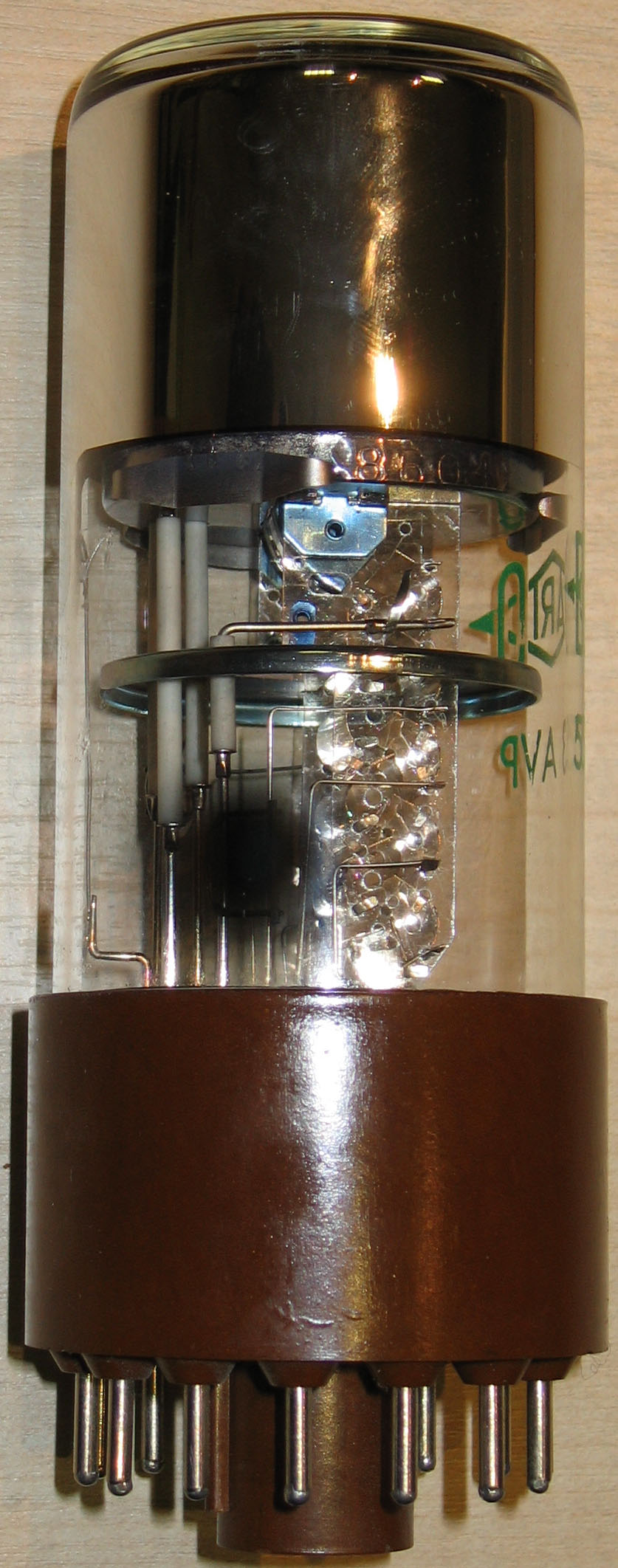
Can be used to detect single photons.
Richard Feynman likes them, he describes the tube at Richard Feynman Quantum Electrodynamics Lecture at University of Auckland (1979) at one point.
It uses the photoelectric effect multiple times to produce a chain reaction. In particular, as mentioned at youtu.be/5V8VCFkAd0A?t=74 from Video 1. "Using a Photomultiplier to Detect single photons by Huygens Optics" this means that the device has a lowest sensitive light frequency, beyond which photons don't have enough energy to eject any electrons.
Here is a vendor showcasing their device. They claim in that video that a single photon is produced and detected:
Concrete device described at: Video "How to use an SiPM - Experiment Video by SensLTech (2018)".
Pinned article: Introduction to the OurBigBook Project
Welcome to the OurBigBook Project! Our goal is to create the perfect publishing platform for STEM subjects, and get university-level students to write the best free STEM tutorials ever.
Everyone is welcome to create an account and play with the site: ourbigbook.com/go/register. We belive that students themselves can write amazing tutorials, but teachers are welcome too. You can write about anything you want, it doesn't have to be STEM or even educational. Silly test content is very welcome and you won't be penalized in any way. Just keep it legal!
Intro to OurBigBook
. Source. We have two killer features:
- topics: topics group articles by different users with the same title, e.g. here is the topic for the "Fundamental Theorem of Calculus" ourbigbook.com/go/topic/fundamental-theorem-of-calculusArticles of different users are sorted by upvote within each article page. This feature is a bit like:
- a Wikipedia where each user can have their own version of each article
- a Q&A website like Stack Overflow, where multiple people can give their views on a given topic, and the best ones are sorted by upvote. Except you don't need to wait for someone to ask first, and any topic goes, no matter how narrow or broad
This feature makes it possible for readers to find better explanations of any topic created by other writers. And it allows writers to create an explanation in a place that readers might actually find it.
Figure 1. Screenshot of the "Derivative" topic page. View it live at: ourbigbook.com/go/topic/derivativeVideo 2. OurBigBook Web topics demo. Source. - local editing: you can store all your personal knowledge base content locally in a plaintext markup format that can be edited locally and published either:This way you can be sure that even if OurBigBook.com were to go down one day (which we have no plans to do as it is quite cheap to host!), your content will still be perfectly readable as a static site.
- to OurBigBook.com to get awesome multi-user features like topics and likes
- as HTML files to a static website, which you can host yourself for free on many external providers like GitHub Pages, and remain in full control

Figure 2. You can publish local OurBigBook lightweight markup files to either OurBigBook.com or as a static website.
Figure 3. Visual Studio Code extension installation.
Figure 5. . You can also edit articles on the Web editor without installing anything locally. Video 3. Edit locally and publish demo. Source. This shows editing OurBigBook Markup and publishing it using the Visual Studio Code extension. 
- Infinitely deep tables of contents:




All our software is open source and hosted at: github.com/ourbigbook/ourbigbook
Further documentation can be found at: docs.ourbigbook.com
Feel free to reach our to us for any help or suggestions: docs.ourbigbook.com/#contact