Topics (384k) Articles (398k) Users (410) Discussions (242) Comments (383) Files (13k) New article

A physicist whose teaching and research address pattern formation in systems away from equilibrium. His notes on the Turing instability show how a spatially uniform chemical state can resist uniform perturbations yet become unstable when diffusion is included. Linear stability analysis separates the reaction dynamics from the wavelength-dependent effect of diffusion, explaining how a preferred spatial pattern can develop.[ref]
Notes on the Turing Instability and Chemical Instabilities by Michael Cross. Introduction and Turing Instability section: two-component reaction–diffusion equations and linearized modes
An experimental atomic physicist who coauthored the realization of a single bosonic Josephson junction from two weakly coupled Bose-Einstein condensates in a double-well potential. The experiment measured the density in each well and inferred the relative phase from interference fringes. It distinguished oscillatory transfer from interaction-induced macroscopic quantum self-trapping, where an initial population imbalance persists despite the coupling.[ref]
An experimental physicist who coauthored the 1964 report of quantum interference in Josephson junctions. The work belongs to the experimental development of superconducting quantum interference devices: a superconducting circuit converts sensitivity to phase and magnetic flux into an electrical signal. It connects the Josephson effect with precision magnetic measurements.[ref]
Quantum Interference Effects in Josephson Tunneling by R. C. Jaklevic and others. Original report, Physical Review Letters 12, pp. 159–160; byline and title
An experimental particle physicist who, with Bruno Rossi, compared the decay of cosmic-ray muons selected by their penetrating power. The less energetic group decayed more rapidly than the more penetrating group, consistent with time dilation. Using absorbers to separate momentum ranges turned naturally occurring particles into a test of the rate of moving clocks.[ref]
Variation of the Rate of Decay of Mesotrons with Momentum by Bruno Rossi and David B. Hall. Abstract: lead-range groups and momentum-dependent decay rate
A researcher in dynamical stability who, with Mark Levi, analyzed a particle in a rotating saddle trap. Rapid rotation can stabilize motion even though the stationary saddle is unstable. Their calculation also finds a slow precession, represented in the averaged equations by a Coriolis-like force in the laboratory frame. This links dynamic stabilization to the behavior of a Foucault pendulum and distinguishes a rotating potential from a particle constrained to a rotating surface.[ref]
Rotating saddle trap as Foucault's pendulum by Oleg N. Kirillov and Mark Levi. Abstract and introduction: stabilization, laboratory-frame precession and distinction between mechanical models
A theoretical physicist who, with Martin Bodo Plenio, introduced entanglement catalysis in transformations of pure quantum states. An auxiliary entangled state can enable a conversion by local operations and classical communication that would otherwise be impossible, yet be returned unchanged. The example shows why the possibilities of manipulating quantum entanglement cannot be described by a single notion of how much entanglement a state contains.[ref]
Entanglement-assisted local manipulation of pure quantum states by Daniel Jonathan and Martin B. Plenio. Abstract: catalytic transformations and finite-state entanglement concentration
Martin Bodo Plenio and Daniel Jonathan showed that a shared auxiliary entangled state can enable a deterministic LOCC conversion that is impossible for the original pair of pure quantum states alone. The auxiliary quantum state is returned unchanged and uncorrelated with the output, so it acts as a catalyst for entanglement catalysis. The key distinction is between consuming an extra resource and using one that can be recovered: a majorization obstruction for the original Schmidt coefficients can disappear after including the catalyst's Schmidt coefficients.[ref]
Entanglement-assisted local manipulation of pure quantum states by Daniel Jonathan and Martin B. Plenio. Abstract and explicit catalytic pure-state conversion

Portrait of Martin Bodo Plenio
. Rickinasia. CC BY-SA 4.0, via Wikimedia Commons. Source.Eli Yablonovitch proposed using a three-dimensional periodic dielectric to inhibit spontaneous emission. If an electronic transition lies inside a complete photonic band gap, the surrounding material supplies no propagating electromagnetic modes at that frequency. The proposal therefore treats spontaneous emission as a process controlled by both the emitter and its electromagnetic environment. It motivated engineering photonic crystals to control light and to reduce unwanted radiative processes; a complete gap is a stronger condition than blocking propagation in only one direction.[ref]

Portrait of Eli Yablonovitch
. Stimmy88. CC BY-SA 3.0, via Wikimedia Commons. Source.A theoretical optical physicist associated with the Van Cittert-Zernike theorem. Propagation from an extended incoherent source can produce spatial coherence, with the coherence pattern related to the source's angular brightness distribution. This connects a measurable interference contrast to source size and underlies astronomical interferometry.[ref]
Die wahrscheinliche Schwingungsverteilung in einer von einer Lichtquelle direkt oder mittels einer Linse beleuchteten Ebene by Pieter Hendrik van Cittert. Original 1934 paper on the statistical field distribution from direct or lens-mediated illumination
A theoretical condensed matter physicist who tested whether double exchange alone could explain transport in doped manganites. His 1995 collaboration showed that the spin-dependent hopping model failed to reproduce important features of measured electrical resistivity, and proposed a crucial role for the electron-phonon interaction. The work illustrates how solving a plausible model can reveal which physical ingredient it lacks.[ref]
Double Exchange Alone Does Not Explain the Resistivity of La1-xSrxMnO3 by A. J. Millis and others. Abstract: comparison with resistivity data and proposed lattice coupling
An experimental condensed matter physicist researching excitons and their possible Bose-Einstein condensation. His review with G. M. Kavoulakis traces experiments in copper(I) oxide, where early spectroscopic and transport signatures were reinterpreted after Auger recombination became better understood. This history illustrates why an apparent condensation signal must be checked against mechanisms that remove or heat excitons.[ref]
Bose-Einstein Condensation of Excitons in Cu2O: Progress Over Thirty Years by David Snoke and G. M. Kavoulakis. Abstract: experimental history, reinterpretation of early claims and Auger losses
A theoretical condensed matter physicist who coauthored, with David Snoke, a study of the experimental search for exciton Bose-Einstein condensation in copper(I) oxide. Their analysis emphasizes Auger recombination, a density-dependent loss mechanism that complicates interpretation of spectroscopic evidence. Understanding the loss processes is necessary before assigning collective quantum behavior to a dense exciton gas.[ref]
Bose-Einstein Condensation of Excitons in Cu2O: Progress Over Thirty Years by David Snoke and G. M. Kavoulakis. Abstract: Auger process and reassessment of earlier condensation claims
An experimental physicist who coauthored a 2006 demonstration of an exciton-polariton condensate in a semiconductor microcavity. The experiment combined a large occupation of the lowest state with increasing temporal coherence and spatial coherence and emerging polarization, rather than relying on bright emission alone. The paper identifies Kasprzak's work on thermalization, condensation and polarization buildup.[ref]
Bose-Einstein condensation of exciton polaritons by J. Kasprzak and others. Abstract and author contributions: J.K.'s thermalization, condensation and polarization work
Victor Weisskopf developed a statistical treatment of particle emission from highly excited heavy atomic nuclei. His 1937 paper compares the process with evaporation: the excitation energy is shared among many internal quantum states, and the available final states constrain which particles can escape with which energies. This connects nuclear level density with emission probabilities and approximately thermal-looking outgoing spectra. Nuclear evaporation supplies a way to predict the aggregate outcome of a complicated nuclear reaction without following every individual internal trajectory.[ref]
Statistics and Nuclear Reactions by Victor Weisskopf. 1937 abstract, statistical emission probabilities and evaporation analogy

Portrait of Victor Weisskopf
. GFHund; photograph from Friedrich Hund’s estate, prepared for Wikipedia in August 2010. CC BY 3.0, via Wikimedia Commons. Source.A nuclear physicist who authored guidelines for evaluating measured nuclear-structure data. The evaluator's task is to reconcile measurements into an internally consistent set of energy levels, nuclear spins, parities and transition properties, while distinguishing a firm assignment from a tentative one. Such work makes a nuclear-data table an assessed physical model rather than a list of unexamined measurements.[ref]
Guidelines for Nuclear Structure Evaluators by Murray J. Martin. Sections on adopted levels, spin/parity arguments and electromagnetic transition strengths
Jerome A. Orosz coauthored a dynamical model of Cygnus X-1 that combines optical light curves, companion-star radial velocities, rotational broadening and a distance constraint to infer the black hole's mass.[ref]
The Mass of the Black Hole in Cygnus X-1 by Jerome A. Orosz and others. Abstract: photometric/spectroscopic constraints and binary model
The measurements constrain different parts of the binary geometry. Radial motion alone leaves an inclination dependence; stellar size and light-curve information help determine the scale and orientation. The quoted paper is a specific historical analysis, so its parameter estimates should not be mistaken for an automatically current calibration.
A theoretical condensed matter physicist who coauthored a dilute-magnon description of field-induced ordering in . Its mean-field theory connected the measured magnetization to Bose-Einstein condensation. The magnetic field permits the excitation population to vary, providing a grand canonical ensemble setting for condensation physics.[ref]
Bose-Einstein Condensation of Dilute Magnons in TlCuCl3 by Tetsuro Nikuni and others. Abstract: mean-field magnetization and grand-canonical interpretation
Masaki Oshikawa coauthored a theory interpreting field-induced Néel order in thallium copper chloride as Bose-Einstein condensation of dilute magnons. An applied magnetic field changes the energy cost of these magnetic excitations, allowing their population to become large enough for collective ordering. The 2000 work compared a dilute-boson mean-field theory with the measured temperature dependence of magnetization. This provides a connection between an insulating magnet and the collective quantum mechanics of a gas of bosons, without requiring the magnetic material to become a fluid.[ref]
Bose-Einstein Condensation of Dilute Magnons in TlCuCl3 by Tetsuro Nikuni and others. Physical Review Letters 84, 5868–5871, abstract and dilute-boson interpretation
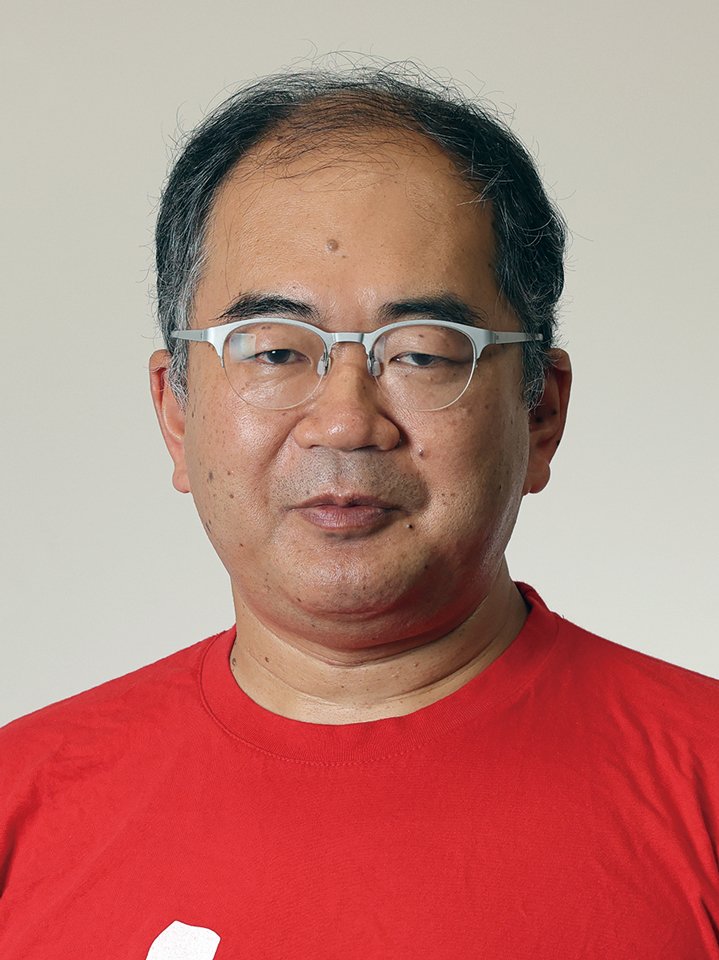
Portrait of Masaki Oshikawa
. External portrait hosted by Institute for Solid State Physics, University of Tokyo. Source.An experimental condensed matter physicist whose measurements of field-induced ordering in motivated a magnon Bose-Einstein condensation interpretation. The subsequent collaborative model reproduced the unusual temperature dependence of magnetization, linking an experimentally measured bulk response to a dilute gas of magnetic excitations.[ref]
Bose-Einstein Condensation of Dilute Magnons in TlCuCl3 by Tetsuro Nikuni and others. Abstract and cited Oosawa et al. experiment, Journal of Physics: Condensed Matter 11, 265 (1999)
An experimental condensed matter physicist associated with measurements of field-induced antiferromagnetism in . With Akira Oosawa, Tetsuro Nikuni and Masaki Oshikawa, he connected this ordering to Bose-Einstein condensation of magnons: varying the magnetic field controls a gas of magnetic excitations in a solid.[ref]
Bose-Einstein Condensation of Dilute Magnons in TlCuCl3 by Tetsuro Nikuni and others. Author list and abstract: observed ordering interpreted as magnon condensation
Pinned article: Introduction to the OurBigBook Project
Welcome to the OurBigBook Project! Our goal is to create the perfect publishing platform for STEM subjects, and get university-level students to write the best free STEM tutorials ever.
Everyone is welcome to create an account and play with the site: ourbigbook.com/go/register. We belive that students themselves can write amazing tutorials, but teachers are welcome too. You can write about anything you want, it doesn't have to be STEM or even educational. Silly test content is very welcome and you won't be penalized in any way. Just keep it legal!
Intro to OurBigBook
. Source. We have two killer features:
- topics: topics group articles by different users with the same title, e.g. here is the topic for the "Fundamental Theorem of Calculus" ourbigbook.com/go/topic/fundamental-theorem-of-calculusArticles of different users are sorted by upvote within each article page. This feature is a bit like:
- a Wikipedia where each user can have their own version of each article
- a Q&A website like Stack Overflow, where multiple people can give their views on a given topic, and the best ones are sorted by upvote. Except you don't need to wait for someone to ask first, and any topic goes, no matter how narrow or broad
This feature makes it possible for readers to find better explanations of any topic created by other writers. And it allows writers to create an explanation in a place that readers might actually find it.
Figure 1. Screenshot of the "Derivative" topic page. View it live at: ourbigbook.com/go/topic/derivativeVideo 2. OurBigBook Web topics demo. Source. - local editing: you can store all your personal knowledge base content locally in a plaintext markup format that can be edited locally and published either:This way you can be sure that even if OurBigBook.com were to go down one day (which we have no plans to do as it is quite cheap to host!), your content will still be perfectly readable as a static site.
- to OurBigBook.com to get awesome multi-user features like topics and likes
- as HTML files to a static website, which you can host yourself for free on many external providers like GitHub Pages, and remain in full control

Figure 2. You can publish local OurBigBook lightweight markup files to either OurBigBook.com or as a static website.
Figure 3. Visual Studio Code extension installation.
Figure 5. . You can also edit articles on the Web editor without installing anything locally. Video 3. Edit locally and publish demo. Source. This shows editing OurBigBook Markup and publishing it using the Visual Studio Code extension. 
- Infinitely deep tables of contents:




All our software is open source and hosted at: github.com/ourbigbook/ourbigbook
Further documentation can be found at: docs.ourbigbook.com
Feel free to reach our to us for any help or suggestions: docs.ourbigbook.com/#contact