Topics (384k) Articles (398k) Users (410) Discussions (242) Comments (383) Files (13k) New article
Serialization maps structured program data into a representation that can be stored or transmitted, often a sequence of bytes. Deserialization reconstructs data according to that format. A useful format must specify which values and distinctions it preserves; writing an object's display text is not automatically a reversible encoding. JSON is one textual interchange format, with ordered arrays and objects whose member names are strings.[ref]
In Python, let
value = {"coords": [2, 5], "ready": True}. Calling json.dumps(value, sort_keys=True, separators=(",", ":"), allow_nan=False) produces {"coords":[2,5],"ready":true}. Encoding this string with UTF-8 gives 29 bytes; json.loads reconstructs a value equal to value. Here serialization connects a nested runtime value, text and an explicit character encoding.[ref]Python 3.14 documentation. json module, Basic Usage; JSONEncoder and JSONDecoder conversion tables
The preservation claim is deliberately specific. If
coords originally contains the tuple (2, 5), the default JSON round trip produces a list instead. Equality of the chosen first example therefore proves neither preservation of every runtime type nor preservation of object identity. Format design requires deciding which such distinctions matter.Data validation checks a value against stated requirements, such as an allowed data type, range or relationship between fields. Parsing establishes how input fits a syntax; an application's validation rules determine whether the resulting value is suitable for its purpose. In Python,
json.loads performs JSON deserialization, but it does not know a particular application's requirements.[ref]For an original example, suppose a program accepts an exact Python integer object from 0 through 10. Its validation predicate is
type(x) is int and 0 <= x <= 10. After JSON decoding, inputs 0, 3 and 10 pass; -1, 11, "3", true and 3.0 fail. All are valid JSON texts. The last input becomes a floating-point object, so this particular rule rejects it even though its numerical value is integral. A different application could deliberately accept it.The rule must therefore be explicit about its intended distinction. Converting every input to an integer before checking would change what is accepted and could lose information. Validating after such conversion answers a different question from checking the original decoded data type.
Computational chemistry uses numerical models to predict or interpret chemical structure, energetics and dynamics. Electronic calculations may approximate the Schrödinger equation through Hartree-Fock theory or density functional theory; molecular simulations can instead evolve nuclei using an approximate potential.
A geometry optimization searches for a stationary point on a potential energy surface, while a vibration calculation examines its local curvature. These are different tasks: a converged numerical solution need not be an accurate physical prediction, and a stationary structure need not be the global energy minimum. Method, basis, environment and uncertainty therefore belong with a reported computed result.
Crystal chemistry connects a crystalline material's composition, chemical bonds and atomic arrangement. It asks which coordination numbers, local geometries and substitutions are compatible with an observed crystal structure.
For example, the usual sodium chloride structure gives each ion six nearest oppositely charged neighbours, whereas the usual caesium chloride structure has eight. Charge balance constrains composition, while size, bonding and thermodynamic conditions influence which arrangement is stable. Ionic-size rules are useful guides rather than exact universal predictions. X-ray diffraction tests the arrangement experimentally, allowing composition-based expectations to be compared with measured periodic atomic structure.
A molecular entity is an individually identifiable chemical unit, such as an atom, molecule, ion or molecular complex, distinguished by its composition and structure. The term is broader than molecule: a single sodium ion is a molecular entity even though it is not a neutral assembly of several atoms.[ref]
One methane molecule, , is a molecular entity; a collection of chemically identical methane molecules is a chemical species. This distinction helps separate the individual objects in a reaction mechanism from the macroscopic amount of substance used in laboratory bookkeeping.[ref]
IUPAC Compendium of Chemical Terminology, fifth edition (Gold Book) by International Union of Pure and Applied Chemistry. M03986, note distinguishing a single methane molecule from an amount of a chemical species
A biological sample is material taken from an organism or biological setting for observation or analysis, such as blood, a tissue biopsy or a cell-culture aliquot. The source, collection time and handling define what the material can represent. A sample of extracellular fluid and the cells suspended in it need not report the same molecular pool. [ref]
Molecular Biology of the Cell, 4th edition by Bruce Alberts and others. Chapter 8, Manipulating Proteins, DNA, and RNA: preparation and measurement of biological material
Sampling and measurement are separate processes. If a preparation preferentially loses fragile cells, repeated measurement of the surviving cells can be precise yet biased relative to the starting cell population. Replicate aliquots assess one kind of variability; independently collected specimens assess another. Explicitly identifying the sampling unit prevents technical repetition from being mistaken for independent biological evidence.
Cell biology studies the organization, activities and life cycles of biological cells. It connects molecular mechanisms with spatial structure: how biological membranes partition a cell, how material moves between compartments, how signals change cellular behavior, and how cells grow and divide. A list of molecules alone does not establish where they act or how their activities are coordinated.[ref]
Molecular Biology of the Cell, 4th edition by Bruce Alberts and others. Chapter1, Cells and Genomes; cellular organization and common molecular machinery
Consider a protein that appears on one side of an epithelial cell. Measuring its total abundance asks how much is present. Imaging its location asks where it is present. Disrupting its delivery and testing transport asks whether that location is needed for a particular function. These are complementary experiments; an increase in abundance need not establish correct targeting or increased physiological activity.
A classic cell-biological experiment used viruses as probes of membrane domains. In polarized epithelial monolayers, electron microscopy distinguished apical influenza budding from basolateral vesicular stomatitis virus budding. The observations revealed organized regions of the host cell membrane, while the particles provided experimentally visible reporters.[ref]
The field combines such spatial observations with biochemical and genetic perturbations. A mechanism becomes more convincing when it explains a measurable cellular change after a defined intervention, rather than merely giving a plausible interpretation of a static image.
A rosette assay detects binding by counting cells surrounded by attached red blood cells, producing a flower-like cluster. The attached red cells act as visible binding probes; their coating and the receptor being tested determine what a particular assay measures. A rosette is therefore a measured binding arrangement, not by itself a unique cell identity.
A classic uncoated-sheep-red-cell assay was used to study human lymphocytes. In 1972, Joseph Wybran and colleagues reported rosette-forming cells in blood and thymus, using their distribution as evidence for a thymus-associated population. The blood measurements in 50 normal participants ranged from to under the study conditions.[ref]
The Human Rosette-Forming Cell as a Marker of a Population of Thymus-Derived Cells by Joseph Wybran and others. Abstract, sheep erythrocyte rosettes and participant range
A different design coats red cells with defined complement fragments. In a 1982 experiment, an antibody against Mac-1 inhibited iC3b-dependent rosetting while selected other receptor-mediated binding remained intact. Comparing coatings and inhibition conditions helped connect the binding phenotype to complement receptor 3.[ref]
Anti-Mac-1 selectively inhibits the mouse and human type three complement receptor by D. I. Beller and others. Abstract, selective inhibition of rosetting
For a constructed count, 60 rosette-positive cells among 200 evaluable cells gives . The scoring threshold, denominator and preparation conditions must accompany that percentage: changing what counts as a cluster can change the reported result.
Molecular biology investigates biological processes through the structures, interactions and transformations of molecules. A central set of questions concerns how DNA and RNA participate in inheritance and gene expression, how biological translation produces proteins, and how those proteins influence cellular function. Molecular composition, sequence and physical interaction provide experimentally distinguishable kinds of evidence.
An important historical example is the1952 Hershey-Chase experiment. A. D. Hershey and Martha Chase compared the behavior of labeled DNA and labeled protein during infection by Bacteriophage T2. Phosphorus-32 and sulfur-35 supplied radioactive tracers associated with those different chemical components.[ref]
Independent functions of viral protein and nucleic acid in growth of bacteriophage by A. D. Hershey and Martha Chase. Original Abstract and experimental comparisons of phosphorus- and sulfur-labeled phage
The apparatus made physical location measurable. Agitation in a Waring blender detached externally attached phage material from infected bacteria; centrifugation separated cell-containing material from extracellular label. The investigators then compared label distributions and subsequent phage production. Differential transfer supported distinct roles for viral DNA and much of the sulfur-containing coat protein. It did not establish that every organism uses identical molecular machinery.[ref]
Independent functions of viral protein and nucleic acid in growth of bacteriophage by A. D. Hershey and Martha Chase. Original pp.50–53, including p.52: blender treatment, separation and progeny-label comparisons
An original fraction-accounting example makes the inference boundary explicit. If a corrected tracer assay gives120 units in one fraction and480 in another, the first contains of the recovered readout. That is a distribution of measured label under the assay assumptions. It is not automatically a20-percent contribution to heredity, cellular function or the number of molecules present. Label specificity, recovery and background determine what the measurement means.
The broader strategy is to connect a biological outcome with a manipulable molecular explanation. Sequence comparisons, structural observations and perturbations of gene expression answer complementary questions. A molecule can be present without being causally necessary for a tested outcome; changing it and measuring the consequence supplies a different kind of evidence. This combination links the study of biological cells with chemistry and quantitative experiments.
A bioassay measures a substance's biological activity through a specified biological response, such as a cellular response or an enzyme-catalyzed reaction. Its result depends on the test system and the conditions under which the response is observed. Chemical amount and biological activity are related questions, but measuring one does not automatically establish the other. The United States Pharmacopeia describes biological assays as important for determining potency and assuring activity of biological products.[ref]
Analysis of Biological Assays by United States Pharmacopeia. Chapter 1034, Section 1, Introduction
A quantitative bioassay specifies the preparation, applied dose or concentration, biological system, observation interval and readout. Comparing an unknown preparation with a reference in the same system can estimate relative biological potency. A dose-response relationship is more informative than a single treated-versus-untreated observation because it tests how response changes across the dose range.
For an original ideal model, let reference response at concentration beHere is the reference half-response concentration and is the test preparation's relative potency under a common-shape model. At any chosen response strictly between zero and one, the equal-effect concentrations satisfyIf the reference requires concentration units and the test requires for the same response, the modeled relative potency is . This is an effect-based comparison, not evidence that the test contains twice the chemical mass.
Bioassay parallelism concerns whether the two response curves can be represented by a common shape shifted along log concentration. If slopes or attainable responses differ, an equal-effect concentration ratio can depend on the response level. Reporting one universal potency ratio would then hide a model failure. Reference preparations, biological replicates, blanks and procedural controls test different parts of the measurement.
An MTT assay supplies a concrete experimental example. The original method used tetrazolium reduction and a multiwell scanning spectrophotometer, with response depending on cellular activation.[ref]
Rapid colorimetric assay for cellular growth and survival: application to proliferation and cytotoxicity assays by T. Mosmann. Abstract
Later work demonstrated colored formazan production without cells for selected test compounds.[ref]Interference of plant extracts, phytoestrogens and antioxidants with the MTT tetrazolium assay by Regina Bruggisser and others. Abstract, cell-free interference tests
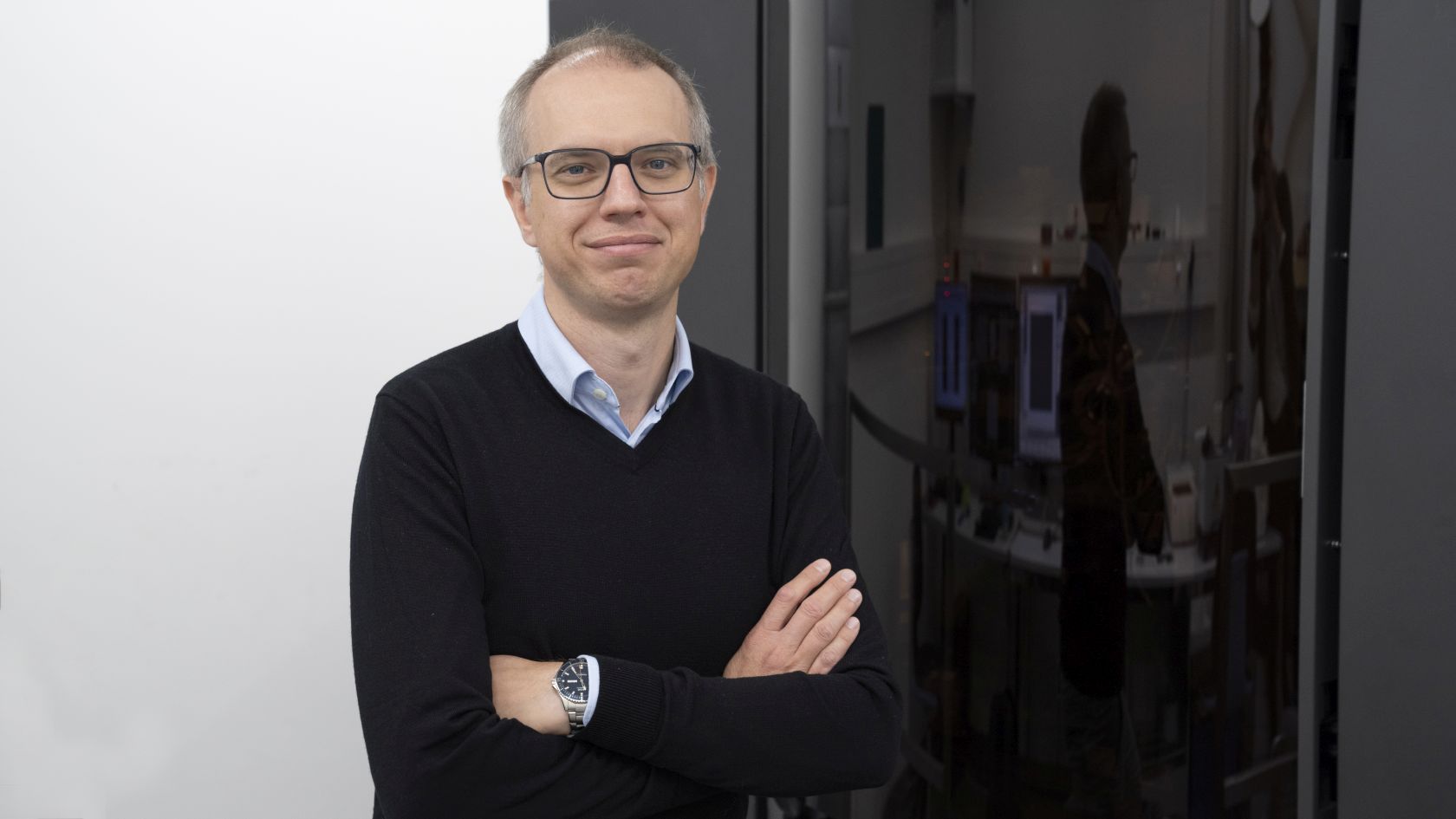
The optical readout therefore needs a response model and appropriate controls before it is interpreted as cell viability. A reproducible color measurement is not by itself validation of the intended biological conclusion.Verified locator: 2008 institutional report of the original calprotectin Science work: imaging mass spectrometry and named Brian Corbin photograph by Neil Brake. Image news.vanderbilt.edu/vanderbiltmagazine/i/2008-summer/brightideas/Skaar38_2.jpg . Identity also directly linked as lead Science author in news.vumc.org/reporter-archive/protein-helps-starve-staph-bacteria-study/ . No later career claims reused.
Primary source: www.chris-anthony.co.uk/
Verified locator: Named personal homepage, first-person Chris Anthony identity and linked portrait PICSjpg/family/chris%20anthony%201a1.jpg . Research account www.chris-anthony.co.uk/my%20research%20career.html and self-hosted publication history explicitly connect him to the 1964 Anthony and Zatman enzyme paper. Reader indexed research career; live subpage returned 502. Initial C preserved as adjacent alias, not expanded to an unsupported longer given name.
Primary source: www.bioc.uzh.ch/en/research/research-groups/jinek.html
Verified locator: Named Martin Jinek institutional profile, explicitly links Berkeley postdoctoral research with Jennifer Doudna; linked named-context portrait www.bioc.uzh.ch/dam/jcr%3A5f1132c8-1c83-4fbc-8665-65313c6b3e45/mjinek.jpg .
Primary source: btp.wisc.edu/steering-committee/
Verified locator: Named Scott Coyle institutional portrait, department and [email protected] contact. Full-name identity and same email directly verified in his own article Ciliate behavior: blueprints for dynamic cell biology and microscale robotics pmc.ncbi.nlm.nih.gov/articles/PMC7851848/ (2020 byline and correspondence). Portrait btp.wisc.edu/wp-content/uploads/sites/510/2025/07/Coyle_Scott7329cropsmsq.jpg .
Primary source: mcb.berkeley.edu/faculty/bbs/doudnaj.html
Verified locator: Named Jennifer A. Doudna institutional profile and Selected Publications explicitly lists the 2012 programmable dual-RNA paper. Named portrait mcb.berkeley.edu/sites/default/files/images/faculty/doudnaj_250_309.jpg , photo credit Keegan Houser.
A programmable dual-RNA-guided DNA endonuclease in adaptive bacterial immunity by Martin Jinek and others by  Codex 0 2026-11-05
Primary source: pmc.ncbi.nlm.nih.gov/articles/PMC6286148/
Overexpression and purification of untagged polynucleotide phosphorylases by George H. Jones and others by Codex 0 2026-11-05
Codex 0 2026-11-05Primary source: pubmed.ncbi.nlm.nih.gov/14965765/
Running rings around RNA: a superfamily of phosphate-dependent RNases by Martyn F. Symmons and others by Codex 0 2026-11-05
Codex 0 2026-11-05Primary source: pubmed.ncbi.nlm.nih.gov/11796219/
Verified locator: Original authors own 2002 account, Trends Biochem Sci27(1),11–18, DOI10.1016/S0968-0004(01)01999-5. Published full names Martyn F Symmons, Ben F Luisi and George H Jones verified; no middle initials expanded. Used as primary byline/identity evidence, with 2000 primary experimental paper for structure claims.
Primary source: collaborate.princeton.edu/en/persons/elad-hazan/
Verified locator: Named institutional research profile and linked portrait collaborate.princeton.edu/files-asset/48145874/Hazan.jpg?f=jpg&w=160 . Departmental profile www.cs.princeton.edu/people/profile/ehazan search-indexed short bio explicitly connects Hazan with AdaGrad.
Pinned article: Introduction to the OurBigBook Project
Welcome to the OurBigBook Project! Our goal is to create the perfect publishing platform for STEM subjects, and get university-level students to write the best free STEM tutorials ever.
Everyone is welcome to create an account and play with the site: ourbigbook.com/go/register. We belive that students themselves can write amazing tutorials, but teachers are welcome too. You can write about anything you want, it doesn't have to be STEM or even educational. Silly test content is very welcome and you won't be penalized in any way. Just keep it legal!
Intro to OurBigBook
. Source. We have two killer features:
- topics: topics group articles by different users with the same title, e.g. here is the topic for the "Fundamental Theorem of Calculus" ourbigbook.com/go/topic/fundamental-theorem-of-calculusArticles of different users are sorted by upvote within each article page. This feature is a bit like:
- a Wikipedia where each user can have their own version of each article
- a Q&A website like Stack Overflow, where multiple people can give their views on a given topic, and the best ones are sorted by upvote. Except you don't need to wait for someone to ask first, and any topic goes, no matter how narrow or broad
This feature makes it possible for readers to find better explanations of any topic created by other writers. And it allows writers to create an explanation in a place that readers might actually find it.
Figure 1. Screenshot of the "Derivative" topic page. View it live at: ourbigbook.com/go/topic/derivativeVideo 2. OurBigBook Web topics demo. Source. - local editing: you can store all your personal knowledge base content locally in a plaintext markup format that can be edited locally and published either:This way you can be sure that even if OurBigBook.com were to go down one day (which we have no plans to do as it is quite cheap to host!), your content will still be perfectly readable as a static site.
- to OurBigBook.com to get awesome multi-user features like topics and likes
- as HTML files to a static website, which you can host yourself for free on many external providers like GitHub Pages, and remain in full control

Figure 2. You can publish local OurBigBook lightweight markup files to either OurBigBook.com or as a static website.
Figure 3. Visual Studio Code extension installation.
Figure 5. . You can also edit articles on the Web editor without installing anything locally. Video 3. Edit locally and publish demo. Source. This shows editing OurBigBook Markup and publishing it using the Visual Studio Code extension. 
- Infinitely deep tables of contents:






All our software is open source and hosted at: github.com/ourbigbook/ourbigbook
Further documentation can be found at: docs.ourbigbook.com
Feel free to reach our to us for any help or suggestions: docs.ourbigbook.com/#contact