Topics (384k) Articles (398k) Users (410) Discussions (242) Comments (383) Files (13k) New article

John E. Straub developed an educational demonstration linking dissolved ions with electrical conductance. Comparing water and a sodium chloride solution illustrates the role of mobile charge carriers; the account also records a weak filament glow for sucrose, so the demonstration is interpreted through its observed signal rather than an ideal zero-current claim.[ref]
Conductivity of solutions by the migration of ions. Understanding section: water, sodium chloride, and sucrose lamp observations
E. W. Kaiser investigated electric dipole moments and hyperfine parameters of hydrogen chloride and its deuterated isotopologue. Comparing the two species connects molecular spectroscopy with the effects of replacing an isotope while retaining the same chemical elements.[ref]
Dipole Moment and Hyperfine Parameters of H35Cl and D35Cl by E. W. Kaiser. 1970, authored abstract, pp.1686–1703; full text unavailable
Johannes Jacobus van Vaals coauthored research on molecular beam.[ref]
High Resolution Molecular Beam Study of Alkali Cyanides by Johannes Jacobus van Vaals. publication title and author list
A molecular beam also includes a stream of chemical atoms, then called an atomic beam. An oven supplies particles; aligned slits restrict their directions, and a vacuum limits subsequent collisions. Narrowing the directions does not by itself make every particle's speed equal. This gives a useful separation of tasks: prepare a path, select or measure speed, apply an interaction, and read the resulting particle counts or deflection.
Klaus P. Huber coauthored research on diatomic molecule.[ref]
Hydrogen iodide: Constants of diatomic molecules by Klaus P. Huber and others. publication title and author list
A diatomic molecule contains two chemical atoms; hydrogen chloride and carbon monoxide are examples. Their fixed-separation moment of inertia is in the linear rigid rotor model.
Robert S. Mulliken proposed an electronegativity-related scale combining ionization energy and electron affinity. Mulliken electronegativity represents a balance between the energetic cost of electron removal and the energetic benefit of electron attachment.
The construction differs from a bond-energy scale. Specifying electronic states and units is essential when comparing the two approaches.[ref]
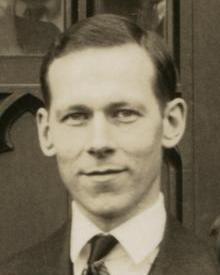
Portrait of Robert S. Mulliken
. GFHund; photograph from Friedrich Hund's estate, held by Gerhard Hund. CC BY 3.0, via Wikimedia Commons. Source.Stepan S. Batsanov examined how energy-based electronegativity conventions relate to chemical bonds. The analysis compares energy-unit coefficients and dependence on other chemical bond properties, making both the definition and its unit convention part of a quantitative comparison.[ref]
Energy Electronegativity and Chemical Bonding by Stepan S. Batsanov. 2022, section1 equation1 and section2.2
Linus Pauling introduced a relative electronegativity comparison based on chemical-bond energies. Excess stability of a heteronuclear bond relative to a reference from homonuclear bonds supplies information about unequal electron sharing.
The Pauling electronegativity scale therefore comes from a model linking bond-energy differences with atomic comparisons. It is not a direct measurement of the partial electric charge on a bonded atom.[ref]

Portrait of Linus Pauling
. Ball Studios, courtesy of Donald Jenkins; National Library of Medicine. Existing restoration and crop by Jorgebarrios. Public domain in the United States per Commons pre-1931 publication tag (1922 U.S. graduation portrait). Source usage terms, via Wikimedia Commons. Source.William R. Robinson coauthored an introductory chemistry text whose thermochemistry chapter develops Hess's law. Adding compatible reaction equations cancels intermediates and adds their enthalpy changes, connecting symbolic chemical bookkeeping with measurable heat.[ref]
Richard Langley coauthored an introductory account of chemical thermodynamics. Its enthalpy examples show how measurements of accessible reactions can be combined to obtain an otherwise inaccessible reaction's energy change using Hess's law.[ref]
Paul Flowers coauthored an introductory chemistry text that develops quantitative thermochemistry. Its treatment of Hess's law keeps the reaction equation attached to the stated enthalpy change, so changing the amount reacted changes the corresponding energy.[ref]
Michael Faraday connected chemistry with quantitative electricity through electrolysis. His experimental treatment related the amount of material transformed at an electrode to the electric charge passed through the apparatus, the basis of Faraday's laws of electrolysis.
His candle lectures made a different connection between apparatus and explanation: the wick supplies melted fuel through capillary action, while the flame's products reveal the chemical transformations involved in combustion.[ref]
The Chemical History of a Candle by Michael Faraday. Lecture I: melting reservoir, wick and capillary attraction; Lectures III–V: combustion products
A chemist whose route into experimental research began with a bookbinding apprenticeship (1805–1812). He became a laboratory assistant at the Royal Institution in 1813, its laboratory director in 1825, and Fullerian Professor of chemistry from 1833 to 1867.[ref]
Michael Faraday (1791–1867). Biography: Ri positions and bookbinding apprenticeship; Fullerian chemistry professorship, 1833–1867

Portrait of Michael Faraday
. Source. Klaus Theopold coauthored an introductory treatment connecting chemical equations with energy balances. The enthalpy chapter explains why reversing a reaction reverses its heat-change sign and why compatible equations can be combined through Hess's law.[ref]
Pinned article: Introduction to the OurBigBook Project
Welcome to the OurBigBook Project! Our goal is to create the perfect publishing platform for STEM subjects, and get university-level students to write the best free STEM tutorials ever.
Everyone is welcome to create an account and play with the site: ourbigbook.com/go/register. We belive that students themselves can write amazing tutorials, but teachers are welcome too. You can write about anything you want, it doesn't have to be STEM or even educational. Silly test content is very welcome and you won't be penalized in any way. Just keep it legal!
Intro to OurBigBook
. Source. We have two killer features:
- topics: topics group articles by different users with the same title, e.g. here is the topic for the "Fundamental Theorem of Calculus" ourbigbook.com/go/topic/fundamental-theorem-of-calculusArticles of different users are sorted by upvote within each article page. This feature is a bit like:
- a Wikipedia where each user can have their own version of each article
- a Q&A website like Stack Overflow, where multiple people can give their views on a given topic, and the best ones are sorted by upvote. Except you don't need to wait for someone to ask first, and any topic goes, no matter how narrow or broad
This feature makes it possible for readers to find better explanations of any topic created by other writers. And it allows writers to create an explanation in a place that readers might actually find it.
Figure 1. Screenshot of the "Derivative" topic page. View it live at: ourbigbook.com/go/topic/derivativeVideo 2. OurBigBook Web topics demo. Source. - local editing: you can store all your personal knowledge base content locally in a plaintext markup format that can be edited locally and published either:This way you can be sure that even if OurBigBook.com were to go down one day (which we have no plans to do as it is quite cheap to host!), your content will still be perfectly readable as a static site.
- to OurBigBook.com to get awesome multi-user features like topics and likes
- as HTML files to a static website, which you can host yourself for free on many external providers like GitHub Pages, and remain in full control

Figure 2. You can publish local OurBigBook lightweight markup files to either OurBigBook.com or as a static website.
Figure 3. Visual Studio Code extension installation.
Figure 5. . You can also edit articles on the Web editor without installing anything locally. Video 3. Edit locally and publish demo. Source. This shows editing OurBigBook Markup and publishing it using the Visual Studio Code extension. 
- Infinitely deep tables of contents:




All our software is open source and hosted at: github.com/ourbigbook/ourbigbook
Further documentation can be found at: docs.ourbigbook.com
Feel free to reach our to us for any help or suggestions: docs.ourbigbook.com/#contact