
Nicholas Harvey Created 2026-10-18 Updated 2026-11-05
Nicholas Harvey is a computer scientist whose research includes the theory of machine learning, randomized algorithms and convex optimization. His teaching work includes a draft text on randomized algorithms, with separate undergraduate and graduate volumes.[ref]
These subjects meet in the analysis of decisions made from limited data or random choices. A randomized algorithm specifies both a computational procedure and a distribution over its choices; its analysis can bound expected work or the chance of an incorrect result. Keeping those guarantees distinct is central to understanding what randomness contributes.
Identity source: www.cs.ubc.ca/~nickhar/W12/

Portrait of Nicholas Harvey
. Portrait identified on the cited institutional profile. Valentine Kabanets Created 2026-10-18 Updated 2026-11-05
Valentine Kabanets is a computer scientist whose research concerns computational complexity theory, derandomization, pseudorandomness and circuit complexity. A recurring question in his research is when efficient randomized algorithms can be replaced by efficient deterministic algorithms.[ref]
Research interests by Valentine Kabanets. Computational Complexity; Role of randomness in efficient computation
His research description emphasizes a connection between designing fast algorithms and proving circuit lower bounds. An upper bound supplies an efficient method for a problem; a lower bound rules out methods within a specified model. In some settings, progress on one side can imply progress on the other, turning apparent obstacles into tools.[ref]
Identity source: www2.cs.sfu.ca/~kabanets/

Portrait of Valentine Kabanets
. Portrait identified on the cited institutional profile. David H. Ackley Created 2026-10-18 Updated 2026-10-20
A computer scientist researching adaptive and distributed computing.[ref]
David H. Ackley by David H. Ackley. Homepage: emeritus Computer Science professorship and computing research
Fritz Strassmann Created 2026-10-18 Updated 2026-11-05
Fritz Strassmann worked with Otto Hahn on chemical identification of the products formed when neutrons irradiate uranium. In December 1938 their separation and analytical methods identified radioactive barium products. This chemical evidence was a crucial step toward the explanation of nuclear fission by Lise Meitner and Otto Frisch.[ref]
https://www.mpic.de/4469988/die-entdeckung-der-kernspaltung. Max Planck Institute for Chemistry, Station 2: irradiation, chemical separation and radioactive barium
A chemist.[ref]
https://www.mpiwg-berlin.mpg.de/Preprints/P203.PDF. Independent biography: identity and specialization; printed p. 1, opening paragraph, and life dates

Portrait of Fritz Strassmann
. Library of Congress Prints and Photographs Division, LC-USZ62-70378. Source. Otto Hahn Created 2026-10-18 Updated 2026-11-05
Otto Hahn and Fritz Strassmann identified radioactive barium among the products of uranium irradiation by neutrons in December 1938. Their chemical separation and analysis established a surprising light-element product. Lise Meitner and Otto Frisch then explained the result in terms of nuclear fission.[ref]
https://www.mpic.de/4469988/die-entdeckung-der-kernspaltung. Max Planck Institute for Chemistry, Station 2: chemical barium identification and subsequent physical interpretation

Alan D. McNaught Created 2026-10-18 Updated 2026-11-05
Alan D. McNaught coauthored research on carbohydrate.[ref]
Nomenclature of Carbohydrates (Recommendations 1996) by Alan D. McNaught. publication title and author list
Carbohydrates are a family of chemical substances encompassing monosaccharides, combinations of monosaccharides, and their derivatives. Glucose is a small carbohydrate; cellulose is a long-chain polysaccharide. Deoxyribose illustrates why composition alone does not define the family: replacing a hydroxy group in ribose by hydrogen still leaves a carbohydrate. See IUPAC Gold Book: carbohydrates.
François-Marie Raoult Created 2026-10-18 Updated 2026-11-05
François-Marie Raoult is associated with quantitative relations between chemical solution composition and physical properties. Raoult's law relates a component's partial vapor pressure in an ideal liquid mixture to its mole fraction and the pure component's vapor pressure at the same temperature. It provides a reference model against which nonideal solution behaviour can be compared.[ref]
Biographical sketch: www2.chem.umd.edu/thermobook/v10-screen.pdf

Portrait of François-Marie Raoult
. Science History Institute; contributed through PA Digital and the Digital Public Library of America, record SHI-glazxc0. Original photographer unspecified; associated photogravure credit: Meisenbach, Riffarth & Co. Public Domain Mark 1.0; status supplied by the collecting institution through DPLA. Source usage terms, via Wikimedia Commons. Source. Irving Langmuir Created 2026-10-18 Updated 2026-11-05
Irving Langmuir investigated gas adsorption on solid surfaces. The Langmuir adsorption model treats a surface as a set of sites that can each be empty or occupied, balancing adsorption against desorption.
The finite number of sites produces saturation: increasing gas pressure cannot raise single-layer occupancy above one molecule per site in this model. Lateral interactions and multilayer formation require a different description.[ref]
The Adsorption of Gases on Plane Surfaces of Glass, Mica and Platinum by Irving Langmuir. 1918, site occupancy and adsorption isotherms
Biographical archive: tile.loc.gov/storage-services/service/gdc/gdcfindingaidpdfs/ms012160/ms012160.pdf


Anne Erwin Moody Created 2026-10-18 Updated 2026-11-05
Anne Erwin Moody developed approaches to teaching chemistry that joined chemical safety with scientific ethics. A coauthored 1999 paper describes using readings and case studies to examine decisions about personal safety, honesty, and integrity in chemical work. It treats these decisions as skills that students can practice through discussion.[ref]
Chemical Safety and Scientific Ethics in a Sophomore Chemistry Seminar by Anne Erwin Moody and others. Chemical Safety and Scientific Ethics in a Sophomore Chemistry Seminar, 1999, abstract
Stephen F. Mason Created 2026-10-18 Updated 2026-11-05
Stephen F. Mason investigated optical activity and molecular dissymmetry in coordination chemistry. His account distinguishes different refractive indices for opposite circular polarizations from unequal absorption of those polarizations.
The first produces circular birefringence and the second circular dichroism. They probe related aspects of a chiral material through different experimental observables.[ref]
Optical Activity and Molecular Dissymmetry in Coordination Chemistry by Stephen F. Mason. Printed pages 335–336, Introduction
Germain Henri Hess Created 2026-10-18 Updated 2026-11-05
Germain Henri Hess studied heat changes accompanying chemical reactions. Hess's law expresses the additivity of compatible reaction enthalpies: reversing a reaction reverses the sign, and combining reaction equations combines their enthalpy changes. This makes it possible to obtain an otherwise inaccessible heat change from an enthalpy cycle.[ref]
Royal Society of Chemistry biographical notice: edu.rsc.org/resources/on-this-day-aug-08--henri-hess-was-born/10808.article

Portrait of Germain Henri Hess
. Source. 
Mary Jane Simpson Created 2026-10-18 Updated 2026-11-05
Mary Jane Simpson authored a quantitative teaching experiment on coloured drink solutions. A water blank, an absorption-peak scan, and serial dilutions connect absorbance with concentration.
The experiment separates visual colour comparison from an instrumental measurement. Quantitative transfer and final-volume calibration matter because dilution ratios are part of the inferred chemical amount.[ref]
Quantitative Analysis of Kool-Aid by Mary Jane Simpson. Stock preparation, peak scan, and repeated 50-to-100 mL dilution
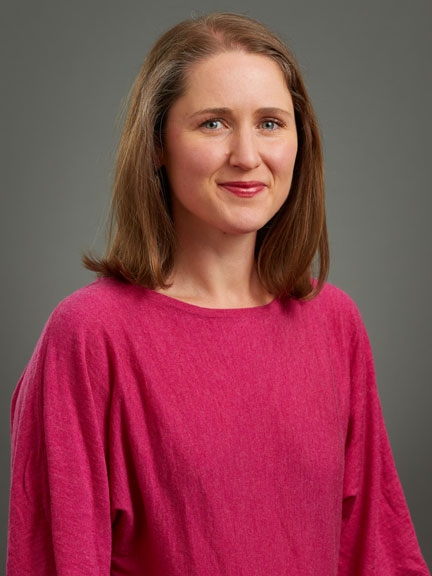
Portrait of Mary Jane Simpson
. Howard DeVoe Created 2026-10-18 Updated 2026-11-05
Howard DeVoe developed a thermodynamic treatment of solutions that distinguishes chemical potentials, reference states, and activity coefficients. An ideal-mixture expression supplies a reference for representing nonideal behaviour.
An activity coefficient therefore compares a real chemical potential with a stated ideal convention. Changing the convention changes the numerical representation without changing the underlying equilibrium condition.[ref]
Identity source: www2.chem.umd.edu/thermobook/v10-screen.pdf
Mircea D. Gheorghiu 2026-10-18
A chemist credited with adapting the inspected acid-base titration experiment to microscale quantities.[ref]
https://chemistry.mit.edu/chemistry-news/mircea-d-gheorghiu-1941-2023/. Institutional obituary: Mircea D. Gheorghiu, 1941-2023

Portrait of Mircea D. Gheorghiu
. Portrait identified in the MIT Department of Chemistry obituary. William Ramsay 2026-10-18
A chemist who led the chemistry department at University College London from 1887 to 1913. His isolation of argon followed John William Strutt, 3rd Baron Rayleigh's observation that atmospheric nitrogen had greater density than chemically prepared nitrogen.[ref]
https://www.ucl.ac.uk/mathematical-physical-sciences/chemistry/about-us/history-department. History of the Department, Ramsay and the nobel gases: chemistry professorship, headship dates and argon isolation

Portrait of William Ramsay
. Portrait reproduced from The World's Work; photographer unidentified. Wikimedia Commons file description and provenance. Source.
Saul Dushman Created 2026-10-18 Updated 2026-11-05
Saul Dushman investigated electron emission from metals as a function of temperature. Thermal emission connects the population of sufficiently energetic electrons with the energy required to escape a surface.
The strong temperature dependence makes the phenomenon useful in electron sources, while the surface state and work function affect quantitative interpretation.[ref]
Physical chemistry.[ref]
https://www.americanjewisharchives.org/wp-content/uploads/d-aja-concise-dictionary.pdf. Independent professional profile
Morton B. Panish Created 2026-10-18 Updated 2026-11-05
Morton B. Panish helped develop semiconductor lasers using a double heterostructure. A narrow-gap active layer between wider-gap semiconductor layers confines injected charge carriers and guides the emitted light. This combined electronic and optical confinement lowered the threshold sufficiently for continuous operation at room temperature.[ref]
https://doi.org/10.1063/1.1653326. Hayashi, Panish, Foy and Sumski, Junction Lasers which Operate Continuously at Room Temperature, Applied Physics Letters17,109–111,1970
A chemist who developed semiconductor lasers at Bell Laboratories.[ref]
Professional profile of Zhores Ivanovich Alferov. Independent professional identity
Raymond Davis Jr. Created 2026-10-18 Updated 2026-11-05
Raymond Davis Jr. developed a chemical method for observing solar neutrinos. In the chlorine experiment, rare interactions converted chlorine-37 into radioactive argon-37; extraction and counting of the argon atoms made a very weak interaction observable. The unexpectedly low measured rate became a central part of the solar neutrino problem.[ref]

Portrait of Raymond Davis Jr.
. Source. 
Karl Friedrich Bonhoeffer Created 2026-10-18 Updated 2026-11-05
Karl Friedrich Bonhoeffer and Paul Harteck prepared parahydrogen at low temperatures in 1929. The work made the distinction between orthohydrogen and parahydrogen experimentally accessible and connected the physical properties of molecular hydrogen with its nuclear-spin states.[ref]
https://www.fhi.mpg.de/history. Institute history: 1929 purification of parahydrogen at low temperatures

Portrait of Karl Friedrich Bonhoeffer
. Source. 
Paul Harteck Created 2026-10-18 Updated 2026-11-05
Paul Harteck and Karl Friedrich Bonhoeffer prepared parahydrogen at low temperatures in 1929. The experiment distinguished forms of molecular hydrogen associated with different nuclear-spin states, connecting a measurable sample property with the quantum description of spin isomers of hydrogen.[ref]
https://www.fhi.mpg.de/history. Institute history: 1929 purification of parahydrogen at low temperatures

Portrait of Paul Harteck
. Source. 
There are unlisted articles, also show them or only show them.