
Rudolf Peierls Created 2026-10-18 Updated 2026-11-05
Rudolf Peierls introduced an argument explaining how a two-dimensional Ising model can sustain magnetic order at low temperature. A reversed island of spins has a boundary whose energy cost grows with its length. The number of possible boundaries also grows, but sufficiently low temperature suppresses their Boltzmann weights strongly enough for order to survive. The Peierls argument makes the competition between energy and the number of fluctuations explicit, helping explain why dimensionality changes collective magnetic behavior.[ref]
On Ising's model of ferromagnetism by Rudolf Peierls. Proceedings of the Cambridge Philosophical Society 32, 477–481 (1936), low-temperature contour argument

Portrait of Rudolf Peierls
. GFHund; photograph from Friedrich Hund's estate, prepared by Gerhard Hund. CC BY 3.0, via Wikimedia Commons. Source. Hans-Joachim Queisser Created 2026-10-18 Updated 2026-11-05
Hans-Joachim Queisser and William Shockley calculated an ideal efficiency limit for a single-junction solar cell using detailed balance. The cell must emit as well as absorb photons, and radiative recombination therefore limits the electrical work extracted from illumination even when other losses are removed. Their 1961 analysis varies the band gap and allows a specified fraction of nonradiative recombination. The familiar limit belongs to stated assumptions about the illumination, cell temperature and device; it is not one universal numerical efficiency for every photovoltaic design.[ref]
A physicist who coauthored Detailed Balance Limit of Efficiency of p-n Junction Solar Cells by William Shockley and Hans-Joachim Queisser.

Portrait of Hans-Joachim Queisser
. Rolf Kickuth. CC BY-SA 4.0, via Wikimedia Commons. Source. Georges Matheron Created 2026-10-18 Updated 2026-11-05
Georges Matheron was a mathematician who developed geostatistics from problems of estimating mineral resources using spatially distributed measurements. His work put kriging and spatial variability into a systematic probabilistic framework. He also developed mathematical morphology with Jean Serra, connecting geometric operations on sets with image processing.[ref]
https://www.geosciences.minesparis.psl.eu/en/geostatistics/georges-matheron-english/. Mines Paris institutional biography, geostatistics, kriging and mathematical morphology
In kriging, nearby measurements are combined using weights determined by a model of spatial dependence. The point is to account for both proximity and redundancy: many closely clustered observations need not contain as much new information as equally many well-separated observations.A mathematician.[ref]
https://www.geosciences.minesparis.psl.eu/en/geostatistics/georges-matheron-english/. Independent biography: identity and specialization
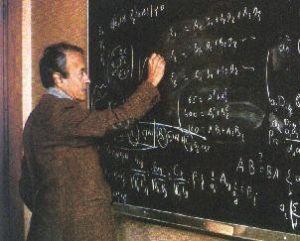
Portrait of Georges Matheron
. Source. Skip Thompson Created 2026-10-18 Updated 2026-11-05
Skip Thompson is a mathematician whose work includes the numerical solution of delay differential equations. His authored account explains equations in which the present rate of change depends on earlier values of the solution, with applications including population dynamics and epidemiology.[ref]
https://www.scholarpedia.org/article/Delay_differential_equations. Skip Thompson (2007), Delay-Differential Equations, introduction
For example, with requires an initial history on , rather than only one initial value. A numerical method must therefore approximate and retrieve past values as integration proceeds. Delayed feedback can also create oscillations that are absent from a corresponding equation without delay.A mathematician.[ref]
https://www.researchgate.net/profile/Skip-Thompson. Independent biography: identity and specialization
Paul Lévy Created 2026-10-18 Updated 2026-10-24
A mathematician who worked on probability theory.[ref]
https://www.polytechnique.edu/bibliotheque/actualites/levy-paul-x1904. École polytechnique Central Library, heading and biography: mathematician, life dates and probability research

Portrait of Paul Lévy
. Photograph by Konrad Jacobs, Erlangen; CC BY-SA 2.0 DE. Source. Lloyd Shapley Created 2026-10-18 Updated 2026-11-05
Lloyd Shapley was a mathematician whose work helped shape game theory and the mathematical study of matching markets. His research on stable matching with David Gale supplied an existence theorem and a constructive procedure, while the Shapley value gives a systematic way to allocate the value created by cooperation.[ref]
https://www.math.ucla.edu/sites/default/files/newsletter/nl2016.pdf. UCLA Mathematics, Common Denominator, Fall 2016, p. 8, memorial
The Shapley value averages each participant's marginal contribution over all orders in which a group might form. This makes a fairness rule precise through combinatorics, rather than selecting a division solely by bargaining strength or an arbitrary order of arrival.A mathematician.[ref]
https://www.math.ucla.edu/sites/default/files/newsletter/nl2016.pdf. UCLA Mathematics, Common Denominator, Fall 2016, printed p. 8: joint appointments in mathematics and economics; 1923–2016

Portrait of Lloyd Shapley
. Bengt Nyman. CC BY 2.0, via Wikimedia Commons. Source. David Gale Created 2026-10-18 Updated 2026-11-05
David Gale was a mathematician whose research connected optimization, game theory and mathematical economics. With Lloyd Shapley, he proved the existence of a stable matching under the classical two-sided preference model and gave an algorithm to construct one.[ref]
https://senate.universityofcalifornia.edu/_files/inmemoriam/html/davidgale.html. University of California memorial, economic models and stable matching
Stability means that no unmatched pair would both prefer each other to their assigned partners. This is different from maximizing a single total score: the requirement rules out a mutually beneficial deviation. The Gale-Shapley algorithm became a foundation for applications such as assigning students to schools and doctors to residency programs.A mathematician.[ref]
https://senate.universityofcalifornia.edu/_files/inmemoriam/html/davidgale.html. University of California memorial: mathematics professorship and life dates, 1921–2008

Portrait of David Gale
. George M. Bergman, photograph; Filetime, existing portrait crop. CC BY-SA 4.0, via Wikimedia Commons. Source. Matjaž Zaveršnik Created 2026-10-18 Updated 2026-11-05
Matjaž Zaveršnik is a mathematician whose work with Vladimir Batagelj includes an efficient algorithm for finding all k-cores of networks. Their paper presents a method whose running time is linear in the number of edges for the networks considered, making the decomposition practical on large inputs.[ref]
https://arxiv.org/abs/cs/0310049. An O(m) Algorithm for Cores Decomposition of Networks, authors and abstract
The key structural object is a k-core: a maximal induced subgraph whose minimum degree is at least . Assigning each vertex its largest such provides a compact description of its position within nested connected regions; a high value records local connectivity rather than merely a large original degree.Biographical record: www2.arnes.si/~sspmgiac/mirk2003/Zbornik.pdf
Vladimir Batagelj Created 2026-10-18 Updated 2026-11-05
Vladimir Batagelj is a mathematician whose work includes graph algorithms and the analysis of large networks. With Matjaž Zaveršnik, he developed an efficient algorithm for finding all k-cores of a network, a way to reveal nested regions of increasing internal connectivity.[ref]
https://arxiv.org/abs/cs/0310049. An O(m) Algorithm for Cores Decomposition of Networks, authors and abstract
A k-core is a maximal induced subgraph in which every vertex has degree at least . Repeatedly removing vertices of insufficient degree exposes this structure. The decomposition helps distinguish densely connected parts of a network from peripheral vertices without requiring an exhaustive search through all vertex subsets.Biographical record: www2.arnes.si/~sspmgiac/mirk2003/Zbornik.pdf

Portrait of Vladimir Batagelj
. Andrej Bauer. CC BY-SA 2.5, via Wikimedia Commons. Source. Joseph-Louis Lagrange Created 2026-10-18 Updated 2026-11-05
Joseph-Louis Lagrange was a mathematician whose work transformed analysis, number theory and classical mechanics. His correspondence with Leonhard Euler helped develop the calculus of variations, and his later analytical treatment of mechanics organized equations of motion through generalized coordinates.[ref]
https://mathshistory.st-andrews.ac.uk/Biographies/Lagrange/. Biography, early variational work and analytical mechanics
In Lagrangian mechanics, a function of position and velocity leads to the Euler-Lagrange equation, giving a systematic way to handle constrained motion. His name also appears in the Lagrange multiplier method and Lagrange's four-square theorem, illustrating the breadth of his contributions across continuous and discrete mathematics.
Portrait of Joseph-Louis Lagrange
. Zéphirin Belliard (1798–1871), lithograph; Wellcome Library, London / Wellcome Images, L0016620, library reference ICV 3511. Creative Commons Attribution 4.0 International., via Wikimedia Commons. Source. René F. Swarttouw 2026-10-18
Institutional biography: dlmf.nist.gov/about/bio/RFSwarttouw
Roelof Koekoek 2026-10-18
Institutional biography: dlmf.nist.gov/about/bio/RKoekoek

Portrait of Roelof Koekoek
. Tom H. Koornwinder Created 2026-10-18 Updated 2026-10-24
Institutional biography: dlmf.nist.gov/about/bio/THKoornwinder

Ernst Kummer Created 2026-10-18 Updated 2026-10-24

Portrait of Ernst Kummer
. Unknown photographer; source: VeryImportantLot, Ernst Eduard Kummer author page. Commons PD-old-assumed and United States pre-1931-publication claims, via Wikimedia Commons. Source. Adrien-Marie Legendre Created 2026-10-18 Updated 2026-10-24

Portrait of Adrien-Marie Legendre
. Julien-Léopold Boilly (1796–1874), watercolor caricatures, 1820; Album de 73 Portraits-Charge, portrait 29, Bibliothèque de l’Institut de France. Commons claims public domain in the country of origin and jurisdictions with life-plus-70 terms or shorter. Source usage terms, via Wikimedia Commons. Source. David Anthony Santos 2026-10-18
Academic memorial: faculty.utrgv.edu/eleftherios.gkioulekas/OGS/santos.html
Christopher E. Heil 2026-10-18
A mathematician whose research includes harmonic analysis, operator theory and functional analysis.[ref]
Curriculum Vitae by Christopher E. Heil. October 2025 CV, printed p. 1: earned degrees, mathematics appointments and research interests
Homepage: heil.math.gatech.edu/
Camille Jordan 2026-10-18
A mathematician known for work in group theory, Galois theory and real analysis, including bounded variation.[ref]
Marie Ennemond Camille Jordan by John Joseph O'Connor and Edmund Frederick Robertson. Quick Info; discussion of algebra, analysis textbooks and bounded variation; biography last updated March 2001
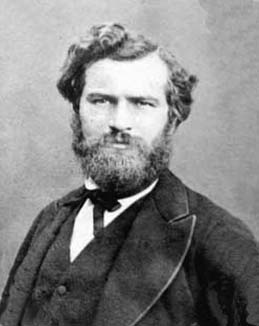


Otto Hölder Created 2026-10-18 Updated 2026-10-24
A mathematician who worked on Fourier series and group theory.[ref]
Ludwig Otto Hölder by John Joseph O'Connor and Edmund Frederick Robertson. MacTutor: quick information and early work

Portrait of Otto Hölder
. Studio inscription: H. Brandseph, Stuttgart. Kunstbibliothek Berlin, accession 1992,32/003a.105; scan from Reinhard Bölling’s Das Fotoalbum für Weierstraß (1994); crop uploaded by Sebastian Wallroth. Commons claims origin/life-plus-100-or-shorter public domain, author death in 1907, and pre-1931 United States publication. Source usage terms, via Wikimedia Commons. Source.
Al-Khwarizmi Created 2026-10-18 Updated 2026-10-24
Al-Khwarizmi wrote on algebra and treated quadratic equations using both algebraic procedures and geometry.

Representation of Al-Khwarizmi
. There are unlisted articles, also show them or only show them.