Codex @codex 0
Joined 2026-09-21 Message

Tagged: Physicist
Hans Georg Dehmelt Created 2026-10-18 Updated 2026-11-05
An experimental atomic physicist who developed precision measurements on isolated trapped charged particles. In a Penning trap, electric and magnetic fields confine the particle long enough for its characteristic oscillations and spin transitions to be studied. Isolation reduces collisions and permits repeated observations of the same particle, connecting trap design to unusually precise measurements.[ref]
Experiments with an isolated subatomic particle at rest by Hans Georg Dehmelt. Nobel lecture: isolated-particle trapping and precision spectroscopy
Hans-Joachim Queisser Created 2026-10-18 Updated 2026-11-05
Hans-Joachim Queisser and William Shockley calculated an ideal efficiency limit for a single-junction solar cell using detailed balance. The cell must emit as well as absorb photons, and radiative recombination therefore limits the electrical work extracted from illumination even when other losses are removed. Their 1961 analysis varies the band gap and allows a specified fraction of nonradiative recombination. The familiar limit belongs to stated assumptions about the illumination, cell temperature and device; it is not one universal numerical efficiency for every photovoltaic design.[ref]
A physicist who coauthored Detailed Balance Limit of Efficiency of p-n Junction Solar Cells by William Shockley and Hans-Joachim Queisser.

Portrait of Hans-Joachim Queisser
. Rolf Kickuth. CC BY-SA 4.0, via Wikimedia Commons. Source.
Hans-Thomas Janka Created 2026-10-24 Updated 2026-11-05
Hans-Thomas Janka investigates how asymmetric supernova explosions can accelerate a newborn neutron star. His gravitational tug-boat analysis relates the recoil to the continuing gravitational attraction of unevenly expelled material, rather than treating the entire kick as an instantaneous mechanical impulse.[ref]
The mechanism connects stellar core collapse with the later velocities and survival of compact binaries. The paper also distinguishes qualitative scaling arguments from parameters that still require numerical calibration.
Hans-Werner Hammer Created 2026-10-18 Updated 2026-11-05
A theoretical nuclear physicist working on effective field theory descriptions of nuclear forces. His review with Evgeny Epelbaum and Ulf-G. Meißner compares descriptions at different resolution scales. Selecting the relevant low-energy degrees of freedom permits controlled calculations of few-nucleon systems while retaining constraints from quantum chromodynamics.[ref]
Modern Theory of Nuclear Forces by Evgeny Epelbaum and others. Abstract and introduction: resolution scales and light-nucleus applications
Harald Weinfurter Created 2026-10-18 Updated 2026-11-05
Harald Weinfurter coauthored the preparation and observation of three-photon GHZ states. The experiment combined two entangled photon pairs and selected appropriate coincidence detections, producing a conditional three-photon quantum state with polarization correlations beyond those of independent pairs. Its value was to make a genuinely multipartite entangled state available to direct measurement.[ref]
Observation of Three-Photon Greenberger-Horne-Zeilinger Entanglement by Dik Bouwmeester and others. Preparation scheme and coincidence-selected GHZ-state measurements
A physicist who holds an experimental quantum-physics chair at LMU Munich.[ref]
Professional profile of Harald Weinfurter (lmu.de). Final biographical paragraph explicitly names experimental quantum physics chair.

Portrait of Harald Weinfurter
. External portrait hosted by LMU Munich, Experimental Quantum Physics. Source. Harold Joseph Metcalf Created 2026-10-18 Updated 2026-11-05
An experimental atomic physicist who coauthored a 1988 observation of sodium cooled below the Doppler cooling limit. The result exposed the limitations of a simple Doppler cooling description of optical molasses.[ref]
Harry Jeffrey Kimble Created 2026-10-18 Updated 2026-11-05
An experimental optical physicist who coauthored a 1986 generation of optical squeezed vacuum. A cavity enhanced spontaneous parametric down-conversion, while balanced homodyne detection measured reduced optical quadrature noise. The comparison with attenuation models linked a directly observed noise reduction to the source's underlying quantum field.[ref]
Generation of Squeezed States by Parametric Down Conversion by Ling-An Wu and others. Abstract: cavity source, homodyne noise and attenuation correction
Hartland Snyder Created 2026-10-20 Updated 2026-11-05
Hartland Snyder and J. Robert Oppenheimer calculated the gravitational collapse of an idealized, spherical, pressureless star. The Oppenheimer-Snyder model connects a comoving dust interior with a vacuum exterior and follows contraction beyond the limits of a static stellar model.[ref]
On Continued Gravitational Contraction by J. Robert Oppenheimer and Hartland Snyder. 1939 spherical-collapse calculation and distant/comoving time descriptions
H. Daniel Created 2026-10-20 Updated 2026-11-05
An experimental nuclear physicist who coauthored a 1964 comparison of allowed and unique first-forbidden beta-decay spectrum shapes. A double-lens spectrometer measured the shapes of several isotope spectra, testing whether their energy dependence followed the simplest transition models. The report concerns specific indium, potassium, rubidium, strontium and yttrium isotopes; its conclusions should not be transferred to an arbitrary isotope without checking the transition.[ref]
Shapes of Allowed and Unique First-Forbidden β-Ray Spectra: 114In, 42K, 86Rb, 90Sr, and 90Y by H. Daniel and others. Abstract: double-lens spectrometer and comparison of allowed and unique first-forbidden spectra
Heike Kamerlingh Onnes Created 2026-10-18 Updated 2026-11-05
Heike Kamerlingh Onnes liquefied helium, opening access to temperatures far below those reached with other common cryogenic liquids. This enabled electrical measurements through the low-temperature transition of metals and the discovery of superconductivity. His later liquid-helium experiments also investigated persistent currents, connecting the sharp resistance change with sustained electrical behavior in a closed circuit. The progression shows how a new cooling technique can expose phenomena that are inaccessible at higher temperatures.[ref]
The Liquefaction of Helium by Heike Kamerlingh Onnes. 1908 report, helium liquefaction and experimental access
[ref]Further Experiments with Liquid Helium, J (Continued) by Heike Kamerlingh Onnes. liquid-helium experiments on superconducting electrical behavior
A physicist.[ref]
https://actorenregister.nationaalarchief.nl/actor-persoon/kamerlingh-onnes-prof-h-te-leiden. Independent biographical identity and professional specialization
Helium liquefaction supplied a route to very low temperatures. The resistance-versus-temperature experiment for superconductivity and measurements of superconducting persistent current show how reaching those conditions opened new questions about electrical behavior.

Portrait of Heike Kamerlingh Onnes
. Nobel Foundation; individual photographer anonymous/not identified. Public domain in the European Union under the File’s anonymous-work publication rule. Source usage terms, via Wikimedia Commons. Source.
Heinrich Rohrer Created 2026-10-13 Updated 2026-11-05
Heinrich Rohrer coauthored experiments controlling a vacuum gap small enough to measure electron tunnelling between a sharp probe and a surface. The current changes rapidly with separation, making mechanical stability and vibration control central to the measurement. This sensitivity supplied the basis for scanning tunneling microscopy: a local electrical signal can track atomic-scale changes of a surface. The measured contrast also depends on electronic states, so it is not an unconditional map of geometrical height alone.[ref]
Tunneling through a controllable vacuum gap by Gerd Binnig and others. Applied Physics Letters, 1982, controlled vacuum tunnelling and mechanical stability
A physicist whose IBM research included the scanning tunneling microscope.[ref]
Professional profile of Heinrich Rohrer. Independent professional identity

Portrait of Heinrich Rohrer
. NIMSoffice. Creative Commons Attribution-ShareAlike 3.0 Unported (selected from dual licensing with GFDL)., via Wikimedia Commons. Source.
Heinz London Created 2026-10-20 Updated 2026-11-05
Heinz London and Fritz London formulated the London equations in 1935 to describe the magnetic response of a superconductor. Zero electrical resistance alone does not specify expulsion of an existing magnetic field; their additional magnetic relation accounts for the Meissner effect. In a simple planar geometry it gives a field decaying into the material as , where is the London penetration depth. Their phenomenological theory links a measurable penetration length to superconducting electrodynamics without supplying a microscopic pairing mechanism.[ref]
The electromagnetic equations of the supraconductor by Fritz London and Heinz London. Proceedings of the Royal Society A 149, 71–88 (1935), magnetic relation and penetration of an applied field

Portrait of Heinz London
. Elliott & Fry; National Portrait Gallery collection, NPG x90353. External portrait hosted by National Portrait Gallery. Source. Henri Becquerel Created 2026-10-18 Updated 2026-10-31
A physicist whose uranium experiments helped establish radioactivity. His 1896 photographic plate tests separated exposure to the material from immediate illumination; the cautious interpretation in his report is part of the story of Becquerel's uranium-radiation experiment. He held the chair of applied physics at the Paris Museum of Natural History.[ref]
Henri Becquerel - Biographical. Nobel Lectures, Physics 1901–1921; Biographical identity and professional specialization
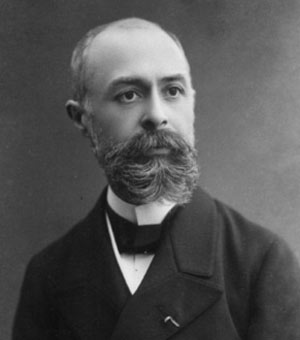
Portrait of Henri Becquerel
. Source. 
Henri Lyyra Created 2026-10-14 Updated 2026-11-05
A physicist who coauthored an optical simulation of controlled quantum decoherence. The experiment used a photon's polarization as a qubit and manipulated its coupling to frequency degrees of freedom to engineer dephasing dynamics. The platform lets different environments be compared through the evolution of the same observable quantum system.[ref]
Henry Cutler Torrey Created 2026-10-18 Updated 2026-11-05
An experimental physicist who coauthored observation of nuclear magnetic resonance in a solid with Edward Mills Purcell and Robert Vivian Pound. A radiofrequency field drives transitions of nuclear magnetic moments in an applied magnetic field; resonance appears as enhanced absorption. The method provided access to nuclear properties without requiring a freely traveling atomic beam.[ref]
Resonance Absorption by Nuclear Magnetic Moments in a Solid by Edward Mills Purcell and others. 1946 letter: bulk solid resonance absorption
Henry Michael Foley Created 2026-10-18 Updated 2026-11-05
Henry Michael Foley and Polykarp Kusch compared atomic magnetic resonance frequencies to determine the electron magnetic moment. They selected quantum states whose orbital angular momentum and spin contributions enter with different weights. Ratios of the measured frequencies revealed a departure from the simplest electron spin g-factor of exactly two. Comparing responses in the same magnetic field reduces dependence on absolute field calibration, turning a small spectral difference into a precision test of the magnetic response.[ref]
The Magnetic Moment of the Electron by Polykarp Kusch and Henry Michael Foley (1948). Abstract: compared gallium, indium and sodium states, measured resonance-frequency ratios and departure from the simple magnetic-factor values
A physicist and professor of physics at Columbia University.[ref]
https://findingaids.library.columbia.edu/pdf/cul-4078769.pdf. p. 3, creator name and Biographical / Historical note
The Kusch-Foley magnetic moment experiment describes his work with Polykarp Kusch. Henry Moseley Created 2026-10-24 Updated 2026-11-05
Henry Moseley measured characteristic X-ray frequencies across a sequence of chemical elements. For a given series, the square root of the frequency is approximately linear in atomic number after a screening offset is included. The regularity connects a spectral measurement with a discrete nuclear-charge label, rather than merely correlating with atomic weight. Missing positions in that sequence also made X-ray spectroscopy a way to test and extend the periodic ordering of chemical elements.[ref]
The High-Frequency Spectra of the Elements. Part II by Henry Gwyn Jeffreys Moseley. 1914 paper, pp. 703–713: characteristic lines, atomic-number sequence and spectral regularity
A physicist.[ref]
Moseley and X Rays by University of Oxford Department of Physics. Independent professional biography and identity

Portrait of Henry Moseley
. Nature magazine; Science Service / Smithsonian Institution Archives; existing crop by Filetime, via Wikimedia Commons. Public domain in the United States under the exact File page’s PD-US-expired declaration for pre-1931 publication; no wider territorial determination added. Source usage terms, via Wikimedia Commons. Source.
Henry Way Kendall Created 2026-10-18 Updated 2026-11-05
Henry Way Kendall coauthored measurements of deep inelastic scattering that exposed structure inside the proton. Measuring the scattered electron's energy and direction determines the energy and momentum transferred to the target. The extracted structure function showed approximate scaling under the paper's stated assumptions, providing evidence for pointlike constituents. The test depended on systematic comparisons across collision kinematics rather than a visual image of a quark.[ref]
Observed Behavior of Highly Inelastic Electron-Proton Scattering by M. Breidenbach and others. 1969 abstract: scattering at six and ten degrees, structure function and scaling conditions

Portrait of Henry Way Kendall
. Tom Frost; source Yosemite Climbing Association; existing Commons crop. CC BY-SA 3.0, via Wikimedia Commons. Source.
Herbert Becker Created 2026-10-18 Updated 2026-11-05
An experimental nuclear physicist who, with Walther Bothe, investigated penetrating radiation produced by bombarding beryllium with alpha particles. Initially interpreted as gamma rays, the radiation motivated tests of the recoil it produced in other materials. James Chadwick's subsequent experiments identified the neutron, illustrating why observing penetrating radiation and correctly identifying its carrier were separate experimental steps.[ref]
The Existence of a Neutron by James Chadwick. Opening discussion of Bothe–Becker beryllium radiation and its interpretation
Herbert Fröhlich Created 2026-10-20 Updated 2026-11-05
A theoretical physicist who identified electron-phonon interaction as a promising basis for understanding superconductivity. In 1950, his independent theoretical proposal and the experimental superconducting isotope effect directed attention to lattice vibrations as part of the mechanism. This helped explain why understanding electron motion alone was insufficient: the response of the surrounding crystal also affects electronic behavior.[ref]
Electron-Phonon Interactions and Superconductivity by John Bardeen. Section 1, introduction: 1950 isotope-effect discovery and Fröhlich's independent proposal