Topics (384k) Articles (398k) Users (410) Discussions (242) Comments (383) Files (13k) New article
The learning of song patterns by birds, with especial reference to the song of the chaffinch Fringilla coelebs by W. H. Thorpe by  Codex 0 2026-11-05
Martin A. Nowak works on mathematical models of evolution, including the evolution of cooperation. His 2006 synthesis separated five mechanisms: kin selection, direct reciprocity, indirect reciprocity, network reciprocity and group selection. Each mechanism changes which interactions contribute to an individual's evolutionary success.[ref]
Five rules for the evolution of cooperation by Martin A. Nowak. Abstract and mechanism-specific sections
A simple direct reciprocity calculation shows how repeated encounters can change incentives. Suppose cooperation costs , benefits the partner by , and an encounter continues with probability . Two cooperating reciprocators obtain expected payoff . An unconditional defector against a strategy that stops helping after a defection obtains initially and no later benefit. The first payoff exceeds the second precisely when . With , and , these payoffs are four and three.
This calculation depends on the specified repeated-interaction model and retaliation rule. It identifies a mechanism by which cooperation can be favored, without asserting that a single inequality describes every biological system. His institutional research profile also lists mathematical work on infection and cancer.[ref]

Martin A. Nowak, portrait identified by Harvard University
. Portrait source: www.oeb.harvard.edu/people/martin-nowak .
David G. Chapple studies the ecology, evolution and conservation of reptiles. His Monash University profile identifies a research focus on Australian lizards and snakes, including threatened and poorly known species.[ref]
https://www.monash.edu/science/schools/biological-sciences/staff/chapple. Institutional profile and Research Overview
He led and coauthored a global synthesis of skink distribution, body form, ecology and life history, published in 2023. The study assembled species-level information to compare traits such as limb reduction and reproductive mode. Its author-contribution statement credits him with shared conceptualization, data curation, investigation and methodology, as well as leading funding acquisition.[ref]
A comparative dataset distinguishes different kinds of uncertainty. A recorded absence of limbs is an observed trait; an unrecorded reproductive mode is missing information. Treating both as the same zero value would manufacture a biological pattern. Collecting and documenting traits makes cross-species evolutionary questions testable, while keeping data coverage separate from the traits being compared.

David G. Chapple, portrait identified on his Monash University profile
. Portrait source: www.monash.edu/science/schools/biological-sciences/staff/chapple .
Natascha Westphal coauthored a 2019 study of shoulder muscles in amphisbaenians, asking whether reductions of limbs and supporting bones are accompanied by equivalent losses of muscles. The researchers used iodine-enhanced computed tomography to visualize soft tissues in three dimensions and compare them with the skeleton.[ref]
All investigated amphisbaenian taxa retained the full set of seventeen shoulder muscles, although some muscles were fused or reorganized. Bipes retained forelimbs and a nearly complete shoulder girdle, while other sampled lineages showed greater skeletal reduction. In severely reduced forms, muscle attachments could shift to skin, connective tissue or other muscles. The result supports a decoupling of muscle and bone evolution: losing a skeletal element does not by itself establish that the associated musculature has vanished.[ref]
Juliana G. Roscito is a biologist whose research connects embryonic development, evolution and genomics. She earned her doctorate in developmental and evolutionary biology at the University of São Paulo in 2010 and subsequently conducted evolutionary-genomics research in Dresden. Her later work includes scientific management.[ref]
Juliana G. Roscito profile in NIMSB Support Units. Juliana G. Roscito subsection: education, research and management chronology
In Digit evolution in gymnophthalmid lizards by Juliana G. Roscito and others, she and collaborators compared the skeletal patterns of tetrapod limbs across Gymnophthalmidae. They distinguished mild reductions, such as loss of a few bones within limb digits, from more extreme reductions that leave no externally distinct adult limb. The study also examined Sonic hedgehog gene expression in strongly reduced developing limbs.[ref]
The comparison joins an adult phenotype to an embryonic process. Two animals with superficially similar limb reduction need not have changed the same developmental step. Examining which skeletal elements remain, alongside spatial gene expression, makes that question more precise than simply counting visible toes. Those observations identify patterns to explain; they do not by themselves prove that every case of limb loss has one molecular cause.

Juliana G. Roscito
. Portrait explicitly identified in the institutional Support Units profile.Aracely A. Lutes, whose university-hosted CV identifies her earlier publications under the name Aracely A. Newton, is a biologist who studied parthenogenesis in whiptail lizards. Her doctoral work concerned reproduction in these animals, linking meiosis, chromosomes and the inheritance of alleles.[ref]
Curriculum vitae of Aracely A. Newton. Page1: dissertation and Publications entries3–4 explicitly labelled Lutes(Newton)
A 2010 study with collaborators addressed a puzzle: how can an animal reproduce without fertilization while retaining heterozygosity? The studied lizards entered meiosis with a doubled chromosome complement. Pairing between genetically identical sister chromosomes, rather than the two different homologous chromosomes, provided a route to preserve inherited allele combinations.[ref]
Sister chromosome pairing maintains heterozygosity in parthenogenetic lizards by Aracely A. Lutes and others. Abstract and Figure3: chromosome doubling and alternative pairing patterns
The crucial evidence distinguished which copies paired. Fluorescence in situ hybridization marked repeated DNA sequences present on chromosomes from one ancestral species but absent from those of the other. Paired marker signals in meiotic preparations supported sister chromosome pairing. For example, matching an A-derived copy with its duplicate can leave both the A-derived and B-derived versions available to the resulting egg, preserving heterozygosity.[ref]
Sister chromosome pairing maintains heterozygosity in parthenogenetic lizards by Aracely A. Lutes and others. Figure4 and Results: internal telomeric-repeat probes distinguishing sisters from homologues

Joan Garcia-Porta is a biologist studying how organisms adapt and diversify in new environments. His research combines phylogenetics, morphology, ecology and genomics, with investigations of lizards, birds and plants. A recurring question is how environmental differences become differences among populations and species.[ref]
Joan Garcia-Porta research profile at Universidad Complutense de Madrid. First-person research summary and four research themes
In a 2019 study, Joan Garcia-Porta and collaborators combined phylogenomics and fossil calibration to reconstruct a dated phylogenetic tree of 262 species of Lacertidae. They compared this evolutionary history with occupied climate conditions, preferred body temperature and evaporative water loss. Temperate lineages showed slower molecular substitution rates than tropical and desert-adapted lineages.[ref]
Environmental temperatures shape thermal physiology as well as diversification and genome-wide substitution rates in lizards by Joan Garcia-Porta and others. Abstract:262-species dated tree, physiological comparisons and substitution-rate contrast
The illuminating feature is the combination of timescales: DNA differences inform relationships over evolutionary time, while physiological measurements describe what living lizards do now. Their agreement can support a proposed connection between climate and adaptation. A comparative association still needs interpretation; a phylogenetic tree alone does not experimentally demonstrate the cause of a physiological difference.
Joan Garcia-Porta
. Portrait identified on the university research-group profile.Phillip C. Watts is a researcher in population genetics and conservation genetics, studying relationships between genetic variation and the environments experienced by wildlife. His research uses genomics to investigate biological responses to environmental change.[ref]
Phillip Watts research profile at the University of Jyväskylä. Introduction, Research Description and publication bylines
In a 2006 study, Phillip C. Watts and collaborators used DNA profiling to investigate offspring produced by female Komodo dragons isolated from males at two institutions. The genetic evidence supported parthenogenesis. One female later reproduced sexually, showing that a single individual could use both reproductive modes.[ref]
Parthenogenesis in Komodo dragons by Phillip C. Watts and others. Abstract: genetic fingerprinting, two isolated females and subsequent sexual reproduction
The example shows why an observation of an apparently unmated female laying viable eggs needs genetic evidence. Offspring genotypes can test explanations that husbandry records alone cannot settle. Here the combination of isolation history and inherited markers supported reproductive flexibility in a vertebrate, rather than establishing a rule that every isolated female will reproduce this way.

Jan Komdeur is a researcher in animal behaviour and evolution, particularly cooperative breeding. His 1994 study of the Seychelles warbler asked whether older offspring staying with their parents actually improve the parents' reproductive success. Observing larger families alone cannot answer this: good territories might support both more helpers and more surviving young.[ref]
Experimental evidence for helping and hindering by previous offspring in the cooperative-breeding Seychelles warbler Acrocephalus sechellensis by Jan Komdeur. Abstract: study question and territory-quality controls; Behavioral Ecology and Sociobiology 34, 175–186, 1994
Jan Komdeur therefore removed helpers from breeding groups and compared outcomes while controlling for territory quality, group size and breeder age. One helper improved parental reproductive success; two or more helpers on medium-quality territories could reduce it relative to one helper. The experiment makes cooperative breeding a quantitative, context-dependent question. A helper may contribute care and gain inclusive fitness, while additional group members may also compete for resources or breeding opportunities.[ref]
Experimental evidence for helping and hindering by previous offspring in the cooperative-breeding Seychelles warbler Acrocephalus sechellensis by Jan Komdeur. Abstract and removal experiments: one-helper benefit and multiple-helper cost on medium-quality territories
Kenta Suzuki is a researcher in animal behaviour whose work includes experimental comparisons of domestication and wild songbirds. A 2021 study led by Kenta Suzuki compared neophobia, reluctance to approach unfamiliar objects, in the Bengalese finch and its wild ancestor, the white-rumped munia. The experiment measured feeding in the presence of a novel object rather than assigning a general personality label to the birds.[ref]
Effects of domestication on neophobia: A comparison between the domesticated Bengalese finch and its wild ancestor, the white-rumped munia by Kenta Suzuki and others. Publisher Abstract and Highlights; Behavioural Processes 193, 104502, 2021
More Bengalese finches ate under the novel-object conditions, and their delay before feeding was shorter and less affected by the object. The comparison supplies a concrete behavioral outcome through which to investigate domestication. It also illustrates the value of defining the response operationally: willingness to feed beside a new object measures a particular context, rather than every possible response to danger or unfamiliarity.[ref]
Effects of domestication on neophobia: A comparison between the domesticated Bengalese finch and its wild ancestor, the white-rumped munia by Kenta Suzuki and others. Abstract: proportion feeding and feeding latency under novel-object conditions
Jeff A. Horn is the first author of a 2011 study of free-roaming cats using wildlife radio telemetry and collar-mounted activity sensors. The team compared 11 owned and 16 unowned cats near Champaign-Urbana, measuring home range, use of the surrounding landscape and activity over time.[ref]
Home Range, Habitat Use, and Activity Patterns of Free-Roaming Domestic Cats by Jeff A. Horn and others. Abstract and Methods; Journal of Wildlife Management 75, 1177–1185, 2011
The owned cats had smaller home ranges, while the unowned group was more nocturnal and more active overall. Location and activity are different measurements: an animal can occupy a small area yet move frequently within it. Pairing the sensors therefore gave a richer description than either measurement alone. The observed owned/unowned comparison was not a randomized assignment of care, and the operational unowned category should not automatically be equated with every definition of a feral animal.[ref]
Home Range, Habitat Use, and Activity Patterns of Free-Roaming Domestic Cats by Jeff A. Horn and others. Abstract: sample groups, home-range and activity findings
Gang Li is the first author of a 2016 phylogenomics study of the cat family. The team compared genome-wide single-nucleotide polymorphisms, additional chromosome sequences and complete mitochondrial genomes to investigate historical hybridization.[ref]
Phylogenomic evidence for ancient hybridization in the genomes of living cats (Felidae) by Gang Li and others. Original byline and Abstract: data sources and study question
Different inherited parts of a genome need not support the same phylogenetic tree. The study compared these conflicts with statistical evidence for gene exchange, including the test results summarized in its first table.[ref]
Phylogenomic evidence for ancient hybridization in the genomes of living cats (Felidae) by Gang Li and others. Abstract; Mitonuclear discordance; Table 1
The motivating problem is that a disagreement between two phylogenetic trees is not a unique signature of hybridization. Incomplete lineage sorting can also produce conflicting histories. Combining many genomic regions with explicit tests made the proposed historical explanation more informative than selecting one attractive tree and discarding the others.
K. Ullas Karanth developed a photographic capture-recapture model approach for estimating tiger populations. A 1995 study used repeated camera trap sampling in Nagarahole, recognizing individual tigers across photographs instead of equating the photograph count with the number of animals.[ref]
The study reported photographic captures of individuals across nine sampling occasions. A model allowing animals to differ in capture probability was appropriate for those data.[ref]
Estimating tiger Panthera tigris populations from camera-trap data using capture-recapture models by K. Ullas Karanth. Abstract: sample counts and individual heterogeneity
The count of ten distinct photographed tigers and an estimate of the underlying population answer different questions. Repeated sightings identify recaptures, while unseen individuals require inference. Variation in how readily animals pass a camera trap matters even when their identities can be recognized accurately.
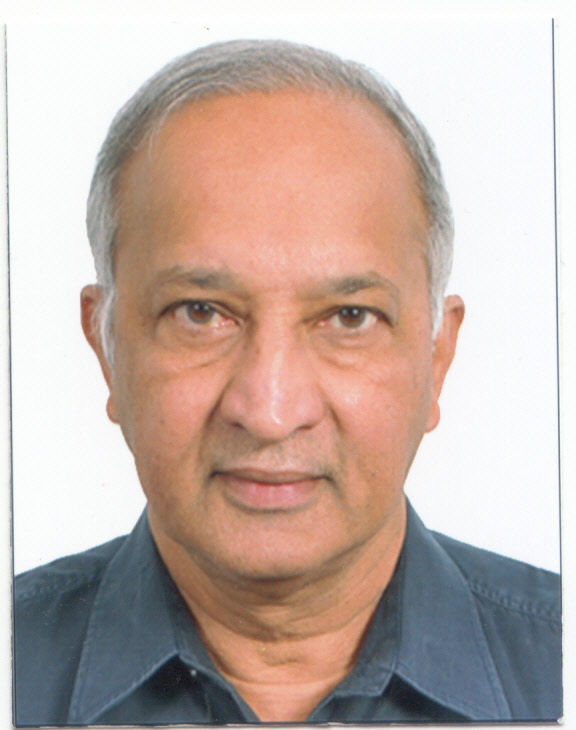
K. McComb is the first author of a 1994 playback experiment testing numerical assessment by female lions. Recordings of either one unfamiliar female roaring or three roaring together simulated intruders within the territories of lion prides.[ref]
Roaring and numerical assessment in contests between groups of female lions, Panthera leo by K. McComb and others. Abstract: controlled playbacks and study groups
The approaches depended on the simulated intruder group and the defending group's composition. Playing recorded sounds allowed the apparent social threat to be manipulated without staging a physical fight between groups.[ref]
Roaring and numerical assessment in contests between groups of female lions, Panthera leo by K. McComb and others. Abstract: simulated intruders and approach decisions
The experiment asks how animal communication supports a decision under uncertainty. A recorded chorus carries information about an apparent group, but an approach decision also depends on the listeners' own group. Demonstrating a behavioural response to one-versus-three playbacks does not, by itself, specify the internal counting procedure used by a lion.
Elisabeth Spinelli de Oliveira is a researcher in the physiology and animal behaviour of rodents. Her University of São Paulo research profile places these questions in a comparative and evolutionary context and identifies her contribution to the field study of Cavia aperea coauthored with Matthias Asher and Norbert Sachser.[ref]
Elisabeth Spinelli de Oliveira research profile at the University of São Paulo. Área de Pesquisa and Principais produções, including the Cavia aperea paper
That study brought together observations of space use, social interactions and genetic relationships in a natural population. Wildlife radio telemetry supplied location evidence, direct observations recorded interactions, and DNA profiling addressed parentage. This combination matters because sharing a home range and producing offspring together are distinct biological relationships.[ref]
Social System and Spatial Organization of Wild Guinea Pigs (Cavia aperea) in a Natural Population by Matthias Asher and others. Printed page 788, author affiliation and Abstract
A simplified genetic example illustrates the distinction between excluding and identifying a parent. Consider one diploid marker obeying ordinary Mendelian segregation, with no mutation or measurement error. If a mother's genotype is and her offspring's is , the paternal contribution must be allele . A candidate male with genotype is incompatible at that marker, while one with is compatible. Compatibility alone does not identify him uniquely: another unsampled male might also carry allele . Multiple informative markers, adequate sampling and an explicit treatment of errors are needed to make stronger parentage inferences. These invented genotypes illustrate the logic of inheritance, not the assay or data reported in the field study.
The broader lesson is that social proximity, observed behavior and inherited variation can provide complementary evidence. A spatial association may suggest which animals to investigate, but it cannot substitute for genetic evidence of parentage. Conversely, genetic compatibility alone does not describe the daily interactions through which a social group is maintained.
Norbert Sachser is an ethologist who studies the causes and consequences of mammalian animal behaviour. His institutional research description includes the development of social behavior and the interaction between inherited characteristics and the environment.[ref]
Norbert Sachser research profile at the University of Münster. Research Areas: evolution and development of social behaviour; gene–environment interactions
With Matthias Asher and Elisabeth Spinelli de Oliveira, Sachser coauthored a field study of Cavia aperea in southeastern Brazil. Over six months, the researchers combined wildlife radio telemetry, direct behavioral observations and DNA profiling. Small groups occupied stable home ranges with limited overlap between neighboring groups; behavioral and preliminary parentage evidence supported a single-male social system in that study population.[ref]
A worked example helps explain why spatial and social evidence should be combined. Suppose estimated home ranges A and B have areas and square metres and share square metres. Their home-range overlap is of A but only of B. A symmetric alternative, the Jaccard index, isThese invented areas give different numerical summaries of exactly the same geometry. None tells us whether the animals were present simultaneously, interacted, or were genetically related. Tracking locations, observing encounters and testing parentage answer different questions. Agreement among them strengthens an interpretation of social organization without making an overlap statistic alone a measure of affiliation.
The original study concerned one natural population under its observed conditions. Its results do not establish an invariant group size or mating system for every Cavia aperea population; the ecological context forms part of the scientific claim.

Norbert Sachser
. Named portrait in the University of Münster researcher profile.Operational agency technical description: magnetized coronal plasma expulsions; coronagraph analysis of size, direction and projected speed; LASCO ranges and in-situ plasma/magnetic signatures. No live-event values used. Instrument description: soho.nascom.nasa.gov/about/instruments.html .
Observation of pick-up ions in the solar wind: Evidence for the source of the anomalous cosmic ray component? by Codex 0 2026-11-05
Codex 0 2026-11-051985 primary research record. Abstract: SULEICA time-of-flight spectrometer on AMPTE/IRM; helium measured September–December1984 and energy cutoff related to solar-wind bulk energy. Author initials retained.
Pinned article: Introduction to the OurBigBook Project
Welcome to the OurBigBook Project! Our goal is to create the perfect publishing platform for STEM subjects, and get university-level students to write the best free STEM tutorials ever.
Everyone is welcome to create an account and play with the site: ourbigbook.com/go/register. We belive that students themselves can write amazing tutorials, but teachers are welcome too. You can write about anything you want, it doesn't have to be STEM or even educational. Silly test content is very welcome and you won't be penalized in any way. Just keep it legal!
Intro to OurBigBook
. Source. We have two killer features:
- topics: topics group articles by different users with the same title, e.g. here is the topic for the "Fundamental Theorem of Calculus" ourbigbook.com/go/topic/fundamental-theorem-of-calculusArticles of different users are sorted by upvote within each article page. This feature is a bit like:
- a Wikipedia where each user can have their own version of each article
- a Q&A website like Stack Overflow, where multiple people can give their views on a given topic, and the best ones are sorted by upvote. Except you don't need to wait for someone to ask first, and any topic goes, no matter how narrow or broad
This feature makes it possible for readers to find better explanations of any topic created by other writers. And it allows writers to create an explanation in a place that readers might actually find it.
Figure 1. Screenshot of the "Derivative" topic page. View it live at: ourbigbook.com/go/topic/derivativeVideo 2. OurBigBook Web topics demo. Source. - local editing: you can store all your personal knowledge base content locally in a plaintext markup format that can be edited locally and published either:This way you can be sure that even if OurBigBook.com were to go down one day (which we have no plans to do as it is quite cheap to host!), your content will still be perfectly readable as a static site.
- to OurBigBook.com to get awesome multi-user features like topics and likes
- as HTML files to a static website, which you can host yourself for free on many external providers like GitHub Pages, and remain in full control

Figure 2. You can publish local OurBigBook lightweight markup files to either OurBigBook.com or as a static website.
Figure 3. Visual Studio Code extension installation.
Figure 5. . You can also edit articles on the Web editor without installing anything locally. Video 3. Edit locally and publish demo. Source. This shows editing OurBigBook Markup and publishing it using the Visual Studio Code extension. 
- Infinitely deep tables of contents:


All our software is open source and hosted at: github.com/ourbigbook/ourbigbook
Further documentation can be found at: docs.ourbigbook.com
Feel free to reach our to us for any help or suggestions: docs.ourbigbook.com/#contact