Topics (384k) Articles (398k) Users (410) Discussions (242) Comments (383) Files (13k) New article

Richard Pymar studied the noisy voter model with Nicolás Rivera. They analyzed the stationary-mass-weighted density of vertices holding one opinion, rather than only individual vertex states. By varying graph size and the noise parameter, their work describes transitions between different limiting probability distributions for this collective observable.[ref]
Nicolás Rivera coauthored, with Richard Pymar, an analysis of the density process of the noisy voter model. The process averages binary opinions using the stationary distribution of an underlying Markov chain. Their results identify different limiting behaviors as graph size and noise vary, linking the graph geometry and copying dynamics to the form of macroscopic fluctuations.[ref]
Yakov Sinai contributed to the study of Feigenbaum constants through thermodynamic formalism, in joint work with E. B. Vul and Konstantin Khanin. Their 1984 paper connects universal period-doubling scaling with methods of statistical mechanics, illustrating how probabilistic and geometric descriptions of a dynamical system can reinforce each other.[ref]
Feigenbaum universality and the thermodynamic formalism by E. B. Vul and others. Byline and article subject, Russian Mathematical Surveys 39(3), 1–40
Konstantin Khanin coauthored a study connecting Feigenbaum constants with thermodynamic formalism, together with E. B. Vul and Yakov Sinai. This places the repeated scaling of period-doubling dynamics in a framework related to statistical mechanics, connecting detailed orbit geometry with collective scaling descriptions.[ref]
Feigenbaum universality and the thermodynamic formalism by E. B. Vul and others. Byline and article subject, Russian Mathematical Surveys 39(3), 1–40
E. B. Vul is a coauthor, with Yakov Sinai and Konstantin Khanin, of a 1984 study of Feigenbaum constants using thermodynamic formalism. The work connects the scaling behavior of period doubling with methods developed for statistical mechanics. The initials identify the cited byline; they are retained here without assuming an unverified expansion of the name.[ref]
Feigenbaum universality and the thermodynamic formalism by E. B. Vul and others. Byline and article subject, Russian Mathematical Surveys 39(3), 1–40
Will J. Merry coauthored notes with Gabriel Paternain on inverse problems in geometry and dynamical systems. They develop geodesic flows, the Anosov flows and Livšic theorem as tools for reconstruction. A recurring idea is to infer information about a function or a Riemannian metric from integrals along trajectories, rather than from direct measurements at every interior point.[ref]
Gabriel Paternain works on the interaction between differential geometry, dynamical systems and inverse problems. His notes with Will J. Merry connect the geodesic flow and Anosov flows to the X-ray transform and boundary rigidity. The guiding reconstruction problem asks how much of an interior Riemannian metric can be determined from measurements of trajectories or distances at the boundary.[ref]
Leonid Pavlovich Shilnikov developed the theory of Shilnikov bifurcations associated with a saddle-focus. The Shilnikov bifurcation explains a route to chaos through the return of an unstable manifold to the same equilibrium. His joint account with Andrey Shilnikov describes the role of the saddle quantity in distinguishing stable periodic behavior from more complicated nearby dynamics.[ref]
Shilnikov Bifurcation by Leonid Pavlovich Shilnikov and Andrey Shilnikov. Shilnikov theorem section
Andrey Shilnikov studies bifurcation theory and dynamical systems. With Leonid Pavlovich Shilnikov, he authored an account of the Shilnikov bifurcation, explaining how a homoclinic orbit to a saddle-focus can produce complicated dynamics. The construction connects local contraction and expansion near an equilibrium with a global return of its unstable manifold.[ref]
Shilnikov Bifurcation by Leonid Pavlovich Shilnikov and Andrey Shilnikov. Saddle-focus and Shilnikov theorem sections
Brigitte Le Roux studies geometric data analysis, including correspondence analysis and principal component analysis. Her research account describes investigations of how principal axes change when observations, weights or the underlying Euclidean geometry are modified. This stability question asks which apparent structures survive a change in the analysis, rather than treating every fitted axis as intrinsic to the data.[ref]
https://brigitte-le-roux.com/en/recherches/. Geometric Data Analysis: Foundations, stability and sensitivity of principal axes
Her joint book with Henry Rouanet, Geometric Data Analysis by Brigitte Le Roux and Henry Rouanet, develops the weighted-cloud approach through correspondence analysis, Euclidean clouds and principal component analysis. It connects the linear algebra of projections with explicit choices about representation of multivariate observations.[ref]

Henry Rouanet worked on statistics for researchers in psychology and the social sciences, emphasizing interpretable methods for analyzing actual data. His own account describes that aim and organizes his work by statistical problem rather than by an abstract sequence of prerequisites.[ref]
https://helios2.mi.parisdescartes.fr/~lerb/rouanet/WelcomePage.html. Author's account of his scientific work
With Brigitte Le Roux, he wrote Geometric Data Analysis by Brigitte Le Roux and Henry Rouanet. Its treatment of correspondence analysis and principal component analysis expresses multivariate data as weighted clouds in Euclidean geometry. The choice of weights and metric specifies which departures count as large; the resulting picture is part of the statistical model, not simply an illustration added afterward.[ref]

David Pollard is a statistician whose research and exposition concern weak convergence, empirical processes and stochastic processes. Yale's institutional profile identifies these specialties, together with statistical asymptotics and econometrics.[ref]
A recurring scientific issue in his writing is how bounds for one random quantity become simultaneous bounds for a whole indexed family. His Measurability Woes by David Pollard explains why pointwise almost-sure agreement does not automatically provide a single exceptional set valid at every index. That distinction matters when a supremum or an entire sample path enters an argument. His author page lists Convergence of Stochastic Processes (1984) and Empirical Processes: Theory and Applications (1990), followed by broader notes on probability methods.[ref]
https://www.stat.yale.edu/~pollard/. Books and manuscripts
[ref]Davar Khoshnevisan is a mathematician whose work concerns probability theory, particularly random fields and stochastic partial differential equations. His institutional page lists research on long-time behavior and well-posedness of randomly forced equations, as well as geometric properties of their solutions.[ref]
His Topics in Probability: Lévy Processes by Davar Khoshnevisan develops how processes with stationary independent increments are decomposed and described by their exponents. For instance, the notes distinguish increasing jump processes through the Laplace exponent of a subordinator of a subordinator, connecting an abstract stochastic process to an explicitly computable transform.[ref]
Topics in Probability: Lévy Processes by Davar Khoshnevisan. Lectures 7–8, compound Poisson component and Laplace exponent

Tim Roughgarden studies the interaction between algorithms, economic incentives and computational limits. His work on selfish routing, including collaboration with Éva Tardos, asks how much efficiency is lost when network users minimize their own delays.[ref]
His Intrinsic Robustness of the Price of Anarchy by Tim Roughgarden develops a framework in which certain inefficiency bounds persist beyond a particular equilibrium description. The proof controls the aggregate cost of specified unilateral deviations, making the bound applicable to broader patterns of behavior such as appropriate learning outcomes.[ref]
Intrinsic Robustness of the Price of Anarchy by Tim Roughgarden. Introduction and robust price-of-anarchy framework
This distinction is useful: proving that an optimal outcome exists, that an equilibrium exists and that observed adaptive behavior stays efficient are three different claims. A robustness argument states which behavioral conditions are actually sufficient for its guarantee. Columbia's institutional profile identifies algorithmic game theory and the design and limitations of algorithms as his research areas.[ref]
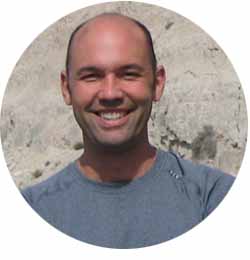
Tim Roughgarden, portrait identified by the linked author, institutional or Commons source
. Tom Wexler works on approximation algorithms, game theory and networks. The author information accompanying Near-Optimal Network Design with Selfish Agents by Elliot Anshelevich and others identifies these research interests and his association with Denison University. It also verifies that this is the coauthor of the strategic network-design work.[ref]
A simple shared-cost example illustrates the kind of incentive question involved. Suppose each of two users can buy a private link costing four or use a common link costing six, split equally if both use it. Both choosing the common link is stable and costs six overall. Both choosing private links is also stable: switching alone to the common link would cost six rather than four. The latter arrangement costs eight despite having no profitable unilateral move.
The contrast motivates separate analysis of the best and worst Nash equilibria. Network-design work asks how cost-allocation rules and algorithms can find efficient stable outcomes, rather than assuming every stable outcome is socially cheapest.[ref]
The Price of Stability for Network Design with Fair Cost Allocation by Elliot Anshelevich and others. Introduction, stable recommendations and best equilibrium

Éva Tardos studies algorithms and the efficiency of systems in which participants act for themselves. Her work with Tim Roughgarden quantified inefficiency in selfish routing, relating equilibrium traffic to a centrally optimized flow.[ref][ref]
How Bad is Selfish Routing? by Tim Roughgarden and Éva Tardos. Network-routing model and inefficiency bounds
A small example shows the issue. Route one unit of traffic over two parallel links, one with latency when carrying flow and one with fixed latency one. The selfish equilibrium sends everything over the first link, giving total latency one: no user can improve by switching to the other link. Splitting traffic equally gives total latency , which minimizes . The equilibrium-to-optimum ratio is .
This is a precise price of anarchy calculation. It demonstrates why individually sensible choices can create avoidable aggregate delay and why a guarantee about an optimization algorithm does not automatically describe an uncoordinated network.

Éva Tardos, portrait identified by the linked author, institutional or Commons source
. Jon Kleinberg studies algorithms and networks, including how the link structure of information can reveal useful organization. His work on the HITS algorithm assigns separate authority and hub scores to web pages: an authority is supported by good hubs, while a hub points to good authorities.[ref]
https://www.cs.cornell.edu/info/people/kleinber/sciam99.html. Author's Hypersearching the Web, hub/authority definition and iterative procedure
If when page links to page , the updates take the form and , with normalization. Combining them gives a power iteration on for authority scores and on for hub scores. Thus the apparently circular verbal definition becomes a numerical eigenvector problem rather than an infinite regress. Link structure supplies a ranking signal, not a guarantee of truth.
With Éva Tardos, Kleinberg also wrote the algorithms textbook Algorithm Design; his institutional page identifies network structure as a central research theme.[ref]

Jon Kleinberg, portrait identified by the linked author, institutional or Commons source
. Anirban Dasgupta studies algorithms for large datasets, networks and related learning problems. His IIT Gandhinagar profile identifies large-scale data algorithms and social networks among his research interests.[ref]
He coauthored The Price of Stability for Network Design with Fair Cost Allocation by Elliot Anshelevich and others and Near-Optimal Network Design with Selfish Agents by Elliot Anshelevich and others. These works connect network optimization with individual route choices. A centrally cheap collection of paths may fail to persist if users can reduce their own payments by switching; conversely, a stable collection need not minimize the total cost.[ref]
The algorithmic challenge is to control both quantities at once: computational work required to find a network and inefficiency introduced by decentralized decisions. That is a concrete bridge between approximation guarantees and strategic behavior.

Elliot Anshelevich studies algorithms for networks with decentralized or strategic decision makers. His institutional research description includes network formation, algorithmic game theory, approximation algorithms and computational questions about collective choice.[ref]
He is a coauthor of The Price of Stability for Network Design with Fair Cost Allocation by Elliot Anshelevich and others. The paper asks how good the best stable network can be when each user can individually change routes and shared edge costs are divided among their users. This separates the best equilibrium's cost from the worst equilibrium's cost, formalized by price of stability and price of anarchy.[ref]
The Price of Stability for Network Design with Fair Cost Allocation by Elliot Anshelevich and others. Introduction and network-design model

Robin J. Evans studies causal inference, graphical models and the behavior of statistical models after hidden variables are marginalized. His work on margins of Bayesian networks characterizes algebraic restrictions that are not captured by a list of conditional independences alone.[ref]
With Thomas S. Richardson and other collaborators, he coauthored Nested Markov Properties for Acyclic Directed Mixed Graphs by Thomas S. Richardson and others. A central idea is to describe constraints on the observed distribution without committing to an identifiable parameter for every unobserved mechanism.[ref]
This matters when two models agree on ordinary independence tests yet differ in other restrictions on probabilities. Separating these cases can improve both model interpretation and estimation: a convenient parameterization of the observed model need not identify the underlying hidden causal story. His institutional personal-page redirect leads to his research-group site.[ref]

Pinned article: Introduction to the OurBigBook Project
Welcome to the OurBigBook Project! Our goal is to create the perfect publishing platform for STEM subjects, and get university-level students to write the best free STEM tutorials ever.
Everyone is welcome to create an account and play with the site: ourbigbook.com/go/register. We belive that students themselves can write amazing tutorials, but teachers are welcome too. You can write about anything you want, it doesn't have to be STEM or even educational. Silly test content is very welcome and you won't be penalized in any way. Just keep it legal!
Intro to OurBigBook
. Source. We have two killer features:
- topics: topics group articles by different users with the same title, e.g. here is the topic for the "Fundamental Theorem of Calculus" ourbigbook.com/go/topic/fundamental-theorem-of-calculusArticles of different users are sorted by upvote within each article page. This feature is a bit like:
- a Wikipedia where each user can have their own version of each article
- a Q&A website like Stack Overflow, where multiple people can give their views on a given topic, and the best ones are sorted by upvote. Except you don't need to wait for someone to ask first, and any topic goes, no matter how narrow or broad
This feature makes it possible for readers to find better explanations of any topic created by other writers. And it allows writers to create an explanation in a place that readers might actually find it.
Figure 1. Screenshot of the "Derivative" topic page. View it live at: ourbigbook.com/go/topic/derivativeVideo 2. OurBigBook Web topics demo. Source. - local editing: you can store all your personal knowledge base content locally in a plaintext markup format that can be edited locally and published either:This way you can be sure that even if OurBigBook.com were to go down one day (which we have no plans to do as it is quite cheap to host!), your content will still be perfectly readable as a static site.
- to OurBigBook.com to get awesome multi-user features like topics and likes
- as HTML files to a static website, which you can host yourself for free on many external providers like GitHub Pages, and remain in full control

Figure 2. You can publish local OurBigBook lightweight markup files to either OurBigBook.com or as a static website.
Figure 3. Visual Studio Code extension installation.
Figure 5. . You can also edit articles on the Web editor without installing anything locally. Video 3. Edit locally and publish demo. Source. This shows editing OurBigBook Markup and publishing it using the Visual Studio Code extension. 
- Infinitely deep tables of contents:


All our software is open source and hosted at: github.com/ourbigbook/ourbigbook
Further documentation can be found at: docs.ourbigbook.com
Feel free to reach our to us for any help or suggestions: docs.ourbigbook.com/#contact