Topics (384k) Articles (398k) Users (410) Discussions (242) Comments (383) Files (13k) New article

S. Sudarshan researches database management systems, particularly database query optimization and the boundary between application code and database queries. His IIT Bombay research description explains work that rewrites repeated query invocations into batches or equivalent larger queries, combining program analysis with query planning.[ref]
For example, an application can issue one query for each employee's department. Collecting the required identifiers and issuing a suitable combined query can reduce repeated communication, provided the rewrite preserves the original transaction and result semantics. Reducing the number of database calls is useful only if it preserves what the program computes. With Abraham Silberschatz and Henry F. Korth, Sudarshan also coauthored the database text and slides cited here.[ref]
Relational Model slides for Database System Concepts by Abraham Silberschatz and others. Author overview and relational query operations
Henry F. Korth studies database management systems, including database transactions and database query processing in parallel and distributed settings. His Lehigh profile records these research areas and work on database storage and aggregation systems.[ref]
https://engineering.lehigh.edu/faculty/henry-hank-korth. Research contributions and database-system projects
With Abraham Silberschatz and S. Sudarshan, he coauthored teaching material on the relational model. A relation is a set of tuples, so mathematical projection removes repeated result tuples; a query language or implementation that retains duplicates has different semantics unless duplicate removal is requested. For example, projecting the department column of two employee records from the same department gives one tuple under set semantics. Keeping this distinction explicit helps connect a declarative query to its actual result.[ref]
Relational Model slides for Database System Concepts by Abraham Silberschatz and others. Relational Algebra, project operation and duplicate elimination

Portrait of Henry F. Korth
. Source. Abraham Silberschatz researches database management systems, operating systems and distributed computing, and coauthored the database text and teaching materials with Henry F. Korth and S. Sudarshan. His Yale profile identifies these research and teaching contributions.[ref]
https://engineering.yale.edu/research-and-faculty/faculty-directory/abraham-silberschatz. Research interests and textbook authorship
Their relational model slides make the distinction between a mathematical query expression and a safely evaluable database query explicit. For example, asking for all values not appearing in a finite table can range over an unlimited universe unless the query restricts its results appropriately. Restricting candidate values to those occurring in stored data makes the intended finite computation visible. This is one reason database theory specifies a query's semantics rather than relying on suggestive notation alone.[ref]
Relational Model slides for Database System Concepts by Abraham Silberschatz and others. slides 3.82 and 3.86, Safety of Expressions
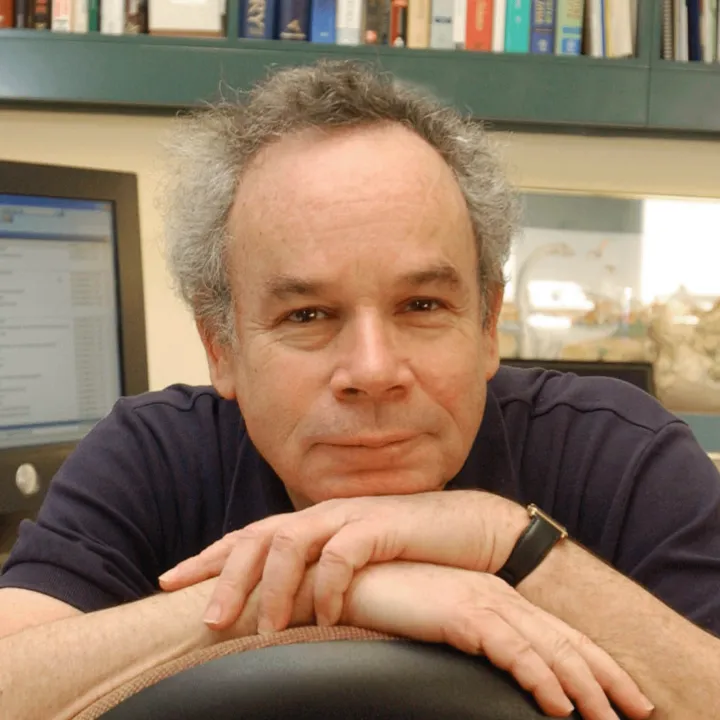
Portrait of Abraham Silberschatz
. Source. Gene M. Amdahl designed computer architectures and analyzed limits to speeding up computation by adding processors. His 1967 paper emphasizes sequential work and irregularities in real scientific programs rather than assuming every operation can be parallelized.[ref]
Validity of the single processor approach to achieving large scale computing capabilities by Gene M. Amdahl. pp.483–485, sequential housekeeping and workload structure
In the standard idealized Amdahl's law model, a fixed workload with serial fraction and perfectly parallel remaining work has speedupIf , ten processors give ; even infinitely many processors cannot exceed a speedup of ten. Communication and synchronization can reduce the gain further. This bound fixes the original workload: scaling the problem along with the machine answers a different performance question.

Portrait of Gene M. Amdahl, circa 1960
. Courtesy of the IBM Corporate Archives; copyright IBM, as recorded by the Computer History Museum. Source.John D. McCalpin developed STREAM, a benchmark for sustained memory bandwidth using simple operations on large arrays. His reference documentation specifies both execution rules and how the benchmark counts transferred bytes and arithmetic work, making reported rates interpretable.[ref]
STREAM Benchmark Reference Information by John D. McCalpin. What is STREAM?, Run Rules and byte/FLOP table
For the triad operation on eight-byte values, the conventional accounting counts two reads and one write: 24 bytes per element, with two floating-point arithmetic operations. A measured rate of therefore corresponds to processed elements per second under that accounting. Actual memory-bus traffic can differ because of cache and write policies. The measurement targets data movement through a specified workload, rather than assuming that peak arithmetic throughput predicts application speed.

Portrait of John D. McCalpin
. Source. Oded Regev introduced learning with errors as a foundation for lattice-based cryptography. His paper connects appropriately parameterized noisy modular linear equations to worst-case lattice problems through a quantum reduction, and constructs a classical public-key encryption scheme from that learning assumption.[ref]
The distinction between a quantum reduction and a classical cryptosystem matters: the encryption and decryption procedures need not run on a quantum computer, even though the reduction establishing the hardness connection uses quantum computation. The work also makes the error distribution part of the problem definition. Removing the errors gives ordinary modular linear equations and changes the computational task fundamentally. Regev's research homepage identifies this lattice-based work among his contributions.[ref]
Robert A. Reckhow coauthored the 1979 paper establishing a general computational framework for propositional proof systems with Stephen Cook. Their formulation represents a proof system by a polynomial-time computable surjection onto the logical tautologies, separating verification cost from the length of the shortest proof.[ref]
The Relative Efficiency of Propositional Proof Systems by Stephen Cook and Robert A. Reckhow. §1, Definition 1.3 and discussion on pp.38–39
The paper compares systems using efficient translations of proofs. If proofs in one system can be converted to proofs in another by a polynomial-time procedure, the translated proofs can grow only polynomially in length. Such a comparison is stronger than observing that both systems eventually prove the same formulas: completeness alone places no useful bound on the cost of converting evidence. This gives proof complexity a way to compare proof formats as computational representations.[ref]
Ashish Vaswani is a machine learning researcher and coauthor of the 2017 paper introducing the Transformer model. The paper's shared-contribution statement credits him with jointly designing and implementing the first Transformer models. It explicitly states that author order is random, so his first position should not be read as sole credit for the architecture.[ref]
Attention Is All You Need by Ashish Vaswani and others. Original byline and contribution footnote
The Transformer model uses self-attention to combine information from different positions in a sequence. In scaled dot-product attention, a query is compared with keys using dot products, then the softmax function supplies weights for combining the corresponding values. The model connects this mechanism to a complete neural network for tasks such as machine translation.[ref]
Attention Is All You Need by Ashish Vaswani and others. Sections3.2–3.2.3: attention computation and its uses
An original one-dimensional example makes the weighting concrete. Choose query , keys , , and values , . With key dimension , the scaled scores are and . The softmax function gives weights and , so the output is . The input values are mixed according to the query–key comparison; this invented example is not a learned translation result.
The original evaluation reported 28.4 BLEU for its large model on the English-to-German newstest2014 test. That is a result under a specific training and evaluation setup, rather than a universal score for all Transformer models.[ref]
Attention Is All You Need by Ashish Vaswani and others. Section6.1 and Table2: big-model translation evaluation
Kishore Papineni is a machine translation researcher who coauthored the 2002 paper introducing BLEU. Its original byline places the authors at IBM's research center. The method supplied an automatic way to compare machine output with human reference translations, making repeated evaluation less dependent on commissioning a fresh human assessment for every system change.[ref]
BLEU: a Method for Automatic Evaluation of Machine Translation by Kishore Papineni and others. Page311: original byline, affiliation, Abstract and motivation
One key idea is modified n-gram precision. Repeating a common word cannot earn unlimited matching credit, because the candidate's matched counts are clipped by the counts available in the references. This connects a cheap string-counting procedure with an explicit defense against a trivial way to inflate ordinary overlap.[ref]
BLEU: a Method for Automatic Evaluation of Machine Translation by Kishore Papineni and others. Section2.1: clipped n-gram counts
For an original unigram example, let the candidate be
red red red blue and the reference be red blue green white. Both candidate word types appear in the reference, but clipping permits only one occurrence of red and one of blue, giving . This is only the unigram component: the full BLEU calculation also combines higher-order n-gram precisions through a geometric mean and applies a brevity penalty.The original method aggregates counts over a corpus. It is not simply the arithmetic mean of independently scored sentences, and a short example explaining one component should not be presented as the complete metric. Its usefulness as an automatic comparison also does not turn word-sequence overlap into a direct proof that every sentence conveys the correct meaning.[ref]
BLEU: a Method for Automatic Evaluation of Machine Translation by Kishore Papineni and others. Section2.1.1: corpus aggregation; Sections2.2.2–2.3: brevity penalty and combined score
T. Bray is credited as editor of RFC 8259, the 2017 specification of JSON as a format for serialization of structured data. The document makes both the grammar and data format interoperability requirements explicit: a shared notation is most useful when independent implementations agree on what it means.[ref]
The JavaScript Object Notation (JSON) Data Interchange Format. Editor byline; Sections1–2: purpose, data values and grammar
One concrete example is duplicate object names. The invented text
{"x":1,"x":2} fits the object grammar, but the specification recommends unique names because receiving implementations can handle duplicates differently. Some keep the last pair, some reject the input and some expose all pairs. A parser accepting text and two applications agreeing on its interpretation are different conditions.[ref]The JavaScript Object Notation (JSON) Data Interchange Format. Section4: object grammar, unique-name recommendation and differing receiver behavior
The specification also requires UTF-8 for exchanged JSON outside a closed ecosystem. Character encoding, syntax and agreement on values thus contribute separately to reliable interchange.[ref]
The JavaScript Object Notation (JSON) Data Interchange Format. Section8.1: network interchange encoding
This work illustrates a contribution through precise specification: identifying where superficially similar implementations can disagree and stating requirements that make exchange predictable. The initial-only header retains the document's editor byline.
Portrait page: www.tbray.org/ongoing/misc/Tim
Mark Davis is a computer scientist whose work connects Unicode specifications with practical software internationalization. The Unicode Consortium's2023 workshop profile credits him with co-founding the Unicode project, leading the architecture of International Components for Unicode and founding the Common Locale Data Repository. It records his presidency of the Consortium from1991 through2022.[ref]
Mark Davis speaker profile at the Unicode Technology Workshop 2023. Official workshop biography: contributions and historical presidency

Mark Davis, from his labeled official Unicode Technology Workshop2023 speaker portrait
. One specific contribution is the Unicode Bidirectional Algorithm: its acknowledgments identify Davis as creator of the initial annex and maintainer of its text through2023. The algorithm computes visual text order from logical text order, allowing differently directed writing systems to coexist in one represented sequence.[ref]
Unicode Bidirectional Algorithm (Revision 51) by the Unicode Consortium. Acknowledgments: initial annex and maintenance through2023
A small original example illustrates the kind of interoperability problem this work addresses. If a line has a right-to-left name next to the digits12, reversing every stored character would turn those digits into21. A direction-sensitive algorithm can reorder surrounding runs while preserving the digits' internal order. Its exact result depends on resolved bidirectional embedding levels and context, rather than a single whole-string reversal.
The specification and the implementation libraries address complementary parts of the problem. A shared algorithm states what independent renderers should compute; reusable internationalization software helps applications apply such behavior consistently. The Common Locale Data Repository supplies another kind of shared resource for locale-sensitive software. These contributions concern data representation and reproducible processing, rather than assigning one fixed glyph shape to every code point.
Tiago Ferreira is identified as Tiago A. Ferreira by his ImageJ project profile, which connects him to the ImageJ User Guide by Tiago Ferreira and Wayne Rasband, SNT and Sholl analysis. The guide's 2012 title page names Ferreira and Wayne Rasband as coauthors. His work combines scientific-software documentation with tools for analyzing spatial structure.[ref]
Tiago A. Ferreira profile on ImageJ.net. Identity panel; author/founder and documentation contributions
[ref]Sholl analysis turns a calibrated tracing or segmented binary image into a Sholl profile. The fact that a Sholl profile does not determine rooted tree topology explains why that summary cannot reconstruct connectivity. Input selection remains a separate issue: the documentation's foreground/background comparison shows that inversion can make the analysis sample the background. Record image segmentation, calibration and sampled radii with the result.[ref]
Wayne Rasband developed NIH Image and ImageJ, tools that make quantitative image processing available through an interactive program and extensible code. The ImageJ project's biography records forty years at the US National Institutes of Health and retirement in 2010. It dates the start of NIH Image to 1987 and ImageJ to 1997, when Rasband explored implementing the earlier program in Java.[ref]
This progression mattered because the same recorded digital image could become input to many explicit measurements. Selecting a region of interest, applying image thresholding and measuring an area are separate operations; each makes a choice that affects the result. ImageJ User Guide by Tiago Ferreira and Wayne Rasband records the program's image representations, selections, analysis commands and scripting facilities.[ref]
ImageJ User Guide by Tiago Ferreira and Wayne Rasband. IJ1.46r, title page and selected contents: Image Types and Formats, Selections, Macro Programming, Threshold and Particle Analyzer
For a small original measurement example, take four stored grayscale valuesSelect values at least 128, obtaining the binary image . If each complete pixel represents a rectangle of calibrated width and height , the area from a calibrated pixel count isThe chosen threshold determines which pixels contribute; the pixel pitch determines the physical area assigned to each. An attractive display alone supplies neither of these measurement choices. The calculation assumes complete selected pixel cells and a uniform rectangular calibration; it is not a measured specimen area.
Rasband's contribution also includes maintaining a community around the software: the project profile describes improvements supplied through user feedback, bug reports, code and documentation. That process connects a general algorithm to the concrete representations and measurement conventions needed for a repeatable analysis.[ref]

Ilya Loshchilov is a researcher in optimization and machine learning whose work with Frank Hutter includes SGDR and AdamW. His Freiburg institutional profile identifies the same author and lists the two papers; it is an alumni record, rather than evidence of a current appointment.[ref]
Ilya Loshchilov profile at the Freiburg Machine Learning Lab. Named alumni profile and 2017/2019 publication entries
Their 2017 SGDR paper introduced a learning rate schedule that decreases the rate along a cosine curve, then raises it at a warm restart while retaining the current parameters. In one cycle,Here is elapsed cycle progress and its length. With and , the rates at are . Raising the rate starts another exploration from the learned parameters; it does not reinitialize the model.[ref]
SGDR: Stochastic Gradient Descent with Warm Restarts by Ilya Loshchilov and Frank Hutter. Section 3, equation 5 and preceding restart description
Their 2019 AdamW work separates decoupled weight decay from the gradient-based update. For ordinary gradient descent, adding gives . Coordinate-dependent scaling can act differently on the penalty contribution, so that equivalence does not extend unchanged to an adaptive gradient method.[ref]
Decoupled Weight Decay Regularization by Ilya Loshchilov and Frank Hutter. Section 2, propositions 1–2
Writing the equation makes the contribution clearer than comparing optimizer names alone.
Ilya Loshchilov, portrait linked from his Freiburg Machine Learning Lab alumni profile
. Frank Hutter researches automated design and configuration of algorithms and machine learning systems. His work asks how experimental measurements of an algorithm's performance can guide the search for better settings, replacing some manual trial and error with an explicit computational procedure.[ref]
Hutter and colleagues developed ParamILS, an algorithm configuration framework described in 2009. It searches settings of a target algorithm and limits unpromising evaluation runs to use the experimental budget more effectively.[ref]
ParamILS: An Automatic Algorithm Configuration Framework by Frank Hutter and others. Abstract, local-search configuration and adaptive evaluation-time limits
A useful example is a solver with several search settings: choosing a setting changes the procedure used on the next problem instance, rather than changing that instance's answer. Performance measured on the tuning instances should therefore be checked on separate instances before claiming a general improvement.With Ilya Loshchilov, Hutter also introduced the decoupled weight decay mechanism underlying AdamW. Their analysis showed why using coupled L2 regularization and directly shrinking parameters cease to be equivalent under general adaptive gradient scaling.[ref]
Decoupled Weight Decay Regularization by Ilya Loshchilov and Frank Hutter. Section 2, propositions 1–2 and Algorithm 2
This contribution connects algorithm design to a precise update equation: an option called weight decay can describe different mathematical operations in different optimizers.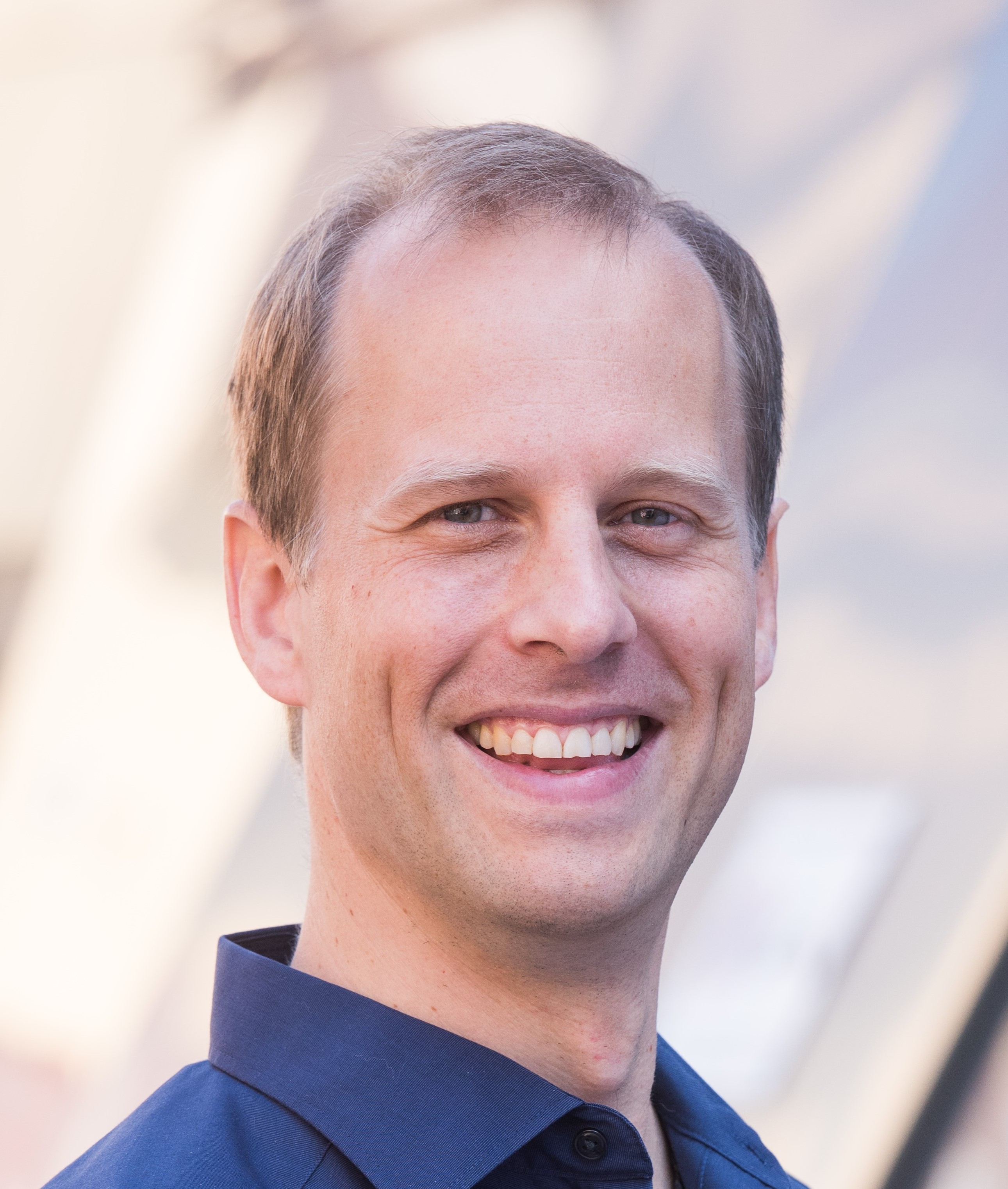
Frank Hutter, portrait linked from his Freiburg Machine Learning Lab profile
. Durk Kingma is a computer scientist who publishes as Diederik P. Kingma. His personal profile describes research on machine learning and generative models, and records a 2017 doctorate at the University of Amsterdam.[ref]
Personal research homepage of Durk Kingma. Brief Bio: formal name, nickname and2017 doctorate
The institutional thesis front matter gives his full formal name as Diederik Pieter Kingma.[ref]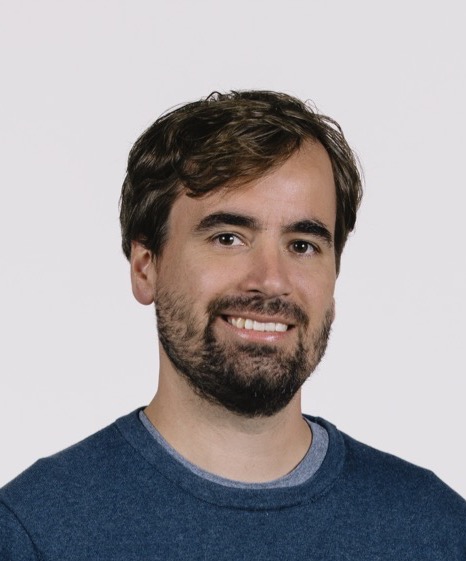
Kingma and Max Welling coauthored Auto-Encoding Variational Bayes by Diederik P. Kingma and Max Welling. A variational autoencoder couples a latent-variable model with an approximating posterior distribution that can be optimized through variational inference. Their reparameterization gradients represent a simulated random variable as a differentiable transformation of parameter-independent noise, allowing derivatives through the transformation.[ref]
Auto-Encoding Variational Bayes by Diederik P. Kingma and Max Welling. §§2.3–2.4, equations4–5 and Gaussian construction
Kingma also coauthored the Adam paper with Jimmy Lei Ba.[ref]Adam: A Method for Stochastic Optimization by Diederik P. Kingma and Jimmy Lei Ba. Full byline and Algorithm1
An original scalar calculation makes the noise handling concrete. Use the Gaussian reparameterization , with having the standard normal distribution and . For , a one-draw reparameterization gradient with respect to isThe derivative holds the sampled fixed. This pathwise gradient is justified here by direct calculation; a general interchange of derivative and expected value requires differentiation under the integral sign conditions.
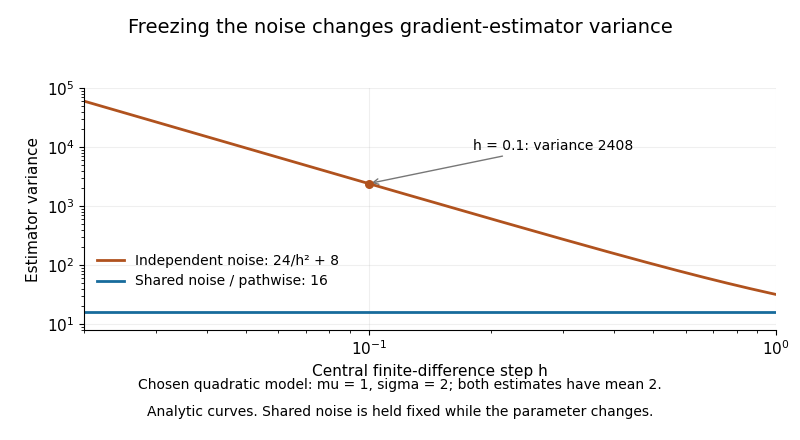
Noise coupling matters even for a central finite difference. If the evaluations at and share the same , the difference of the two squares gives exactly for every . This is a use of common random numbers. If instead the evaluations use independent standard normal distributions for their noise draws, the estimatorstill has expected value , but independence gives the variance of Gaussian-square finite-difference gradientsIndeed, a normal random variable of mean and variance has squared-value variance ; sum the two independent squared-value variances and divide by . Thus shrinking need not suppress simulation noise.
For chosen , and , both estimators have expected value 2, while their variances are 16 with shared noise and 2408 with independent noise. The example is a separate exact quadratic model; its purpose is to explain the role of keeping base noise fixed, not to reproduce a published variational-autoencoder benchmark.
Jimmy Lei Ba, also known as Jimmy Ba, is a computer scientist whose published work includes Adam and layer normalization. His personal research biography identifies Geoffrey Hinton as his doctoral supervisor and describes a focus on efficient algorithms for deep learning.[ref] The 2016 layer-normalization manuscript prints his University of Toronto affiliation and the name Jimmy Lei Ba.[ref]
Layer Normalization by Jimmy Lei Ba and others. First-page full byline and affiliations
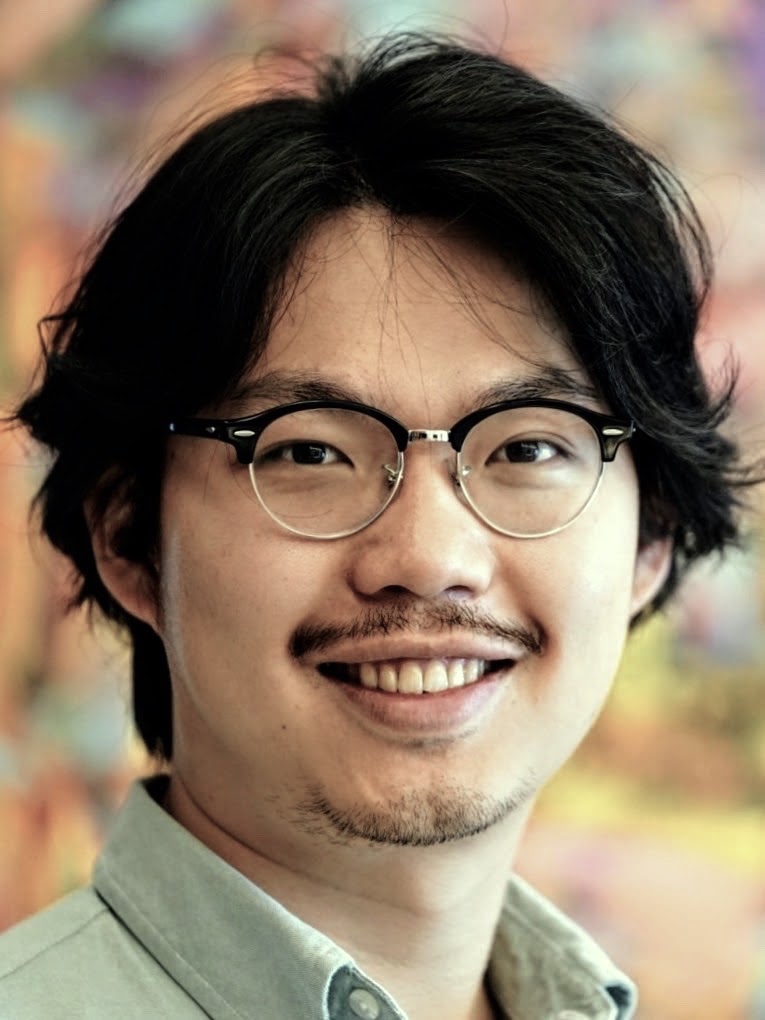
Ba coauthored Adam: A Method for Stochastic Optimization by Diederik P. Kingma and Jimmy Lei Ba with Diederik P. Kingma. The algorithm maintains optimizer state based on gradients, so its update depends on the history of the optimization. Adam bias correction accounts for the early effect of initializing its exponential accumulators at zero.[ref]
Adam: A Method for Stochastic Optimization by Diederik P. Kingma and Jimmy Lei Ba. Algorithm1 and §3, initialization bias
The layer normalization paper, coauthored with Jamie Ryan Kiros and Geoffrey E. Hinton, addresses a different part of a neural network: it computes a mean and variance across feature coordinates of an individual example, then applies learned gain and bias. It avoids making those statistics depend on the other examples in the mini-batch.[ref]
Layer Normalization by Jimmy Lei Ba and others. §3, equation3; Table1
An original numerical example illustrates one precise symmetry. In the stabilized formula of layer normalization, set all gains to 1, all biases to 0, and layer-normalization epsilon to . For , the coordinate arithmetic mean is 2 and the coordinate variance is , so the normalized output is . Adding 10 to every coordinate gives , whose output is again : layer normalization is invariant under a common input shift because the coordinate mean shifts by the same amount and the deviations remain unchanged.
The fixed layer-normalization epsilon affects scaling differently. With , the coordinate variance is and the output is , which differs from the original output. This calculation distinguishes the exact common-shift symmetry from idealized scale invariance when the stabilizer is omitted. It does not assign either numerical example to the paper's experiments.
John Rischard Rice was a computer scientist and mathematician whose work included numerical approximation, elliptic partial differential equations and mathematical software. Purdue's memorial identifies his full name and records that he led the development of the ELLPACK elliptic-problem software.[ref]
In Memoriam: Professor Emeritus John R. Rice by Eugene H. Spafford. Opening identity paragraph and scientific-computing/ELLPACK paragraph
His algorithm selection work separates a problem instance, its descriptive features, candidate algorithms and the performance criterion used to choose between them. The institutional technical-report record is dated 1975; the later chapter is dated 1976.[ref]
The Algorithm Selection Problem by John R. Rice. Purdue technical report 75-152; later Advances in Computers15, pp65–118
Thus choosing an algorithm is itself a computational decision, not simply declaring one program universally best.For an original example, suppose two candidates in an algorithm portfolio take and seconds, with relative errors and on one stipulated instance. If the rule is to minimize runtime subject to error at most , only the second candidate qualifies. Relaxing the tolerance to makes the first candidate the faster admissible choice. The ranking changes because the stated task changes; the four values are chosen examples, not measured solver performance.
A real selector must obtain usable problem features and include selection overhead in its evaluation. Choosing after observing every candidate's completed result is a comparison bound, not automatically an implementable advance decision. This distinction connects numerical software to empirical tests of how its performance varies across inputs.
Jamie Ryan Kiros coauthored the 2016 layer normalization paper with Jimmy Lei Ba and Geoffrey E. Hinton. The original paper gives the full byline Jamie Ryan Kiros and a University of Toronto affiliation. Its normalization statistics are computed across the inputs within one case, rather than across different cases in a batch.[ref]
Layer Normalization by Jimmy Lei Ba and others. Title page; §3, equation 3; §3.1, recurrent-network application
A small original implementation experiment tests that distinction without measuring training speed. Fix one case's two inputs at , unit gains, zero biases and a variance stabilizer of . The within-case mean is and variance is , so its normalized outputs areEvaluate this case first beside another case and then beside . The stated isolated normalization computation returns the same output for in both evaluations, because neither companion enters its statistics. This tests a concrete dependency of the computation, not a claim about every layer of a complete network.
The paper also studies recurrent neural networks, computing the statistics separately at each time step.[ref]
Layer Normalization by Jimmy Lei Ba and others. §3.1 and experimental sections
That application makes the choice of averaging axes consequential. The paper establishes a collaborative contribution; its byline does not assign a separate invention to each author.Max Welling coauthored Auto-Encoding Variational Bayes by Diederik P. Kingma and Max Welling with Durk Kingma. Their work combines a learned approximate posterior with a differentiable transformation of parameter-independent noise, permitting variational inference to use a reparameterization gradient. The original preprint was submitted in December 2013; its historical byline uses Diederik P. Kingma.[ref]
Auto-Encoding Variational Bayes by Diederik P. Kingma and Max Welling. Primary byline, §§2.3–2.4 and §3
An original scalar calculation illustrates the computational mechanism. Let , where has a standard normal distribution and . For the chosen objective ,Holding one noise draw fixed while differentiating its squared transformed value instead gives the stochastic estimates and . At chosen , and , these are both , while the exact expectation gradients are and . Averaging over the noise, rather than treating one draw as the expectation, recovers the exact gradients in this example.
This small calculation isolates the differentiable sampling step. A variational autoencoder also specifies a probabilistic model and an evidence lower bound; a differentiable random transformation alone does not supply those components. The contribution is joint work, not a claim that one coauthor alone originated every part of the method.
Pinned article: Introduction to the OurBigBook Project
Welcome to the OurBigBook Project! Our goal is to create the perfect publishing platform for STEM subjects, and get university-level students to write the best free STEM tutorials ever.
Everyone is welcome to create an account and play with the site: ourbigbook.com/go/register. We belive that students themselves can write amazing tutorials, but teachers are welcome too. You can write about anything you want, it doesn't have to be STEM or even educational. Silly test content is very welcome and you won't be penalized in any way. Just keep it legal!
Intro to OurBigBook
. Source. We have two killer features:
- topics: topics group articles by different users with the same title, e.g. here is the topic for the "Fundamental Theorem of Calculus" ourbigbook.com/go/topic/fundamental-theorem-of-calculusArticles of different users are sorted by upvote within each article page. This feature is a bit like:
- a Wikipedia where each user can have their own version of each article
- a Q&A website like Stack Overflow, where multiple people can give their views on a given topic, and the best ones are sorted by upvote. Except you don't need to wait for someone to ask first, and any topic goes, no matter how narrow or broad
This feature makes it possible for readers to find better explanations of any topic created by other writers. And it allows writers to create an explanation in a place that readers might actually find it.
Figure 1. Screenshot of the "Derivative" topic page. View it live at: ourbigbook.com/go/topic/derivativeVideo 2. OurBigBook Web topics demo. Source. - local editing: you can store all your personal knowledge base content locally in a plaintext markup format that can be edited locally and published either:This way you can be sure that even if OurBigBook.com were to go down one day (which we have no plans to do as it is quite cheap to host!), your content will still be perfectly readable as a static site.
- to OurBigBook.com to get awesome multi-user features like topics and likes
- as HTML files to a static website, which you can host yourself for free on many external providers like GitHub Pages, and remain in full control

Figure 2. You can publish local OurBigBook lightweight markup files to either OurBigBook.com or as a static website.
Figure 3. Visual Studio Code extension installation.
Figure 5. . You can also edit articles on the Web editor without installing anything locally. Video 3. Edit locally and publish demo. Source. This shows editing OurBigBook Markup and publishing it using the Visual Studio Code extension. 
- Infinitely deep tables of contents:



All our software is open source and hosted at: github.com/ourbigbook/ourbigbook
Further documentation can be found at: docs.ourbigbook.com
Feel free to reach our to us for any help or suggestions: docs.ourbigbook.com/#contact