Topics (384k) Articles (398k) Users (410) Discussions (242) Comments (383) Files (13k) New article

Michel Waldschmidt works on transcendental number theory and Diophantine approximation. With Patrice Philippon, he wrote quantitative results for linear forms in logarithms of algebraic numbers of algebraic numbers.[ref]
A nonzero expression such as can be small, but lower bounds limit how small it can be in terms of the algebraic data and coefficient sizes. Such bounds convert qualitative nonvanishing into numerical restrictions useful in solving Diophantine equations. The algebraic-coefficient and integer-coefficient cases require distinct estimates.[ref]
Galyna V. Livshyts studies convex geometry, analysis and high-dimensional probability theory. Her research page connects these areas through geometric inequalities and properties of convex sets.[ref]
Her course Topics in Concentration of Measure and Convexity by Galyna V. Livshyts develops concentration of measure, isoperimetric inequalities and Steiner symmetrization. Replacing each parallel fibre of a set by a centred interval of the same length preserves volume while increasing symmetry, making some inequalities easier to prove. The course page credits the written notes to students, with editing by Livshyts.[ref]
Topics in Concentration of Measure and Convexity by Galyna V. Livshyts. Definition 3.1 and Claim 3.2, p. 28; course-page authorship credit
Herbert W. Hethcote developed mathematical models of infectious-disease transmission. His University of Iowa research history emphasizes the interaction between infectious and susceptible populations.[ref]
His The Mathematics of Infectious Diseases by Herbert W. Hethcote brings together models, thresholds and their assumptions. In a constant-population SIS model, recovery returns individuals to susceptibility; the infectious fraction satisfies a scalar nonlinear equation whose equilibria reveal an invasion threshold. The example shows how a biological transition diagram becomes a differential equation and then a stability question.[ref]
James A. Yorke studies dynamical systems and chaos. His joint 1984 paper with Celso Grebogi, Edward Ott and Steven Pelikan demonstrates strange nonchaotic attractors.[ref]
Strange attractors that are not chaotic by Celso Grebogi and others. Original byline and abstract
The construction distinguishes the geometry of an attracting set from the stability of motion on it. Two incommensurate forcing frequencies permit strange geometry without exponential divergence of nearby trajectories. Persistence is established for perturbations preserving the system's forcing type; arbitrary perturbations need not preserve that behavior.[ref]
Steven Pelikan coauthored the 1984 construction of strange nonchaotic attractors with Celso Grebogi, Edward Ott and James A. Yorke. The original paper verifies the byline.[ref]
Their examples separate an attractor's irregular geometry from sensitive dependence of nearby trajectories. Quasiperiodic forcing with two incommensurate frequencies can produce a geometrically strange attracting set without exponential trajectory separation. This distinction prevents a complicated-looking attractor from being treated as sufficient evidence of chaos.[ref]
Strange attractors that are not chaotic by Celso Grebogi and others. Introduction and quasiperiodically driven examples
Jacques Vélu worked on elliptic curves and explicit isogenies. The original Bordeaux seminar archive verifies the name and his 1970–1971 contribution on elliptic curves.[ref]
https://www.numdam.org/item/STNB_1970-1971____A20_0/. Original seminar author record
Vélu's formulas construct an isogeny from an elliptic curve and a finite kernel subgroup by summing coordinate corrections over the nonidentity kernel points. They turn the abstract quotient by a subgroup into explicit equations for both the map and the quotient curve. The simple short-Weierstrass formulas require characteristic restrictions and do not replace the distinction between geometric kernel points and inseparable degree.[ref]
Isogeny kernels and division polynomials by Andrew Sutherland. Lecture 5, Theorems 5.11, 5.13 and 5.15, explicit Vélu formulas and hypotheses
Michael J. Whinihan published an analysis of Fibonacci Nim in 1963. His paper connects a take-away game with the unique decomposition of an integer into nonconsecutive Fibonacci numbers.[ref]
After the opening move, a player may remove at most twice the preceding player's removal. The smallest summand in the heap's Zeckendorf representation identifies the strategic threshold. Thus a numerical representation becomes operational information about a winning strategy: the relevant feature is not the heap's size alone but its least Fibonacci component.[ref]
Fibonacci Nim by Michael J. Whinihan. Winning-strategy construction
A. J. Cole and A. J. T. Davie introduced Euclid game in a 1969 paper. They explicitly designed it to illustrate an algorithm for a winning strategy, making a familiar arithmetic procedure into a problem of combinatorial game theory.[ref]
A Game Based on the Euclidean Algorithm and a Winning Strategy for It by A. J. Cole and A. J. T. Davie. Original byline and introductory extract
The Euclidean algorithm repeatedly subtracts multiples of the smaller integer from the larger. Allowing a player to choose the multiple creates branching choices: termination alone is no longer the main question, because the player also cares who makes the last legal move. The terminal convention must therefore accompany any strategy statement.
A. J. T. Davie coauthored A Game Based on the Euclidean Algorithm and a Winning Strategy for It by A. J. Cole and A. J. T. Davie with A. J. Cole. The original publisher record verifies the initials and joint authorship.[ref]
A Game Based on the Euclidean Algorithm and a Winning Strategy for It by A. J. Cole and A. J. T. Davie. Original 1969 byline and introductory extract
Their Euclid game turns the Euclidean algorithm into a contest: a legal subtraction is chosen by a player, so computing a greatest common divisor becomes a question about winning positions. The example connects an arithmetic algorithm with a constructive winning strategy in combinatorial game theory.
Arjen K. Lenstra works in computational number theory and cryptography. With Hendrik W. Lenstra and László Lovász, he authored the 1982 paper introducing the LLL algorithm and applying lattice reduction to factoring polynomials with rational number coefficients in polynomial time.[ref]
Factoring Polynomials with Rational Coefficients by Arjen K. Lenstra and others. Introduction, section 1 and polynomial factorization construction
A rational factorization can be converted to an integer-coefficient problem, then studied through modular information and short lattice vectors. Reduction helps recover an exact factor from that indirect arithmetic data. The achievement concerns polynomial factorization; it does not provide a polynomial-time algorithm for general integer factorization. His EPFL interview describes his introduction to randomized algorithms and his approach to teaching mathematical computation.[ref]
https://actu.epfl.ch/news/arjen-lenstra-la-craie-le-tableau-noir-et-le-tourn/. 2019 institutional interview

Arjen Lenstra, photograph in EPFL 2019 interview
. Hendrik W. Lenstra is a mathematician working in computational number theory. He introduced the elliptic-curve factorization method, replacing the multiplicative groups in an earlier factorization approach by groups of points on variable elliptic curves.[ref]
Factoring integers with elliptic curves by Hendrik W. Lenstra, Jr.. Abstract, algorithm and dependence on the smallest prime divisor
The method computes modulo a composite integer without first knowing its prime divisors. If an elliptic-curve operation requires inverting a denominator with , the failed inversion reveals a proper divisor. Varying the elliptic curve varies the group orders modulo the unknown primes, offering repeated chances for a favourable order. He also coauthored the LLL algorithm with Arjen K. Lenstra and László Lovász.[ref]
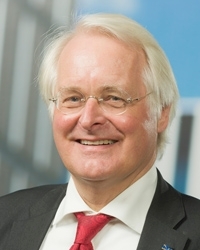
Hendrik W. Lenstra, Clay Mathematics Institute portrait
. Jacob Lurie is a mathematician whose work develops higher category theory and its applications to algebraic geometry and homotopy theory. His 2009 paper sketches a proof of the cobordism hypothesis, a classification of extended topological quantum field theories.[ref]
On the Classification of Topological Field Theories by Jacob Lurie. Abstract and introductory formulation
The organizing idea is that the value on a point, with the appropriate duality properties, can determine the field theory on higher-dimensional manifolds and their cobordisms. Cutting and gluing become composition laws in a higher category. This explains why passing from whole manifolds to pieces of every dimension changes the algebraic framework. His chromatic lecture notes give another bridge between algebra and topology, constructing Morava K-theory from structured topological spectra.[ref]
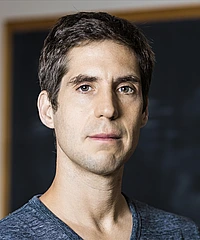
Jacob Lurie, Institute for Advanced Study portrait
. Matthew Emerton is a mathematician working in number theory whose work connects modular forms, representation theory and arithmetic geometry. His authored account of classical modular forms as automorphic forms gives a precise translation between a weight- holomorphic function on the upper half-plane and an arithmetically invariant function on an adelic group.[ref]
The translation converts a transformation rule into invariance and differentiation conditions. In particular, being holomorphic becomes annihilation by a suitable differential operator, while the weight becomes a character under rotations. This places classical modular forms in the same representation-theoretic language as more general smooth automorphic forms. His author page provides the note and identifies his research area as number theory.[ref]
https://www.math.uchicago.edu/~emerton/. Author homepage and Miscellaneous Notes

Andrés Caicedo is the mathematician specializing in set theory identified as Andrés Eduardo Caicedo on his author homepage.[ref]
https://websites.umich.edu/~caicedo/. Author homepage, mathematical identity
His published teaching notes develop infinite partition relations, including omega-Jónsson functions and their relationship to colourings of countably infinite subsets.[ref]For an infinite set , an omega-Jónsson function has the form , and every with satisfies . Thus a large restriction still produces every colour. His notes present a proof of existence assuming the axiom of choice, explicitly attributing the theorem and the simplified proof to their discoverers. This is a concrete example of the interaction between cardinal arithmetic and infinite combinatorics.

Andrés Eduardo Caicedo, Ann Arbor, June 2015; photograph by Juli Pinsak
. András Hajnal was a mathematician working in set theory and combinatorics. He served as director of DIMACS and later as a Rutgers mathematics professor before returning to Hungary after retirement.[ref]
https://www.math.rutgers.edu/people/department-directory/detail/343-in-memoriam/2066-hajnal-andras. Institutional memorial, 1931–2016 and career
One result bearing his name, proved with Paul Erdős, says that every infinite set admits an omega-Jónsson function: a colouring of its countably infinite subsets by its elements such that every subset of the same cardinality still sees every colour. Assuming the axiom of choice, even restricting to a large subset cannot simplify this colouring by omitting a colour. This illustrates the negative side of infinite partition relations, complementing Ramsey theory results that force homogeneous subsets.[ref]

András Hajnal, Rutgers memorial portrait
. Andrei Moroianu works in differential geometry, including Kähler geometry and geometric differential operators. His authored lectures develop the interaction of a Riemannian metric, a complex structure , and the associated Kähler form . For a Kähler manifold, the Levi-Civita connection preserves , linking the real and complex descriptions of curvature.[ref]
A concrete consequence is that the Ricci form represents the tangent First Chern class; prescribing Ricci curvature therefore has a topological constraint, not just a differential equation. His lectures explain the Kähler-Einstein metric equation and illustrate it on Complex projective space and Ricci-flat examples.[ref]
Lectures on Kähler Geometry by Andrei Moroianu. sections 11, 13 and 17
His personal page identifies him as a CNRS research director.[ref]https://moroianu.perso.math.cnrs.fr/. Author homepage

Vitalii Konarovskyi is a mathematician working in probability theory working on stochastic analysis and interacting particle systems. In his paper on coalescing heavy diffusion particles, he constructed a modified Arratia flow in which particles carry conserved mass and their diffusion rate is inversely proportional to that mass, starting from uniformly distributed mass on an interval.[ref]
The mechanism is easy to picture: after particles merge, the heavier cluster diffuses more slowly. A rigorous construction must accommodate a continuum of initial particles, rather than only a finite collection of independent paths. His work develops a stochastic integral for the resulting flow and describes total local time through an occupation measure. His authored notes on the large deviation principle also explain how unlikely fluctuations acquire quantitative path costs.[ref]

Annette Huber, identified as Annette Huber-Klawitter on her institutional page, works in number theory and arithmetic geometry.[ref]
https://uni-freiburg.de/reinemathematik/prof-dr-annette-huber-klawitter/. University of Freiburg profile, research area
With Guido Kings and Niko Naumann, she developed integral and extension-field refinements of the Lazard isomorphism, relating continuous group cohomology to Lie algebra cohomology under stated hypotheses.[ref]The scientific use is a change of language: one can study suitable cohomology classes of a -adic analytic group using alternating multilinear maps on its Lie algebra. Retaining integral coefficients is an extra achievement because passing to rational coefficients loses torsion elements information. The hypotheses in the comparison are therefore essential, rather than cosmetic generality.

Annette Huber-Klawitter, University of Freiburg; photograph credited to Christian Hanner
. Guido Kings is a mathematician working in number theory working in arithmetic geometry. In joint work with Annette Huber and Niko Naumann, he extended the Lazard isomorphism in two directions: to integral coefficients under additional hypotheses, and to analytic cochains over finite extensions compared with -Lie algebra cohomology.[ref]
This comparison replaces cohomological questions about a locally analytic group by questions about its infinitesimal Lie algebra, where linear and multilinear calculations are available. The base field matters: being analytic over is more restrictive than merely being analytic over . His University of Regensburg page identifies his mathematical position and links to his research.[ref]
https://www.uni-regensburg.de/mathematik/prof-dr-guido-kings. Official faculty page

Guido Kings, University of Regensburg portrait
. Niko Naumann works in arithmetic geometry and homotopy theory. With Annette Huber and Guido Kings, he refined the Lazard isomorphism, extending a comparison between continuous group cohomology and Lie algebra cohomology to integral coefficients under suitable hypotheses.[ref]
Some complements to the Lazard isomorphism by Annette Huber and others. Abstract and the integral comparison results
The distinction between integral and rational coefficients matters: tensoring with can discard torsion elements, so a rational comparison does not automatically recover integral information. The same work also treats analytic cochains over finite extensions of . Naumann's author page lists arithmetic algebraic geometry, motivic homotopy theory, and joint work on nilpotence and descent in equivariant stable homotopy theory.[ref]
Pinned article: Introduction to the OurBigBook Project
Welcome to the OurBigBook Project! Our goal is to create the perfect publishing platform for STEM subjects, and get university-level students to write the best free STEM tutorials ever.
Everyone is welcome to create an account and play with the site: ourbigbook.com/go/register. We belive that students themselves can write amazing tutorials, but teachers are welcome too. You can write about anything you want, it doesn't have to be STEM or even educational. Silly test content is very welcome and you won't be penalized in any way. Just keep it legal!
Intro to OurBigBook
. Source. We have two killer features:
- topics: topics group articles by different users with the same title, e.g. here is the topic for the "Fundamental Theorem of Calculus" ourbigbook.com/go/topic/fundamental-theorem-of-calculusArticles of different users are sorted by upvote within each article page. This feature is a bit like:
- a Wikipedia where each user can have their own version of each article
- a Q&A website like Stack Overflow, where multiple people can give their views on a given topic, and the best ones are sorted by upvote. Except you don't need to wait for someone to ask first, and any topic goes, no matter how narrow or broad
This feature makes it possible for readers to find better explanations of any topic created by other writers. And it allows writers to create an explanation in a place that readers might actually find it.
Figure 1. Screenshot of the "Derivative" topic page. View it live at: ourbigbook.com/go/topic/derivativeVideo 2. OurBigBook Web topics demo. Source. - local editing: you can store all your personal knowledge base content locally in a plaintext markup format that can be edited locally and published either:This way you can be sure that even if OurBigBook.com were to go down one day (which we have no plans to do as it is quite cheap to host!), your content will still be perfectly readable as a static site.
- to OurBigBook.com to get awesome multi-user features like topics and likes
- as HTML files to a static website, which you can host yourself for free on many external providers like GitHub Pages, and remain in full control

Figure 2. You can publish local OurBigBook lightweight markup files to either OurBigBook.com or as a static website.
Figure 3. Visual Studio Code extension installation.
Figure 5. . You can also edit articles on the Web editor without installing anything locally. Video 3. Edit locally and publish demo. Source. This shows editing OurBigBook Markup and publishing it using the Visual Studio Code extension. 
- Infinitely deep tables of contents:


All our software is open source and hosted at: github.com/ourbigbook/ourbigbook
Further documentation can be found at: docs.ourbigbook.com
Feel free to reach our to us for any help or suggestions: docs.ourbigbook.com/#contact