Topics (384k) Articles (398k) Users (410) Discussions (242) Comments (383) Files (13k) New article

Karl-Heinz Hellwich contributed to IUPAC polymer nomenclature and terminology. IUPAC's author index lists his coauthorship of A brief guide to polymer nomenclature and the recommendations on biorelated polymers.[ref]
Articles of Karl-Heinz Hellwich in Pure and Applied Chemistry by IUPAC. author identity and listed 2012 reports
A central scientific use of nomenclature is to distinguish molecular structure from a material's origin or intended use. Saying that a polymer is used in a medical device does not specify its polymer repeat unit, copolymer sequence, end groups or molecular-size distribution. Those distinctions can matter when comparing chemical reactions or measured properties.
For an original atom-counting example, a repeat unit written has composition . A sequence of 100 such repeat units contributes before the end groups are counted. Its repeat-unit contribution to molar mass is approximately ; the complete chain requires the additional end-group composition. The structural repeat is not by itself a complete molecular formula for a finite molecule.
Likewise, two copolymers can have the same overall monomer proportions and different sequences. A block copolymer and a statistical copolymer therefore cannot generally be identified solely by elemental composition. Precise structural descriptions make such comparisons reproducible without implying that a naming convention predicts every material property.
Michael Hess coauthored the 2012 IUPAC recommendations on biorelated-polymer terminology. The verified byline places his contribution in the chemistry of polymers, alongside Michel Vert, Karl-Heinz Hellwich and the other authors.[ref]
Terminology for biorelated polymers and applications (IUPAC Recommendations 2012) by Michel Vert and others. full byline and recommendation scope
One recurring measurement issue in polymer science is that a specimen contains molecules of different sizes. The number-average molar mass and weight-average molar mass answer different questions:Here counts molecules of molar mass . The second average emphasizes heavier molecules; the word weight in its conventional name does not mean gravitational force.
For an original two-population model, take equal molecule counts at and . Then and . Their ratio is . Reversing to equal mass fractions would change the number fractions and the resulting averages.
Consequently a statement that a biorelated polymer has a particular molar mass must identify the average and measurement method. A changed size distribution can change these averages even when the specimen retains the same total mass. The example explains a quantitative reporting issue relevant to the terminology effort; it does not attribute these hypothetical measurements or formulas' invention to Hess.
Philip Hodge investigated ring-opening metathesis polymerization of macrocycles. In a 2015 study with Abdel Chakiri, he prepared functionalized polymers from macrocyclic olefins derived from deoxycholic acid. The primary manuscript reports film formation and discusses potential materials applications.[ref]
Entropically-driven ring-opening metathesis polymerization (ED-ROMP) of macrocyclic olefins prepared from deoxycholic acid to give functionalized polymers by Philip Hodge and Abdel Chakiri. accepted manuscript p. 1, byline, affiliation and Abstract
The work illustrates an alternative to explaining every ring-opening reaction solely by release of strain in a small ring. For sufficiently large rings, the balance between rings and chains can depend strongly on entropy and concentration. The thermodynamic question is the change in Gibbs free energy,for a specified reaction and state, including the relevant activities.
For an original numerical illustration, a stipulated reaction with and at has . This demonstrates how a favorable entropy contribution can supply the free-energy decrease without a negative enthalpy change. It does not assign those values to Hodge's experimental macrocycles.
Functional groups retained in the resulting material provide another design variable beyond chain formation. Film formation, mechanical performance and suitability for contact with cells are separate tests: a transparent film is not by itself proof of a biological effect. The example connects molecular architecture, thermodynamics and material characterization without promoting a proposed use to an established result.
Przemyslaw Kubisa studied the use of ionic liquids in polymerization. His 2004 review examined their solvent role, including effects on polymerization kinetics and separation of polymer from catalyst-containing reaction media.[ref]
The solvent is part of the chemical system rather than merely an inert container. It can alter the environment of an active chain end, the solubility of growing chains and the partition of catalyst and product. Consequently equal monomer conversion in two media does not guarantee equal chain lengths or equal product purity.
An original ideal-chain calculation makes one distinction precise. Suppose of monomer is combined with of initiator, every initiator forms exactly one growing chain, and there is no chain transfer or termination. At conversion , the degree of polymerization contributed by incorporated monomer isIf only half the initiator forms chains under the same assumptions, that average becomes 160, despite equal monomer conversion. Conversely, chain transfer can increase the chain count and lower the average.
The model is deliberately idealized, not a measurement in Kubisa's review. It shows why solvent comparisons need chain-count and molecular-size information as well as reaction yield. A solvent enabling convenient catalyst recovery still requires separate evidence for its influence on the polymerization mechanism.
Marguerite Rinaudo investigated polysaccharides and the interactions governing their behavior in solution and assembled materials. Her 2006 paper discusses how ionic interactions, hydrogen bonds and other non-covalent interactions affect chain conformation, solubility and gel formation. Its primary byline identifies her CERMAV-CNRS affiliation.[ref]
Non-covalent interactions in polysaccharide systems by Marguerite Rinaudo. full byline, affiliation and Abstract
This connects chemical composition to behavior without requiring a new covalent bond for every structural change. Changing pH can change the charge state of an ionizable chain, and changing ionic strength can alter interactions between charged segments. Measuring only the polymer repeat unit therefore need not predict the chain's shape or interactions in a particular solution.
For an original independent-site model of protonatable amine groups, suppose the conjugate acid has . The protonated fraction isAt pH 5.5 it is ; at pH 7.5 it is . A chain with 100 equivalent sites would therefore have mean charges about and in this stipulated model. The backbone need not be cleaved for its electrostatic behavior to change.
Real chains can couple neighboring sites and change their effective acid-base behavior with salt concentration and conformation. The simple calculation is not a fitted result from Rinaudo's paper. It illustrates why controlled solution conditions and measurements of charge, size or viscosity complement a structural formula.
François Schué coauthored the IUPAC recommendations on terminology for biorelated polymers and their applications. This work provided shared definitions for communicating material behavior across polymer chemistry and biological applications.[ref]
Terminology for biorelated polymers and applications (IUPAC Recommendations 2012) by Michel Vert and others. published full byline and scope
A useful illustration concerns chain scission and loss of specimen mass. Breaking a long polymer backbone produces shorter molecules; those fragments need not immediately leave the specimen. Measuring a lower number-average molar mass therefore answers a different question from weighing the remaining material.
For an original counting model, begin with 100 linear chains, each containing 1000 identical polymer repeat units. Make exactly one internal cut in every chain, without removing any material and neglecting the tiny end-group mass change. There are now 200 chains containing the same 100000 repeat units. The average chain length falls from 1000 to 500 units, while the specimen mass is unchanged. The two fragments from a cut need not be equal for this average to halve.
An experiment addressing the distinction can combine size-exclusion chromatography of recovered molecules with a specimen mass balance and analysis of released material. A molecular-size change alone does not establish how much material has left, which chemical pathway caused cleavage, or whether living organisms caused it. The example shows why precise terminology is part of interpreting an experiment, not merely a choice of labels.
Abdel Chakiri coauthored a 2015 study with Philip Hodge on ring-opening metathesis polymerization of macrocyclic olefins prepared from deoxycholic acid. The primary manuscript gives the Manchester chemistry affiliation and describes functionalized polymers and film formation.[ref]
Entropically-driven ring-opening metathesis polymerization (ED-ROMP) of macrocyclic olefins prepared from deoxycholic acid to give functionalized polymers by Philip Hodge and Abdel Chakiri. accepted manuscript p. 1, byline, affiliation and Abstract
The scientific idea is to use molecular building blocks that carry useful functional groups into the resulting polymer, rather than treating the chain backbone as the only design variable. A polymer repeat unit can describe a recurring structural contribution, while the final material also depends on its chain lengths, end groups and retained functionality.
For an original bookkeeping example, suppose an ideal polymerization converts 100 macrocyclic building blocks into long chains without losing their repeat-unit mass, and each building block carries two accessible hydroxyl groups. The product contains 200 such groups regardless of whether it forms one chain or ten. If the repeat contribution is , that corresponds to of groups in the end-group-neglecting model. Changing the number of chains changes average molecular size but not that stipulated functional-group loading.
The assumption of two surviving accessible groups per unit must be tested, not inferred from a synthetic scheme alone. Spectroscopy or chemical analysis can examine structure; film formation and mechanical testing examine different properties. The manuscript's proposed use of films for supporting cell growth should likewise be distinguished from a demonstrated biological or clinical result. The numerical loading above is illustrative and is not assigned to Chakiri's actual polymers.
Takeru Higuchi, credited as T. Higuchi in his 1963 paper, developed mathematical descriptions of diffusion-controlled drug release from solid matrices. The University of Kansas archive holds that exact paper among his personal papers, establishing the connection between the initial-only byline and the full name.[ref]
Takeru Higuchi papers in the University of Kansas archives. Personal papers of Takeru Higuchi, PP359, Box10, Folder13; exact 1963 item title

Takeru Higuchi, portrait identified by the Kansas Historical Society
. External portrait linked from the Kansas Historical Society's named Kansapedia biography.The paper distinguished a uniform matrix serving as the diffusional medium from a granular matrix penetrated by a solvent. It considered planar and spherical geometries, rather than treating all sustained release as a single first-order process.[ref]
Mechanism of Sustained-Action Medication. Theoretical Analysis of Rate of Release of Solid Drugs Dispersed in Solid Matrices by T. Higuchi. 1963, publisher byline, affiliation and Abstract, pp.1145–1149
The resulting models connect formulation geometry and material properties with a measurable drug release rate.A simplified planar derivation illustrates the Higuchi equation. Assume a stationary matrix with constant diffusion coefficient , excess undissolved drug, a perfect sink condition in drug release at its exposed face, and a slowly moving depletion boundary at depth . Approximate the dissolved-drug concentration as linear from zero at the exposed face to its solubility at that boundary. If initial total loading per unit volume is , the amount released per exposed area isbecause the depleted layer retains a triangular dissolved-drug profile. The outward mass flux is approximately , so mass conservation givesThus the cumulative released amount is proportional to in this model, whereas its derivative decreases as . The high-loading approximation makes the slowly moving boundary assumption more plausible; the result is not a general solution for an arbitrary dissolving or swelling material.
For an original illustration, let with . The cumulative release is at one hour and at four hours, but the instantaneous rates per area are respectively and . These are chosen model values. They show why sustained release need not be constant-rate release. Finite thickness, depletion of the solid phase, changing solubility or external transport resistance can end this regime. Measuring release tests the model's transport assumptions; a square-root fit alone does not uniquely identify them.
Brent C. Trela is first author, with Andrew L. Waterhouse, of the 1996 study measuring isomer-specific molar absorption coefficients and stability of resveratrol. The paper reports distinct ethanol absorption maxima for trans-Resveratrol and cis-Resveratrol and examines dependence on light exposure and pH.[ref]
Resveratrol: Isomeric Molar Absorptivities and Stability by Brent C. Trela and Andrew L. Waterhouse. Byline and Abstract; pp.1253–1257
The contribution is quantitative: an optical signal becomes a concentration estimate only through the response factor for the actual chemical species and measurement conditions. Equal molecular formulas do not ensure equal optical responses.
At the reported trans-isomer maximum, in ethanol, the coefficient is . An original Beer-Lambert law example has absorbance in a path, givingUsing an incorrectly assumed coefficient in the same units instead gives , a 20 percent overestimate. The incorrect coefficient is hypothetical, not attributed to another publication.
A stable instrument reading also does not establish stable chemical composition if the preparation changes under illumination. Separating isomers by chromatography and controlling the sample environment can test changes hidden by a single optical channel. Trela's joint measurements therefore connect chemical identity and sample handling with the interpretation of an analytical signal.
Andrew L. Waterhouse is a wine chemist whose UC Davis profile describes research in phenolic compounds and wine oxidation.[ref]
Andrew L. Waterhouse at UC Davis. Official profile, Research section
With Brent C. Trela, he coauthored the 1996 primary study of resveratrol isomer absorptivities and stability.[ref]
Andrew L. Waterhouse, portrait identified by UC Davis
. External portrait explicitly labelled Dr. Andrew L Waterhouse on the official Viticulture and Enology profile.An original mixture example illustrates why identifying both isomers requires more than a total optical signal. Suppose two calibrated channels obeywhere are trans- and cis-isomer concentrations expressed numerically in . These coefficients are chosen for the example, not taken from the paper. Readings and giveDifferent spectral responses make the two channels informative jointly. If their response rows were proportional, greater reading precision would not distinguish both concentrations. Multivariate calibration or separation by chromatography must establish the required selectivity. The measured composition is an analytical result; it does not by itself establish a health effect of consuming the preparation.
G. W. Burton is first author of the 1983 study with A. Joyce and K. U. Ingold on lipid-soluble chain-breaking activity in plasma and erythrocyte membrane preparations. The investigators compared that activity with vitamin E determined by high-performance liquid chromatography.[ref]
Is vitamin E the only lipid-soluble, chain-breaking antioxidant in human blood plasma and erythrocyte membranes? by G. W. Burton and others. Byline and Abstract, inhibited-autoxidation and chromatographic comparison
The work illustrates why both the measurement and its normalization matter. An antioxidant concentration per volume and its amount relative to available lipid answer different questions. The paper explicitly examined vitamin-E/lipid ratios in the sampled materials.[ref]
For an original example, sample A contains of a donor and of a specified lipid reference. Its ratio is . Sample B contains donor and lipid reference, giving . The donor concentration is 50 percent higher in B, yet the donor-to-lipid ratio is 25 percent lower.
Those statements are compatible because their denominators differ. Neither ratio alone predicts the rate of lipid peroxidation: local antioxidant reaction competition, chemical accessibility and other chain reactions also matter. The example uses a stipulated common lipid-amount convention and does not assign molecular concentrations to the paper's actual samples or infer a clinical benefit.
A. Joyce coauthored the 1983 investigation of chain-breaking antioxidant activity in human plasma and erythrocyte membrane preparations with G. W. Burton and K. U. Ingold.[ref]
Is vitamin E the only lipid-soluble, chain-breaking antioxidant in human blood plasma and erythrocyte membranes? by G. W. Burton and others. Byline and Abstract
The experiment compared an inhibited autoxidation assay with high-performance liquid chromatography measurements of vitamin E, linking a functional reaction readout with a chemically selective measurement.An original comparison shows how the two measurements can test a proposed attribution. Suppose an inhibited interval is and a calibrated radical initiation rate is . Under a model of two intercepted radicals per donor molecule, the interval corresponds toIf independent chromatography instead reports of the proposed donor, the activity-equivalent concentration is 75 percent of that compositional value.
This discrepancy does not uniquely identify its cause. Extraction recovery, the assumed trapping stoichiometry, accessibility within the reaction medium or an incorrect initiation rate could affect the relation. Agreement would likewise support the attribution only within the measurement model and its measurement uncertainty. The chosen numbers are not results from Joyce's paper; they explain the value of measuring composition and activity by different methods without equating either observation automatically with an effect in a living person.
K. U. Ingold coauthored the 1983 study with G. W. Burton and A. Joyce comparing lipid-soluble chain-breaking antioxidant activity with independently measured vitamin E. The activity measurement used an inhibited autoxidation assay, while high-performance liquid chromatography supplied a compositional measurement.[ref]
Is vitamin E the only lipid-soluble, chain-breaking antioxidant in human blood plasma and erythrocyte membranes? by G. W. Burton and others. 1983, byline and Abstract, assay comparison
The scientific distinction is between how quickly a radical-trapping antioxidant intercepts reactive intermediates and how much trapping capacity a finite sample contains. Antioxidant reaction competition concerns rates; an inhibited interval can instead report a finite capacity under a specified initiation model.
For an original idealization, suppose each donor molecule intercepts radical events and radicals enter at constant concentration rate . Complete interception until exhaustion givesAn observed interval of at chosen identifies capacity . It is consistent with and , or and .
Thus timing alone does not identify molecular stoichiometry and concentration separately. A chromatographic measurement can supply independent information, provided the chemical identity and response calibration are appropriate. This is an illustrative identifiability argument, not a fitted value or individual experimental task assigned to Ingold.
Pradeep K. Sengupta is first author, with Michael Kasha, of the 1979 investigation connecting the unusual fluorescence of 3-Hydroxyflavone and quercetin with excited-state intramolecular proton transfer.[ref]
Excited state proton-transfer spectroscopy of 3-hydroxyflavone and quercetin by Pradeep K. Sengupta and Michael Kasha. Original full byline and Abstract, printed p.382
The study compared optical observations under different environments, rather than assigning a mechanism from a single emission maximum.One informative comparison concerns excitation spectra: the authors reported that the violet and green emissions could share the same excitation spectrum under their low-temperature conditions.[ref]
Excited state proton-transfer spectroscopy of 3-hydroxyflavone and quercetin by Pradeep K. Sengupta and Michael Kasha. Printed p.384, excitation spectra for the two luminescence regions
That supports a common initially absorbing species, while allowing different processes after excitation. It does not require identical emitting molecular structures.An original test illustrates the logic. Suppose a corrected excitation profile is and two emission channels giveNormalizing each channel removes its constant amplitude, revealing matching shapes. At chosen excitation wavelengths where is , signals and differ in brightness but have identical normalized profiles. A contaminant whose absorption happened to have the same profile would not be excluded by this comparison alone.
Complementary temperature and deuteration measurements therefore matter: they change the competition among pathways while testing a common interpretation. The paper discusses deuteration effects on relative emission.[ref]
Excited state proton-transfer spectroscopy of 3-hydroxyflavone and quercetin by Pradeep K. Sengupta and Michael Kasha. Printed p.384, Figure4
The numerical profiles above are original examples, not the reported spectra. Together these comparisons show why a mechanism gains support from several different experimental perturbations.Michael Kasha connected molecular light emission with the structure and competing relaxation of excited states. His 1950 paper formulated the spectroscopic regularity now called Kasha's rule: emission of a given spin multiplicity normally comes from the lowest excited level of that multiplicity.[ref]
The argument involves rates, rather than a prohibition on preparing a higher excited state. In an original model, a higher state has radiative rate and competing molecular internal conversion rate . Its probability of emitting before conversion isChoosing and gives approximately . Most molecules can therefore reach the lower state before emitting even when absorption initially populates the higher state. These are illustrative rates, not measured constants assigned to the 1950 paper. A rate competition also explains why the regularity has conditions and exceptions.
Kasha later coauthored the 1979 investigation with Pradeep K. Sengupta of 3-Hydroxyflavone and quercetin fluorescence. Comparing solution spectra, rigid low-temperature matrices, excitation spectra and isotope substitution supported formation of an emitting tautomer through excited-state proton transfer.[ref]
Excited state proton-transfer spectroscopy of 3-hydroxyflavone and quercetin by Pradeep K. Sengupta and Michael Kasha. Printed pp.382–384, Figures1–4 and discussion
This distinguishes the electronic state initially reached by absorption from the molecular form that eventually emits. The lesson is experimental: emission colour and lifetime can identify competing pathways that a molecular formula alone cannot reveal.Evan A. Haidasz is first author of a spectrophotometric method for measuring radical-trapping antioxidant reactivity, with Antonius T. M. Van Kessel and Derek A. Pratt. The primary paper uses visible-light monitoring of hydrocarbon co-oxidation with PBD-BODIPY or STY-BODIPY signal carriers.[ref]
A Continuous Visible Light Spectrophotometric Approach To Accurately Determine the Reactivity of Radical-Trapping Antioxidants by Evan A. Haidasz and others. Byline and Abstract; Journal of Organic Chemistry81, pp.737–744
The measurement connects a continuous optical trace with a kinetic model, rather than ranking compounds solely by a final colour.For an original idealization, let a signal carrier at concentration obey the Beer-Lambert law in a fixed path:With stipulated , and slope , the inferred carrier-consumption rate is . These chosen optical parameters are not a calibration assigned to the paper's dyes.
A constant background drops out of the derivative, but a drifting background does not. If itself changes, its slope can mimic chemical conversion. Products that also absorb at the measurement wavelength likewise require an expanded response model. Continuous observation provides timing information, while chemical identity and calibration determine what that timing means. The inferred dye-consumption rate is not automatically the elementary rate of every radical event.
Antonius T. M. Van Kessel coauthored the visible-light co-oxidation assay with Evan A. Haidasz and Derek A. Pratt for characterizing radical-trapping antioxidants.[ref]
A Continuous Visible Light Spectrophotometric Approach To Accurately Determine the Reactivity of Radical-Trapping Antioxidants by Evan A. Haidasz and others. Byline and Abstract
A central analytical distinction is between reaction speed and finite trapping capacity: an inhibitor can intercept radicals rapidly yet be exhausted after relatively few events.An original competition model holds the concentrations of donor and reporter approximately constant over a short interval. Let the effective rates for a radical be for interception and for a competing reporter route. The probability of interception as the first event isChoosing and gives . Halving without changing concentration gives . The kinetic response changes even if the two preparations have the same total number of donor molecules.
Under a separate ideal capacity model, two intercepted radicals per donor at and constant initiation rate give an inhibited interval . That capacity estimate alone does not distinguish the two chosen rate constants. Actual co-oxidation traces require the appropriate chain-reaction and reporter model; the simple competition and capacity calculations illustrate different kinds of information, not individual experimental tasks attributed to Van Kessel.
Derek A. Pratt studies the mechanisms and products of radical reactions, including hydrocarbon and lipid oxidation and its inhibition by antioxidants. His University of Ottawa profile identifies this research programme and his chemistry affiliation.[ref] With Evan A. Haidasz and Antonius T. M. Van Kessel, he coauthored the visible-light spectrophotometric method for radical-trapping antioxidant reactivity.[ref]

Derek A. Pratt, portrait identified by the University of Ottawa
. External portrait labelled Derek Pratt on the official Faculty of Science profile.An original steady-state model illustrates why adding a trap can change oxidation kinetics. Let radicals enter at rate , disappear by bimolecular radical chain termination at rate , and be removed by trapping at rate . Radical balance givesWith no trapping, ; with sufficiently strong trapping, . A substrate-oxidation rate proportional to consequently follows different initiation-rate scalings in those regimes.
For chosen and , the no-trap radical concentration is . Adding gives . These are illustrative model parameters, not measurements from Pratt's work. Experimental interpretation must identify which reactions the optical reporter follows; a reduced signal alone does not locate the inhibited chemical step or establish an effect in a living system.
Muhammad N. Siddiquee is first author, with Arno de Klerk, of a 2016 study on measuring dissolved oxygen during liquid-phase hydrocarbon oxidation. The primary byline preserves the middle initial N.; the publisher identifies the authors' University of Alberta chemical-engineering affiliation at the time.[ref]
In Situ Measurement of Liquid Phase Oxygen during Oxidation by Muhammad N. Siddiquee and Arno de Klerk. 2016 primary author-information panel and Abstract
The work addresses oxygen availability as an experimentally measurable variable affecting autoxidation.The abstract reports oxygen-transfer measurements in benzene and indan at and oxygen partial pressure 19.2 kPa.[ref]
In Situ Measurement of Liquid Phase Oxygen during Oxidation by Muhammad N. Siddiquee and Arno de Klerk. Abstract, solvent systems and measurement conditions
This supports a contribution in reaction measurement without inferring uninspected details of the apparatus.An original transient model shows what a transfer measurement can identify. In a nonreacting, well-mixed liquid with constant interfacial equilibrium concentration ,Suppose , , and the measured concentration after 2 minutes is . ThenThe fitted quantity includes transfer geometry through the interfacial-area contribution ; it is not simply the molecular rate constant of an oxidation reaction.
If oxygen is consumed while transfer occurs, the nonreacting model is incomplete. A low dissolved concentration can reflect slow replenishment, rapid reaction, or both. Varying mixing and independently characterizing consumption helps distinguish these explanations. The example illustrates why Siddiquee and de Klerk's direct concentration question matters to interpretation of reaction rates, while making no claim that its hypothetical values reproduce their experiment.
Arno de Klerk researches chemical conversion processes, including catalysis and hydrocarbon oxidation. His University of Alberta profile records qualifications in chemical engineering and analytical chemistry and describes work connecting conversion chemistry with reactor behavior.[ref]
Arno de Klerk at the University of Alberta. Official profile, About and Research
Measuring what reactants actually reach a liquid-phase reaction is one link between those subjects.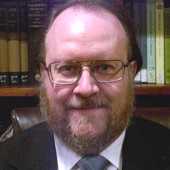
Arno de Klerk, portrait identified by the University of Alberta directory
. Source. With Muhammad N. Siddiquee, de Klerk coauthored a 2016 study of in situ liquid-phase oxygen measurement during oxidation. The primary abstract explains why oxygen availability affects reaction rate and product selectivity.[ref]
In Situ Measurement of Liquid Phase Oxygen during Oxidation by Muhammad N. Siddiquee and Arno de Klerk. Industrial & Engineering Chemistry Research 55, pp. 6607–6618, byline and Abstract
The contribution concerns quantifying the reaction environment rather than equating gas supplied to a vessel with dissolved reactant available everywhere inside it.An original well-mixed balance illustrates the issue. Let liquid oxygen concentration be , its equilibrium value at the gas boundary be , the volumetric transfer coefficient be , and a stipulated first-order consumption coefficient be . ThenFor and , the steady dissolved concentration is only . Doubling the transfer coefficient gives even though the intrinsic consumption coefficient is unchanged. A changed measured oxidation rate need not imply changed intrinsic chemical kinetics.
This is a deliberately simplified interphase mass transfer model, not reconstructed experimental data. Spatial gradients, changing products and chain reactions can require a richer description. Direct measurements of liquid composition make it possible to test which interpretation of a reactor's behavior is consistent with the observations.
Pinned article: Introduction to the OurBigBook Project
Welcome to the OurBigBook Project! Our goal is to create the perfect publishing platform for STEM subjects, and get university-level students to write the best free STEM tutorials ever.
Everyone is welcome to create an account and play with the site: ourbigbook.com/go/register. We belive that students themselves can write amazing tutorials, but teachers are welcome too. You can write about anything you want, it doesn't have to be STEM or even educational. Silly test content is very welcome and you won't be penalized in any way. Just keep it legal!
Intro to OurBigBook
. Source. We have two killer features:
- topics: topics group articles by different users with the same title, e.g. here is the topic for the "Fundamental Theorem of Calculus" ourbigbook.com/go/topic/fundamental-theorem-of-calculusArticles of different users are sorted by upvote within each article page. This feature is a bit like:
- a Wikipedia where each user can have their own version of each article
- a Q&A website like Stack Overflow, where multiple people can give their views on a given topic, and the best ones are sorted by upvote. Except you don't need to wait for someone to ask first, and any topic goes, no matter how narrow or broad
This feature makes it possible for readers to find better explanations of any topic created by other writers. And it allows writers to create an explanation in a place that readers might actually find it.
Figure 1. Screenshot of the "Derivative" topic page. View it live at: ourbigbook.com/go/topic/derivativeVideo 2. OurBigBook Web topics demo. Source. - local editing: you can store all your personal knowledge base content locally in a plaintext markup format that can be edited locally and published either:This way you can be sure that even if OurBigBook.com were to go down one day (which we have no plans to do as it is quite cheap to host!), your content will still be perfectly readable as a static site.
- to OurBigBook.com to get awesome multi-user features like topics and likes
- as HTML files to a static website, which you can host yourself for free on many external providers like GitHub Pages, and remain in full control

Figure 2. You can publish local OurBigBook lightweight markup files to either OurBigBook.com or as a static website.
Figure 3. Visual Studio Code extension installation.
Figure 5. . You can also edit articles on the Web editor without installing anything locally. Video 3. Edit locally and publish demo. Source. This shows editing OurBigBook Markup and publishing it using the Visual Studio Code extension. 
- Infinitely deep tables of contents:


All our software is open source and hosted at: github.com/ourbigbook/ourbigbook
Further documentation can be found at: docs.ourbigbook.com
Feel free to reach our to us for any help or suggestions: docs.ourbigbook.com/#contact