Topics (384k) Articles (398k) Users (410) Discussions (242) Comments (383) Files (13k) New article

A credited contributor to Chapters 1 and 18 of the NIST Digital Library of Mathematical Functions, treating algebraic and analytic methods and orthogonal polynomials. These credits refer to the named chapters, rather than the whole reference.[ref]
1 Algebraic and Analytic Methods. author attribution and the named work’s subject
A credited contributor to chapters of the NIST Digital Library of Mathematical Functions on algebraic and analytic methods and orthogonal polynomials. These chapters connect differential equations, asymptotic methods and special-function formulas.[ref]
1 Algebraic and Analytic Methods. author attribution and the named work’s subject
A credited contributor to Chapter 1 of the NIST Digital Library of Mathematical Functions, covering algebraic and analytic methods. His chapter contribution connects elementary identities with the methods used to study special functions.[ref]
1 Algebraic and Analytic Methods. author attribution and the named work’s subject
Frank W. J. Olver worked on special functions, asymptotic analysis of differential equations and reliable numerical methods. His research relates limiting descriptions of solutions to the computation of functions such as Bessel functions and hypergeometric functions. He authored the integer-order Bessel chapter in the original NIST handbook and helped develop the modern NIST Digital Library of Mathematical Functions.[ref]
https://dlmf.nist.gov/about/bio/FWJOlver. NIST profile, research and handbook/DLMF contributions
Homepage: dlmf.nist.gov/about/bio/FWJOlver

Portrait of Frank W. J. Olver
. Photograph identified on the NIST DLMF profile.A credited Chapter 1 contributor to the NIST Digital Library of Mathematical Functions. That chapter develops algebraic and analytic methods, including complex analysis, integral transforms and differential equations. Chapter authorship is distinct from authorship of the entire reference.[ref]
1 Algebraic and Analytic Methods. author attribution and the named work’s subject
Author of MIT teaching notes in complex analysis, including the argument principle and its use in counting zeros and poles by a contour integral.[ref]
Topic 11: Argument Principle by Jeremy Orloff. author attribution and the named work’s subject
Coauthor with Gavin C. Cawley of research on overfitting during model selection, distinguishing selection of a fitted model from an unbiased evaluation of its predictive performance.[ref]
On Over-fitting in Model Selection and Subsequent Selection Bias in Performance Evaluation by Gavin C. Cawley and others. author attribution and the named work’s subject
Coauthor with Nicola L. C. Talbot of research on overfitting during model selection. Their analysis explains how repeatedly optimizing a validation criterion can bias the final performance estimate.[ref]
On Over-fitting in Model Selection and Subsequent Selection Bias in Performance Evaluation by Gavin C. Cawley and others. author attribution and the named work’s subject
Author of teaching material on ridge regression, cross-validation and statistical model selection. These topics connect penalized fitting with the separate task of estimating predictive performance.[ref]
Modern regression 1: Ridge regression. author attribution and the named work’s subject
Author of teaching material in topology, including the quotient topology and the criterion for continuous maps out of a quotient. These constructions explain how identifying points produces a new topological space.[ref]
3.01 Quotient topology. author attribution and the named work’s subject
Coauthor with John A. Beachy of an abstract algebra textbook. Its subject includes the structural viewpoint that connects familiar arithmetic with more general algebraic systems.[ref]
Abstract Algebra (second edition) by John A. Beachy and others. author attribution and the named work’s subject
Coauthor with William D. Blair of an abstract algebra textbook treating algebraic structures through definitions, examples and proofs.[ref]
Abstract Algebra (second edition) by John A. Beachy and others. author attribution and the named work’s subject
Author of an elementary number theory text whose treatment of Chebyshev functions connects weighted prime counts with questions in analytic number theory.[ref]
7.2: Chebyshev's Functions. author attribution and the named work’s subject
Terence Tao works in harmonic analysis, partial differential equations, analytic number theory, arithmetic combinatorics and related areas.[ref] His Nonlinear dispersive equations: local and global analysis by Terence Tao studies the existence and evolution of nonlinear waves, while 254A: Topics in Ergodic Theory by Terence Tao develops mathematical tools for long-time averages and recurrence. These works connect estimates for functions and operators with qualitative questions about dynamical evolution.
Homepage: www.math.ucla.edu/~tao/

Portrait of Terence Tao
. Gert-Martin Greuel, ICM Madrid, 2006; Mathematisches Institut Oberwolfach, photo 8483; existing crop by FMSky. CC BY-SA 2.0 Germany, via Wikimedia Commons. Source.Author of a 1918 study of products of absolutely convergent and Cesàro-summable series. The paper places multiplication results within the developing theory of Cesàro summation. Initials are retained as printed on the inspected source, without expanding an unverified identity.[ref]
Sur la multiplication de séries absolument convergentes par des séries sommables par la méthode de Cesàro by A. F. Andersen. author attribution and the named work’s subject
Author of mathematics tutorials including a treatment of Cesàro summation. His examples compare ordinary partial sums with their arithmetic averages, including Grandi's series.[ref]
Cesàro Summation (Mathematica tutorial) by Vladimir Dobrushkin. author attribution and the named work’s subject
Developed a normality-test correction for the Kolmogorov-Smirnov test when the normal mean and variance are estimated from the same sample. Fitting those parameters changes the null distribution, so known-parameter critical values cannot simply be reused.[ref]
On the Kolmogorov-Smirnov Test for Normality with Mean and Variance Unknown by Hubert W. Lilliefors. author attribution and the named work’s subject
Keith Conrad is a mathematician working in number theory.[ref]
https://math.uconn.edu/person/keith-conrad/. University of Connecticut profile, Research: Number Theory
His expository notes develop topics across algebra and number theory; for example, Bilinear Forms by Keith Conrad treats forms on vector spaces, while The p-adic expansion of rational numbers by Keith Conrad explains representations of rational numbers in P-adic numbers.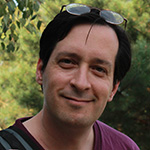
Portrait of Keith Conrad
. Portrait provided by the University of Connecticut Department of Mathematics.Christian Clason authored an introduction to finite-element methods. The approach replaces a differential equation with a weak formulation and a finite-dimensional approximation space, connecting functional analysis with a computable matrix problem.[ref]
Introduction to Finite Element Methods by Christian Clason. author attribution and the described mathematical development

Portrait of Christian Clason
. External portrait hosted by University of Graz. Source.Claude Shannon established a mathematical framework for communication using probabilistic sources and channels. Entropy measures source uncertainty, while coding theorems relate channel noise to the rate at which information can be transmitted reliably. His framework separates communication reliability from the semantic interpretation of a message.[ref]
A Mathematical Theory of Communication by Claude Shannon. author attribution and the described mathematical development

Portrait of Claude Shannon
. Konrad Jacobs, Erlangen / Mathematisches Forschungsinstitut Oberwolfach (MFO), photo 3807. Creative Commons Attribution-ShareAlike 2.0 Germany; VRT ticket 2008042410024381., via Wikimedia Commons. Source. Pinned article: Introduction to the OurBigBook Project
Welcome to the OurBigBook Project! Our goal is to create the perfect publishing platform for STEM subjects, and get university-level students to write the best free STEM tutorials ever.
Everyone is welcome to create an account and play with the site: ourbigbook.com/go/register. We belive that students themselves can write amazing tutorials, but teachers are welcome too. You can write about anything you want, it doesn't have to be STEM or even educational. Silly test content is very welcome and you won't be penalized in any way. Just keep it legal!
Intro to OurBigBook
. Source. We have two killer features:
- topics: topics group articles by different users with the same title, e.g. here is the topic for the "Fundamental Theorem of Calculus" ourbigbook.com/go/topic/fundamental-theorem-of-calculusArticles of different users are sorted by upvote within each article page. This feature is a bit like:
- a Wikipedia where each user can have their own version of each article
- a Q&A website like Stack Overflow, where multiple people can give their views on a given topic, and the best ones are sorted by upvote. Except you don't need to wait for someone to ask first, and any topic goes, no matter how narrow or broad
This feature makes it possible for readers to find better explanations of any topic created by other writers. And it allows writers to create an explanation in a place that readers might actually find it.
Figure 1. Screenshot of the "Derivative" topic page. View it live at: ourbigbook.com/go/topic/derivativeVideo 2. OurBigBook Web topics demo. Source. - local editing: you can store all your personal knowledge base content locally in a plaintext markup format that can be edited locally and published either:This way you can be sure that even if OurBigBook.com were to go down one day (which we have no plans to do as it is quite cheap to host!), your content will still be perfectly readable as a static site.
- to OurBigBook.com to get awesome multi-user features like topics and likes
- as HTML files to a static website, which you can host yourself for free on many external providers like GitHub Pages, and remain in full control

Figure 2. You can publish local OurBigBook lightweight markup files to either OurBigBook.com or as a static website.
Figure 3. Visual Studio Code extension installation.
Figure 5. . You can also edit articles on the Web editor without installing anything locally. Video 3. Edit locally and publish demo. Source. This shows editing OurBigBook Markup and publishing it using the Visual Studio Code extension. 
- Infinitely deep tables of contents:




All our software is open source and hosted at: github.com/ourbigbook/ourbigbook
Further documentation can be found at: docs.ourbigbook.com
Feel free to reach our to us for any help or suggestions: docs.ourbigbook.com/#contact