Topics (384k) Articles (398k) Users (410) Discussions (242) Comments (383) Files (13k) New article

Coauthor with Imre Csiszár of a tutorial connecting information theory with statistics. It develops information measures as tools for statistical modeling and inference.[ref]
Information Theory and Statistics: A Tutorial by Imre Csiszár and Paul C. Shields. author attribution and the named work’s subject
Author of notes on measure theory, asymptotic analysis and singular perturbations. The perturbation notes distinguish regular expansions from problems requiring inner scales and matching.[ref]
Measure Theory by John K. Hunter. author attribution and the named work’s subject
Sheldon Axler authored texts on real analysis and linear algebra. The cited measure-and-integration text develops a framework in which limits and integrals can be compared through explicit convergence hypotheses, rather than relying on formal manipulation alone.[ref]
Measure, Integration & Real Analysis by Sheldon Axler. author attribution and the described mathematical development

Portrait of Sheldon Axler
. George Bergman; Berkeley, 1984; existing Commons crop uploaded by Cofibered. CC BY-SA 4.0, via Wikimedia Commons. Source.Stephen Boyd coauthored a text on convex optimization with Lieven Vandenberghe. Convexity connects local optimality with global conclusions, while duality supplies bounds and certificates useful for understanding numerical answers.[ref]
Convex Optimization by Stephen Boyd and Lieven Vandenberghe. author attribution and the described mathematical development
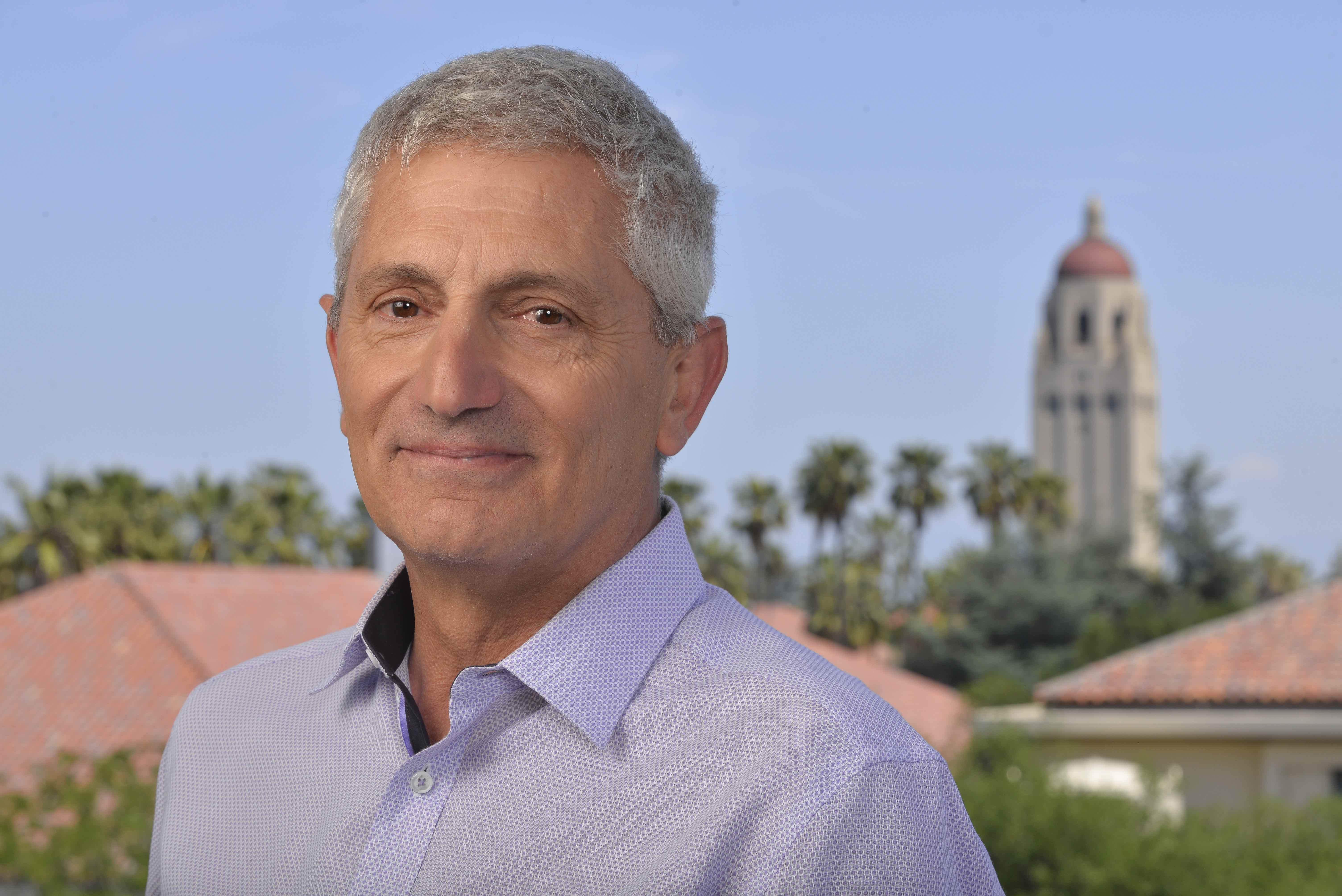
Portrait of Stephen Boyd
. Portrait provided on the Stanford personal homepage.Imre Csiszár developed information-theoretic methods for probability and statistics. His method-of-types exposition organizes sequences by empirical distributions, turning many probabilistic estimates into finite counting and divergence calculations.[ref]
The Method of Types by Imre Csiszár. author attribution and the described mathematical development
Homepage: www.renyi.hu/~csiszar/
Publications: www.renyi.hu/~csiszar/publist2012.pdf

Portrait of Imre Csiszár
. Konrad Jacobs; Oberwolfach Photo Collection. CC BY-SA 2.0, via Wikimedia Commons. Source.Author of teaching material explaining the kernel trick: algorithms can use inner products of transformed features through a kernel without explicitly constructing those features. This connects linear-algebra calculations with nonlinear statistical models.[ref]
The kernel trick by Ryan Giordano. author attribution and the named work’s subject
Coauthor with Carl Edward Rasmussen of a textbook on Gaussian processes for machine learning, developing covariance-based regression and the corresponding predictive uncertainty.[ref]
Gaussian Processes for Machine Learning by Carl Edward Rasmussen and Christopher K. I. Williams. author attribution and the named work’s subject
Coauthor with Christopher K. I. Williams of a textbook on Gaussian processes for machine learning. It treats regression through probability distributions over functions, linking covariance choices with predictive means and uncertainties.[ref]
Gaussian Processes for Machine Learning by Carl Edward Rasmussen and Christopher K. I. Williams. author attribution and the named work’s subject
Coauthor with David I. Ketcheson and Randall J. LeVeque of an interactive book on Riemann problems. Its computational examples connect analytic wave structure with approximate solvers for hyperbolic equations.[ref]
Riemann Problems and Jupyter Solutions by David I. Ketcheson, Randall J. LeVeque, and Mauricio J. del Razo. author attribution and the named work’s subject
Coauthor with David I. Ketcheson and Mauricio J. del Razo of a book connecting Riemann problems, hyperbolic partial differential equations and executable numerical examples.[ref]
Riemann Problems and Jupyter Solutions by David I. Ketcheson, Randall J. LeVeque, and Mauricio J. del Razo. author attribution and the named work’s subject
Coauthor with Randall J. LeVeque and Mauricio J. del Razo of an interactive book on Riemann problems and approximate solvers for hyperbolic partial differential equations. Computational notebooks let readers vary initial states and compare wave patterns.[ref]
Riemann Problems and Jupyter Solutions by David I. Ketcheson, Randall J. LeVeque, and Mauricio J. del Razo. author attribution and the named work’s subject
Coauthor with Dan Margalit (mathematician) of an interactive linear algebra textbook, connecting algebraic procedures with geometric explanations and worked examples.[ref]
Interactive Linear Algebra by Dan Margalit and others. author attribution and the named work’s subject
Developed asymptotic-efficiency methods for hypothesis tests based on sums of observations. The exponential-moment technique associated with Chernoff bounds turns a tail event into an optimization of a moment bound.[ref]
A Measure of Asymptotic Efficiency for Tests of an Hypothesis Based on the Sum of Observations, technical report by Herman Chernoff. author attribution and the named work’s subject
The credited author of Chapter 24, Bernoulli and Euler Polynomials, in the NIST Digital Library of Mathematical Functions. The chapter collects their generating functions, recurrences and applications.[ref]
24 Bernoulli and Euler Polynomials. author attribution and the named work’s subject
Author of an introduction to point processes and their applications. The subject models random spatial configurations and distinguishes local point density from dependence between nearby points.[ref]
Spatial Point Processes and their Applications. author attribution and the named work’s subject
The LAPACK project develops numerical software for linear algebra, including solving linear systems, least-squares problems, eigenvalue problems and singular value decomposition. Its routines combine mathematical factorizations with implementation choices intended to exploit reliable high-performance basic operations.
For example, DGETRS solves a system using a previously computed LU factorization, while DLARTG constructs a scaled Givens rotation. Distinguishing a factorization from the later solve permits reuse for several right-hand sides. The routine documentation specifies storage conventions and exceptional inputs; these details are part of using a numerical algorithm correctly.[ref]
DGETRS (LAPACK 3.3.1) by LAPACK project. Purpose and Arguments
Coauthor of a textbook on Markov chains and mixing times, studying convergence to equilibrium and quantitative bounds on the time required.[ref]
Markov Chains and Mixing Times, second edition by David A. Levin and others. author attribution and the named work’s subject
Yuval Peres coauthored a treatment of Markov chains and mixing times. Coupling, spectral methods and probabilistic estimates quantify how quickly a chain approaches equilibrium, connecting a limiting distribution with the time needed to approximate it.[ref]
Markov Chains and Mixing Times, second edition by David A. Levin and others. author attribution and the described mathematical development

Portrait of Yuval Peres
. George M. Bergman. CC BY-SA 4.0, via Wikimedia Commons. Source.Coauthor of a textbook on Markov chains and mixing times. The subject asks how repeated random transitions approach a stationary distribution and how rapidly initial-state information is lost.[ref]
Markov Chains and Mixing Times, second edition by David A. Levin and others. author attribution and the named work’s subject
Author of an open textbook on probability theory, statistics and stochastic processes. It develops probabilistic models from random experiments through standard distributions and stochastic-process examples.[ref]
Introduction to Probability, Statistics, and Random Processes by Hossein Pishro-Nik. author attribution and the named work’s subject
Pinned article: Introduction to the OurBigBook Project
Welcome to the OurBigBook Project! Our goal is to create the perfect publishing platform for STEM subjects, and get university-level students to write the best free STEM tutorials ever.
Everyone is welcome to create an account and play with the site: ourbigbook.com/go/register. We belive that students themselves can write amazing tutorials, but teachers are welcome too. You can write about anything you want, it doesn't have to be STEM or even educational. Silly test content is very welcome and you won't be penalized in any way. Just keep it legal!
Intro to OurBigBook
. Source. We have two killer features:
- topics: topics group articles by different users with the same title, e.g. here is the topic for the "Fundamental Theorem of Calculus" ourbigbook.com/go/topic/fundamental-theorem-of-calculusArticles of different users are sorted by upvote within each article page. This feature is a bit like:
- a Wikipedia where each user can have their own version of each article
- a Q&A website like Stack Overflow, where multiple people can give their views on a given topic, and the best ones are sorted by upvote. Except you don't need to wait for someone to ask first, and any topic goes, no matter how narrow or broad
This feature makes it possible for readers to find better explanations of any topic created by other writers. And it allows writers to create an explanation in a place that readers might actually find it.
Figure 1. Screenshot of the "Derivative" topic page. View it live at: ourbigbook.com/go/topic/derivativeVideo 2. OurBigBook Web topics demo. Source. - local editing: you can store all your personal knowledge base content locally in a plaintext markup format that can be edited locally and published either:This way you can be sure that even if OurBigBook.com were to go down one day (which we have no plans to do as it is quite cheap to host!), your content will still be perfectly readable as a static site.
- to OurBigBook.com to get awesome multi-user features like topics and likes
- as HTML files to a static website, which you can host yourself for free on many external providers like GitHub Pages, and remain in full control

Figure 2. You can publish local OurBigBook lightweight markup files to either OurBigBook.com or as a static website.
Figure 3. Visual Studio Code extension installation.
Figure 5. . You can also edit articles on the Web editor without installing anything locally. Video 3. Edit locally and publish demo. Source. This shows editing OurBigBook Markup and publishing it using the Visual Studio Code extension. 
- Infinitely deep tables of contents:




All our software is open source and hosted at: github.com/ourbigbook/ourbigbook
Further documentation can be found at: docs.ourbigbook.com
Feel free to reach our to us for any help or suggestions: docs.ourbigbook.com/#contact