Topics (384k) Articles (398k) Users (410) Discussions (242) Comments (383) Files (13k) New article

Carl Pomerance studies computational number theory, including primality testing. His historical and mathematical account connects tests of whether an integer is prime with changes in the available algorithms and their complexity.[ref]
Primality testing: then and now by Carl Pomerance. author attribution and the described mathematical development
Homepage: math.dartmouth.edu/~carlp/
William L. Briggs developed teaching material on multigrid. The tutorial viewpoint explains why a coarse representation can correct smooth error left behind by a fine-grid relaxation method.[ref]
A Multigrid Tutorial (lecture slides) by William L. Briggs. author attribution and the described mathematical development

Portrait of William L. Briggs
. External portrait hosted by University of Colorado Boulder, Center for Leadership. Source.Coauthor with Glenn Shafer of research on the historical sources of axiomatic probability theory. Their account traces the context of the modern measure-based formulation.[ref]
The Sources of Kolmogorov’s Grundbegriffe by Glenn Shafer and others. author attribution and the named work’s subject
Coauthor with John Tsitsiklis of MIT introductory probability theory material covering probability models and axioms. The treatment separates possible outcomes from the probabilities assigned to events.[ref]
Introduction to Probability, Lecture 1: Probability Models and Axioms by John Tsitsiklis and others. author attribution and the named work’s subject
Martin S. Andersen coauthored a treatment of chordal structure in semidefinite optimization. The graph-based description of sparse matrices helps expose computational structure in large convex problems.[ref]
Chordal Graphs and Semidefinite Optimization by Lieven Vandenberghe and others. author attribution and the described mathematical development
Portrait of Martin S. Andersen
. External portrait hosted by Technical University of Denmark. Source.Long Chen authored notes on multigrid methods. They connect smoothing, interpolation and coarse-grid correction with the error components each operation controls, giving a mathematical explanation of an efficient iterative solver.[ref]
Introduction to Multigrid Methods by Long Chen. author attribution and the described mathematical development
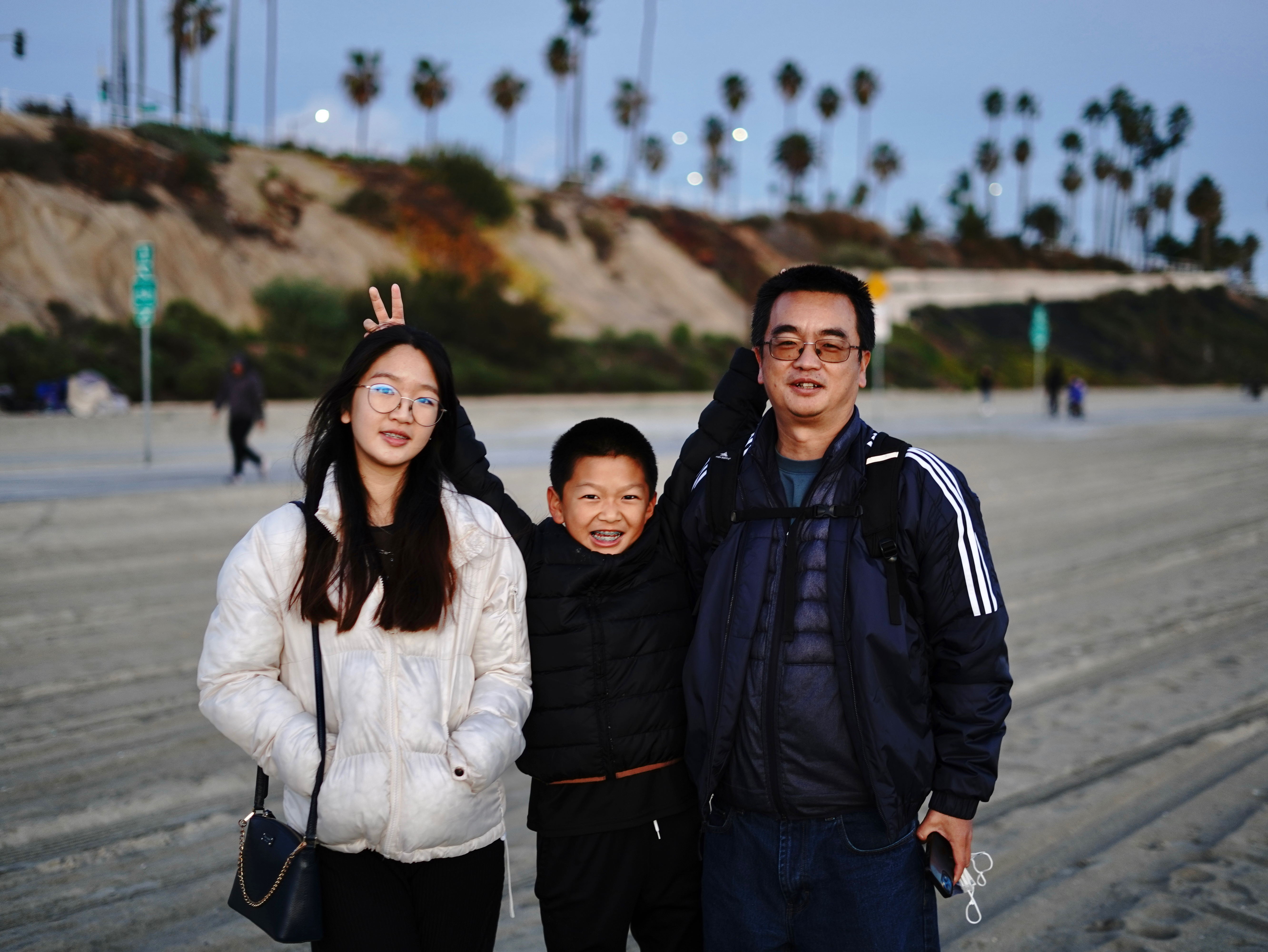
Portrait of Long Chen
. External portrait hosted by University of California, Irvine, Department of Mathematics. Source.Lieven Vandenberghe coauthored work on chordal graphs and semidefinite optimization. Matrix sparsity can be organized through graph structure, allowing large positive-semidefinite constraints to be analyzed through smaller coupled pieces.[ref]
Chordal Graphs and Semidefinite Optimization by Lieven Vandenberghe and others. author attribution and the described mathematical development

Portrait of Lieven Vandenberghe
. Portrait provided on the UCLA personal homepage.A teacher and author of probability theory materials. The MIT introductory lecture credited jointly with Patrick Jaillet explains how a sample space and probability axioms define a mathematical model of uncertainty.[ref]
Introduction to Probability, Lecture 1: Probability Models and Axioms by John Tsitsiklis and others. author attribution and the named work’s subject
Coauthor with Barry W. Peyton of an introduction to chordal graphs and junction trees. These structures connect graph decompositions with efficient sparse computations.[ref]
An Introduction to Chordal Graphs and Clique Trees by Jean R. S. Blair and others. author attribution and the named work’s subject
James Demmel authored numerical-computation teaching material explaining why multigrid combines different error-reduction mechanisms. Frequency analysis separates the error rapidly damped by relaxation from components better handled on a coarser grid.[ref]
CS267: Supplemental Notes for Lecture 17 — How Multigrid Damps High Frequencies by James Demmel. author attribution and the described mathematical development

Portrait of James Demmel
. Derrick Coetzee (Dcoetzee); photographed 5 March 2010 in Demmel’s Berkeley Par Lab office; own work. CC0 1.0 Universal Public Domain Dedication. Source usage terms, via Wikimedia Commons. Source.Coauthor with Vladimir Vovk of a historical investigation of the sources of the axiomatic formulation of probability theory. The account distinguishes the formal axioms from the earlier problems and interpretations that motivated them.[ref]
The Sources of Kolmogorov’s Grundbegriffe by Glenn Shafer and others. author attribution and the named work’s subject
Gilbert Strang wrote teaching texts connecting linear algebra, differential equations and scientific computation. The cited computational text emphasizes how shared matrix structures appear in physical models and numerical algorithms.[ref]
Computational Science and Engineering by Gilbert Strang. author attribution and the described mathematical development

Portrait of Gilbert Strang
. Pahidla; own-work photograph dated 10 May 2021. CC BY-SA 4.0, via Wikimedia Commons. Source.George S. Lueker coauthored research on graph representations of vertex elimination. The work connects a combinatorial ordering problem with the computational fill produced by sparse matrix factorization.[ref]
Algorithmic Aspects of Vertex Elimination on Graphs by Donald J. Rose and others. author attribution and the described mathematical development
Portrait of George S. Lueker
. External portrait hosted by University of California, Irvine. Source.Donald J. Rose coauthored work connecting elimination in sparse matrices with graph structure. Eliminating a variable can create new couplings, represented as fill edges; the graph viewpoint makes it possible to analyze and choose elimination orders.[ref]
Algorithmic Aspects of Vertex Elimination on Graphs by Donald J. Rose and others. author attribution and the described mathematical development
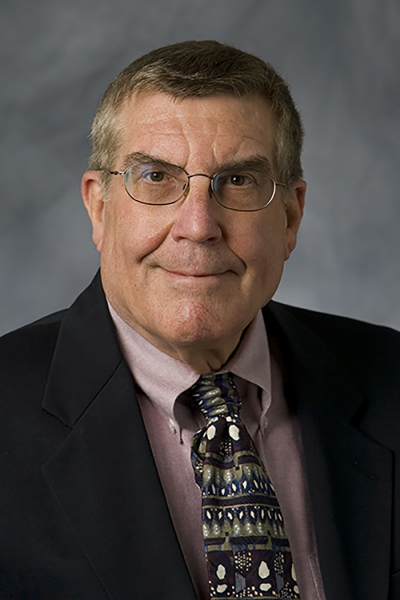
Portrait of Donald J. Rose
. External portrait hosted by Duke University Department of Computer Science. Source.Coauthor with Jean R. S. Blair of a treatment of chordal graphs and junction trees, explaining how graph structure supports sparse matrix computations.[ref]
An Introduction to Chordal Graphs and Clique Trees by Jean R. S. Blair and others. author attribution and the named work’s subject
Achi Brandt developed multilevel approaches to boundary-value problems. His adaptive multigrid work connects local relaxation, which reduces oscillatory error, with coarse-grid correction for slowly varying error. The combination explains why changing scale can be more effective than repeating one relaxation scheme.[ref]
Multi-Level Adaptive Solutions to Boundary-Value Problems by Achi Brandt. author attribution and the described mathematical development

Portrait of Achi Brandt
. Via Wikimedia Commons; credits and usage information are on the linked source file page. Source.Isaac Newton (1643–1727, Gregorian dates) developed calculus and a mathematical account of motion and gravity. His 1687 treatment of classical mechanics made the same inverse-square law govern terrestrial falling bodies and planetary orbits, turning astronomical regularities into consequences of a dynamical model. He also investigated optics experimentally.[ref]
https://mathshistory.st-andrews.ac.uk/Biographies/Newton/. University of St Andrews, MacTutor biography, calendar convention and account of the1687 Principia and optical research
In the modern constant-mass form of Newton's second law, , a specified force and initial conditions determine an ordinary differential equation for a trajectory. The connection with calculus is operational: instantaneous change defines velocity and acceleration, while solving the equation recovers motion over time. The scope is Newtonian mechanics; relativistic and quantum regimes require different physical models.

Portrait of Isaac Newton
. Godfrey Kneller, 1689; Isaac Newton Institute. Public domain. Source and usage information on the linked Wikimedia file page. Source. Pinned article: Introduction to the OurBigBook Project
Welcome to the OurBigBook Project! Our goal is to create the perfect publishing platform for STEM subjects, and get university-level students to write the best free STEM tutorials ever.
Everyone is welcome to create an account and play with the site: ourbigbook.com/go/register. We belive that students themselves can write amazing tutorials, but teachers are welcome too. You can write about anything you want, it doesn't have to be STEM or even educational. Silly test content is very welcome and you won't be penalized in any way. Just keep it legal!
Intro to OurBigBook
. Source. We have two killer features:
- topics: topics group articles by different users with the same title, e.g. here is the topic for the "Fundamental Theorem of Calculus" ourbigbook.com/go/topic/fundamental-theorem-of-calculusArticles of different users are sorted by upvote within each article page. This feature is a bit like:
- a Wikipedia where each user can have their own version of each article
- a Q&A website like Stack Overflow, where multiple people can give their views on a given topic, and the best ones are sorted by upvote. Except you don't need to wait for someone to ask first, and any topic goes, no matter how narrow or broad
This feature makes it possible for readers to find better explanations of any topic created by other writers. And it allows writers to create an explanation in a place that readers might actually find it.
Figure 1. Screenshot of the "Derivative" topic page. View it live at: ourbigbook.com/go/topic/derivativeVideo 2. OurBigBook Web topics demo. Source. - local editing: you can store all your personal knowledge base content locally in a plaintext markup format that can be edited locally and published either:This way you can be sure that even if OurBigBook.com were to go down one day (which we have no plans to do as it is quite cheap to host!), your content will still be perfectly readable as a static site.
- to OurBigBook.com to get awesome multi-user features like topics and likes
- as HTML files to a static website, which you can host yourself for free on many external providers like GitHub Pages, and remain in full control

Figure 2. You can publish local OurBigBook lightweight markup files to either OurBigBook.com or as a static website.
Figure 3. Visual Studio Code extension installation.
Figure 5. . You can also edit articles on the Web editor without installing anything locally. Video 3. Edit locally and publish demo. Source. This shows editing OurBigBook Markup and publishing it using the Visual Studio Code extension. 
- Infinitely deep tables of contents:




All our software is open source and hosted at: github.com/ourbigbook/ourbigbook
Further documentation can be found at: docs.ourbigbook.com
Feel free to reach our to us for any help or suggestions: docs.ourbigbook.com/#contact