Ciro Santilli @cirosantilli 40
Joined 2022-11-02 Message

Incoming links: Electron
Ampere in the 2019 redefinition of the SI base units Updated 2025-07-16
Starting in the 2019 redefinition of the SI base units, the elementary charge is assigned a fixed number, and the Ampere is based on it and on the second, which is beautiful.
This choice is not because we attempt to count individual electrons going through a wire, as it would be far too many to count!
Rather, it is because because there are two crazy quantum mechanical effects that give us macroscopic measures that are directly related to the electron charge. www.nist.gov/si-redefinition/ampere/ampere-quantum-metrology-triangle by the NIST explains that the two effects are:
- quantum Hall effect, which has discrete resistances of type:for integer values of .
- Josephson effect, used in the Josephson voltage standard. With the Inverse AC Josephson effect we are able to produce:per Josephson junction. This is about 2 microvolt / GHz, where GHz is a practical input frequency. Video "The evolution of voltage metrology to the latest generation of JVSs by Alain Rüfenacht" mentions that a typical operating frequency is 20 GHz.But this is possible to implement in a single chip with existing micro fabrication techniques, and is exactly what the Josephson voltage standard does!
Those effect work because they also involve dividing by the Planck constant, the fundamental constant of quantum mechanics, which is also tiny, and thus brings values into a much more measurable order of size.
Baryon vs meson vs lepton Updated 2025-07-16
"Barys" means "heavy" in Greek, because protons and neutrons was what made most of the mass of known ordinary matter, as opposed notably to electrons.
Baryons can be contrasted with:
- mesons, which have an even number of elementary particles. The name meson comes from "medium" since their most common examples have two quarks rather than three as the most common baryons such as protons. So they have less mass than a proton, but more than an electron, this medium mass.
- leptons, which are much lighter particles such as the electron. "Leptos" means "fine, small, thin".
Beta decay Updated 2025-07-16
Uranium emits them, you can see their mass to charge ratio under magnetic field and so deduce that they are electrons.
Caused by weak interaction TODO why/how.
The emitted electron kinetic energy is random from zero to a maximum value. The rest goes into a neutrino. This is how the neutrino was first discovered/observed indirectly. This is well illustrated in a decay scheme such as Figure "caesium-137 decay scheme".
Bohr model Updated 2025-07-16
Was the first model to explain the Balmer series, notably linking atomic spectra to the Planck constant and therefore to other initial quantum mechanical observations.
This was one of the first major models that just said:
I give up, I can't tie this to classical physics in any way, let's just roll with it, OK?
It still treats electrons as little points spinning around the nucleus, but it makes the non-classical postulate that only certain angular momentums (and therefore energies) are allowed.
Bibliography:
- Inward Bound by Abraham Pais (1988) Chapter 9.e Atomic structure and spectral lines - Niels Bohr
- The Quantum Story by Jim Baggott (2011) Chapter 3 A Little Bit of Reality
Capacitor Updated 2025-07-16
They can only absorb electrons up to a certain point, but then the pushback becomes too strong, and current stops.
Therefore, they cannot conduct direct current long term.
For alternating current however, things are different, because in alternating current, electrons are just jiggling back and forward a little bit around a center point. So you can send alternating current power across a capacitor.
The key equation that relates Voltage to electric current in the capacitor is:So if a voltage Heavyside step function is applied what happens is:More realistically, one may consider the behavior or the series RC circuit to see what happens without infinities when a capacitor is involved as in the step response of the series RC circuit.
- the capacitor fills up instantly with an infinite current
- the current then stops instantly

Capacitors Explained by The Engineering Mindset
. Source. 2019. Condensed matter physics Updated 2025-07-16
Condensed matter physics is one of the best examples of emergence. We start with a bunch of small elements which we understand fully at the required level (atoms, electrons, quantum mechanics) but then there are complex properties that show up when we put a bunch of them together.
Includes fun things like:
As of 2020, this is the other "fundamental branch of physics" besides to particle physics/nuclear physics.
Condensed matter is basically chemistry but without reactions: you study a fixed state of matter, not a reaction in which compositions change with time.
Just like in chemistry, you end up getting some very well defined substance properties due to the incredibly large number of atoms.
Just like chemistry, the ultimate goal is to do de-novo computational chemistry to predict those properties.
And just like chemistry, what we can actually is actually very limited in part due to the exponential nature of quantum mechanics.
Also since chemistry involves reactions, chemistry puts a huge focus on liquids and solutions, which is the simplest state of matter to do reactions in.
Condensed matter however can put a lot more emphasis on solids than chemistry, notably because solids are what we generally want in end products, no one likes stuff leaking right?
One thing condensed matter is particularly obsessed with is the fascinating phenomena of phase transition.

What Is Condensed matter physics? by Erica Calman
. Source. Cute. Overview of the main fields of physics research. Quick mention of his field, quantum wells, but not enough details. Defining properties of elementary particles Updated 2025-07-16
A suggested at Physics from Symmetry by Jakob Schwichtenberg (2015) chapter 3.9 "Elementary particles", it appears that in the Standard Model, the behaviour of each particle can be uniquely defined by the following five numbers:
Once you specify these properties, you could in theory just pluck them into the Standard Model Lagrangian and you could simulate what happens.
Setting new random values for those properties would also allow us to create new particles. It appears unknown why we only see the particles that we do, and why they have the values of properties they have.
Dirac equation solution for the hydrogen atom Updated 2025-07-16
Predicts fine structure.
Bibliography:
How To Solve The Dirac Equation For The Hydrogen Atom | Relativistic Quantum Mechanics by Dietterich Labs (2018)
Source. Double-slit experiment Updated 2025-07-16
Amazingly confirms the wave particle duality of quantum mechanics.
The effect is even more remarkable when done with individual particles such individual photons or electrons.
Richard Feynman liked to stress how this experiment can illustrate the core ideas of quantum mechanics. Notably, he night have created the infinitely many slits thought experiment which illustrates the path integral formulation.
History of quantum mechanics Updated 2025-07-16
The discovery of the photon was one of the major initiators of quantum mechanics.
Light was very well known to be a wave through diffraction experiments. So how could it also be a particle???
This process "started" in 1900 with Planck's law which was based on discrete energy packets being exchanged as exposed at On the Theory of the Energy Distribution Law of the Normal Spectrum by Max Planck (1900).
This ideas was reinforced by Einstein's explanation of the photoelectric effect in 1905 in terms of photon.
In the next big development was the Bohr model in 1913, which supposed non-classical physics new quantization rules for the electron which explained the hydrogen emission spectrum. The quantization rule used made use of the Planck constant, and so served an initial link between the emerging quantized nature of light, and that of the electron.
The final phase started in 1923, when Louis de Broglie proposed that in analogy to photons, electrons might also be waves, a statement made more precise through the de Broglie relations.
This event opened the floodgates, and soon matrix mechanics was published in quantum mechanical re-interpretation of kinematic and mechanical relations by Heisenberg (1925), as the first coherent formulation of quantum mechanics.
It was followed by the Schrödinger equation in 1926, which proposed an equivalent partial differential equation formulation to matrix mechanics, a mathematical formulation that was more familiar to physicists than the matrix ideas of Heisenberg.
Inward Bound by Abraham Pais (1988) summarizes his views of the main developments of the subjectit:
- Planck's on the discovery of the quantum theory (1900);
- Einstein's on the light-quantum (1905);
- Bohr's on the hydrogen atom (1913);
- Bose's on what came to be called quantum statistics (1924);
- Heisenberg's on what came to be known as matrix mechanics (1925);
- and Schroedinger's on wave mechanics (1926).
Bibliography:
Lamb shift Updated 2025-07-16
2s/2p energy split in the hydrogen emission spectrum, not predicted by the Dirac equation, but explained by quantum electrodynamics, which is one of the first great triumphs of that theory.
Note that for atoms with multiple electrons, 2s/2p shifts are expected: Why does 2s have less energy than 1s if they have the same principal quantum number?. The surprise was observing that on hydrogen which only has one electron.
Initial experiment: Lamb-Retherford experiment.
On the return from the train from the Shelter Island Conference in New York, Hans Bethe managed to do a non-relativistic calculation of the Lamb shift. He then published as The Electromagnetic Shift of Energy Levels by Hans Bethe (1947) which is still paywalled as of 2021, fuck me: journals.aps.org/pr/abstract/10.1103/PhysRev.72.339 by Physical Review.
The Electromagnetic Shift of Energy Levels Freeman Dyson (1948) published on Physical Review is apparently a relativistic analysis of the same: journals.aps.org/pr/abstract/10.1103/PhysRev.73.617 also paywalled as of 2021.
TODO how do the infinities show up, and how did people solve them?
Lamb shift by Dr. Nissar Ahmad (2020)
Source. Whiteboard Lecture about the phenomena, includes description of the experiment. Seems quite good.www.mdpi.com/2624-8174/2/2/8/pdf History and Some Aspects of the Lamb Shift by G. Jordan Maclay (2019)
Mentions that he moved to the USA from the United Kingdom specifically because great experiments were being carried at Columbia University, which is where the Lamb-Retherford experiment was done, and that Isidor Isaac Rabi was the head at the time.
He then explains mass renormalization briefly: instead of calculating from scratch, you just compare the raw electron to the bound electron and take the difference. Both of those have infinities in them, but the difference between them cancels out those infinities.
Hans Bethe - The Lamb shift (1996)
Source. Lamb shift by Vidya-mitra (2018)
Source. Madelung energy ordering rule Updated 2025-07-16
Looking at the energy level of the Schrödinger equation solution for the hydrogen atom, you would guess that for multi-electron atoms that only the principal quantum number would matter, azimuthal quantum number getting filled randomly.
However, orbitals energies for large atoms don't increase in energy like those of hydrogen due to electron-electron interactions.
In particular, the following would not be naively expected:
This rule is only an approximation, there exist exceptions to the Madelung energy ordering rule.
Magnetic dipole Updated 2026-08-21
A tiny idealized magnet! It is a very good model if you have a small strong magnet interacting with objects that are far away, notably other magnetic dipoles or a constant magnetic field.
The cool thing about this model is that we have simple explicit formulas for the magnetic field it produces, and for how this little magnet is affected by a magnetic field or by another magnetic dipole.
This is the perfect model for electron spin, but it can also be representative of macroscopic systems in the right circumstances.

Different macroscopic magnets can be approximated by a magnetic dipole when shrunk seen from far away
. Source. Neutrino Updated 2025-07-16
First observed directly by the Cowan-Reines neutrino experiment.
Photomultiplier tube Updated 2025-07-16
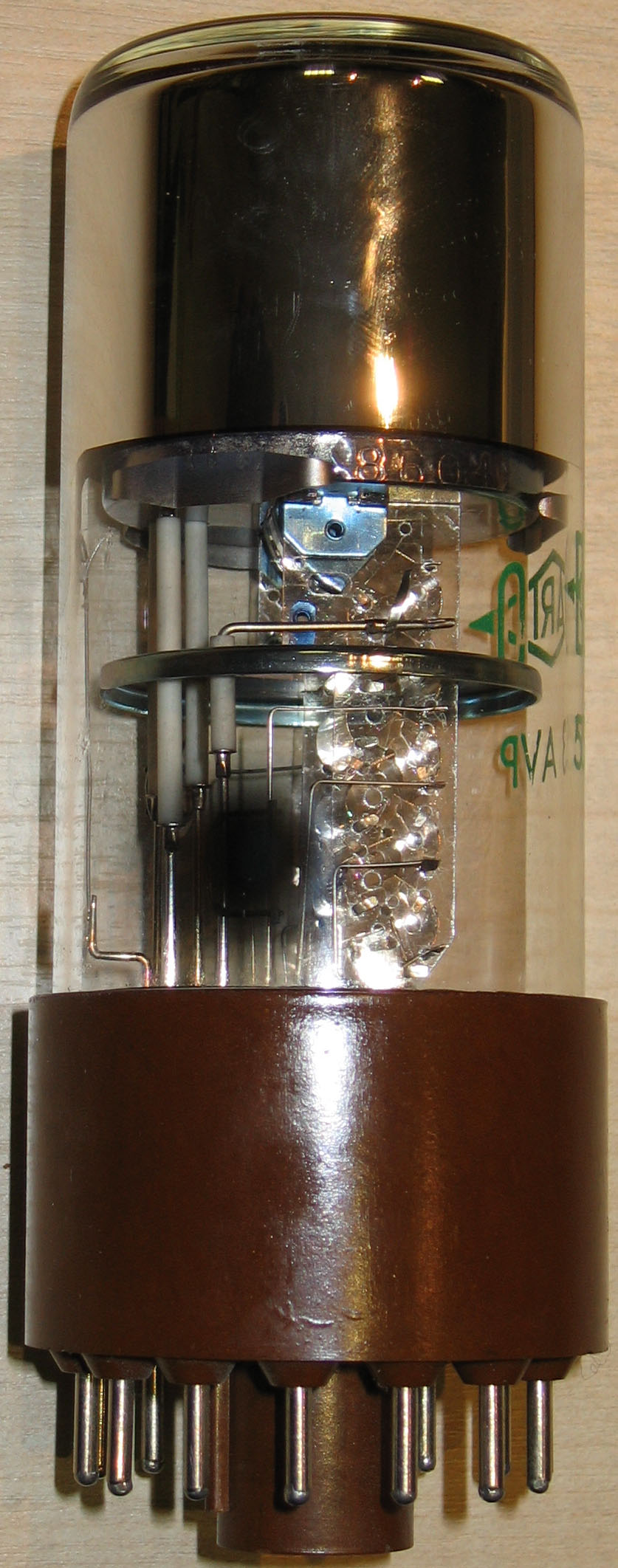
Can be used to detect single photons.
Richard Feynman likes them, he describes the tube at Richard Feynman Quantum Electrodynamics Lecture at University of Auckland (1979) at one point.
It uses the photoelectric effect multiple times to produce a chain reaction. In particular, as mentioned at youtu.be/5V8VCFkAd0A?t=74 from Video 1. "Using a Photomultiplier to Detect single photons by Huygens Optics" this means that the device has a lowest sensitive light frequency, beyond which photons don't have enough energy to eject any electrons.


Quantum electrodynamics Updated 2025-07-16
Theory that describes electrons and photons really well, and as Feynman puts it "accounts very precisely for all physical phenomena we have ever observed, except for gravity and nuclear physics" ("including the laughter of the crowd" ;-)).
While Ciro acknowledges that QED is intrinsically challenging due to the wide range or requirements (quantum mechanics, special relativity and electromagnetism), Ciro feels that there is a glaring gap in this moneyless market for a learning material that follows the Middle Way as mentioned at: the missing link between basic and advanced. Richard Feynman Quantum Electrodynamics Lecture at University of Auckland (1979) is one of the best attempts so far, but it falls a bit too close to the superficial side of things, if only Feynman hadn't assumed that the audience doesn't know any mathematics...
The funny thing is that when Ciro Santilli's mother retired, learning it (or as she put it: "how photons and electrons interact") was also one of her retirement plans. She is a pharmacist by training, and doesn't know much mathematics, and her English was somewhat limited. Oh, she also wanted to learn how photosynthesis works (possibly not fully understood by science as that time, 2020). Ambitious old lady!!!
Combines special relativity with more classical quantum mechanics, but further generalizing the Dirac equation, which also does that: Dirac equation vs quantum electrodynamics. The name "relativistic" likely doesn't need to appear on the title of QED because Maxwell's equations require special relativity, so just having "electro-" in the title is enough.
Before QED, the most advanced theory was that of the Dirac equation, which was already relativistic but TODO what was missing there exactly?
As summarized at: youtube.com/watch?v=_AZdvtf6hPU?t=305 Quantum Field Theory lecture at the African Summer Theory Institute 1 of 4 by Anthony Zee (2004):
- classical mechanics describes large and slow objects
- special relativity describes large and fast objects (they are getting close to the speed of light, so we have to consider relativity)
- classical quantum mechanics describes small and slow objects.
- QED describes objects that are both small and fast
That video also mentions the interesting idea that:Therefore, for small timescales, energy can vary a lot. But mass is equivalent to energy. Therefore, for small time scale, particles can appear and disappear wildly.
- in special relativity, we have the mass-energy equivalence
- in quantum mechanics, thinking along the time-energy uncertainty principle,
QED is the first quantum field theory fully developed. That framework was later extended to also include the weak interaction and strong interaction. As a result, it is perhaps easier to just Google for "Quantum Field Theory" if you want to learn QED, since QFT is more general and has more resources available generally.
Like in more general quantum field theory, there is on field for each particle type. In quantum field theory, there are only two fields to worry about:
- photon field
- electromagnetism field
Lecture 01 | Overview of Quantum Field Theory by Markus Luty (2013)
Source. This takes quite a direct approach, one cool thing he says is how we have to be careful with adding special relativity to the Schrödinger equation to avoid faster-than-light information. Quantum electrodynamics Lagrangian Updated 2025-07-16
where:
- is the electromagnetic tensor
Note that this is the sum of the:Note that the relationship between and is not explicit. However, if we knew what type of particle we were talking about, e.g. electron, then the knowledge of psi would also give the charge distribution and therefore
- Dirac Lagrangian, which only describes the "inertia of bodies" part of the equation
- the electromagnetic interaction term , which describes term describes forces
As mentioned at the beginning of Quantum Field Theory lecture notes by David Tong (2007):
- by "Lagrangian" we mean Lagrangian density
- the generalized coordinates of the Lagrangian are fields
Quantum entanglement Updated 2025-07-16
Quantum entanglement is often called spooky/surprising/unintuitive, but they key question is to understand why.
To understand that, you have to understand why it is fundamentally impossible for the entangled particle pair be in a predefined state according to experiments done e.g. where one is deterministically yes and the other deterministically down.
In other words, why local hidden-variable theory is not valid.
How to generate entangled particles:
- particle decay, notably pair production
- for photons, notably: spontaneous parametric down-conversion, e.g.: www.youtube.com/watch?v=tn1sEaw1K2k "Shanni Prutchi Construction of an Entangled Photon Source" by HACKADAY (2015). Estimatd price: 5000 USD.
Contains the clearest Bell test experiment description seen so far.
It clearly describes the photon-based 22.5, 45 degree/85%/15% probability photon polarization experiment and its result conceptually.
It does not mention spontaneous parametric down-conversion but that's what they likely hint at.
Done in Collaboration with 3Blue1Brown.
Question asking further clarification on why the 100/85/50 thing is surprising: physics.stackexchange.com/questions/357039/why-is-the-quantum-venn-diagram-paradox-considered-a-paradox/597982#597982
Quantum Mechanics: Animation explaining quantum physics by Physics Videos by Eugene Khutoryansky (2013)
Source. Usual Eugene, good animations, and not too precise explanations :-) youtu.be/iVpXrbZ4bnU?t=922 describes a conceptual spin entangled electron-positron pair production Stern-Gerlach experiment as a Bell test experiments. The 85% is mentioned, but not explained at all.
Quantum Entanglement Lab by Scientific American (2013)
Source. The hosts interview Professor Enrique Galvez of Colgate University who shows briefly the optical table setup without great details, and then moves to a whiteboard explanation. Treats the audience as stupid, doesn't say the keywords spontaneous parametric down-conversion and Bell's theorem which they clearly allude to. You can even them showing a two second footage of the professor explaining the rotation experiments and the data for it, but that's all you get. Quantum field theory Updated 2025-07-16
Theoretical framework on which quantum field theories are based, theories based on framework include:so basically the entire Standard Model
The basic idea is that there is a field for each particle particle type.
E.g. in QED, one for the electron and one for the photon: physics.stackexchange.com/questions/166709/are-electron-fields-and-photon-fields-part-of-the-same-field-in-qed.
And then those fields interact with some Lagrangian.
One way to look at QFT is to split it into two parts:Then interwined with those two is the part "OK, how to solve the equations, if they are solvable at all", which is an open problem: Yang-Mills existence and mass gap.
- deriving the Lagrangians of the Standard Model: S. This is the easier part, since the lagrangians themselves can be understood with not very advanced mathematics, and derived beautifully from symmetry constraints
- the qantization of fields. This is the hard part Ciro Santilli is unable to understand, TODO mathematical formulation of quantum field theory.
There appear to be two main equivalent formulations of quantum field theory:
Quantum Field Theory visualized by ScienceClic English (2020)
Source. Gives one piece of possibly OK intuition: quantum theories kind of model all possible evolutions of the system at the same time, but with different probabilities. QFT is no different in that aspect.- youtu.be/MmG2ah5Df4g?t=209 describes how the spin number of a field is directly related to how much you have to rotate an element to reach the original position
- youtu.be/MmG2ah5Df4g?t=480 explains which particles are modelled by which spin number
Quasiparticles vs elementary particles Updated 2025-07-16
As a phisicist once amazingly put it in a talk Ciro watched:
It all depends on how much energy you have to probe nature with. Previously, we thought protons were elementary particles. But then we used more energy and found that they aren't.If some alien race had even less energy, they might not know about electrons at all, and could think that anyons are actually elementary.Being an "elementary particle" is always a possibly temporary label.