
Kip Thorne is a physicist whose research connects general relativity, black holes, neutron stars and gravitational waves. His authored Nobel autobiography describes how theoretical questions about these systems helped shape LIGO and the interpretation of its signals. The collaboration required both predicted gravitational-wave behavior and sustained experimental development; a detector's observed strain becomes astrophysical information through that connection.[ref]
https://www.nobelprize.org/prizes/physics/2017/thorne/biographical/. Kip S. Thorne, authored Nobel autobiography, relativistic astrophysics and LIGO sections

Portrait of Kip Thorne
. Christopher Michel (Cmichel67). Creative Commons Attribution-ShareAlike 4.0 International., via Wikimedia Commons. Source.
Jim Peebles calculated the recombination history of the early cosmic plasma. His treatment followed how electrons and protons form neutral hydrogen while the expanding background changes the conditions for atomic transitions.
An equilibrium abundance alone is insufficient when photons from atomic transitions are repeatedly reabsorbed and the expansion competes with reaction rates. Following this nonequilibrium history helps determine when the cosmic microwave background ceases to scatter efficiently. The calculation connects atomic physics to the observable last-scattering epoch.[ref]
Recombination of the Primeval Plasma by P. J. E. Peebles. Abstract and opening kinetic discussion: non-equilibrium recombination and cosmological radiation

Portrait of Jim Peebles
. Juan Diego Soler; 17 May 2010; existing Commons crop and levels adjustment by WikiPedant. CC BY 2.0, via Wikimedia Commons. Source.
Anne L'Huillier develops experimental and theoretical methods based on high harmonic generation in gases. The generated extreme ultraviolet light contains many harmonics of the driving laser frequency; their relative spectral phases determine whether they combine into short optical pulses. Her research connects that generation problem with attosecond measurements of electron dynamics following photoionization. The central link is between a controlled optical waveform and the timing information carried by emitted electrons.[ref]
Anne L'Huillier - Lund University by Lund University. Research profile: high-order harmonics in gases, attosecond pulses and photoionization electron dynamics
A physicist who researches high harmonic generation and ultrafast electron dynamics.[ref]
Anne L'Huillier - Lund University by Lund University. Personal profile: Research; Atomic Physics appointment

Portrait of Anne L'Huillier
. Prolineserver, photograph; Vogler, existing portrait derivative. CC BY-SA 3.0, via Wikimedia Commons. Source.
Leticia Cugliandolo studies the slow nonequilibrium dynamics of spin glass systems and other complex systems. Her theoretical treatment distinguishes equilibrium relaxation from aging in nonequilibrium systems, where a response depends on how long the system has already been evolving. Two-time correlation functions and responses can violate an equilibrium fluctuation-dissipation theorem, leading to carefully defined effective-temperature descriptions in suitable regimes. Solvable mean-field models connect this dynamics with a complicated free-energy landscape, supplying tests of which features extend beyond a particular material.[ref]
Dynamics of glassy systems by Leticia Fernanda Cugliandolo. 2002 lecture notes, introduction, aging and fluctuation-dissipation analysis
A physicist researching spin glasses and statistical physics at Sorbonne University.[ref]
Professional profile of Leticia Fernanda Cugliandolo (nasonline.org). Biosketch and Research Interests: Sorbonne physics professorship and nonequilibrium research

Portrait of Leticia Cugliandolo
. Leticiacugliandolo. CC BY-SA 4.0, via Wikimedia Commons. Source.
John Hopfield showed how an interacting neural network can retrieve a stored pattern from incomplete information. His 1982 model uses asynchronous updates of simple units, with symmetric couplings allowing an energy-like function to decrease as the network evolves. Stored patterns act as attractors, so the collective dynamics can correct some corrupted input rather than requiring an exact address. The physical analogy connects stable states of an interacting system with associative computation; convergence to a stable state does not by itself guarantee retrieval of the intended pattern.[ref]
Neural networks and physical systems with emergent collective computational abilities by John Joseph Hopfield. Proceedings of the National Academy of Sciences 79, 2554–2558 (1982), associative memory and asynchronous dynamics
A physicist who studied condensed matter physics and theoretical models of neural networks.[ref]
John J. Hopfield - Curriculum vitae. Experience: research physicist and Physics professorships, 1960–1980

Portrait of John Hopfield
. Arthur Petron, own photograph at the Nobel-week press conference, Stockholm, 8 December 2024. Creative Commons Attribution-Share Alike 4.0 International., via Wikimedia Commons. Source.
John Clarke coauthored experiments testing quantum mechanics through a macroscopic superconducting electrical circuit. In 1985, a current-biased Josephson junction exhibited quantized levels of its phase difference, with positions predicted from independently measured classical circuit parameters. The experiment connected precision electrical measurement with the discrete spectrum of a collective circuit coordinate.[ref]
A physicist researching superconducting quantum interference devices and quantum-limited measurements.[ref]
John Clarke | Physics by University of California, Berkeley, Department of Physics. Research Interests: superconducting quantum-interference devices and quantum-limited measurements

Portrait of John Clarke (physicist)
. UC Berkeley. CC BY 4.0, via Wikimedia Commons. Source.
Stuart Freedman and John Clauser measured polarization correlations between pairs of photons emitted in a calcium atomic cascade. Comparing coincidence rates at different polarizer orientations allowed them to test a Bell inequality adapted to their apparatus; the 1972 results agreed with quantum mechanics. Their measurement made a foundational question experimentally concrete, while its interpretation retained assumptions concerning the detected sample and optical efficiencies.[ref]
A physicist who researched nuclear physics and experimentally tested Bell inequalities.[ref]
Professional profile of Stuart Jay Freedman (newscenter.lbl.gov). Opening biography; final biographical paragraphs.

Portrait of Stuart Freedman
. Lawrence Berkeley National Laboratory (Commons author field and photoarchive source). CC BY-SA 4.0, via Wikimedia Commons. Source.
John Clauser and Stuart Freedman tested local hidden-variable theories with photons from a calcium atomic cascade. They measured joint detections behind differently oriented polarizers and compared a combination of those rates with a Bell inequality. The observed violation agreed with quantum mechanics, turning assumptions about distant outcomes into a quantitative laboratory test. The experiment used additional assumptions about detection and the sampled photon pairs; it did not close every later-identified experimental loophole.[ref]
Experimental Test of Local Hidden-Variable Theories by Stuart Jay Freedman and John Francis Clauser. 1972 paper, abstract, apparatus and inequality comparison
A physicist who performed experimental tests of Bell inequalities.[ref]
Professional profile of John Francis Clauser (johnclauser.com). Self-authored opening identity paragraph.

Portrait of John Clauser
. Peter Lyons, photograph; Adem, existing portrait crop. CC BY-SA 4.0, via Wikimedia Commons. Source.
Jian-Wei Pan coauthored an optical demonstration of entanglement swapping. Starting with two separate entangled photon pairs, a joint Bell-state measurement on one photon from each pair conditionally prepared the remaining two photons in an entangled state, although those two photons had not interacted. The resulting correlations are conditioned on the joint measurement record, which is essential when comparing the data.[ref]
A physicist researching experimental quantum information science.[ref]
Professional profile of Jian-Wei Pan (quantum.ustc.edu.cn). Introduction; research-focus paragraph.

Portrait of Pan Jianwei
. Uuongkinghe. CC BY-SA 4.0, via Wikimedia Commons. Source.
Erwin Hahn discovered spin echo signals, in which radiofrequency pulses restore an observable signal from nuclear spins that have apparently lost phase coherence. A spread of static magnetic fields makes different spins precess at different rates; suitable later pulses allow this reversible dephasing to refocus. The echo amplitude then probes relaxation and diffusion, rather than being determined solely by static field inhomogeneity. His 1950 analysis made pulsed nuclear magnetic resonance a method for distinguishing different causes of signal decay.[ref]
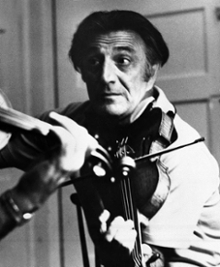
Portrait of Erwin Louis Hahn
. David Bohm's 1952 formulation of de Broglie-Bohm theory supplements the wave function with definite particle positions guided by that wave function. For a spinless particle of mass , writing gives the guidance velocity . The resulting trajectories and the Schrödinger equation together preserve the distribution when it holds initially, connecting the particle description with ordinary measurement statistics. His second paper examined the measurement process and its relation to the usual quantum mechanics predictions.[ref]
A Suggested Interpretation of the Quantum Theory in Terms of Hidden Variables I by David Bohm. Guidance dynamics and probability distribution
[ref]A physicist, Professor of theoretical physics at Birkbeck from 1961 to 1987.[ref]
Archives and special collections. The David Bohm Papers: Professor of Theoretical Physics, 1961–1987

Portrait of David Bohm
. Unknown photographer; crop credited to Commons contributor JB Hoang Tam. Attribution-only permission, as declared on the Commons file record; no Creative Commons licence is asserted., via Wikimedia Commons. Source.
Thomas Young developed the wave account of optical wave interference. His Bakerian lecture, read in 1801 and published in 1802, relates reinforcement and cancellation to the relative arrival of waves. In modern notation, two equal-amplitude coherent light fields give , where is their relative wave phase. The dark fringes are therefore a measurable consequence of adding fields before calculating intensity. This is a modern expression of the interference principle, rather than a quotation of his notation.[ref]
On the Theory of Light and Colours by Thomas Young. 1802, Proposition VIII, coincident undulations and interference; modern equal-amplitude example
A physicist appointed professor of natural philosophy at the Royal Institution in 1801.[ref]
Young; Thomas (1773–1829); physician, physicist and Egyptologist by Royal Society. Activity, Career: interference research and appointment as professor of natural philosophy in 1801

Portrait of Thomas Young (scientist)
. Henry Perronet Briggs, 1822, after Thomas Lawrence; commissioned by Hudson Gurney. Public domain: PD-Art, life plus 100 years and U.S. publication before 1931. Source usage terms, via Wikimedia Commons. Source.
A physicist whose work on fluid mechanics linked mathematical models with measurements of turbulence. He used an anemometer with a heated wire to probe velocity fluctuations and studied Burgers' equation, a simplified nonlinear equation that retains competition between wave steepening and viscous smoothing. The simpler equation makes it possible to isolate mechanisms that are entangled in the full Navier-Stokes equations. His work also introduced the Burgers vector as a measure of a dislocation in a crystal lattice.[ref]
Jan Burgers' Biography at the University of Maryland. Scientific-work paragraphs: hot-wire measurements, turbulence models, Burgers equation and crystal dislocations
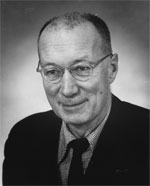
Portrait of Jan Burgers
. Source. Mildred Dresselhaus investigated the electronic band structure and optical response of carbon materials, from graphite to carbon nanotubes. Her group's Raman spectroscopy studies used resonant enhancement to distinguish nanotubes by their geometry and electronic transitions. Measurements on individual carbon nanotubes connected the vibrational spectrum with diameter and chirality, making light scattering a structural probe at the scale of a single tube.[ref]
https://physics.mit.edu/faculty/mildred-dresselhaus/. MIT faculty profile, Research Interests: resonant Raman characterization of individual nanotubes
Her authored solid-state lecture notes also explain how impurity spectra test models of electrons and holes in semiconductors, including the limitations of treating every impurity as a simple hydrogen-like system.[ref]
MIT memorial profile and portrait: physics.mit.edu/faculty/mildred-dresselhaus/

Portrait of Mildred Dresselhaus
. Official White House photograph by Pete Souza; existing Commons crop of Mildred Dresselhaus. Public domain (official United States federal government photograph). Source usage terms, via Wikimedia Commons. Source.
Sydney Chapman developed a quantitative explanation of atmospheric ozone photochemistry. In the basic mechanism, ultraviolet radiation dissociates molecular oxygen, an oxygen atom combines with another molecular oxygen and a third collision partner to form ozone, and further reactions remove it. His 1930 treatment connected the production and destruction reaction rates with the distribution and seasonal variation of ozone, while explicitly setting aside uncertain atmospheric transport. It was a testable physical model with stated omissions, rather than a complete account of all observed ozone changes.[ref]
A Theory of Upper-Atmospheric Ozone by Sydney Chapman. Introduction and sections on formation and removal of atmospheric ozone; original-paper excerpt

Portrait of Sydney Chapman (mathematician)
. NOAA. Public domain in the United States (NOAA official work). Source usage terms, via Wikimedia Commons. Source.
A theoretical physicist who, with Scott Hill, developed a calculable measure of quantum entanglement for pairs of qubits. Their 1997 work introduced the concurrence approach and obtained an exact preparation-cost formula for mixed states of rank at most two, with evidence for a broader extension. This turned an optimization over pure-state decompositions into a practical calculation for an important class of small quantum systems.[ref]
Entanglement of a Pair of Quantum Bits by Scott Hill and William K. Wootters. Abstract and equations (3)–(6): rank-two result and magic-basis construction
Jainendra K. Jain proposed describing the fractional quantum Hall effect through composite fermions: correlated electronic states represented by electrons carrying an even number of units of the magnetic flux quantum. In this effective description, important fractional electronic states correspond to filled effective Landau levels, connecting them with the integer quantum Hall effect. For instance, the electronic filling factor belongs to the sequence with . Flux attachment here encodes many-electron correlations; it is not a claim that each electron is a tiny classical solenoid.[ref]
Composite-fermion approach for the fractional quantum Hall effect by J. K. Jain. Physical Review Letters 63, 199–202 (1989), abstract and composite-fermion construction

Portrait of Jainendra K. Jain
. Xpaqui. CC0 1.0 Universal, via Wikimedia Commons. Source.

Portrait of Wojciech H. Zurek
. Los Alamos National Laboratory. Unless otherwise indicated, this information has been authored by an employee or employees of the Los Alamos National Security, LLC (LANS), operator of the Los Alamos National Laboratory under Contract No. DE-AC52-06NA25396 with the U.S. Department of Energy. The U.S. Government has rights to use, reproduce, and distribute this information. The public may copy and use this information without charge, provided that this Notice and any statement of authorship are reproduced on all copies. Neither the Government nor LANS makes any warranty, express or implied, or assumes any liability or responsibility for the use of this information. Los Alamos National Laboratory attribution permission, via Wikimedia Commons. Source.

Artur Ekert proposed deriving a shared cryptographic key from measurements on entangled particle pairs while testing other measurement settings through a Bell inequality. The different settings therefore serve two purposes: correlated results supply candidate key bits, and the observed correlations constrain possible descriptions of the source and an eavesdropper. The proposal connected a foundational test of quantum mechanics with the operational task of quantum key distribution, under the assumptions of its measurement and security model.[ref]
Quantum cryptography based on Bell's theorem by Artur K. Ekert. 1991 proposal, entangled pairs, key settings and Bell-correlation test

Portrait of Artur Ekert
. The Royal Society (required attribution); Commons author field: Duncan.Hull; existing crop by Ravenpuff. CC BY-SA 3.0, via Wikimedia Commons. Source.
David Attwood studies the use of diffraction for X-ray microscopy. With Janos Kirz, he authored the X-Ray Data Booklet's account of zone plates: concentric rings select contributions that interfere at a focus. Their treatment connects outer-zone width to spatial resolution and explains why an ideal opaque/transparent zone plate sends only of incident power into its first diffraction order. Resolving a small structure and collecting a useful fraction of the incident X-rays are therefore separate design constraints.[ref]
Zone Plates by Janos Kirz and David Attwood. Section 4.4, zone geometry, resolution and first-order efficiency

Portrait of David Attwood
. External portrait hosted by University of California, Berkeley. Source. There are unlisted articles, also show them or only show them.