Norbert Sachser is an ethologist who studies the causes and consequences of mammalian animal behaviour. His institutional research description includes the development of social behavior and the interaction between inherited characteristics and the environment.[ref]
Norbert Sachser research profile at the University of Münster. Research Areas: evolution and development of social behaviour; gene–environment interactions
With Matthias Asher and Elisabeth Spinelli de Oliveira, Sachser coauthored a field study of Cavia aperea in southeastern Brazil. Over six months, the researchers combined wildlife radio telemetry, direct behavioral observations and DNA profiling. Small groups occupied stable home ranges with limited overlap between neighboring groups; behavioral and preliminary parentage evidence supported a single-male social system in that study population.[ref]
A worked example helps explain why spatial and social evidence should be combined. Suppose estimated home ranges A and B have areas and square metres and share square metres. Their home-range overlap is of A but only of B. A symmetric alternative, the Jaccard index, isThese invented areas give different numerical summaries of exactly the same geometry. None tells us whether the animals were present simultaneously, interacted, or were genetically related. Tracking locations, observing encounters and testing parentage answer different questions. Agreement among them strengthens an interpretation of social organization without making an overlap statistic alone a measure of affiliation.
The original study concerned one natural population under its observed conditions. Its results do not establish an invariant group size or mating system for every Cavia aperea population; the ecological context forms part of the scientific claim.
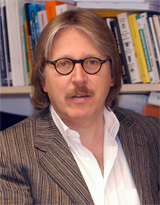
Norbert Sachser
. Named portrait in the University of Münster researcher profile.Elisabeth Spinelli de Oliveira is a researcher in the physiology and animal behaviour of rodents. Her University of São Paulo research profile places these questions in a comparative and evolutionary context and identifies her contribution to the field study of Cavia aperea coauthored with Matthias Asher and Norbert Sachser.[ref]
Elisabeth Spinelli de Oliveira research profile at the University of São Paulo. Área de Pesquisa and Principais produções, including the Cavia aperea paper
That study brought together observations of space use, social interactions and genetic relationships in a natural population. Wildlife radio telemetry supplied location evidence, direct observations recorded interactions, and DNA profiling addressed parentage. This combination matters because sharing a home range and producing offspring together are distinct biological relationships.[ref]
Social System and Spatial Organization of Wild Guinea Pigs (Cavia aperea) in a Natural Population by Matthias Asher and others. Printed page 788, author affiliation and Abstract
A simplified genetic example illustrates the distinction between excluding and identifying a parent. Consider one diploid marker obeying ordinary Mendelian segregation, with no mutation or measurement error. If a mother's genotype is and her offspring's is , the paternal contribution must be allele . A candidate male with genotype is incompatible at that marker, while one with is compatible. Compatibility alone does not identify him uniquely: another unsampled male might also carry allele . Multiple informative markers, adequate sampling and an explicit treatment of errors are needed to make stronger parentage inferences. These invented genotypes illustrate the logic of inheritance, not the assay or data reported in the field study.
The broader lesson is that social proximity, observed behavior and inherited variation can provide complementary evidence. A spatial association may suggest which animals to investigate, but it cannot substitute for genetic evidence of parentage. Conversely, genetic compatibility alone does not describe the daily interactions through which a social group is maintained.
K. McComb is the first author of a 1994 playback experiment testing numerical assessment by female lions. Recordings of either one unfamiliar female roaring or three roaring together simulated intruders within the territories of lion prides.[ref]
Roaring and numerical assessment in contests between groups of female lions, Panthera leo by K. McComb and others. Abstract: controlled playbacks and study groups
The approaches depended on the simulated intruder group and the defending group's composition. Playing recorded sounds allowed the apparent social threat to be manipulated without staging a physical fight between groups.[ref]
Roaring and numerical assessment in contests between groups of female lions, Panthera leo by K. McComb and others. Abstract: simulated intruders and approach decisions
The experiment asks how animal communication supports a decision under uncertainty. A recorded chorus carries information about an apparent group, but an approach decision also depends on the listeners' own group. Demonstrating a behavioural response to one-versus-three playbacks does not, by itself, specify the internal counting procedure used by a lion.
K. Ullas Karanth developed a photographic capture-recapture model approach for estimating tiger populations. A 1995 study used repeated camera trap sampling in Nagarahole, recognizing individual tigers across photographs instead of equating the photograph count with the number of animals.[ref]
The study reported photographic captures of individuals across nine sampling occasions. A model allowing animals to differ in capture probability was appropriate for those data.[ref]
Estimating tiger Panthera tigris populations from camera-trap data using capture-recapture models by K. Ullas Karanth. Abstract: sample counts and individual heterogeneity
The count of ten distinct photographed tigers and an estimate of the underlying population answer different questions. Repeated sightings identify recaptures, while unseen individuals require inference. Variation in how readily animals pass a camera trap matters even when their identities can be recognized accurately.
Gang Li is the first author of a 2016 phylogenomics study of the cat family. The team compared genome-wide single-nucleotide polymorphisms, additional chromosome sequences and complete mitochondrial genomes to investigate historical hybridization.[ref]
Phylogenomic evidence for ancient hybridization in the genomes of living cats (Felidae) by Gang Li and others. Original byline and Abstract: data sources and study question
Different inherited parts of a genome need not support the same phylogenetic tree. The study compared these conflicts with statistical evidence for gene exchange, including the test results summarized in its first table.[ref]
Phylogenomic evidence for ancient hybridization in the genomes of living cats (Felidae) by Gang Li and others. Abstract; Mitonuclear discordance; Table 1
The motivating problem is that a disagreement between two phylogenetic trees is not a unique signature of hybridization. Incomplete lineage sorting can also produce conflicting histories. Combining many genomic regions with explicit tests made the proposed historical explanation more informative than selecting one attractive tree and discarding the others.
Jeff A. Horn is the first author of a 2011 study of free-roaming cats using wildlife radio telemetry and collar-mounted activity sensors. The team compared 11 owned and 16 unowned cats near Champaign-Urbana, measuring home range, use of the surrounding landscape and activity over time.[ref]
Home Range, Habitat Use, and Activity Patterns of Free-Roaming Domestic Cats by Jeff A. Horn and others. Abstract and Methods; Journal of Wildlife Management 75, 1177–1185, 2011
The owned cats had smaller home ranges, while the unowned group was more nocturnal and more active overall. Location and activity are different measurements: an animal can occupy a small area yet move frequently within it. Pairing the sensors therefore gave a richer description than either measurement alone. The observed owned/unowned comparison was not a randomized assignment of care, and the operational unowned category should not automatically be equated with every definition of a feral animal.[ref]
Home Range, Habitat Use, and Activity Patterns of Free-Roaming Domestic Cats by Jeff A. Horn and others. Abstract: sample groups, home-range and activity findings
Kenta Suzuki is a researcher in animal behaviour whose work includes experimental comparisons of domestication and wild songbirds. A 2021 study led by Kenta Suzuki compared neophobia, reluctance to approach unfamiliar objects, in the Bengalese finch and its wild ancestor, the white-rumped munia. The experiment measured feeding in the presence of a novel object rather than assigning a general personality label to the birds.[ref]
Effects of domestication on neophobia: A comparison between the domesticated Bengalese finch and its wild ancestor, the white-rumped munia by Kenta Suzuki and others. Publisher Abstract and Highlights; Behavioural Processes 193, 104502, 2021
More Bengalese finches ate under the novel-object conditions, and their delay before feeding was shorter and less affected by the object. The comparison supplies a concrete behavioral outcome through which to investigate domestication. It also illustrates the value of defining the response operationally: willingness to feed beside a new object measures a particular context, rather than every possible response to danger or unfamiliarity.[ref]
Effects of domestication on neophobia: A comparison between the domesticated Bengalese finch and its wild ancestor, the white-rumped munia by Kenta Suzuki and others. Abstract: proportion feeding and feeding latency under novel-object conditions
Jan Komdeur is a researcher in animal behaviour and evolution, particularly cooperative breeding. His 1994 study of the Seychelles warbler asked whether older offspring staying with their parents actually improve the parents' reproductive success. Observing larger families alone cannot answer this: good territories might support both more helpers and more surviving young.[ref]
Experimental evidence for helping and hindering by previous offspring in the cooperative-breeding Seychelles warbler Acrocephalus sechellensis by Jan Komdeur. Abstract: study question and territory-quality controls; Behavioral Ecology and Sociobiology 34, 175–186, 1994
Jan Komdeur therefore removed helpers from breeding groups and compared outcomes while controlling for territory quality, group size and breeder age. One helper improved parental reproductive success; two or more helpers on medium-quality territories could reduce it relative to one helper. The experiment makes cooperative breeding a quantitative, context-dependent question. A helper may contribute care and gain inclusive fitness, while additional group members may also compete for resources or breeding opportunities.[ref]
Experimental evidence for helping and hindering by previous offspring in the cooperative-breeding Seychelles warbler Acrocephalus sechellensis by Jan Komdeur. Abstract and removal experiments: one-helper benefit and multiple-helper cost on medium-quality territories
Phillip C. Watts is a researcher in population genetics and conservation genetics, studying relationships between genetic variation and the environments experienced by wildlife. His research uses genomics to investigate biological responses to environmental change.[ref]
Phillip Watts research profile at the University of Jyväskylä. Introduction, Research Description and publication bylines
In a 2006 study, Phillip C. Watts and collaborators used DNA profiling to investigate offspring produced by female Komodo dragons isolated from males at two institutions. The genetic evidence supported parthenogenesis. One female later reproduced sexually, showing that a single individual could use both reproductive modes.[ref]
Parthenogenesis in Komodo dragons by Phillip C. Watts and others. Abstract: genetic fingerprinting, two isolated females and subsequent sexual reproduction
The example shows why an observation of an apparently unmated female laying viable eggs needs genetic evidence. Offspring genotypes can test explanations that husbandry records alone cannot settle. Here the combination of isolation history and inherited markers supported reproductive flexibility in a vertebrate, rather than establishing a rule that every isolated female will reproduce this way.
Joan Garcia-Porta is a biologist studying how organisms adapt and diversify in new environments. His research combines phylogenetics, morphology, ecology and genomics, with investigations of lizards, birds and plants. A recurring question is how environmental differences become differences among populations and species.[ref]
Joan Garcia-Porta research profile at Universidad Complutense de Madrid. First-person research summary and four research themes
In a 2019 study, Joan Garcia-Porta and collaborators combined phylogenomics and fossil calibration to reconstruct a dated phylogenetic tree of 262 species of Lacertidae. They compared this evolutionary history with occupied climate conditions, preferred body temperature and evaporative water loss. Temperate lineages showed slower molecular substitution rates than tropical and desert-adapted lineages.[ref]
Environmental temperatures shape thermal physiology as well as diversification and genome-wide substitution rates in lizards by Joan Garcia-Porta and others. Abstract:262-species dated tree, physiological comparisons and substitution-rate contrast
The illuminating feature is the combination of timescales: DNA differences inform relationships over evolutionary time, while physiological measurements describe what living lizards do now. Their agreement can support a proposed connection between climate and adaptation. A comparative association still needs interpretation; a phylogenetic tree alone does not experimentally demonstrate the cause of a physiological difference.
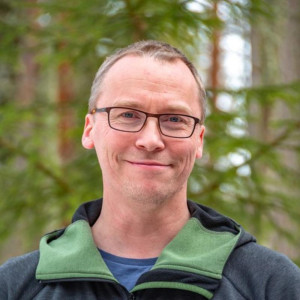
Joan Garcia-Porta
. Portrait identified on the university research-group profile.Aracely A. Lutes, whose university-hosted CV identifies her earlier publications under the name Aracely A. Newton, is a biologist who studied parthenogenesis in whiptail lizards. Her doctoral work concerned reproduction in these animals, linking meiosis, chromosomes and the inheritance of alleles.[ref]
Curriculum vitae of Aracely A. Newton. Page1: dissertation and Publications entries3–4 explicitly labelled Lutes(Newton)
A 2010 study with collaborators addressed a puzzle: how can an animal reproduce without fertilization while retaining heterozygosity? The studied lizards entered meiosis with a doubled chromosome complement. Pairing between genetically identical sister chromosomes, rather than the two different homologous chromosomes, provided a route to preserve inherited allele combinations.[ref]
Sister chromosome pairing maintains heterozygosity in parthenogenetic lizards by Aracely A. Lutes and others. Abstract and Figure3: chromosome doubling and alternative pairing patterns
The crucial evidence distinguished which copies paired. Fluorescence in situ hybridization marked repeated DNA sequences present on chromosomes from one ancestral species but absent from those of the other. Paired marker signals in meiotic preparations supported sister chromosome pairing. For example, matching an A-derived copy with its duplicate can leave both the A-derived and B-derived versions available to the resulting egg, preserving heterozygosity.[ref]
Sister chromosome pairing maintains heterozygosity in parthenogenetic lizards by Aracely A. Lutes and others. Figure4 and Results: internal telomeric-repeat probes distinguishing sisters from homologues
Juliana G. Roscito is a biologist whose research connects embryonic development, evolution and genomics. She earned her doctorate in developmental and evolutionary biology at the University of São Paulo in 2010 and subsequently conducted evolutionary-genomics research in Dresden. Her later work includes scientific management.[ref]
Juliana G. Roscito profile in NIMSB Support Units. Juliana G. Roscito subsection: education, research and management chronology
In Digit evolution in gymnophthalmid lizards by Juliana G. Roscito and others, she and collaborators compared the skeletal patterns of tetrapod limbs across Gymnophthalmidae. They distinguished mild reductions, such as loss of a few bones within limb digits, from more extreme reductions that leave no externally distinct adult limb. The study also examined Sonic hedgehog gene expression in strongly reduced developing limbs.[ref]
The comparison joins an adult phenotype to an embryonic process. Two animals with superficially similar limb reduction need not have changed the same developmental step. Examining which skeletal elements remain, alongside spatial gene expression, makes that question more precise than simply counting visible toes. Those observations identify patterns to explain; they do not by themselves prove that every case of limb loss has one molecular cause.

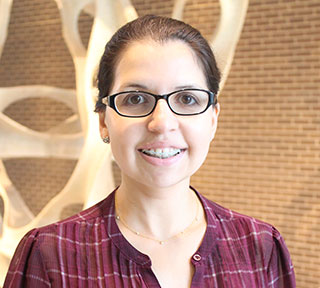
Juliana G. Roscito
. Portrait explicitly identified in the institutional Support Units profile.Natascha Westphal coauthored a 2019 study of shoulder muscles in amphisbaenians, asking whether reductions of limbs and supporting bones are accompanied by equivalent losses of muscles. The researchers used iodine-enhanced computed tomography to visualize soft tissues in three dimensions and compare them with the skeleton.[ref]
All investigated amphisbaenian taxa retained the full set of seventeen shoulder muscles, although some muscles were fused or reorganized. Bipes retained forelimbs and a nearly complete shoulder girdle, while other sampled lineages showed greater skeletal reduction. In severely reduced forms, muscle attachments could shift to skin, connective tissue or other muscles. The result supports a decoupling of muscle and bone evolution: losing a skeletal element does not by itself establish that the associated musculature has vanished.[ref]
David G. Chapple studies the ecology, evolution and conservation of reptiles. His Monash University profile identifies a research focus on Australian lizards and snakes, including threatened and poorly known species.[ref]
https://www.monash.edu/science/schools/biological-sciences/staff/chapple. Institutional profile and Research Overview
He led and coauthored a global synthesis of skink distribution, body form, ecology and life history, published in 2023. The study assembled species-level information to compare traits such as limb reduction and reproductive mode. Its author-contribution statement credits him with shared conceptualization, data curation, investigation and methodology, as well as leading funding acquisition.[ref]
A comparative dataset distinguishes different kinds of uncertainty. A recorded absence of limbs is an observed trait; an unrecorded reproductive mode is missing information. Treating both as the same zero value would manufacture a biological pattern. Collecting and documenting traits makes cross-species evolutionary questions testable, while keeping data coverage separate from the traits being compared.

David G. Chapple, portrait identified on his Monash University profile
. Portrait source: www.monash.edu/science/schools/biological-sciences/staff/chapple .
Martin A. Nowak works on mathematical models of evolution, including the evolution of cooperation. His 2006 synthesis separated five mechanisms: kin selection, direct reciprocity, indirect reciprocity, network reciprocity and group selection. Each mechanism changes which interactions contribute to an individual's evolutionary success.[ref]
Five rules for the evolution of cooperation by Martin A. Nowak. Abstract and mechanism-specific sections
A simple direct reciprocity calculation shows how repeated encounters can change incentives. Suppose cooperation costs , benefits the partner by , and an encounter continues with probability . Two cooperating reciprocators obtain expected payoff . An unconditional defector against a strategy that stops helping after a defection obtains initially and no later benefit. The first payoff exceeds the second precisely when . With , and , these payoffs are four and three.
This calculation depends on the specified repeated-interaction model and retaliation rule. It identifies a mechanism by which cooperation can be favored, without asserting that a single inequality describes every biological system. His institutional research profile also lists mathematical work on infection and cancer.[ref]
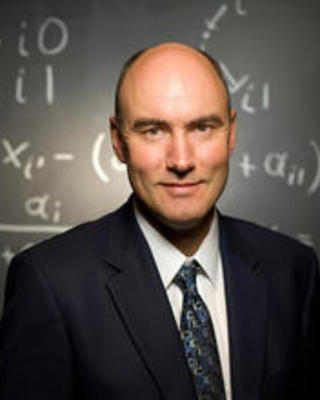
Martin A. Nowak, portrait identified by Harvard University
. Portrait source: www.oeb.harvard.edu/people/martin-nowak .
Coauthor of research on interactions among honeybee workers and hormonal regulation of the division of labour. The study connected social contact with flexible changes in worker roles.[ref]
Researcher in social evolution. With Robert Axelrod, Hamilton analyzed the evolution of cooperation through repeated interactions, connecting a formal strategic model with conditions under which cooperative behavior can persist.[ref]
The evolution of cooperation by Robert Axelrod and William D. Hamilton. Author list and described study
Coauthor of research on deceptive alarm snorts by topi antelopes. The study investigated how an alarm-like signal can affect mating behavior, connecting communication with conflicts of reproductive interest.[ref]
Coauthor of research on flexible alarm mimicry in an African bird. The study investigated deceptive use of calls, connecting learned or flexible signaling with access to resources.[ref]
Deception by Flexible Alarm Mimicry in an African Bird by Tom P. Flower and others. Author list and described study
Researcher in social evolution. Trivers developed an account of parent-offspring conflict, connecting differences in genetic interests with disagreement over parental investment.[ref]
Parent-Offspring Conflict by Robert L. Trivers. Author list and described study

Portrait of Robert Trivers
. Lois Nelson. Public domain in the United States (published without copyright notice, 1978–1989). Source usage terms, via Wikimedia Commons. Source.
Coauthor of field research on coordinated hunting by groupers and giant moray eels. The study connected communication between different species with complementary ways of capturing prey.[ref]
Researcher in microbial evolution. With Angus Buckling, Rainey investigated antagonistic coevolution between bacteria and bacteriophages, connecting adaptation in one population with changing selection on its opponent.[ref]
Antagonistic coevolution between a bacterium and a bacteriophage by Angus Buckling and Paul B. Rainey. Author list and described study

Portrait of Paul B. Rainey
. External portrait hosted by Max-Planck-Gesellschaft. Source.Coauthor of research on worker policing in honeybees. The study investigated how workers suppress reproduction by other workers, connecting colony organization with conflicts over reproductive output.[ref]
Worker policing in the honeybee by Francis L. W. Ratnieks and P. Kirk Visscher. Author list and described study
Coauthor of research on the emergence of leaders and followers through social feedback. The study connected repeated responses between individuals with group-level differences in behavioral roles.[ref]
Social feedback and the emergence of leaders and followers by Jennifer L. Harcourt and others. Author list and described study
Researcher in animal communication. With Wiline M. Pangle, Jakob Bro-Jørgensen investigated deceptive alarm snorts in topi antelopes, connecting a familiar signal type with manipulation of a mating partner’s behavior.[ref]
Researcher in social evolution. Godfray analyzed signaling of need by offspring to parents, connecting the costs and benefits of a signal with the allocation of parental resources.[ref]
Signalling of need by offspring to their parents by H. C. J. Godfray. Author list and described study
Researcher in social-insect biology. With Z. Y. Huang, Robinson studied interactions among honeybee workers and flexible division of labor, connecting social environment with hormonal regulation of behavior.[ref]
Researcher in social-insect evolution. With P. Kirk Visscher, Ratnieks investigated worker policing in honeybees, connecting enforcement within a colony with conflicting reproductive interests.[ref]
Worker policing in the honeybee by Francis L. W. Ratnieks and P. Kirk Visscher. Author list and described study
Coauthor of research on deceptive orchid pollination. The study investigated how a plant exploits insect mating responses, connecting a chemical or sensory signal with transfer of pollen.[ref]
Orchid pollination by sexual swindle by Florian P. Schiestl and others. Author list and described study
Researcher in microbial mutualisms. Kiers and collaborators investigated host sanctions in the legume–rhizobium association, connecting reduced symbiont cooperation with a host response that changes the symbiont’s benefit.[ref]
Host sanctions and the legume-rhizobium mutualism by E. Toby Kiers and others. Author list and described study

Portrait of Toby Kiers
. Peter Valckx; upload by Kpwalther. CC BY-SA 4.0, via Wikimedia Commons. Source.
Coauthor of research on quorum decisions in fish shoals. The study connected responses to the number of moving neighbors with information transfer and collective choice.[ref]
Quorum decision-making facilitates information transfer in fish shoals by Ashley J. W. Ward and others. Author list and described study
Researcher in social-insect behavior. Dornhaus tested whether task specialization predicts individual efficiency in ants, separating a worker’s frequency of performing a task from its performance when doing so.[ref]
Specialization Does Not Predict Individual Efficiency in an Ant by Anna Dornhaus. Author list and described study
Researcher in microbial evolution. With Paul B. Rainey, Angus Buckling studied antagonistic coevolution between bacteria and bacteriophages, using interacting populations to investigate reciprocal adaptation.[ref]
Antagonistic coevolution between a bacterium and a bacteriophage by Angus Buckling and Paul B. Rainey. Author list and described study
Coauthor of research on vocal negotiation among barn owl siblings. The study connected communication before feeding with allocation of a resource among competing offspring.[ref]
Barn owl (Tyto alba) siblings vocally negotiate resources by Alexandre Roulin and others. Author list and described study
Author of research on plastid origins and photosynthetic evolution. The work connects organelle structure and genetic evidence with the incorporation and subsequent transformation of photosynthetic partners in eukaryotic cells.[ref]
Origin and Evolution of Plastids and Photosynthesis in Eukaryotes by Geoffrey I. McFadden. Author list and described study
Researcher in cellular evolution. Margulis, publishing as Lynn Sagan, developed an endosymbiotic account of eukaryotic-cell origins, connecting the distinct properties of organelles with formerly independent cellular partners.[ref]
On the origin of mitosing cells by Lynn Sagan. Author list and described study

Portrait of Lynn Margulis
. Jpedreira. CC BY-SA 2.5, via Wikimedia Commons. Source.
Coauthor of work on the definition of Aves and related dinosaur groups. The study connected phylogenetic nomenclature with distinctions among feathers, flight and membership in a specified evolutionary lineage.[ref]
Researcher in experimental evolution. Dodd investigated reproductive isolation following adaptive divergence in Drosophila pseudoobscura, connecting differences generated under contrasting conditions with later mating behavior.[ref]
Articles by others on the same topic
There are currently no matching articles.