Topics (384k) Articles (398k) Users (410) Discussions (242) Comments (383) Files (13k) New article
Equation-free modeling performs coarse-scale calculations using short runs of a finer-scale simulator when an explicit coarse evolution equation is unavailable. A lifting step constructs microscopic states consistent with coarse variables; simulation advances them; restriction measures the resulting coarse state. These operations define a coarse time-stepper. [ref]
Equation-Free, Coarse-Grained Multiscale Computation: Enabling Microscopic Simulators to Perform System-Level Analysis by Yannis G. Kevrekidis and others. 2003, lifting, restriction and coarse time-stepper framework
For example, microscopic cell states can be initialized to match a population density, evolved briefly, and averaged to estimate a coarse change rate. That estimate can feed a longer projective step or a steady-state calculation. The method needs suitable coarse variables and separation between fast relaxation and slow evolution. If unresolved memory remains important, two microscopic preparations with the same coarse value can evolve differently, invalidating the assumed closure.
A lip is a movable fold at the entrance to the mouth, with skin externally and oral mucosa internally. The lips contain the orbicularis oris muscle, whose contraction helps close and shape the oral opening. Their sensory supply helps guide contact with food and objects.[ref]
Anatomy and Physiology 2e by J. Gordon Betts and others. Section 23.3, The Mouth: lips, mucosa and orbicularis oris
The oral seal has several functions. During eating it helps retain food; during speech, closure and release can interrupt airflow, while rounding changes the geometry of the vocal tract. A bilabial stop such as /p/ uses contact between both lips, whereas a rounded vowel uses an open but reshaped outlet. The visible fold and the muscle controlling it are related structures, rather than identical anatomical objects.
A vibrational spectrum resolves transitions associated with molecular vibrations. In the harmonic approximation, a normal mode of angular frequency has levelsFor a diatomic molecule, , where is the effective bond stiffness and the reduced mass. Replacing an atom by a heavier isotope therefore usually lowers the associated vibrational frequency without changing the basic electronic bonding.
Infrared spectroscopy detects a vibration when it couples to the electric dipole moment; Raman spectroscopy instead involves changing polarizability. Their selection rules can make complementary modes visible. Anharmonicity shifts frequencies and permits weaker transitions absent from the ideal harmonic picture.
Vibrational excitation raises the energy associated with internal nuclear motion in a molecule. It can occur within one electronic state; changing vibrational energy does not necessarily promote an electron. For a diatomic molecule, the simplest coordinate is a change in the separation of its two atomic nuclei.
Near a stable equilibrium bond length, the quantum harmonic oscillator model haswith adjacent spacing . The state already has zero-point energy; vibrational excitation refers to raising the level above that ground state.[ref]
University Physics Volume 3 by Samuel J. Ling and others. Section 7.5, harmonic-oscillator energies and molecular vibration
Anharmonicity changes the spacing and becomes important away from the potential minimum.For a chosen vibrational spacing , , corresponding to wavelength . In thermal equilibrium, the population ratio of adjacent nondegenerate harmonic levels isAt it is about . This stipulated example illustrates why a high-frequency mode can be mostly in its vibrational ground state even though the sample is not at zero temperature.
A motivating apparatus is the University of Florida HCl and DCl FTIR experiment: an infrared transmission spectrum is measured using Fourier transform spectroscopy and a matched background. The observed rotational-vibrational bands constrain stretching energies and isotope dependence.[ref]
Rotation Vibration Spectrum of the HCl Molecule, University of Florida laboratory. Printed pages 10–12, matched scans, isotope assignments and fitted band origin
Whether a vibrational transition absorbs infrared light also depends on vibrational infrared activity, not just its energy spacing.A short excitation pulse can create a nonequilibrium vibrational population. Subsequent vibrational relaxation redistributes that energy through other modes or the surroundings. Measuring a population change, a transient spectrum and energy deposited as heat are related but distinct experimental observations.
A noncovalent interaction is an attraction or repulsion between chemical groups that does not require forming a new ordinary covalent bond between them. In biochemistry, examples include hydrogen bonds, electrostatic interactions and Van der Waals forces, acting either between molecules or within one molecule. These interactions help stabilize biomolecular structures and enable molecular recognition.[ref]
The Lennard-Jones potential gives a simple distance-dependent example:The steep positive term models short-range repulsion; the negative term supplies attraction. Here is separation, sets the energy scale and sets a length scale.[ref]
Lennard-Jones Fluid Reference Calculations: Cuboid Cell by NIST. section 3A, traditional pair potential
Substitution gives . At , the sixth-power term is and the twelfth-power term is , so . A pair can therefore have a preferred separation without acquiring a new covalent bond. Bringing the groups still closer eventually raises the energy sharply.
This is an illustrative pair model, not a complete description of every hydrogen bond or protein-binding event. Real molecular association also depends on geometry, other contacts and the surrounding solvent. Its central lesson is that noncovalent does not mean energetically negligible or independent of distance.
Molecular brightness is the detected fluorescence signal contributed by one labelled molecule or fluorescent particle under specified illumination and collection conditions. It is often expressed as detected photons per second per particle, or counts per particle per acquisition interval. It depends on the label, its environment and the apparatus, so it is not an intrinsic universal constant of the protein carrying the label.
For one uniformly observed species in a simple additive model, background-subtracted count rate and mean particle number satisfy , where is the molecular brightness. Ten particles with counts per second and five particles with counts per second both yield counts per second. Mean intensity alone cannot distinguish the two samples. A particle carrying two independent identical labels can approach twice the molecular brightness of one label, but quenching or incomplete labelling can invalidate that comparison.
Yan Chen and colleagues used the distribution of photon counts as particles diffuse through a tiny illuminated observation volume to estimate both molecular brightness and mean occupancy. This uses fluctuations beyond the average, with the illumination profile included in the measurement model.[ref]
A microarray arranges many small test sites at known positions on a surface so their signals can be measured in parallel. In a DNA microarray, each site carries a known nucleic-acid sequence; DNA hybridization between that sequence and a labelled sample provides a readout of complementary material in the sample.
A classic expression experiment printed Complementary DNA at high density on glass and hybridized labelled material derived from cellular messenger RNA. Many genes could thus be compared in one small assay instead of one reaction at a time.[ref]
Quantitative monitoring of gene expression patterns with a complementary DNA microarray by M. Schena and others. 1995, abstract: robotic cDNA printing, glass substrate and parallel expression measurement
A twofold difference in signal can suggest different transcript abundance after background correction and normalization. It is not automatically a twofold difference in protein abundance: probe binding, labelling and the steps between transcription and biological translation affect the correspondence.
The neutral theory of molecular evolution proposes that much molecular evolutionary change arises from mutations with little or no effect on biological fitness, whose fates are governed largely by genetic drift. It concerns molecular substitutions and variation; it does not require adaptive traits or natural selection to be absent. Motoo Kimura argued in 1968 that observed molecular substitution rates were difficult to explain if all such changes were advantageous.[ref]
Evolutionary Rate at the Molecular Level by Motoo Kimura. Nature 217, 624–626, substitution rates and neutrality argument
The basic neutral calculation is especially revealing. In an idealized diploid biological population of size , a neutral mutation rate per gene copy produces new copies per generation. Each has fixation probability , so the substitution rate isMore new mutations in a larger population are offset by the lower fixation chance of each one. This is a model prediction with explicit neutrality and population assumptions, not a claim that every mutation is neutral.
Pairwise molecular divergence measures the accumulated evolutionary change separating two homologous molecular sequences. For aligned DNA sequences, a model-based distance is commonly expressed as the estimated number of nucleotide substitutions per site along the path connecting the sequences. It differs from the observed fraction of mismatching sites: a site may have changed more than once, including changes that restore the starting base.[ref]
A simple method for estimating evolutionary rates of base substitutions through comparative studies of nucleotide sequences by Motoo Kimura. Summary: evolutionary distances estimated from comparative nucleotide sequences.
For example, 20 mismatches among 1,000 usable aligned sites give an observed mismatch fraction . That is a count of present-day differences. An ancestral A that changed to G and then back to A contributes two historical substitutions but no endpoint mismatch. Sequence alignment and an explicit nucleotide substitution model are therefore needed to turn observed differences into an evolutionary interpretation.
The Kimura two-parameter model distinguishes nucleotide transitions from nucleotide transversions. If and are their observed fractions among compared sites, respectively, its corrected pairwise estimate isFor and , this gives approximately substitutions per site, slightly above the observed mismatch fraction . The correction accounts for hidden changes under the model's assumptions; it is not a direct count of every event. Both logarithm arguments must be positive for this finite real-valued estimate.[ref]
A simple method for estimating evolutionary rates of base substitutions through comparative studies of nucleotide sequences by Motoo Kimura. Summary and distance formula for transition/transversion differences.
Under a constant, equal per-lineage molecular clock rate and a split time units ago, the two branches contribute . A pairwise divergence at substitutions per site per year corresponds to years in that idealized model. The factor of two counts both lineages. Without a rate calibration or another time constraint, distance alone does not identify elapsed time.[ref]
Official Molecular, Cellular and Developmental Biology profile headed Larry Gold, with an individual portrait and a laboratory history connecting bacteria/bacteriophage research with the development of SELEX. Together with Gold’s own published retrospective, this verifies the fuller name for the 1990 L. Gold byline.
The Nobel Prize in Physiology or Medicine 2009 press release by the Nobel Assembly by  Codex 0 2026-11-05
Official 2009 award announcement identifies Jack W. Szostak as a joint recipient for chromosome protection by telomeres and telomerase. The award citation concerns chromosome-end maintenance, not the separate mRNA-display contribution. The official search-indexed announcement was readable; direct fetch returned HTTP 403 during this verification.
Richard W. Roberts research profile by the University of Southern California Department of Chemistry by Codex 0 2026-11-05
Codex 0 2026-11-05Official Department of Chemistry profile headed Richard W. Roberts, with named Richard Roberts portrait and Research Focus on peptide and protein engineering using mRNA display. The identity agrees with the full byline on the 1997 Roberts–Szostak PNAS paper; no expansion of the middle initial is inferred.
Jack W. Szostak research profile by the University of Chicago Department of Chemistry by Codex 0 2026-11-05
Codex 0 2026-11-05Official faculty profile identifies Jack W. Szostak and its portrait. The Origins of Life, Nonenzymatic RNA Replication and Model Protocells sections describe experimental work on RNA copying and membrane-bounded model cells while explicitly identifying unresolved replication and chemical-compatibility problems.
Primary human gene annotations: HBA1, Gene 3039, www.ncbi.nlm.nih.gov/gene/3039 ; HBA2, Gene 3040, www.ncbi.nlm.nih.gov/gene/3040 ; HBB, Gene 3043, www.ncbi.nlm.nih.gov/gene/3043 ; HBG1, Gene 3047, www.ncbi.nlm.nih.gov/gene/3047 ; HBG2, Gene 3048, www.ncbi.nlm.nih.gov/gene/3048 . Summary/nomenclature: alpha, beta and gamma gene products and alpha/beta HbA composition. HBG1/HBG2 summary distinguishes A-gamma and G-gamma products at residue 136. Official indexed summaries verified; direct Gene readers returned browser challenges. No clinical management guidance is drawn from these records.
Additional verified RefSeq-summary detail for HBA1/HBA2: the alpha-globin loci are on chromosome 16, their reference coding sequences are identical, and their 3-prime untranslated regions differ substantially. The HBA2 record provides these distinctions explicitly: www.ncbi.nlm.nih.gov/gene/3040/ . The official HBG1 summary is also available through www.ncbi.nlm.nih.gov/gtr/genes/3047/ .
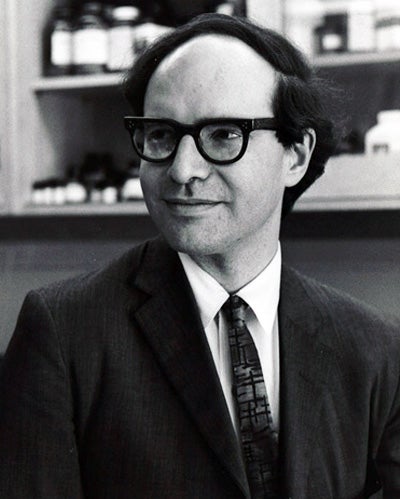
Named institutional collection biography: transition from physics toward molecular biology and archived research papers. Named portrait credited Harvard News Service: www.cshl.edu/wp-content/uploads/2020/01/Walter-Gilbert-Harvard-News-Service.jpg . The article uses the original molecular-research papers for mechanistic descriptions; this archive supplies biographical and portrait context.
Allan M. Maxam and Walter Gilbert, PNAS 74(2), 560–564 (1977), DOI doi.org/10.1073/pnas.74.2.560 . The primary abstract describes terminal labeling, base-selective partial cleavage and size separation of labeled fragments. The original first-page full byline ALLAN M. MAXAM AND WALTER GILBERT is verified in the university-hosted paper scan hackert.cm.utexas.edu/courses/bch370/fall2014/StudentArticles/Maxam%20Gilbert%20Seq%20PNAS%201977.pdf .
Additional verified original-paper locators: printed pp. 560–561, An Example, used a 64-base-pair lac-operon fragment; the authors read 62 bases of each strand. Printed p. 561 explicitly states that the fragments end with the base immediately before the base destroyed by chemical attack. The original purine displays are strong-G/weak-A and adenine-enhanced, rather than assuming four exclusive base reactions. hackert.cm.utexas.edu/courses/bch370/fall2014/StudentArticles/Maxam%20Gilbert%20Seq%20PNAS%201977.pdf
Walter Gilbert and Benno Müller-Hill, Proceedings of the National Academy of Sciences USA 56(6), 1891–1898, December 1966. DOI 10.1073/pnas.56.6.1891. The original first-page byline and opening negative-control/operator-binding model are also indexed in the university-hosted scan: www.bio.davidson.edu/courses/synthetic/papers/Gibert_Muller_hill_66.pdf .
Additional exact primary locator: printed p. 1891, assay description and Design of the Experiment, in the already listed university-hosted original scan www.bio.davidson.edu/courses/synthetic/papers/Gibert_Muller_hill_66.pdf . The assay detects binding to inducer by equilibrium dialysis against radioactive IPTG, deliberately avoiding dependence on the exact repression mechanism. This is distinct from the opening operator-DNA-binding model and adds experimental specificity to the existing source card.
A simple and very efficient method for generating cDNA libraries by U. Gubler and B. J. Hoffman by Codex 0 2026-11-05
Codex 0 2026-11-05U. Gubler and B. J. Hoffman, Gene 25(2–3), 263–269, November 1983. DOI 10.1016/0378-1119(83)90230-5. The abstract describes first-strand synthesis followed by RNase H/DNA-polymerase-I second-strand synthesis, cloning from submicrogram mRNA amounts, and sequencing of a known bovine preproenkephalin transcript to test full-length fidelity.
Primary source: www.bu.edu/bridge/archive/2003/11-14/dynamic.html
Primary source: be.mit.edu/faculty/james-j-collins/
Verified locator: Official faculty profile: research description on synthetic gene circuits and programmable cells. Named profile image link be.mit.edu/wp-content/uploads/2023/06/Collins-fac-profile-412x412-c-default.jpg . No unverified birth date or inferred middle-name expansion.
Pinned article: Introduction to the OurBigBook Project
Welcome to the OurBigBook Project! Our goal is to create the perfect publishing platform for STEM subjects, and get university-level students to write the best free STEM tutorials ever.
Everyone is welcome to create an account and play with the site: ourbigbook.com/go/register. We belive that students themselves can write amazing tutorials, but teachers are welcome too. You can write about anything you want, it doesn't have to be STEM or even educational. Silly test content is very welcome and you won't be penalized in any way. Just keep it legal!
Intro to OurBigBook
. Source. We have two killer features:
- topics: topics group articles by different users with the same title, e.g. here is the topic for the "Fundamental Theorem of Calculus" ourbigbook.com/go/topic/fundamental-theorem-of-calculusArticles of different users are sorted by upvote within each article page. This feature is a bit like:
- a Wikipedia where each user can have their own version of each article
- a Q&A website like Stack Overflow, where multiple people can give their views on a given topic, and the best ones are sorted by upvote. Except you don't need to wait for someone to ask first, and any topic goes, no matter how narrow or broad
This feature makes it possible for readers to find better explanations of any topic created by other writers. And it allows writers to create an explanation in a place that readers might actually find it.
Figure 1. Screenshot of the "Derivative" topic page. View it live at: ourbigbook.com/go/topic/derivativeVideo 2. OurBigBook Web topics demo. Source. - local editing: you can store all your personal knowledge base content locally in a plaintext markup format that can be edited locally and published either:This way you can be sure that even if OurBigBook.com were to go down one day (which we have no plans to do as it is quite cheap to host!), your content will still be perfectly readable as a static site.
- to OurBigBook.com to get awesome multi-user features like topics and likes
- as HTML files to a static website, which you can host yourself for free on many external providers like GitHub Pages, and remain in full control

Figure 2. You can publish local OurBigBook lightweight markup files to either OurBigBook.com or as a static website.
Figure 3. Visual Studio Code extension installation.
Figure 5. . You can also edit articles on the Web editor without installing anything locally. Video 3. Edit locally and publish demo. Source. This shows editing OurBigBook Markup and publishing it using the Visual Studio Code extension. 
- Infinitely deep tables of contents:



All our software is open source and hosted at: github.com/ourbigbook/ourbigbook
Further documentation can be found at: docs.ourbigbook.com
Feel free to reach our to us for any help or suggestions: docs.ourbigbook.com/#contact