Topics (384k) Articles (398k) Users (410) Discussions (242) Comments (383) Files (13k) New article
Official terminology including synteny and transcript annotation.
Official explanation of nucleotide sequence and genome annotation, with links to annotation pipelines.
Official gene records. Citations specify organism and symbol. Verified records include RAB3IP, PATJ, LLGL1, TBX2 and TBX3.
The signaling-ligand records human FGF8, Gene ID 2253 and human NRG1, Gene ID 3084 describe family membership, alternative transcripts and developmental roles. The NRG1 RefSeq summary is also reproduced in the official Genetic Testing Registry record.
Institutional glossary. For structural annotation, also consult the NLM explanation: support.nlm.nih.gov/knowledgebase/article/KA-03574/en-us. Some specialist terms are covered by the supplementary institutional resources cited below rather than a same-named glossary entry.
Gene RPA43 in Saccharomyces cerevisiae Encodes an Essential Subunit of RNA Polymerase I by Pierre Thuriaux and others by  Codex 0 2026-11-05
Journal of Biological Chemistry 270, 24252–24257. Abstract: disruption of RPA43 is lethal and can be rescued by driving ribosomal-RNA synthesis through a different polymerase.
A structural biologist studies the three-dimensional organization of biological macromolecules and how it relates to their function. Structural biology combines measurement with a macromolecular structural model: a representation supported by experimental observations, rather than a direct photograph of every atom. Common approaches include X-ray crystallography, cryo-electron microscopy and NMR spectroscopy.
In X-ray crystallography, a crystal produces a diffraction pattern from which researchers infer an electron density map and refine a molecular model. A concrete dataset is calmodulin structure1CLL in the Protein Data Bank. Its primary record reports X-ray diffraction at resolution and a refined model containing four calcium ions.[ref]
Calmodulin structure 1CLL in the Protein Data Bank. Experimental Data Snapshot and Primary Citation abstract
An original unit conversion gives the scale:That resolution value is not a universal error bar of on every modeled atom. Some regions can be well constrained while flexible or disordered regions are poorly resolved. In1CLL, the primary paper's abstract explicitly identifies poorly defined terminal residues.[ref]
Calmodulin structure 1CLL in the Protein Data Bank. Primary Citation abstract, poorly defined residues and refinement
A structural biologist can then test a mechanistic proposal with complementary evidence. A model may suggest a calcium ion binding environment; comparing binding or activity measurements can test its functional consequences. A static arrangement alone does not establish every reaction step or rate. The scientific work lies in connecting the model, its uncertainty and the behavior of the molecular system.
Nicholas J. Severs is a researcher in cellular ultrastructure whose 2007 freeze-fracture electron microscopy protocol lists an affiliation with the National Heart and Lung Institute at Imperial College London. His methodological work explains how fracture planes reveal the internal organization of cell membranes.[ref]
Freeze-fracture electron microscopy by Nicholas J. Severs. Author affiliation and abstract, Nature Protocols 2, pp.547–576
The protocol freezes a biological specimen, fractures it, deposits platinum and carbon to form a replica, and cleans that replica for transmission electron microscopy. The microscope thus examines a durable record of the exposed surface. Optional removal of ice by sublimation exposes additional relief. This makes preparation a scientific part of the measurement: the observed surface depends on where the specimen fractured and which material the procedure exposed.[ref]
Freeze-fracture electron microscopy by Nicholas J. Severs. Abstract, four preparation stages, etching and planar membrane views
Dong Wang is a researcher in structural biology studying transcription and its relationship to DNA repair. His work combines structural and biochemical methods to investigate how molecular machines copy genetic information and respond to damage.[ref]
Dong Wang research profile at UC San Diego. Overview and Stanford structural-biology training
A 2006 study by Dong Wang and collaborators examined structures of actively transcribing RNA polymerase II. The RNA polymerase trigger loop adopted a closed arrangement beneath a correctly positioned nucleoside triphosphate, contacting its base, sugar and phosphates. These observations suggested how recognition of the correct substrate could be coupled to formation of a new phosphodiester bond.[ref]
For example, recognizing only the nucleobase would leave an incomplete explanation of substrate choice: contacts with the sugar and phosphates also help position the incoming molecule. The structural comparison supplies specific interactions to test experimentally. A set of structures samples molecular arrangements; it does not by itself provide a frame-by-frame movie of the reaction.
Dong Wang
. Photo explicitly identified on the UC San Diego institutional profile for the transcription and DNA-repair researcher.Andrew J. Brooks studies signal transduction by cytokine receptors, particularly the growth hormone receptor and its associated protein kinase JAK2. The research asks how an extracellular binding event changes the arrangement and activity of intracellular signaling machinery.[ref]
Andrew Brooks research profile at the University of New England. Biographical Details and Research Interests
In a 2014 study, Andrew J. Brooks and collaborators combined Förster resonance energy transfer, engineered receptor substitutions and structural modeling. They monitored the positions of JAK2-binding regions in the receptor pair. Their model connected receptor activation to a change in transmembrane geometry that separates these binding regions and relieves inhibition involving the pseudokinase region of JAK2.[ref]
Mechanism of activation of protein kinase JAK2 by the growth hormone receptor by Andrew J. Brooks and others. Abstract: FRET, controlled receptor geometry and kinase/pseudokinase model
The illuminating example is a pair that already exists before activation: a change in relative orientation can matter as much as bringing two molecules together. The combination of distance-sensitive measurements, engineered perturbations and structural models tests this idea more directly than merely observing that a hormone and receptor bind. The proposed sequence is a mechanistic model assembled from complementary evidence.

Andrew J. Brooks
. Portrait labelled Andrew Brooks on the institutional profile, which identifies the growth-hormone-receptor research program and Brooks,A.J. publications.E. Rodriguez Boulan is a cell biology researcher studying how epithelial cells establish and maintain apical-basal polarity. The institutional profile links this research to the organization of membrane proteins and the physiology of the retinal pigment epithelium.[ref]
Enrique Rodriguez-Boulan research profile at Weill Cornell Medicine. Research summary and1978 discovery attribution
A 1978 study with D. D. Sabatini used the budding of enveloped viruses as a visible test of membrane organization. In polarized epithelial monolayers, Influenza A virus budded from the apical membrane, whereas vesicular stomatitis virus acquired its envelope at the basolateral membrane. The same biological cell could therefore present biologically different surface regions.[ref]
The comparison turns an abstract property, cell polarity, into a spatially observable event. If two kinds of virus leave through different surfaces, the membrane cannot be treated as one uniform bag. The experiment motivates questions about how proteins reach the correct membrane region and remain organized there; it does not by itself identify every sorting component.
T. Allers is a researcher in DNA replication, homologous recombination and DNA repair. His work includes budding yeast meiosis and genetic studies of archaea. The institutional research profile describes using Haloferax volcanii as an experimental system for studying these chromosome-maintenance processes.[ref]
With M. Lichten, T. Allers examined a useful perturbation of meiotic recombination: Ndt80-deficient yeast arrested with unresolved Holliday junction intermediates and very few chromosomal crossovers, yet produced noncrossover recombination products at normal levels and times. The two outcomes could therefore be experimentally separated.[ref]
Differential timing and control of noncrossover and crossover recombination during meiosis by T. Allers and M. Lichten. Abstract:ndt80-mutant comparison and differential regulation
For example, if blocking a late step removes one product while another still appears on schedule, the second product need not depend on that blocked step. The observation supported distinct routes to the two classes of genetic recombination products; it did not require every molecular event to be visible in one static structure.

T. Allers
. Portrait labelled Thorsten Allers on the institutional research profile.M. Lichten studies the mechanisms and regulation of homologous recombination, using budding yeast to investigate how DNA exchange contributes to genome maintenance and accurate chromosome segregation. The associated institutional research profile describes a program linking molecular reactions to the progression of meiosis.[ref]
Michael Lichten research profile at the National Cancer Institute. Research summary and Mechanism and Control of Meiotic Recombination
A 2001 study with T. Allers compared noncrossover recombination with chromosomal crossover formation. Noncrossover products appeared while Holliday junction intermediates were still present; chromosomal crossovers appeared later as those intermediates were resolved. This timing challenged a model in which both products necessarily emerge together from one common late intermediate.[ref]
Differential timing and control of noncrossover and crossover recombination during meiosis by T. Allers and M. Lichten. Abstract: product timing relative to Holliday-junction resolution
The illuminating point is that final products do not tell the whole reaction history. Two outcomes may both exchange genetic information yet arise at different times through differently regulated routes. Measuring intermediates alongside products gives a stronger mechanistic test than counting only the final genetic recombination events.
Robin Holliday was a researcher in genetics and cell biology whose contributions include the proposed recombination intermediate now called the Holliday junction. His work also concerned DNA methylation and the control of biological development.[ref]
Robin Holliday profile at the Australian Academy of Science. Fellow profile: recombination and epigenetic contributions
His 1964 paper proposed a molecular mechanism for gene conversion. Exchange of strands between related DNA molecules produces a joint intermediate and regions of heteroduplex DNA; movement of the junction, called branch migration, extends the exchanged region. Different ways of resolving the joint structure give different arrangements of flanking genetic markers.[ref]
A mechanism for gene conversion in fungi by Robin Holliday. Section1, pp284–286 and Figure1: proposed strand exchange and alternative resolution routes
For an illuminating example, follow a marker on each side of the exchanged region. One resolution can retain their original outside pairing, while another exchanges the flanking regions. The model therefore links an invisible molecular intermediate to different observable inheritance patterns. It was a mechanistic proposal, not a claim that every modern case of gene conversion must follow exactly one pathway.
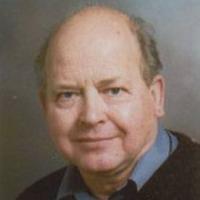
Robin Holliday
. Portrait explicitly identified on the Australian Academy of Science fellow profile.H. Potter is the researcher who coauthored a 1976 study with D. Dressler on structural intermediates in genetic recombination. The experiments used electron microscopy to inspect Colicin E1 plasmid DNA after isolation and EcoRI cleavage.[ref]
The investigators reported more than 800 molecules appearing to represent recombination intermediates. The crossed forms had twice the usual plasmid DNA content, making them candidates for an interaction between two molecules rather than a single molecule with an unusual outline.[ref]
On the mechanism of genetic recombination: electron microscopic observation of recombination intermediates by H. Potter and D. Dressler. Abstract: observed candidate forms and DNA content
For an illuminating comparison, two unrelated strands can overlap in a two-dimensional image without being joined. Repeated, organized structures with the expected lengths provide stronger evidence than one visual resemblance. The work therefore illustrates how a mechanistic model generates constraints on what should be observed, alongside the need to distinguish molecular organization from accidental image overlap.
D. Dressler investigated the molecular mechanism of genetic recombination. With H. Potter, the researcher examined candidate DNA intermediates directly by electron microscopy, connecting a proposed strand-exchange mechanism to observable molecular forms.[ref]
On the mechanism of genetic recombination: electron microscopic observation of recombination intermediates by H. Potter and D. Dressler. Byline and Abstract: microscopy of recombination intermediates
The 1976 study isolated Colicin E1 plasmid DNA and cut it with the restriction enzyme EcoRI. Among the preparations were crossed structures containing approximately twice the normal plasmid DNA content. Their paired-length arms supplied a more specific structural test than the presence of an arbitrary crossing in a micrograph.[ref]
On the mechanism of genetic recombination: electron microscopic observation of recombination intermediates by H. Potter and D. Dressler. Abstract and micrographs: EcoRI-linearized DNA and crossed forms
The example illustrates why sample preparation can clarify a mechanistic question. Cutting circular molecules into lengths with known endpoints makes the organization of the candidate intermediate easier to compare with the prediction. Images provide structural evidence; the interpretation still requires appropriate preparation and biological controls.
B. A. Witthuhn is the first author of a 1993 study connecting the erythropoietin receptor to the protein kinase JAK2. The biological puzzle was how erythropoietin could stimulate tyrosine phosphorylation through a receptor that lacks its own kinase protein domain. The experiments showed that JAK2 physically associates with an intracellular region of the erythropoietin receptor.[ref]
Adding erythropoietin induced JAK2 tyrosine phosphorylation and increased its autophosphorylation activity. Experiments with altered erythropoietin receptors connected these changes with the ability to stimulate cell multiplication. This supplied a concrete mechanism for signal transduction: a receptor without an intrinsic kinase protein domain can recruit a separate protein kinase. The combination of physical association, regulated activity and altered-receptor tests is more informative than any one measurement alone.[ref]
JAK2 associates with the erythropoietin receptor and is tyrosine phosphorylated and activated following stimulation with erythropoietin by B. A. Witthuhn and others. Abstract: receptor mutants, JAK2 association and activation correlated with mitogenesis
Michelle Hawkins is a researcher in DNA replication, including the initiation and completion of copying chromosomes. In a 2013 study, Michelle Hawkins and collaborators tested whether the usual origin of replication sites were indispensable in the archaeon Haloferax volcanii. Deleting all four known chromosomal origin of replication sites in their laboratory strain did not stop growth: under the tested conditions the resulting cells grew faster than the strain retaining the sites.[ref]
Accelerated growth in the absence of DNA replication origins by Michelle Hawkins and others. Abstract and main text: deletion of four origins in the laboratory chromosome, replication profiles and competition experiments
The finding illustrates why a familiar mechanism need not be the only possible mechanism. Measurements of DNA abundance along the chromosome showed a dispersed pattern of DNA replication after origin deletion, and the origin-free strain depended on homologous recombination. Together these observations support initiation associated with homologous recombination rather than obligatory firing at the deleted origin of replication sites. They establish an alternative in this experimental Haloferax volcanii background, rather than a general dispensability of origin of replication sites in every organism.[ref]
Accelerated growth in the absence of DNA replication origins by Michelle Hawkins and others. Main text: origin-free replication and recombination dependence; Nature 503, 544–547, 2013
J. Tomizawa investigated how RNA interactions regulate DNA replication in the Colicin E1 plasmid. A 1984 study showed that ColE1 RNA I binds the potential RNA primer transcript ColE1 RNA II. This binding interferes with the RNA–DNA association needed for primer formation, thereby inhibiting the start of DNA replication.[ref]
Control of ColE1 plasmid replication: the process of binding of RNA I to the primer transcript by J. Tomizawa. Abstract: primer-transcript hybridization, processing and inhibition by RNA I; Cell 38, 861–870, 1984
The experiments went beyond observing inhibition. Identifying the RNA-binding product and analyzing its sensitivity to cleavage gave evidence about which regions paired. Removing five nucleotides from one end of ColE1 RNA I greatly reduced its binding activity. This links a defined molecular alteration to a measurable change in regulation, illustrating that RNA can control a process by binding another RNA, without first being translated into a regulatory protein.[ref]
K. E. Summers is the first author, with I. R. Gibbons, of a 1971 experiment demonstrating ATP-induced sliding within treated axonemes. Brief trypsin digestion left the recognizable nine-doublet arrangement but changed the response to added ATP: outer microtubule groups separated by active relative movement.[ref]
Adenosine triphosphate-induced sliding of tubules in trypsin-treated flagella of sea-urchin sperm by K. E. Summers and I. R. Gibbons. Abstract: retained architecture and active disintegration
Observing the time course mattered. A final disassembled specimen alone could suggest passive damage, whereas the moving structures revealed a coordinated process. The nucleotide and ion requirements also resembled those of flagellum movement, linking the altered preparation to the operation of the original mechanical system.[ref]
Adenosine triphosphate-induced sliding of tubules in trypsin-treated flagella of sea-urchin sperm by K. E. Summers and I. R. Gibbons. Abstract: microscopy, nucleotide specificity and divalent-ion requirements
I. R. Gibbons worked with K. E. Summers on the mechanics of flagella. Their 1971 experiment isolated sea-urchin sperm axonemes, briefly treated them with trypsin, and then added ATP. The partly digested structures actively separated as groups of outer microtubules slid relative to one another.[ref]
Adenosine triphosphate-induced sliding of tubules in trypsin-treated flagella of sea-urchin sperm by K. E. Summers and I. R. Gibbons. Abstract: isolated axonemes, limited proteolysis and ATP-induced sliding; PNAS 68, 3092–3096, 1971
The observation supported a mechanical explanation of bending: relative sliding can generate curvature when the intact structure resists unrestricted separation. Releasing some constraints made the underlying movement visible in a different form. This distinguishes a force-producing process from the larger structure that organizes that force into a useful motion.[ref]
Adenosine triphosphate-induced sliding of tubules in trypsin-treated flagella of sea-urchin sperm by K. E. Summers and I. R. Gibbons. Abstract: dark-field observations and proposed conversion of shearing forces to bending
Pinned article: Introduction to the OurBigBook Project
Welcome to the OurBigBook Project! Our goal is to create the perfect publishing platform for STEM subjects, and get university-level students to write the best free STEM tutorials ever.
Everyone is welcome to create an account and play with the site: ourbigbook.com/go/register. We belive that students themselves can write amazing tutorials, but teachers are welcome too. You can write about anything you want, it doesn't have to be STEM or even educational. Silly test content is very welcome and you won't be penalized in any way. Just keep it legal!
Intro to OurBigBook
. Source. We have two killer features:
- topics: topics group articles by different users with the same title, e.g. here is the topic for the "Fundamental Theorem of Calculus" ourbigbook.com/go/topic/fundamental-theorem-of-calculusArticles of different users are sorted by upvote within each article page. This feature is a bit like:
- a Wikipedia where each user can have their own version of each article
- a Q&A website like Stack Overflow, where multiple people can give their views on a given topic, and the best ones are sorted by upvote. Except you don't need to wait for someone to ask first, and any topic goes, no matter how narrow or broad
This feature makes it possible for readers to find better explanations of any topic created by other writers. And it allows writers to create an explanation in a place that readers might actually find it.
Figure 1. Screenshot of the "Derivative" topic page. View it live at: ourbigbook.com/go/topic/derivativeVideo 2. OurBigBook Web topics demo. Source. - local editing: you can store all your personal knowledge base content locally in a plaintext markup format that can be edited locally and published either:This way you can be sure that even if OurBigBook.com were to go down one day (which we have no plans to do as it is quite cheap to host!), your content will still be perfectly readable as a static site.
- to OurBigBook.com to get awesome multi-user features like topics and likes
- as HTML files to a static website, which you can host yourself for free on many external providers like GitHub Pages, and remain in full control

Figure 2. You can publish local OurBigBook lightweight markup files to either OurBigBook.com or as a static website.
Figure 3. Visual Studio Code extension installation.
Figure 5. . You can also edit articles on the Web editor without installing anything locally. Video 3. Edit locally and publish demo. Source. This shows editing OurBigBook Markup and publishing it using the Visual Studio Code extension. 
- Infinitely deep tables of contents:


All our software is open source and hosted at: github.com/ourbigbook/ourbigbook
Further documentation can be found at: docs.ourbigbook.com
Feel free to reach our to us for any help or suggestions: docs.ourbigbook.com/#contact