Topics (384k) Articles (398k) Users (410) Discussions (242) Comments (383) Files (13k) New article

An electrical engineer who develops quantum-computing hardware.[ref]
Professional profile of Marissa Giustina (mcqst.de). Opening professional description; Vienna research paragraph.

Portrait of Marissa Giustina
. Google. CC BY 3.0, via Wikimedia Commons. Source.Paul E. McKenney is a computer scientist known for work on concurrent computing and operating-system kernels. His contributions include read-copy-update, developed for systems in which reads are frequent and updates must coexist with them.[ref]
The key read-copy-update distinction is between removing an object from a shared data structure and reclaiming its storage. An earlier reader may still hold a reference after removal; reclamation waits until the relevant readers have finished. That separation permits lighter synchronization on the read path. It is an example of how the lifetime of a shared object becomes part of a concurrent algorithm.[ref]
What is RCU? in the Linux Kernel documentation. Section 1, RCU Overview
With David Howells, he also authored the kernel guide to circular buffers and their memory barriers.[ref]
Tony Hoare is a computer scientist whose contributions include quicksort, Hoare logic and communicating sequential processes. His industrial work included an early ALGOL 60 compiler; his institutional biography also describes an unsuccessful operating system project, giving concrete context for the difficulty of reliable systems engineering.[ref]
https://www.microsoft.com/en-us/research/people/thoare/. Institutional biography, early Elliott Brothers projects and research achievements
In his 1969 paper An Axiomatic Basis for Computer Programming by Tony Hoare, he set out assignment, composition and iteration rules for reasoning directly about program text. The assignment rule reasons backward from the required result, while a loop invariant compresses arbitrarily many iterations into a preservation obligation. The paper explicitly distinguishes these partial correctness results from successful termination and discusses how arithmetic and side effects affect the model.[ref]

Portrait of Tony Hoare
. Dennis Hamilton (orcmid), Flickr; File caption identifies FLoC 2006, 18 August 2006. Creative Commons Attribution 2.0 Generic., via Wikimedia Commons. Source.Scott Kirkpatrick is a computer scientist whose work connects statistical physics with computational complexity theory and optimization. With Charles Daniel Gelatt Jr. and Mario P. Vecchi, he developed simulated annealing as a method for combinatorial optimization.[ref]
Optimization by Simulated Annealing by Scott Kirkpatrick and others. 1983, introduction and pages 672–673
The method borrows a rule from the Metropolis algorithm: a proposed increase in cost can be accepted with probability , where is an adjustable control parameter in the same units as the cost. Allowing occasional uphill changes can escape a local minimum; reducing progressively makes them less likely. The original work applied this physical analogy to electronic component placement and wiring.[ref]
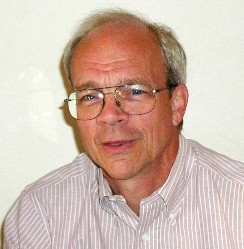
Portrait of Scott Kirkpatrick
. Photograph from Hebrew University of Jerusalem's official researcher profile. Source.Robert Tarjan is a computer scientist whose work connects efficient graph algorithms, data structures and rigorous analysis. His contributions include algorithms for lowest common ancestors and, with collaborators, splay trees and Fibonacci heaps.[ref]
His work on amortized analysis explains why an individual operation can be expensive while a whole sequence remains efficient. The accounting assigns the cost of occasional restructuring across the sequence instead of assuming each operation has the same worst-case cost. Splay trees make this distinction particularly concrete: moving recently accessed nodes changes the tree while supporting strong bounds over a sequence of accesses.[ref]
Amortized Computational Complexity by Robert Endre Tarjan. Sections 1–2, total sequence cost and amortization
Homepage: www.cs.princeton.edu/~ret/
Institutional profile: www.hertzfoundation.org/people/robert-tarjan/

Gerald Jay Sussman is a computer scientist whose work includes the design and explanation of systems expressed as programs. With Hal Abelson and Julie Sussman, he authored Structure and Interpretation of Computer Programs by Harold Abelson and others, a text that develops programming abstraction, recursion and models of program execution through Scheme.[ref]
Structure and Interpretation of Computer Programs by Harold Abelson and others. Second-edition byline and section 1.2
One useful distinction in the text is between the shape of a procedure's source and the computation it generates. A syntactically recursive procedure can produce an iterative process when no deferred operations accumulate. That makes the execution model, rather than the presence of a self-call alone, central to reasoning about storage.[ref]

Portrait of Gerald Jay Sussman
. Phoebe, own photograph at MIT, 29 January 2024; existing Commons crop. Creative Commons Attribution-Share Alike 4.0 International., via Wikimedia Commons. Source.Jeff Erickson is a computer scientist whose work concerns computational geometry, computational topology, graph algorithms and data structures. His research also examines how students learn to design algorithms.[ref]
His open textbook Algorithms by Jeff Erickson develops algorithm design through explicit examples, proofs and analysis. Its treatments of dynamic programming and depth-first search show complementary organizing ideas: reuse results of smaller subproblems, or explore the structure of a graph. The explanations connect the procedure with the invariant or recurrence that justifies it.[ref]
Homepage: jeffe.cs.illinois.edu/

Portrait drawing of Jeff Erickson
. Drawing by Damien Erickson (2018), from University of Illinois Urbana-Champaign's official researcher profile. Source.Venkatesan Guruswami is a computer scientist whose research includes coding theory, computational complexity theory, pseudorandomness and the complexity of approximate optimization. A major focus is list decoding of error-correcting codes.[ref]
Ordinary unique decoding aims to recover one transmitted message; list decoding permits a bounded list of candidate messages when the received word has too many errors for uniqueness. The resulting questions connect the amount of redundancy in a error-correcting code with how much corruption can be handled efficiently. His research profile also describes work on approximate solutions to problems with NP-hardness.[ref]
Venkatesan Guruswami's Berkeley research homepage. Research, list decoding with optimal redundancy and approximate solutions to NP-hard problems
Identity source: theory.cs.berkeley.edu/

Portrait of Venkatesan Guruswami
. Photograph from University of California, Berkeley's official researcher profile. Source.Nicholas Harvey is a computer scientist whose research includes the theory of machine learning, randomized algorithms and convex optimization. His teaching work includes a draft text on randomized algorithms, with separate undergraduate and graduate volumes.[ref]
These subjects meet in the analysis of decisions made from limited data or random choices. A randomized algorithm specifies both a computational procedure and a distribution over its choices; its analysis can bound expected work or the chance of an incorrect result. Keeping those guarantees distinct is central to understanding what randomness contributes.
Identity source: www.cs.ubc.ca/~nickhar/W12/

Portrait of Nicholas Harvey
. Portrait identified on the cited institutional profile.Valentine Kabanets is a computer scientist whose research concerns computational complexity theory, derandomization, pseudorandomness and circuit complexity. A recurring question in his research is when efficient randomized algorithms can be replaced by efficient deterministic algorithms.[ref]
Research interests by Valentine Kabanets. Computational Complexity; Role of randomness in efficient computation
His research description emphasizes a connection between designing fast algorithms and proving circuit lower bounds. An upper bound supplies an efficient method for a problem; a lower bound rules out methods within a specified model. In some settings, progress on one side can imply progress on the other, turning apparent obstacles into tools.[ref]
Identity source: www2.cs.sfu.ca/~kabanets/

Portrait of Valentine Kabanets
. Portrait identified on the cited institutional profile.A computer scientist researching adaptive and distributed computing.[ref]
David H. Ackley by David H. Ackley. Homepage: emeritus Computer Science professorship and computing research
Fritz Strassmann worked with Otto Hahn on chemical identification of the products formed when neutrons irradiate uranium. In December 1938 their separation and analytical methods identified radioactive barium products. This chemical evidence was a crucial step toward the explanation of nuclear fission by Lise Meitner and Otto Frisch.[ref]
https://www.mpic.de/4469988/die-entdeckung-der-kernspaltung. Max Planck Institute for Chemistry, Station 2: irradiation, chemical separation and radioactive barium
A chemist.[ref]
https://www.mpiwg-berlin.mpg.de/Preprints/P203.PDF. Independent biography: identity and specialization; printed p. 1, opening paragraph, and life dates

Portrait of Fritz Strassmann
. Library of Congress Prints and Photographs Division, LC-USZ62-70378. Source.Otto Hahn and Fritz Strassmann identified radioactive barium among the products of uranium irradiation by neutrons in December 1938. Their chemical separation and analysis established a surprising light-element product. Lise Meitner and Otto Frisch then explained the result in terms of nuclear fission.[ref]
https://www.mpic.de/4469988/die-entdeckung-der-kernspaltung. Max Planck Institute for Chemistry, Station 2: chemical barium identification and subsequent physical interpretation

Alan D. McNaught coauthored research on carbohydrate.[ref]
Nomenclature of Carbohydrates (Recommendations 1996) by Alan D. McNaught. publication title and author list
Carbohydrates are a family of chemical substances encompassing monosaccharides, combinations of monosaccharides, and their derivatives. Glucose is a small carbohydrate; cellulose is a long-chain polysaccharide. Deoxyribose illustrates why composition alone does not define the family: replacing a hydroxy group in ribose by hydrogen still leaves a carbohydrate. See IUPAC Gold Book: carbohydrates.
François-Marie Raoult is associated with quantitative relations between chemical solution composition and physical properties. Raoult's law relates a component's partial vapor pressure in an ideal liquid mixture to its mole fraction and the pure component's vapor pressure at the same temperature. It provides a reference model against which nonideal solution behaviour can be compared.[ref]
Biographical sketch: www2.chem.umd.edu/thermobook/v10-screen.pdf

Portrait of François-Marie Raoult
. Science History Institute; contributed through PA Digital and the Digital Public Library of America, record SHI-glazxc0. Original photographer unspecified; associated photogravure credit: Meisenbach, Riffarth & Co. Public Domain Mark 1.0; status supplied by the collecting institution through DPLA. Source usage terms, via Wikimedia Commons. Source.Irving Langmuir investigated gas adsorption on solid surfaces. The Langmuir adsorption model treats a surface as a set of sites that can each be empty or occupied, balancing adsorption against desorption.
The finite number of sites produces saturation: increasing gas pressure cannot raise single-layer occupancy above one molecule per site in this model. Lateral interactions and multilayer formation require a different description.[ref]
The Adsorption of Gases on Plane Surfaces of Glass, Mica and Platinum by Irving Langmuir. 1918, site occupancy and adsorption isotherms
Biographical archive: tile.loc.gov/storage-services/service/gdc/gdcfindingaidpdfs/ms012160/ms012160.pdf

Anne Erwin Moody developed approaches to teaching chemistry that joined chemical safety with scientific ethics. A coauthored 1999 paper describes using readings and case studies to examine decisions about personal safety, honesty, and integrity in chemical work. It treats these decisions as skills that students can practice through discussion.[ref]
Chemical Safety and Scientific Ethics in a Sophomore Chemistry Seminar by Anne Erwin Moody and others. Chemical Safety and Scientific Ethics in a Sophomore Chemistry Seminar, 1999, abstract
Stephen F. Mason investigated optical activity and molecular dissymmetry in coordination chemistry. His account distinguishes different refractive indices for opposite circular polarizations from unequal absorption of those polarizations.
The first produces circular birefringence and the second circular dichroism. They probe related aspects of a chiral material through different experimental observables.[ref]
Optical Activity and Molecular Dissymmetry in Coordination Chemistry by Stephen F. Mason. Printed pages 335–336, Introduction
Germain Henri Hess studied heat changes accompanying chemical reactions. Hess's law expresses the additivity of compatible reaction enthalpies: reversing a reaction reverses the sign, and combining reaction equations combines their enthalpy changes. This makes it possible to obtain an otherwise inaccessible heat change from an enthalpy cycle.[ref]
Royal Society of Chemistry biographical notice: edu.rsc.org/resources/on-this-day-aug-08--henri-hess-was-born/10808.article

Portrait of Germain Henri Hess
. Source. Mary Jane Simpson authored a quantitative teaching experiment on coloured drink solutions. A water blank, an absorption-peak scan, and serial dilutions connect absorbance with concentration.
The experiment separates visual colour comparison from an instrumental measurement. Quantitative transfer and final-volume calibration matter because dilution ratios are part of the inferred chemical amount.[ref]
Quantitative Analysis of Kool-Aid by Mary Jane Simpson. Stock preparation, peak scan, and repeated 50-to-100 mL dilution
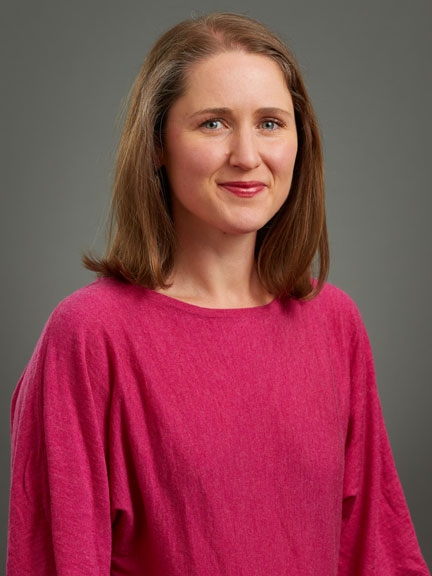
Portrait of Mary Jane Simpson
. Pinned article: Introduction to the OurBigBook Project
Welcome to the OurBigBook Project! Our goal is to create the perfect publishing platform for STEM subjects, and get university-level students to write the best free STEM tutorials ever.
Everyone is welcome to create an account and play with the site: ourbigbook.com/go/register. We belive that students themselves can write amazing tutorials, but teachers are welcome too. You can write about anything you want, it doesn't have to be STEM or even educational. Silly test content is very welcome and you won't be penalized in any way. Just keep it legal!
Intro to OurBigBook
. Source. We have two killer features:
- topics: topics group articles by different users with the same title, e.g. here is the topic for the "Fundamental Theorem of Calculus" ourbigbook.com/go/topic/fundamental-theorem-of-calculusArticles of different users are sorted by upvote within each article page. This feature is a bit like:
- a Wikipedia where each user can have their own version of each article
- a Q&A website like Stack Overflow, where multiple people can give their views on a given topic, and the best ones are sorted by upvote. Except you don't need to wait for someone to ask first, and any topic goes, no matter how narrow or broad
This feature makes it possible for readers to find better explanations of any topic created by other writers. And it allows writers to create an explanation in a place that readers might actually find it.
Figure 1. Screenshot of the "Derivative" topic page. View it live at: ourbigbook.com/go/topic/derivativeVideo 2. OurBigBook Web topics demo. Source. - local editing: you can store all your personal knowledge base content locally in a plaintext markup format that can be edited locally and published either:This way you can be sure that even if OurBigBook.com were to go down one day (which we have no plans to do as it is quite cheap to host!), your content will still be perfectly readable as a static site.
- to OurBigBook.com to get awesome multi-user features like topics and likes
- as HTML files to a static website, which you can host yourself for free on many external providers like GitHub Pages, and remain in full control

Figure 2. You can publish local OurBigBook lightweight markup files to either OurBigBook.com or as a static website.
Figure 3. Visual Studio Code extension installation.
Figure 5. . You can also edit articles on the Web editor without installing anything locally. Video 3. Edit locally and publish demo. Source. This shows editing OurBigBook Markup and publishing it using the Visual Studio Code extension. 
- Infinitely deep tables of contents:




All our software is open source and hosted at: github.com/ourbigbook/ourbigbook
Further documentation can be found at: docs.ourbigbook.com
Feel free to reach our to us for any help or suggestions: docs.ourbigbook.com/#contact