
John M. Lee Created 2026-10-14 Updated 2026-11-05
John M. Lee is a mathematician working in geometry and topology, and the author of textbooks on topological manifolds, smooth manifolds, Riemannian manifolds and complex manifolds. His expository work develops the different structures that can be placed on a manifold, from local coordinates on topological manifolds to differentiability and Riemannian geometry.[ref]
https://sites.math.washington.edu/~lee/. Author homepage, Textbooks and Ricci tensor-calculation software
Homepage: sites.math.washington.edu/~lee/

Portrait of John M. Lee
. Portrait provided on the official University of Washington homepage. Kyle Siegrist 2026-10-14
A mathematician whose research includes probability theory, stochastic processes and statistics.[ref]
Homepage: www.randomservices.org/Siegrist.html
Andrea Honeycutt Mathis 2026-10-14
A mathematics educator and senior contributing author of Prealgebra 2e.[ref]
https://openstax.org/books/prealgebra-2e/pages/preface. About the Authors / Senior Contributing Authors: Andrea Honeycutt Mathis
MaryAnne Anthony-Smith 2026-10-14
A mathematics educator and senior contributing author of Prealgebra 2e.[ref]
https://openstax.org/books/prealgebra-2e/pages/preface. About the Authors / Senior Contributing Authors: MaryAnne Anthony-Smith
Lynn Marecek Created 2026-10-14 Updated 2026-10-18
A mathematics educator and senior contributing author of Prealgebra 2e.[ref]
https://openstax.org/books/prealgebra-2e/pages/preface. About the Authors / Senior Contributing Authors: Lynn Marecek
Alan V. Oppenheim Created 2026-10-14 Updated 2026-10-24
An electrical engineer working in signal processing. [ref]
https://www.eecs.mit.edu/people/alan-oppenheim/. MIT EECS profile: engineering title, EE discipline and Signal Processing research area
He authored lecture notes and transparencies. [ref]
Continuous-Time Modulation by Alan V. Oppenheim. Continuous-Time Modulation, PDF p. 14: individual authored-resource attribution

Professor Alan Oppenheim
. Portrait by SJMW1987, licensed CC BY-SA 4.0. Source.
Michael R. Clarkson Created 2026-10-14 Updated 2026-11-05
Michael R. Clarkson is a computer scientist whose teaching connects practical computer programming with reasoning about correctness. His work includes OCaml Programming: Correct + Efficient + Beautiful by Michael R. Clarkson and others, which develops functional programming, data structures and methods for specifying and checking program behaviour.[ref]
8.3 Module Documentation. Module implementation, abstraction functions and representation invariants
One characteristic example separates an abstraction function from a representation invariant. A list can represent a mathematical set, but an implementation that assumes no duplicate entries must maintain that condition after every operation. The explanation shows how an abstract interface is justified by concrete representation rules.[ref]
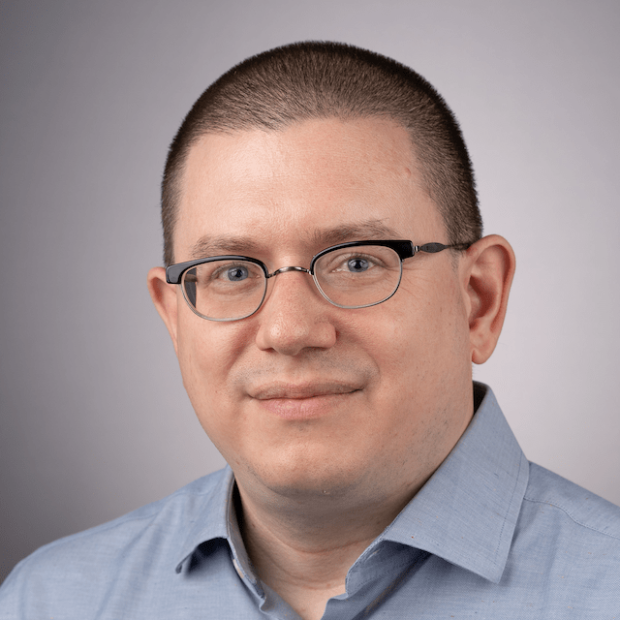
Portrait of Michael R. Clarkson
. Portrait identified on the Cornell University profile. Marijn Heule Created 2026-10-14 Updated 2026-11-05
Marijn Heule is a computer scientist whose work connects Boolean satisfiability solving with machine-checkable mathematical proofs. With Emre Yolcu and Xinyu Wu, he studied proofs of the colouring requirements of Mycielski graphs.[ref]
Their study separates two questions: does a short proof exist in a specified proof system, and can an automated solver find it efficiently? Constructing and checking a proof answers the first without automatically answering the second. The distinction helps explain why stronger proof rules alone do not settle the practical difficulty of proof search.[ref]
Mycielski graphs and PR proofs by Emre Yolcu and others. Abstract and introduction, proof construction and CDCL experiments
Portrait of Marijn Heule
. Portrait identified on the Carnegie Mellon University profile. Xinyu Wu Created 2026-10-14 Updated 2026-11-05
Xinyu Wu is a computer scientist whose research has included the theoretical foundations of quantum computing, pseudorandomness in quantum states and quantum channels. A 2021 Carnegie Mellon research profile describes this combination of tools from mathematics, physics and computer science.[ref]
https://www.cs.cmu.edu/news/2021/xinyu-wu-wins-ada-lovelace-fellowship. 26 January 2021, research description; historical profile, not a claim of current student status
With Emre Yolcu and Marijn Heule, Wu also studied the complexity of proving colouring properties of Mycielski graphs. Their work connects short formal proofs with experiments on automated proof search.[ref]

Portrait of Xinyu Wu
. Portrait identified on the Carnegie Mellon University profile. Emre Yolcu Created 2026-10-14 Updated 2026-11-05
Emre Yolcu is a computer scientist whose research includes proof complexity, Boolean satisfiability and automated deduction. These subjects distinguish the existence of a short formal proof from the computational task of finding it.[ref]
With Xinyu Wu and Marijn Heule, he studied Mycielski graphs through clausal proofs of their colouring requirements. Their work constructed short proofs in a propagation-redundancy system and compared their availability with the behaviour of automated proof search.[ref]
Mycielski graphs and PR proofs by Emre Yolcu and others. Abstract and introduction
Homepage: emreyolcu.com/
Jean Gallier Created 2026-10-14 Updated 2026-11-05
Jean Gallier is a computer scientist whose research connects mathematical foundations with computer programming and geometric applications. His earlier work includes formal verification, automated deduction and unification; his later interests include computer graphics, computer vision, robotics and the geometry of curves and surfaces.[ref]
His Curves and Surfaces in Geometric Modeling: Theory and Algorithms by Jean Gallier develops geometric constructions with explicit mathematical foundations. For example, its account of affine maps separates the geometry of points from the linear maps acting on displacement vectors, a distinction useful when describing transformations in computer graphics.[ref]
Curves and Surfaces in Geometric Modeling: Theory and Algorithms by Jean Gallier. Sections 2.4 and 2.7, affine constructions
Homepage: www.cis.upenn.edu/~jean/
Jonas Almström Duregård Created 2026-10-14 Updated 2026-11-05
Jonas Almström Duregård is a computer scientist and a coeditor, with Peter Ljunglöf and Alex Gerdes, of Data Structures and Algorithms edited by Peter Ljunglöf and others. The book connects data structures with algorithms that operate on them, including linked lists, dynamic arrays and binary trees. Its organization illustrates the distinction between an interface's promised operations and the representation used to implement them.[ref]
Homepage: www.chalmers.se/en/persons/almstroj/
Alex Gerdes Created 2026-10-14 Updated 2026-11-05
Alex Gerdes is a computer scientist and a coeditor, with Peter Ljunglöf and Jonas Almström Duregård, of Data Structures and Algorithms edited by Peter Ljunglöf and others. Its treatment connects sorting algorithms with asymptotic analysis and implementation choices. For example, choosing a sorting algorithm involves comparing its growth in work as well as properties such as stability and storage requirements.[ref]
Homepage: www.chalmers.se/en/persons/alexg/
Peter Ljunglöf Created 2026-10-14 Updated 2026-11-05
Peter Ljunglöf is a computer scientist and a coeditor, with Alex Gerdes and Jonas Almström Duregård, of Data Structures and Algorithms edited by Peter Ljunglöf and others. The book develops abstract data types alongside concrete representations and analysis of algorithms. Its comparison of linear search with binary search illustrates how assumptions about the stored data affect the available algorithm.[ref]
Homepage: www.chalmers.se/en/persons/peb/
Léo Ducas Created 2026-10-14 Updated 2026-11-05
Léo Ducas is a computer scientist whose work concerns lattice-based cryptography and lattice algorithms. His research connects the geometry and computation of Euclidean lattices with the construction of cryptographic protocols.[ref]
Léo Ducas's CWI research homepage. About, teaching and cryptographic scheme contributions
He is a co-designer of CRYSTALS-Kyber and CRYSTALS-Dilithium, the schemes that were standardized as ML-KEM and ML-DSA. They serve different purposes: a key encapsulation mechanism establishes a shared secret through a public-key operation, while a digital signature authenticates a message under a signing key.[ref]
Léo Ducas's CWI research homepage. Co-Designer of schemes submitted for standardization, CRYSTALS-Kyber and CRYSTALS-Dilithium
Homepage: homepages.cwi.nl/~ducas/
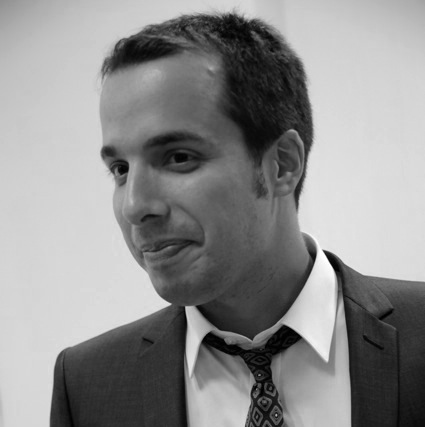
Portrait of Léo Ducas
. Photograph linked on the CWI personal homepage. Gabriele Farina Created 2026-10-14 Updated 2026-11-05
Gabriele Farina is a computer scientist who studies machine learning, optimization and game theory, especially decision-making with incomplete information. His research connects individual learning rules with the collective behaviour of interacting decision-makers.[ref]
Research profile by Gabriele Farina. About me; No-Regret Learning Dynamics
One focus is no-regret learning: can repeated local adaptation lead to a useful game-theoretic equilibrium? The computational question matters because a multi-agent system must find strategies through available observations and calculations. His doctoral work studied learning and equilibrium computation in imperfect-information games.[ref]
Homepage: www.eecs.mit.edu/people/gabriele-farina/

Portrait of Gabriele Farina
. Portrait identified on the MIT EECS profile. Cheryl Smith Created 2026-10-14 Updated 2026-11-05
Cheryl Smith coauthored work on electronic balances and gravimetric applications, including pycnometer density measurement. Calibration and weighing at different temperatures require attention to the liquid's density and the calibrated vessel volume.
A precise mass reading is therefore one input to a density measurement. Temperature conventions and sample handling determine how that reading is converted into a material property.[ref]
The Electronic Balance and Some Gravimetric Applications (The Density of Solids and Liquids, Pycnometry and Mass) by Randall M. Schoonover and others. Printed pages 313–316, pycnometer calibration and application
Sterling Brown Hendricks Created 2026-10-14 Updated 2026-11-05
Sterling Brown Hendricks coauthored experiments in which red and far-red illumination changed seed germination reversibly. Controlled dark preparation and alternating exposures connected wavelength with a later biological endpoint.
The reversal supports a photochemical switching process. The original experiment explicitly deferred pigment identification, so the observed response should be distinguished from later identification of the sensing molecule.[ref]
A Reversible Photoreaction Controlling Seed Germination by Harry Alfred Borthwick and others. Pages 662–665, exposures and Table 1
Gerald T. Fraser Created 2026-10-14 Updated 2026-11-05
Gerald T. Fraser coauthored validation of Fourier-transform microwave spectroscopy for trace-gas measurements. The instrument combines controlled excitation and molecular expansion with a rotational spectroscopic readout.
Changing carrier conditions can change the sampled populations, so an instrument's sensitivity must be separated from the chemical composition presented to it.[ref]
The Validation of Fourier-Transform Microwave Spectroscopy for Trace-Gas Analysis. Printed pages 25–27, apparatus and nozzle comparisons
Identity source: www.nist.gov/people/gerald-t-fraser
George C. Rhoderick Created 2026-10-14 Updated 2026-11-05
George C. Rhoderick coauthored research validating microwave spectroscopy for trace-gas analysis. The work tests quantitative response against prepared gas mixtures and calibration standards.
Such comparisons connect a measured spectral amplitude with a chemical amount. Sample delivery and expansion can influence that connection even when line assignment is secure.[ref]
The Validation of Fourier-Transform Microwave Spectroscopy for Trace-Gas Analysis. Printed pages 25–27, quantitative validation
Identity source: www.nist.gov/publications/search_by_author/1148686
There are unlisted articles, also show them or only show them.