
Zhao-Di Liu Created 2026-10-14 Updated 2026-11-05
Zhao-Di Liu helped design and implement an optical dephasing simulator, controlling a photon's initial polarization–frequency quantum state to engineer the subsequent loss and revival of quantum coherence.[ref]
Experimental implementation of fully controlled dephasing dynamics and synthetic spectral densities by Zhao-Di Liu and others. Results, experimental setup and Author Contributions
A physicist working on quantum information. Affiliation recorded at publication in 2018: University of Science and Technology of China, CAS Key Laboratory of Quantum Information.[ref]
https://pmc.ncbi.nlm.nih.gov/articles/PMC6110829/#article-aaff-info. 2018 article byline and author affiliations: Zhao-Di Liu
John Preskill Created 2026-10-14 Updated 2026-11-05
John Preskill's quantum computation notes develop the distinction between a quantum state ray, a normalized wave function, and a density operator. This makes a practical difference for a subsystem of an entangled state: its predictions are described by a reduced density operator obtained with the partial trace, even when the joint quantum state is pure. His discussion also shows why different statistical preparations can give the same density operator and therefore identical predictions for measurements confined to that subsystem.[ref]
Foundations I: States and Ensembles by John Preskill. Section 2.1, state rays; section 2.3.1, equations (2.51)–(2.61), partial trace and ensemble interpretation
Homepage: www.preskill.caltech.edu/

Portrait of John Preskill
. Lumidek at English Wikipedia; File description mentions taking the photograph with an unnamed fellow blogger. Worldwide public-domain release by the author identified on Commons; fallback permission for any purpose where legal dedication is unavailable., via Wikimedia Commons. Source.
Oscar Levin 2026-10-14
A mathematician working in computability theory, and the author of Discrete Mathematics: An Open Introduction.[ref]

Portrait of Oscar Levin
. Source: institutional profile, which identifies the image as a headshot of Oscar Levin. Ilse Ipsen Created 2026-10-14 Updated 2026-11-05
Ilse Ipsen works in numerical linear algebra, randomized algorithms, the theory of matrices and scientific computing. Her research also connects numerical methods with nonlinear problems, parameter estimation and statistics. These topics concern both efficient computation and how approximation errors or perturbations affect the reliability of a calculated result.[ref]
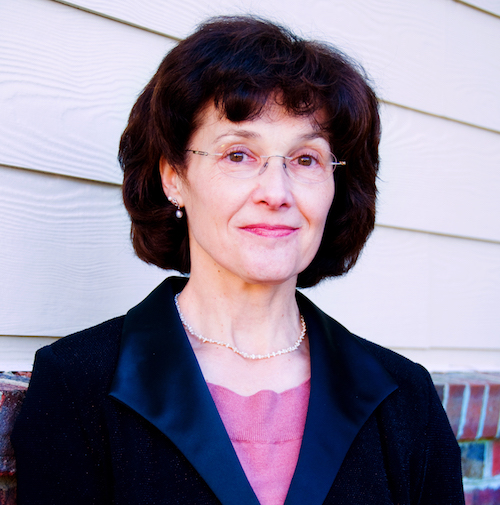
Portrait of Ilse Ipsen
. Portrait identified on the NC State University profile. C. T. Kelley Created 2026-10-14 Updated 2026-11-05
C. T. Kelley studies numerical analysis, including iterative methods for nonlinear equations, mathematical optimization and linear systems. His research connects solver design with numerical stability and computational cost, including methods that perform different stages at different arithmetic precisions.[ref]
https://ctkelley.github.io/. Author homepage, professional research activities and nonlinear-equation books
Homepage: ctkelley.github.io/
K. I. Dickson Created 2026-10-14 Updated 2026-11-05
K. I. Dickson is credited as a coauthor of Condition Estimates for Pseudo-Arclength Continuation by K. I. Dickson and others. The paper studies the linear systems arising when a solution branch is followed through a fold using pseudo-arclength continuation.
The mathematical contribution concerns conditioning: adding a continuation constraint can keep the augmented problem regular even when a fixed-parameter formulation is singular. The initials are retained from the verified paper; no full name or personal biography is inferred.[ref]
Condition Estimates for Pseudo-Arclength Continuation by K. I. Dickson and others. author list; §2.2, simple folds and augmented system
Gerald Teschl Created 2026-10-14 Updated 2026-11-05
Gerald Teschl is a mathematician working on spectral theory and inverse spectral theory for differential and difference operators, together with their connections to integrable systems. His books treat Schrödinger operators, ordinary differential equations and discrete models such as the Toda lattice.[ref] A direct spectral problem asks for the spectrum of an operator specified by its coefficients. An inverse spectral problem asks how the coefficients can be reconstructed from spectral data. This turns observed frequencies or quantum energy data into information about the underlying mathematical model, subject to the uniqueness conditions of the particular problem.
Portrait of Gerald Teschl
. Portrait identified on the TU Wien viennaPDE profile. Claude Berge Created 2026-10-14 Updated 2026-11-05
Claude Berge was a mathematician whose work helped establish modern graph theory, with connections to combinatorics, game theory and optimization. His books gave common mathematical language to networks arising in different applications. He also formulated the strong perfect graph conjecture, a major stimulus to research on perfect graphs.[ref]
https://mathshistory.st-andrews.ac.uk/Biographies/Berge/. Biography, books and strong perfect graph conjecture
A perfect graph has equal chromatic number and clique number in every induced subgraph. The condition expresses when the obvious lower bound for graph coloring, supplied by mutually adjacent vertices, is always attainable; requiring it in every induced subgraph is essential.
Portrait of Claude Berge
. Mihály Hujter (HUJTER Mihály), photograph in New York, 1985; Commons records VRT permission ticket 2025052210006236. Creative Commons Attribution-Share Alike 4.0 International., via Wikimedia Commons. Source.
George Pólya Created 2026-10-14 Updated 2026-11-05
George Pólya was a mathematician whose research spanned probability theory, analysis, combinatorics and geometry. He also became an influential writer about mathematical discovery, emphasizing the search for analogies, simpler cases and useful auxiliary constructions.[ref]
https://mathshistory.st-andrews.ac.uk/Biographies/Polya/. Biography, research areas and approach to mathematical discovery
His work on random walks gives a striking example of dimension changing a qualitative answer: a simple symmetric random walk on the integer lattice returns to its starting point with probability one in dimensions one and two, while in dimension three that probability is less than one. The distinction connects local random steps with the distinction between recurrent graphs and transient graphs.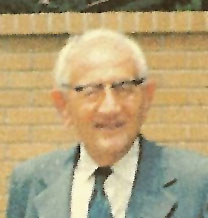
Portrait of George Pólya
. Photograph identified on the named portrait page. Source.
John Edensor Littlewood Created 2026-10-14 Updated 2026-11-05
John Edensor Littlewood was a mathematician whose work with Godfrey Harold Hardy connected analysis, inequalities, series and the Riemann zeta function. Their collaboration helped develop the Hardy-Littlewood circle method for arithmetic counting problems. He also worked with Mary Cartwright on nonlinear ordinary differential equations motivated by radio engineering, including the Van der Pol equation.[ref]
https://mathshistory.st-andrews.ac.uk/Biographies/Littlewood/. Biography, Hardy collaboration and Cartwright collaboration
Their investigations of strongly driven oscillators helped reveal how a deterministic dynamical system can have complicated long-term behavior. This makes his work a bridge between the estimates of classical analysis and the geometric study of dynamical systems.
Portrait of John Edensor Littlewood
. Photograph identified on the named portrait page. Godfrey Harold Hardy Created 2026-10-14 Updated 2026-11-05
Godfrey Harold Hardy was a mathematician whose work joined analysis with number theory, including Fourier series, the Riemann zeta function and the distribution of prime numbers. His long collaboration with John Edensor Littlewood and his work with Srinivasa Ramanujan produced influential methods and results in analytic number theory.[ref]
https://mathshistory.st-andrews.ac.uk/Biographies/Hardy/. Biography, collaborations and principal mathematical interests
The Hardy-Littlewood circle method exemplifies this connection: it studies arithmetic counting problems through an integral of products of exponential sums, separating regions near rational points from the remaining contribution. His teaching also helped establish rigorous accounts of limits, functions and convergence in English undergraduate analysis.
Portrait of Godfrey Harold Hardy
. Photograph identified on the named portrait page. Source.
David E. Joyce Created 2026-10-14 Updated 2026-11-05
David E. Joyce is a mathematician whose mathematical writing and online resources cover Euclidean geometry, algebra, complex numbers and dynamical systems. His annotated presentation of Euclid's Elements makes the structure of the ancient text accessible through explanations and geometric diagrams. His other resources explore symmetry, knot theory, hyperbolic geometry and pictures of Julia sets and Mandelbrot sets.[ref]
https://mathcs.clarku.edu/~djoyce/. Author homepage, Mathematics web pages and An Algebraic Approach to Symmetry with Applications to Knot Theory
These topics share a visual route into abstract mathematics: a construction or a computer-generated picture suggests relationships, while definitions and proofs determine which of those relationships hold generally.Homepage: mathcs.clarku.edu/~djoyce/
Herbert Robbins Created 2026-10-14 Updated 2026-11-05
Herbert Robbins was a mathematician and statistician whose research ranged from topology to Empirical Bayes method methods and stochastic approximation. With Sutton Monro, he introduced an iterative approach to finding a zero of a function when observations of its values contain random error. Instead of requiring exact function evaluations, successive corrections use noisy measurements with diminishing step sizes. This idea became fundamental to stochastic optimization.[ref]
https://mathshistory.st-andrews.ac.uk/Biographies/Robbins/. Biography, stochastic approximation and statistical contributions
He also coauthored an influential mathematical exposition with Richard Courant, emphasizing explanations and examples that reveal why a proof works rather than a collection of calculation rules.
Portrait of Herbert Robbins
. Photograph identified on the University of St Andrews portrait page. Nimrod Megiddo Created 2026-10-14 Updated 2026-11-05
Nimrod Megiddo is a mathematician known for research on optimization and the computational complexity theory of algorithms. His fixed-dimensional linear programming algorithm solves a problem with constraints in time when the dimension is fixed. The dependence on is absorbed into the constant, so this statement does not give a uniformly linear algorithm when the number of variables also grows.[ref]
https://theory.stanford.edu/~megiddo/pdf/lplin.pdf. Linear Programming in Linear Time When the Dimension Is Fixed, JACM 31 (1984), abstract and introduction, pp. 114–115
This result illustrates a useful distinction in computational complexity theory: a geometric optimization problem can become much easier when its ambient dimension is a fixed parameter.Homepage: theory.stanford.edu/~megiddo/
Refael Hassin Created 2026-10-14 Updated 2026-11-05
Refael Hassin is a mathematician working on combinatorial optimization and strategic behavior in queueing theory. His research asks how individual decisions change the operation of a service system: customers may decide whether to join a queue, while its operator chooses prices or what information to reveal.[ref] One of his studies considers a service rate or quality known to the operator but uncertain to customers. Revealing that information can change customer decisions and the operator's expected profit, so greater information does not automatically have the same consequences for every participant.[ref]
https://www.math.tau.ac.il/~hassin/q.pdf. Information and uncertainty in a queueing system, abstract and introduction, p. 1
Homepage: english.tau.ac.il/profile/hassin

Portrait of Refael Hassin
. Photograph identified on the Tel Aviv University profile. Marin Mersenne Created 2026-10-14 Updated 2026-11-05
Marin Mersenne was a mathematician and scientific correspondent whose network helped Pierre de Fermat, René Descartes and other researchers exchange questions and results. He studied number theory and the acoustics of vibrations of mechanical strings.[ref]
https://mathshistory.st-andrews.ac.uk/Biographies/Mersenne/. Biography, correspondence network and laws of vibrating strings
A Mersenne number has the form ; for it to be a Mersenne prime, must be a prime number, although that condition is not sufficient: . For an ideal stretched mechanical string, the fundamental frequency is , relating the audible pitch to the length , tension and mass per unit length .
Portrait of Marin Mersenne
. Engraving dated 1654 on Wikimedia Commons, which identifies the artwork as public domain. Source.
Euclid Created 2026-10-14 Updated 2026-11-05
Euclid was a mathematician associated with Alexandria around 300 BCE. His Euclid's Elements organized geometry and number theory into definitions, assumptions and chains of proofs, drawing together earlier results as well as material attributed to him. Very little reliable biographical information survives, so the familiar portraits are later imagined likenesses.[ref]
https://mathshistory.st-andrews.ac.uk/Biographies/Euclid/. Biography, evidence for dating and composition of the Elements
The lasting attraction of the Euclid's Elements is its deductive structure: a construction or mathematical theorem becomes reusable in subsequent proofs, rather than remaining an isolated calculation. Its Euclidean algorithm and proof that there are infinitely many prime numbers remain basic tools of number theory.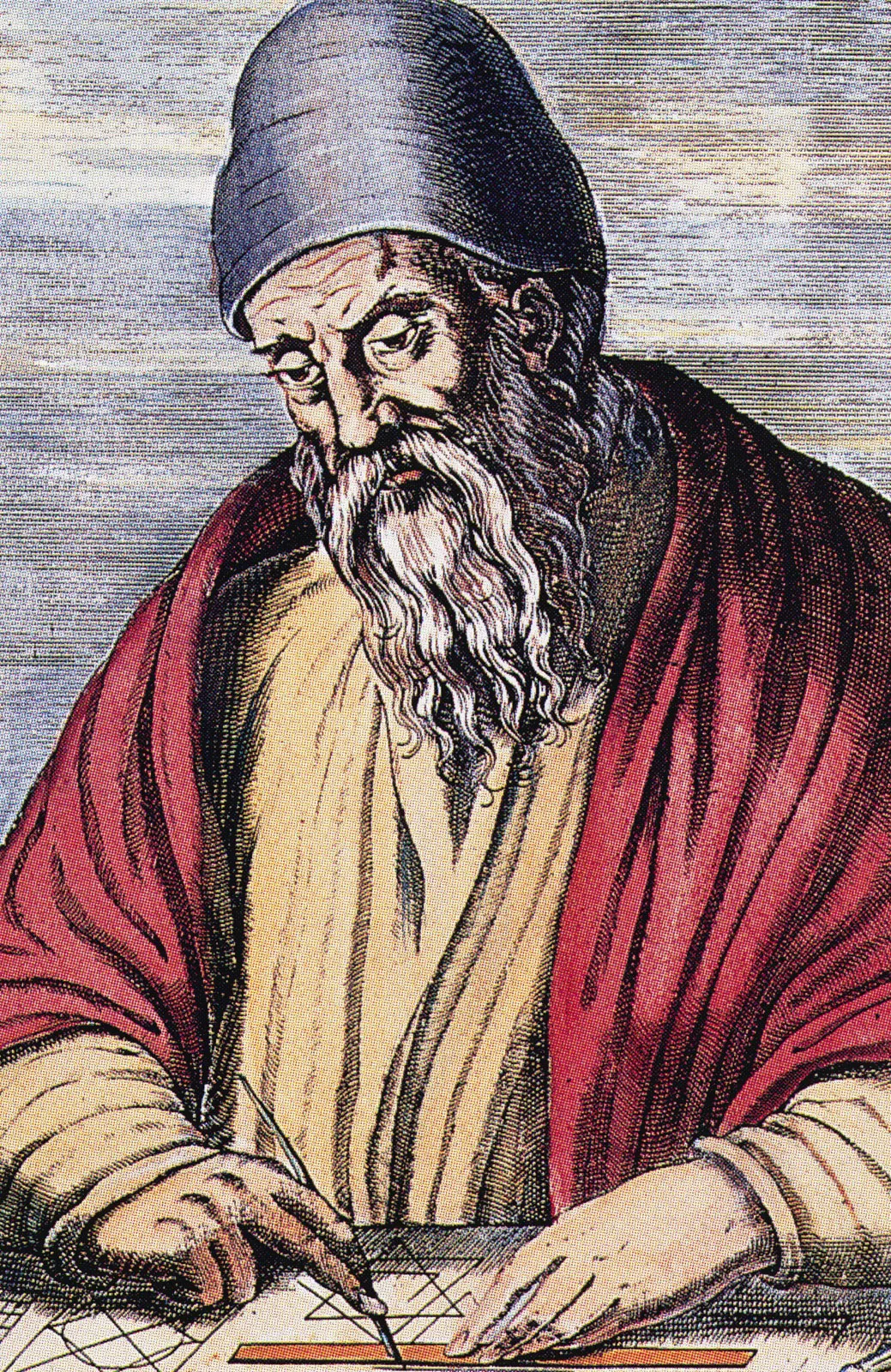
Portrait of Euclid
. Later imagined depiction dated 1584, identified on Wikimedia Commons. This is not an authentic likeness from antiquity; Commons identifies the artwork as public domain. Source.
Peter G. Doyle Created 2026-10-14 Updated 2026-11-05
Peter G. Doyle is a mathematician whose work connects geometry, combinatorics and probability theory. His book with J. Laurie Snell explains how a random walk on a graph can be studied through an electrical network: a probability of reaching one boundary before another satisfies the same averaging equations as an electrical potential.[ref] His work on isospectral manifolds also investigates how much geometry can be recovered from the spectrum of a differential operator: equal vibration frequencies need not determine the shape.[ref]
https://faculty-directory.dartmouth.edu/peter-doyle. Research areas and selected publications, including Tetra and Didi and Some Planar Isospectral Domains
J. Laurie Snell Created 2026-10-14 Updated 2026-11-05
J. Laurie Snell worked on Markov chains and their applications and wrote Introduction to Probability by Charles M. Grinstead and J. Laurie Snell with Charles M. Grinstead. His autobiographical research statement also describes work on finite mathematics and teaching people to assess probability and statistical claims in the news.[ref]
https://chance.dartmouth.edu/Laurie.x.html. Autobiographical account, research on Markov chains, probability book and Chance project
A Markov chain replaces the full history by a specified present-state transition law; first-step analysis then turns hitting probabilities and expected hitting times into linear equations. That link between a stochastic model and solvable equations is central to the subject's practical usefulness.Homepage: chance.dartmouth.edu/Laurie.x.html
Charles M. Grinstead Created 2026-10-14 Updated 2026-11-05
Charles M. Grinstead coauthored Introduction to Probability by Charles M. Grinstead and J. Laurie Snell with J. Laurie Snell. The institutional publication record identifies the1997 second revised edition and its authors.[ref]
https://works.swarthmore.edu/fac-math-stat/153/. Swarthmore institutional book record
The text develops probability from concrete models through tools such as conditional probability, expectation and Markov chains. For example, counting length- sequences of independent fair coin tosses gives probability for exactly heads, connecting discrete counting with a probability model rather than treating either in isolation.Homepage: works.swarthmore.edu/fac-math-stat/153/
There are unlisted articles, also show them or only show them.