Topics (384k) Articles (398k) Users (410) Discussions (242) Comments (383) Files (13k) New article


Ernst Zermelo in the 1900s
. Unknown photographer, Mondadori archive; Wikimedia Commons lists the photograph as public domain. Source.Marc Lackenby works in topology, geometry and group theory. His research includes knot theory, bounds on Reidemeister moves between knot diagrams, and hyperbolic geometry of link complements. These topics connect the geometric shape of three-dimensional spaces with the computational difficulty of recognizing and simplifying their descriptions.[ref]
https://www.maths.ox.ac.uk/people/marc.lackenby. Oxford Mathematical Institute, Research interests and Highlighted publications

Portrait of Marc Lackenby in 1997
. Crop of a photograph by George Bergman, hosted by Wikimedia Commons. Original photograph and credits; CC BY-SA 4.0. Crop details are on the linked source file page. Source.A mathematician whose 1926 work introduced a component-merging method for the minimum spanning tree problem, now called Borůvka's algorithm.[ref]
O jistém problému minimálním by Otakar Borůvka. Original article, 1926, pp. 37–58

Portrait of Otakar Borůvka in 1981
. Via Wikimedia Commons; the linked file page provides image credits and usage information. Source.John Pollard is a mathematician whose work in number theory includes Pollard's rho algorithm and Pollard's p-1 algorithm for integer factorization. His retrospective explains how collision ideas related to the birthday paradox lead to the rho method, and distinguishes its factorization and discrete logarithm applications.[ref]
https://sites.google.com/site/jmptidcott2/50-years-of-the-rho-method. Author's retrospective, 50 Years of the rho method
Homepage: sites.google.com/site/jmptidcott2/
A mathematician whose work includes Radon's theorem, Radon measures, the Radon-Nikodym theorem and the Radon transform.
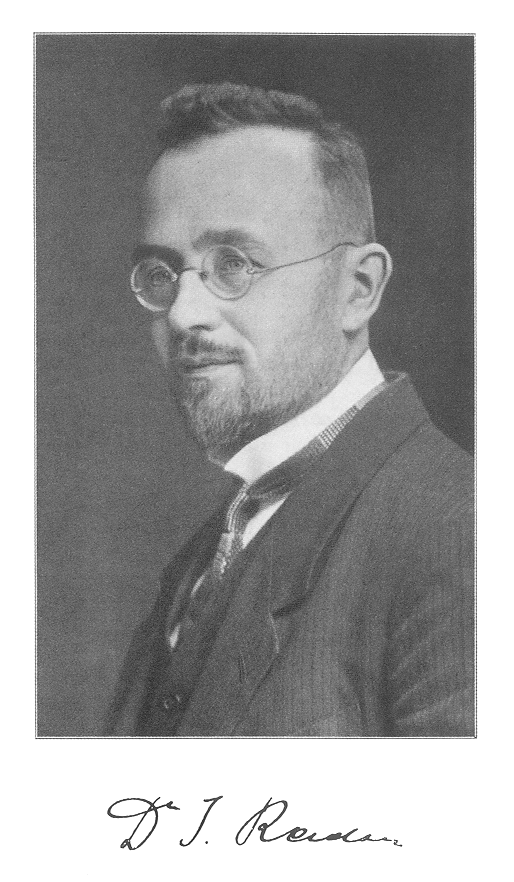
Portrait of Johann Radon around 1920
. Source. A French mathematician whose work connected analysis, probability theory and mathematical physics. His 1837 study of probabilities of judicial decisions introduced the Poisson distribution. Its modern parameter controls both the mean and variance of the count, making the law useful for modeling rare events.
His research on attractive forces and potential theory also helped shape the Poisson equation, relating the Laplacian of a potential to its source. His name appears in the Poisson bracket of Hamiltonian mechanics as well: the same biography reaches both statistical counts and the geometry of dynamical equations. [ref]
https://mathshistory.st-andrews.ac.uk/Biographies/Poisson/. University of St Andrews historical biography, mathematical work and career

Siméon Denis Poisson, cropped portrait from a lithograph
. Portrait source. François-Séraphin Delpech, after Nicolas Eustache Maurin; existing crop hosted on Wikimedia Commons. The file cites the Smithsonian Libraries Scientific Identity source. Public-domain artwork; faithful reproduction, PD-Art / Public Domain Mark.
Øystein Ore worked in ring theory, Galois theory, lattice theory and graph theory. His work on noncommutative rings investigated when a ring can be embedded in a division ring, extending the idea of forming fractions beyond commutative arithmetic.
His later books also linked mathematical ideas with their history. The movement from algebraic structures to closure relations and graphs illustrates how an organizing mathematical viewpoint can lead into several different subjects.[ref]

Portrait of Øystein Ore
. Identified external portrait in the University of St Andrews MacTutor collection; photographer not stated on the inspected display. Source.Harish-Chandra developed representation theory for Lie groups, especially infinite-dimensional representations of semisimple groups. His work connects continuous symmetries with operators on function spaces, extending the symmetry viewpoint familiar from quantum mechanics into deep questions in analysis and number theory.
He trained in theoretical physics before moving toward mathematics. The Institute for Advanced Study records his faculty affiliation from 1963 to 1983 and describes infinite-dimensional representations as a central theme of his work.[ref]
https://www.ias.edu/scholars/harish-chandra. Institutional profile, research description and faculty dates

Portrait of Harish-Chandra
. Photograph by Paul Halmos, as credited by the University of St Andrews MacTutor display. Source.Elizabeth Wong coauthored Sequential Quadratic Programming Methods by Philip E. Gill and Elizabeth Wong with Philip E. Gill. The review concerns constrained optimization, in which successive local quadratic problems determine steps and multiplier estimates.
Their work connects the design of optimization algorithms with the linear algebra needed to solve the local subproblems. The 2010 report's title page identifies the authors and institutional report number.[ref]
Philip E. Gill works on numerical analysis, numerical linear algebra and scientific computation. With Elizabeth Wong, he authored Sequential Quadratic Programming Methods by Philip E. Gill and Elizabeth Wong, explaining how constrained nonlinear problems can be approached through successive quadratic models.
The connection with linear algebra is computationally important: solving the local constrained systems is part of making an optimization method reliable.[ref]
British mathematician associated with numerical analysis and mathematical optimization, including Sℓ1QP.
A mathematician whose research includes mathematical optimization. The Dennis-Moré condition concerns superlinear convergence of quasi-Newton methods.
Homepage: www.cmor-faculty.rice.edu/~dennis/
A mathematician working on mathematical optimization algorithms and software. The Dennis-Moré condition concerns superlinear convergence of quasi-Newton methods.
Homepage: www.mcs.anl.gov/~more/
Henry Bessemer was an engineer associated with the Bessemer process, a method for converting molten pig iron toward steel using an air blast. His 1856 patent describes introducing air into molten iron so that reactions within the bath generate heat while changing its chemical composition.[ref]
Improvement in the manufacture of iron and steel by Henry Bessemer. US16082A, specification and claims
The important design insight is the coupling between chemical reaction, mixing and heating: the unwanted constituents become part of the source of energy for processing the material. The Bessemer process consequently illustrates how understanding a material's chemistry can change the scale and speed of manufacture. Obtaining a desired steel still requires control of the starting chemical composition and the final carbon content.
Identity and portraits: National Portrait Gallery, sitter biography and dated portraits.

Portrait of Henry Bessemer
. Source. A computer scientist whose work with Robert Tarjan includes splay trees and amortized analysis. His Carnegie Mellon University homepage identifies his full name and academic role.[ref]
https://www.cs.cmu.edu/~sleator/. Named author homepage: Daniel Dominic Kaplan Sleator, professor of computer science

Portrait of Daniel Sleator
. Photograph from the author's Carnegie Mellon University gallery, Some pictures of me. Source.Computer scientist whose work includes algorithms, computational complexity theory and algorithmic game theory.
Official profile: www.cs.ox.ac.uk/people/paul.goldberg/
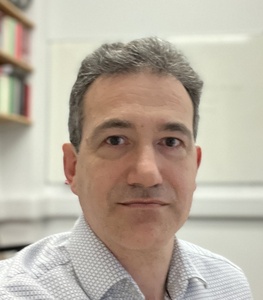
Armin Biere coauthored Symbolic Model Checking without BDDs by Armin Biere and others, which introduced a bounded model checking procedure for linear temporal logic using Boolean satisfiability. The method encodes a finite sequence of finite-state machine transitions as a propositional formula; a satisfying assignment can describe a path violating a requested property. The paper demonstrates how SAT solving can replace binary decision diagrams in this verification task.[ref]
Alessandro Cimatti coauthored Symbolic Model Checking without BDDs by Armin Biere and others, which introduced a bounded model checking procedure for linear temporal logic using Boolean satisfiability. The method encodes a finite sequence of finite-state machine transitions as a propositional formula; a satisfying assignment can describe a path violating a requested property. The paper demonstrates how SAT solving can replace binary decision diagrams in this verification task.[ref]
Edmund Clarke coauthored Symbolic Model Checking without BDDs by Armin Biere and others, which introduced a bounded model checking procedure for linear temporal logic using Boolean satisfiability. The method encodes a finite sequence of finite-state machine transitions as a propositional formula; a satisfying assignment can describe a path violating a requested property. The paper demonstrates how SAT solving can replace binary decision diagrams in this verification task.[ref]
Yunshan Zhu coauthored Symbolic Model Checking without BDDs by Armin Biere and others, which introduced a bounded model checking procedure for linear temporal logic using Boolean satisfiability. The method encodes a finite sequence of finite-state machine transitions as a propositional formula; a satisfying assignment can describe a path violating a requested property. The paper demonstrates how SAT solving can replace binary decision diagrams in this verification task.[ref]
Pinned article: Introduction to the OurBigBook Project
Welcome to the OurBigBook Project! Our goal is to create the perfect publishing platform for STEM subjects, and get university-level students to write the best free STEM tutorials ever.
Everyone is welcome to create an account and play with the site: ourbigbook.com/go/register. We belive that students themselves can write amazing tutorials, but teachers are welcome too. You can write about anything you want, it doesn't have to be STEM or even educational. Silly test content is very welcome and you won't be penalized in any way. Just keep it legal!
Intro to OurBigBook
. Source. We have two killer features:
- topics: topics group articles by different users with the same title, e.g. here is the topic for the "Fundamental Theorem of Calculus" ourbigbook.com/go/topic/fundamental-theorem-of-calculusArticles of different users are sorted by upvote within each article page. This feature is a bit like:
- a Wikipedia where each user can have their own version of each article
- a Q&A website like Stack Overflow, where multiple people can give their views on a given topic, and the best ones are sorted by upvote. Except you don't need to wait for someone to ask first, and any topic goes, no matter how narrow or broad
This feature makes it possible for readers to find better explanations of any topic created by other writers. And it allows writers to create an explanation in a place that readers might actually find it.
Figure 1. Screenshot of the "Derivative" topic page. View it live at: ourbigbook.com/go/topic/derivativeVideo 2. OurBigBook Web topics demo. Source. - local editing: you can store all your personal knowledge base content locally in a plaintext markup format that can be edited locally and published either:This way you can be sure that even if OurBigBook.com were to go down one day (which we have no plans to do as it is quite cheap to host!), your content will still be perfectly readable as a static site.
- to OurBigBook.com to get awesome multi-user features like topics and likes
- as HTML files to a static website, which you can host yourself for free on many external providers like GitHub Pages, and remain in full control

Figure 2. You can publish local OurBigBook lightweight markup files to either OurBigBook.com or as a static website.
Figure 3. Visual Studio Code extension installation.
Figure 5. . You can also edit articles on the Web editor without installing anything locally. Video 3. Edit locally and publish demo. Source. This shows editing OurBigBook Markup and publishing it using the Visual Studio Code extension. 
- Infinitely deep tables of contents:




All our software is open source and hosted at: github.com/ourbigbook/ourbigbook
Further documentation can be found at: docs.ourbigbook.com
Feel free to reach our to us for any help or suggestions: docs.ourbigbook.com/#contact