Topics (384k) Articles (398k) Users (410) Discussions (242) Comments (383) Files (13k) New article

Peter H. Dahl develops physical accounts of acoustic radiation and measurement. His applied-acoustics lectures derive how an extended source's geometry determines its directional sound wave field and distinguish hydrodynamic near-field effects from geometric near/far-field approximations.[ref]
The far-field approximation drops quadratic path-length phase terms only when their phase error is small. This explains why a receiver being many wavelengths away is not always sufficient for a large aperture: source size also enters the criterion.
Sergei V. Ketov studied how curvature-driven cosmic inflation can arise within supergravity. With Alexei A. Starobinsky, he constructed an embedding of the inflationary model into an supergravity framework.[ref]
Embedding (R+R^2)-Inflation into Supergravity by Sergei V. Ketov and Alexei A. Starobinsky. Abstract: embedding and the role of higher supercurvature terms
Here denotes ordinary spacetime scalar curvature, while the supersymmetric construction uses a superfield extension. Relating the two descriptions is a model-building calculation; adding a curvature term to an action does not alone establish all of its supersymmetric couplings or the required slow-roll regime.
Kenneth G. Libbrecht analyzes ice growth and frost heave using thermodynamics. His heat-engine argument bounds the overburden pressure that an advancing freezing front can sustain by comparing useful mechanical work with the maximum efficiency allowed between warm and cold reservoirs.[ref]
The method separates an equilibrium upper bound from the actual growth rate. A thermodynamically permitted pressure need not be reached if liquid supply or heat removal is too slow. Frost heave therefore cannot be understood solely as the volume expansion of an isolated water sample on freezing.
Matteo G. A. Paris is a theoretical physicist working on quantum information, quantum optics and quantum measurement. His article Quantum estimation for quantum technology by Matteo G. A. Paris explains how to estimate quantities encoded in a quantum state when a direct measurement of the desired parameter is unavailable.
The treatment uses the symmetric logarithmic derivative and Quantum Fisher information to bound attainable precision and compare measurement strategies. It connects the choice of measurement with statistical estimation, rather than assuming that repeated observations automatically achieve the best possible accuracy.[ref]
Quantum estimation for quantum technology by Matteo G. A. Paris. §2, local quantum estimation; 2008 preprint, 2009 journal publication
Institutional profile: www.unimi.it/it/ugov/person/matteo-paris.

C. W. Tang coauthored a 1987 organic light-emitting diode paper with S. A. VanSlyke. It demonstrated an organic thin-film device in which injection of electrons and holes, followed by recombination near an internal interface, generated green light.
The reported brightness exceeded 1000 candelas per square metre at an applied electric potential difference below ten volts. Thin layers and suitable contacts addressed a central limitation of earlier organic emitters: obtaining substantial light output without a very large driving potential.[ref]
Organic electroluminescent diodes by C. W. Tang and S. A. VanSlyke. 1987, p. 913, abstract and device motivation
The National Inventors Hall of Fame profile identifies the OLED co-inventor as Ching Wan Tang; the header retains the paper's initials.
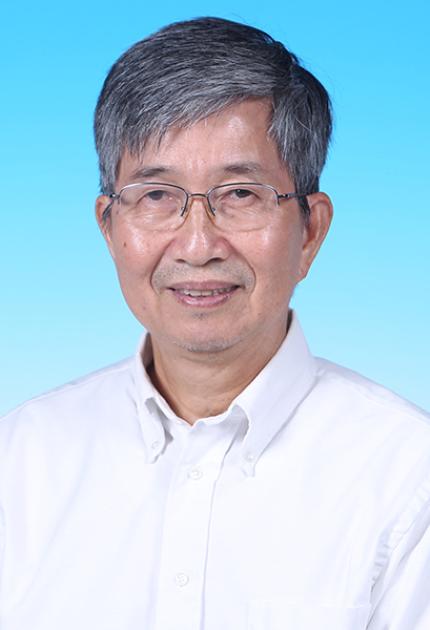
S. A. VanSlyke coauthored the 1987 demonstration of an efficient organic light-emitting diode with C. W. Tang at Eastman Kodak. Their device used two deposited organic layers between an indium-tin-oxide anode and a magnesium-silver cathode.
This architecture brought electrons and holes together near the organic-layer interface, producing visible electroluminescence at an applied electric potential difference below ten volts. It connected control of carrier injection and recombination to practical light output.[ref]
Organic electroluminescent diodes by C. W. Tang and S. A. VanSlyke. 1987, p. 913 abstract and Figure 1
The National Inventors Hall of Fame profile identifies the OLED co-inventor as Steven Van Slyke. The header preserves the original publication byline.
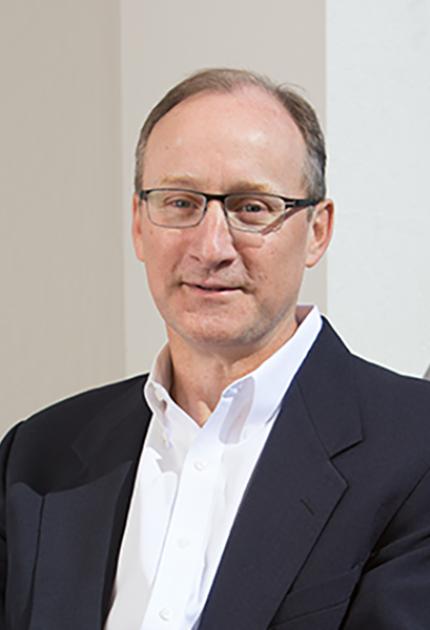
Dave Strickland is an astrophysicist credited as first author of a study of X-rays from the M82 galactic wind, with Trevor Ponman and Ian Stevens. Their analysis detected wind emission several kiloparsecs from the galaxy and compared its spectrum at different heights.
The spatial variation showed why an integrated brightness alone is insufficient: different regions constrain the gas temperature, distribution and plausible heating mechanisms. The paper's archive byline uses Dave Strickland and lists the University of Birmingham affiliation.[ref]
Trevor Ponman is an astrophysicist who studies hot gas in galaxies, galaxy groups and galaxy clusters. Such gas records both gravitational confinement and the energy supplied by stellar activity.[ref]
https://www.birmingham.ac.uk/staff/profiles/physics/ponman-trevor. University of Birmingham research profile
With Dave Strickland and Ian Stevens, he analysed diffuse X-ray emission from the M82 galactic wind. Separating point sources from extended emission allowed the team to infer properties of the outflowing gas and test physical explanations for its radiation.[ref]
ROSAT Observations of the Galactic Wind in M82 by Dave Strickland and others. Abstract: separation of point and diffuse emission
Ian Stevens is an astrophysicist whose research includes massive stars and stellar winds. He coauthored an analysis of X-ray observations of the galactic wind in the starburst galaxy M82.
The team compared diffuse emission with models of a freely expanding wind and of clouds heated by shocks. The observations favoured shocked clouds over the simple free-wind model, showing how radiation can identify which component of an outflow is being measured.[ref]
ROSAT Observations of the Galactic Wind in M82 by Dave Strickland and others. Abstract, model comparison; 1996 preprint, 1997 journal article
Institutional profile: research.birmingham.ac.uk/en/persons/ian-stevens/.
Peter Breitenlohner was a theoretical physicist whose work with Daniel Z. Freedman established the Breitenlohner-Freedman bound for fields in Anti-de Sitter spacetime.
For a scalar field in -dimensional Anti-de Sitter spacetime with curvature radius , the familiar form is , with stability also requiring suitable boundary conditions. The negative right-hand side explains the surprising feature: a negative mass-squared parameter alone does not establish instability in this curved background. Their result links field dynamics to the geometry and boundary conditions of spacetime.[ref]
Stability in gauged extended supergravity by Peter Breitenlohner and Daniel Z. Freedman. 1982, stability analysis; formula uses d boundary spacetime dimensions and radius L
Daniel Z. Freedman is a theoretical physicist whose work includes supergravity and the stability of fields in Anti-de Sitter spacetime. With Peter Breitenlohner, he derived the condition known as the Breitenlohner-Freedman bound.
Under the appropriate boundary conditions, a scalar field in Anti-de Sitter spacetime can be stable even when its mass-squared parameter is negative, provided it remains above the bound. Curved background geometry changes the stability criterion familiar from flat spacetime.[ref]
Stability in gauged extended supergravity by Peter Breitenlohner and Daniel Z. Freedman. 1982, scalar-field stability result
His MIT profile also identifies his 1976 collaborative construction of supergravity.[ref]C. W. F. Everitt led the Gravity Probe B experiment, which tested general relativity using four cryogenic gyroscopes in Earth orbit. The instrument measured slow changes in spin-axis direction relative to a stellar reference, separating the geodetic effect from frame dragging.
The 2011 final-results paper reported a geodetic drift of milliarcseconds per year and a frame dragging drift of milliarcseconds per year, compatible with the predicted values within the reported uncertainties. The latter effect was much smaller, illustrating why identifying and modelling instrument drifts was central to the test.[ref]
Gravity Probe B: Final Results of a Space Experiment to Test General Relativity by C. W. F. Everitt and others. Abstract: four-gyroscope results and comparison with relativity predictions

C. W. F. Everitt receiving an award in 2011
. Everitt is on the left, as identified in the Stanford Gravity Probe B mission account of the 4 May 2011 presentation.Andrew Strominger studies quantum gravity, string theory and black holes. His work with Alexander Zhiboedov relates gravitational memory to the Soft graviton theorem through the behaviour of detectors and radiation near future null infinity.
A pulse need not leave only a passing oscillation: it can produce a lasting relative displacement between freely moving detectors. Their calculation links that displacement to the radiation energy flux, making a measurable classical effect part of a broader relationship with low-energy quantum emission.[ref]
Institutional profile: www.physics.harvard.edu/people/facpages/strominger.
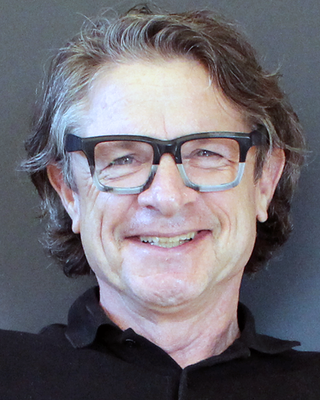
Alexander Zhiboedov is a theoretical physicist who, with Andrew Strominger, connected gravitational memory to the Soft graviton theorem. Their 2014 preprint considers arrays of detectors before and after passage of a gravitational radiation pulse near future null infinity.
The resulting relative displacement reproduces gravitational memory, while its formula is related to the low-energy limit described by the Soft graviton theorem. This unites a lasting change in detector separation with an apparently different statement about emission of very low-energy gravitons.[ref]
Gravitational Memory, BMS Supertranslations and Soft Theorems by Andrew Strominger and Alexander Zhiboedov. Abstract and §4; preprint submitted 21 November 2014
Institutional profile: theory.cern/roster/zhiboedov-alexander.
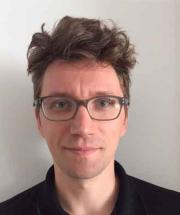
Yair Margalit is an experimental physicist credited as first author of a detailed realization of a complete Stern-Gerlach interferometer. In this experiment, gradients of a magnetic field generated by an atom chip split atomic wave packets according to their internal spin state and then recombined them coherently.
Recombination matters: separating two paths shows state-dependent motion, whereas recovering quantum interference tests preservation of the relative phase. The reported arrangement used controlled microscopic field sources; it should not be confused with the original macroscopic-magnet Stern-Gerlach experiment.[ref]
Peter H. Yoon studies the kinetic theory of plasmas, including the electron velocity distributions observed in the solar wind. His 2014 paper relates the Kappa distribution, with its comparatively large high-velocity tail, to a self-consistent description of weak plasma turbulence.
The paper extends the calculation to electrostatic fluctuations associated with Langmuir waves, often called quasi-thermal noise. It thereby connects a particle distribution to the fluctuations with which the particles interact, rather than simply choosing an empirical tail and leaving the field unspecified. The author affiliations identify the University of Maryland and Kyung Hee University.[ref]
Electron kappa distribution and quasi-thermal noise by Peter H. Yoon. 2014, author affiliations and abstract: steady-state weak-turbulence solution and electrostatic fluctuations
J. Kurchan coauthored a 1993 analytical study of relaxation in a long-range spin glass with Leticia Fernanda Cugliandolo. They solved the long-time behaviour of correlation and response functions in a spherical model with interactions involving several spins.[ref]
The solution exhibits aging in nonequilibrium systems: the response after a disturbance depends on how long the system has already been evolving, rather than only on elapsed time since the disturbance. It supplies an explicit model in which slow history-dependent dynamics can be studied analytically. The initials are those printed in the primary-paper byline.
M. Jullière reported an early experiment on spin-dependent quantum tunnelling between ferromagnetic films in 1975. The study compared the electrical conductance of iron–germanium–cobalt junctions when the film magnetizations were parallel or antiparallel.[ref]
Tunneling between ferromagnetic films by M. Jullière. Physics Letters A 54, pp. 225–226, abstract and junction comparison
The associated Jullière model relates the change in conductance to spin-dependent density of states in the two electrodes. Changing their relative magnetic orientation changes the available tunnelling channels, providing a physical basis for tunnel magnetoresistance. The experiment made magnetic configuration an electrical readout variable, rather than treating the barrier alone as the determinant of tunnelling. The author name here retains the primary-paper byline.
Randall P. Wagner is a physicist at the US National Institute of Standards and Technology whose research includes acoustic measurement. In 2011, Wagner and colleagues described improved microphone reciprocity calibration for laboratory-standard microphones.
The method measures pairs of microphones coupled through air-filled cavities, using reciprocity to determine pressure sensitivity. Comparing long and short coupling cavities tests corrections rather than assuming one apparatus geometry is exact. The reported service covered 31.5 hertz to 20 kilohertz and reduced stated measurement uncertainty relative to the previous service. This supports a traceable conversion from electric potential difference to sound pressure.[ref]
Institutional profile: www.nist.gov/people/randall-p-wagner.
Mark Brongersma develops nanostructured materials and devices for manipulating light, particularly in plasmonics. His Stanford profile describes research on electronic and photonic devices at the nanoscale.[ref] He coauthored the indium tin oxide study that links optical behavior to band nonparabolicity.[ref]
A central design tradeoff is between concentrating an optical field and dissipating its energy. Strong confinement can make a small region interact intensely with light, but absorption and finite carrier mobility can limit how long that energy persists. A useful device description therefore needs both its mode geometry and its loss mechanisms. Treating a material's optical response as fixed while changing its carrier population can miss another part of that tradeoff.

Portrait of Mark Brongersma
. Source. Pinned article: Introduction to the OurBigBook Project
Welcome to the OurBigBook Project! Our goal is to create the perfect publishing platform for STEM subjects, and get university-level students to write the best free STEM tutorials ever.
Everyone is welcome to create an account and play with the site: ourbigbook.com/go/register. We belive that students themselves can write amazing tutorials, but teachers are welcome too. You can write about anything you want, it doesn't have to be STEM or even educational. Silly test content is very welcome and you won't be penalized in any way. Just keep it legal!
Intro to OurBigBook
. Source. We have two killer features:
- topics: topics group articles by different users with the same title, e.g. here is the topic for the "Fundamental Theorem of Calculus" ourbigbook.com/go/topic/fundamental-theorem-of-calculusArticles of different users are sorted by upvote within each article page. This feature is a bit like:
- a Wikipedia where each user can have their own version of each article
- a Q&A website like Stack Overflow, where multiple people can give their views on a given topic, and the best ones are sorted by upvote. Except you don't need to wait for someone to ask first, and any topic goes, no matter how narrow or broad
This feature makes it possible for readers to find better explanations of any topic created by other writers. And it allows writers to create an explanation in a place that readers might actually find it.
Figure 1. Screenshot of the "Derivative" topic page. View it live at: ourbigbook.com/go/topic/derivativeVideo 2. OurBigBook Web topics demo. Source. - local editing: you can store all your personal knowledge base content locally in a plaintext markup format that can be edited locally and published either:This way you can be sure that even if OurBigBook.com were to go down one day (which we have no plans to do as it is quite cheap to host!), your content will still be perfectly readable as a static site.
- to OurBigBook.com to get awesome multi-user features like topics and likes
- as HTML files to a static website, which you can host yourself for free on many external providers like GitHub Pages, and remain in full control

Figure 2. You can publish local OurBigBook lightweight markup files to either OurBigBook.com or as a static website.
Figure 3. Visual Studio Code extension installation.
Figure 5. . You can also edit articles on the Web editor without installing anything locally. Video 3. Edit locally and publish demo. Source. This shows editing OurBigBook Markup and publishing it using the Visual Studio Code extension. 
- Infinitely deep tables of contents:


All our software is open source and hosted at: github.com/ourbigbook/ourbigbook
Further documentation can be found at: docs.ourbigbook.com
Feel free to reach our to us for any help or suggestions: docs.ourbigbook.com/#contact