Topics (384k) Articles (398k) Users (410) Discussions (242) Comments (383) Files (13k) New article

Harold Hwang studies electronic phenomena in oxide materials and their interfaces. His Stanford publication record includes work on electronic reconstruction and emergent states at oxide interfaces, where local symmetry and charge distribution can differ from those of either bulk material.[ref]
https://profiles.stanford.edu/harold-hwang. Publication entry, Emergent phenomena at oxide interfaces, 2012
He also coauthored the indium tin oxide study of band nonparabolicity.[ref]
Quantification and impact of nonparabolicity of the conduction band of indium tin oxide on its plasmonic properties by Xiaoge Liu and others. published byline
The broader experimental idea is that an interface is a physical region with its own structure and boundary conditions. Measuring a conducting layer at a boundary therefore raises questions about charge location, thickness and the adjoining materials, rather than being fully described by averaging the two bulk conductivities. Local structural and electronic measurements can test those distinctions.
Portrait of Harold Hwang
. Source. Yi Cui develops nanomaterials and methods for studying their structure and behavior, with applications including lithium-ion batteries, catalysis and environmental technologies. His Stanford research description identifies this combination of material design and characterization.[ref] He also coauthored the indium tin oxide study cited here.[ref]
A useful geometric motivation for nanoscale design is that a sphere's surface-area-to-volume ratio is . Reducing its radius tenfold increases that ratio tenfold, changing how much material lies near an interface. In an electrode, small dimensions can also shorten transport distances, while a greater exposed surface can increase unwanted reactions. Useful material design must therefore test the complete device behavior rather than assuming smaller features improve every property.

Hongtao Yuan researches electronic and optoelectronic behavior at material interfaces. His Nanjing University profile describes electric-field control of charge, spin and orbital behavior in low-dimensional systems and records his earlier Stanford work with Yi Cui and Harold Hwang.[ref]
He also coauthored the indium tin oxide study of band nonparabolicity.[ref]
Quantification and impact of nonparabolicity of the conduction band of indium tin oxide on its plasmonic properties by Xiaoge Liu and others. published byline
A basic experimental distinction in this field is between changing the number of carriers electrically and changing a material's chemical composition. Both can alter conductivity, but their structural effects and reversibility need not be the same. Comparing transport and optical response helps identify what has changed beyond a single resistance value.
Portrait of Hongtao Yuan
. Source. Ju-Hyung Kang coauthored the study connecting indium tin oxide's electronic-band shape with its optical response. The laboratory alumni record lists Juhyung Kang as a former research associate, alongside the corresponding Stanford email identity.[ref]
https://brongersma.stanford.edu/alumni/. Juhyung Kang entry
[ref]One way to understand the combined measurements is to compare the Drude model's mobility and optical-frequency relations. With a characteristic momentum relaxation time , electron mobility obeys , while . A change in mobility alone cannot distinguish a change in scattering time from a change in effective mass. An independent carrier density measurement and optical response impose additional constraints. Together, these probes constrain several material parameters that a single measurement leaves entangled.
Junghyun Park coauthored the indium tin oxide study with Xiaoge Liu and collaborators. Stanford's laboratory alumni page identifies Park as a former postdoctoral researcher.[ref]
https://brongersma.stanford.edu/alumni/. Junghyun Park entry
[ref]The study's subject illustrates a useful modeling test. A parabolic conduction band has the form with constant effective mass. Adding an energy-dependent correction means that electrons occupying higher-energy states need not respond as though they have the same mass. Optical and transport behavior can then change together as the band fills. A model fitted at one carrier concentration should consequently be tested at others, rather than assuming its parameters remain constant.
Xiaoge Liu is the first-listed author of the 2014 study of band nonparabolicity and the optical properties of indium tin oxide. The Stanford laboratory's alumni record also identifies Liu as a former doctoral student.[ref]
https://brongersma.stanford.edu/alumni/. Xiaoge Liu entry
[ref]The physical issue can be expressed through the Drude model relationwhere is carrier density and the relevant effective mass. If were fixed, doubling would double . A density-dependent mass changes that prediction. Combining electrical and optical measurements can therefore test a band model rather than treating every shift in plasma frequency as a direct measure of carrier density alone.
B. C. Wilson coauthored the early time-resolved tissue-optics paper with M. S. Patterson and Britton Chance, connecting pulsed measurements to a model of radiative transfer in tissue.[ref]
Time resolved reflectance and transmittance for the non-invasive measurement of tissue optical properties by M. S. Patterson and others. published byline and abstract
Brian Wilson's institutional research account describes subsequent work on optical diagnosis, image-guided interventions and light-activated treatments.[ref]An illuminating distinction is between detecting light and knowing where it originated. A fluorescence signal collected through tissue depends on excitation delivery, emission production, light scattering and absorption along the return path. Quantitative interpretation must therefore connect the instrument's signal with transport through the sample, rather than equating detector brightness directly with the amount of a fluorescent substance.

Portrait of B. C. Wilson
. Source. M. S. Patterson coauthored the 1989 time-resolved tissue-optics study with Britton Chance and B. C. Wilson. It used picosecond light pulses and a diffusion approximation to infer optical properties from the time dependence of transmitted or backscattered light, comparing the model with preliminary measurements and Monte Carlo simulations.[ref]
The measurement separates effects that an overall brightness reading can mix together. Repeated light scattering lengthens photon paths and broadens the arrival-time distribution, while absorption suppresses photons along those paths. A pulsed source, a sample and a time-sensitive detector therefore provide more information than a single steady illumination measurement. Inferring coefficients still depends on the geometry and the validity of the transport approximation; pulse timing does not remove the need for a physical model.
W. C. Wiley worked on time-of-flight mass spectrometry at Bendix Aviation Corporation Research Laboratories. With I. H. McLaren, Wiley published a 1955 instrument study addressing the arrival-time spread of ions with the same mass-to-charge ratio. Their apparatus combined an ion-producing source, accelerating electric fields, an evacuated drift region and a collector; its analysis separated broadening from initial position and initial motion.[ref]
Time-of-Flight Mass Spectrometer with Improved Resolution by W. C. Wiley and I. H. McLaren. Printed p. 1150, byline, affiliation and instrument description; pp. 1151–1154, space and initial-energy contributions
The basic timing principle can be derived without the focusing details. An initially stationary ion of positive electric charge accelerated through an electric potential difference acquires kinetic energy . Over a field-free drift length ,For a fixed charge state and instrument setting, differentiating gives the approximate mass resolving powerFor illustration, a arrival time with a timing width corresponds to , if that width is the relevant small peak-width measure.
The focusing problem addressed by Wiley and I. H. McLaren is therefore substantive: a spread of initial conditions can broaden a peak even when the detector timing is precise. Their work on space focusing and time-lag focusing changes the ion trajectories to reduce that broadening, rather than merely measuring the same broad peak with a faster clock.
I. H. McLaren coauthored with W. C. Wiley the 1955 Bendix study of time-of-flight mass spectrometry with improved mass resolving power. A notable part of their analysis was time-lag focusing: waiting between ion formation and application of an accelerating pulse lets initial velocities become position differences that can compensate some arrival-time spread.[ref]
A first-order calculation exposes the mechanism. Let be arrival time after immediate extraction for initial axial velocity and position . During a field-free delay , an ion moves to . Apart from the common delay added to all times,The partial derivatives are evaluated at and the reference position. First-order sensitivity to vanishes ifA positive delay requires opposite signs of these sensitivities. For example, and give . These values illustrate the cancellation, rather than reproducing an instrument setting from the paper.
This also reveals the tradeoff: the cancellation needs a nonzero position sensitivity, whereas ideal first-order space focusing sets . The paper's delayed-extraction condition and measured spectra therefore address competing sources of broadening, not a universal elimination of every initial-condition effect.[ref]
Time-of-Flight Mass Spectrometer with Improved Resolution by W. C. Wiley and I. H. McLaren. Printed p. 1154, equations 13–13a and discussion of the compromise between space resolution and time-lag energy focusing
James W. Deardorff was an atmospheric scientist whose numerical work helped establish large eddy simulation as a way to study turbulence. His 1970 study integrated three-dimensional equations for turbulent channel flow while representing subgrid effects through coefficients tied to resolved deformation. The primary paper identifies his affiliation as the National Center for Atmospheric Research.[ref]
A numerical study of three-dimensional turbulent channel flow at large Reynolds numbers by James W. Deardorff. Printed p. 453, byline, affiliation and abstract
The calculation used 6720 uniform grid intervals and compared computed flow statistics with experimental measurements. The reported agreement ranged from good to marginal. This made the unresolved-motion model testable against quantities beyond the appearance of an evolving flow: the paper examined eddy structure and the kinetic energy balance as well as statistical averages.[ref]
A numerical study of three-dimensional turbulent channel flow at large Reynolds numbers by James W. Deardorff. Printed p. 453, abstract: grid, comparison, eddy shapes and energy balance
An elementary example explains why those separate statistics matter. Two equally likely velocities and have mean and variance . A prediction that always returns has the correct mean but zero variance. Matching a mean velocity profile alone therefore cannot establish that a model captures turbulent fluctuations or their transport.
Deardorff's study illustrates a productive compromise: compute evolving resolved structures, model the missing influence with a subgrid-scale model, and compare predicted statistics with observations. Finer resolution and a different closure can change the prediction, so agreement remains a property of a specified calculation and test.
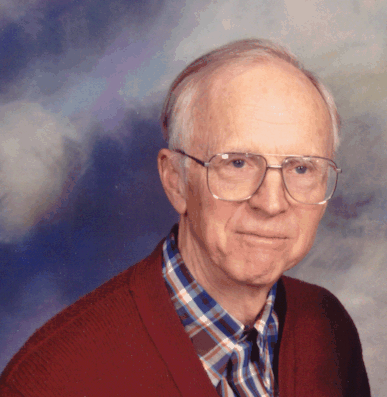
P. R. Moran authored a 1982 paper describing flow-sensitive phase modulation for magnetic resonance imaging. The method adds information about motion to spatial encoding: the abstract describes imaging a joint distribution of position and velocity, rather than treating the signal solely as a map of stationary material.[ref]
A flow velocity zeugmatographic interlace for NMR imaging in humans by P. R. Moran. 1982 indexed byline and abstract: phase modulation, joint spatial/flow spin density and reconstructed flow measures
The physical idea is magnetic resonance velocity encoding. Motion through a magnetic field gradient changes accumulated signal phase under a specified pulse sequence. Appropriate measurements can therefore distinguish moving spin populations that occupy similar positions. The cited abstract describes reconstructing flow-related quantities from complex image data; it does not establish a unique molecular or material identity from signal phase alone.
A synthetic model shows why a distribution of velocities can matter. At one location, suppose two equally weighted contributions with velocities and acquire phases and . Their combined complex signal isIt is real even though neither population is stationary. For , , compared with for two stationary contributions in this model. A zero imaginary component alone consequently does not prove zero motion. This is an explanatory phase-summation example, not a numerical result reported in the 1982 paper.
The verified source byline supplies initials only. No expanded given name, personal dates or portrait is inferred from similarly named researchers.
M. P. Unterweger coauthored a 2000 study of measurement calibration for water standards containing tritium. The paper combined measurements using a proportional counter with liquid scintillation counting comparisons. It also followed massic activity data spanning 38 years to estimate a tritium half-life of days, with the uncertainty specified as one standard deviation.[ref]
The long time record makes a useful distinction visible. A reference sample's radioactive activity changes through radioactive decay even when its chemical identity is unchanged. In an ideal closed sample with constant half-life ,Measurements made at different times must therefore be related to a common time before differences can be interpreted as inconsistent standards. A half-life determination and a detector comparison address related but distinct parts of that problem.
Denis E. Bergeron is a NIST research chemist in its Radioactivity Group whose work concerns physical radioactive activity measurements and standards. His official profile identifies his work in that group; an author account in the Journal of Research of NIST documents the comparison of primary activity standards over several decades.[ref][ref]

In the 2014 coauthored review, Bergeron and colleagues examined ten fluorine-18 standardizations from 1982 to 2013. A new standard differed by about 4 percent from results obtained in1998–2008. The authors compared multiple primary measurement methods and possible sources of bias, while explicitly reporting that the older discrepancy was not fully explained.[ref]
A Review of NIST Primary Activity Standards for 18F: 1982 to 2013 by Denis E. Bergeron and others. Abstract; §4 Discussion, comparison of techniques and unresolved bias
A simple ionization chamber example shows why a calibration difference matters. Suppose measured electric current is and the response model is . A hypothetical factor gives activity . Replacing it by gives approximately for the same current, an increase of about .
These numbers are invented, not the review's calibration table. They separate the detector observation from the inferred radioactive activity. Bergeron's standards work demonstrates why cross-method comparisons and an explicit measurement uncertainty budget matter even when repeated readings are consistent.
Norman V. Klassen is a physicist whose work with Carl K. Ross connects water calorimetry, radiolysis and absorbed dose measurement. Their 1997 study compared calculated heat defects with experimental observations, including independently measured chemical products. This comparison tests the physical model through more than its agreement with a single temperature rise.[ref]
Water Calorimetry: The Heat Defect by Norman V. Klassen and Carl K. Ross. Printed p.63, byline, Abstract and Introduction
The issue is that a water calorimeter measures a thermal response to ionizing radiation, whereas absorbed dose concerns deposited energy per unit mass. If is the thermal energy per unit mass, the heat defect relates them byA useful sensitivity calculation follows directly. Holding fixed and differentiating with respect to givesFor an illustrative , an absolute change changes the inferred absorbed dose by approximately , or . Thus improving thermometer precision alone cannot remove the contribution of an uncertain heat defect to measurement uncertainty. The example is a local sensitivity estimate, rather than an uncertainty budget for their apparatus.[ref]
Water Calorimetry: The Heat Defect by Norman V. Klassen and Carl K. Ross. Printed p.63, Eq1, from which the sensitivity calculation follows
In 2002, Klassen and Carl K. Ross reported that a literature reaction rate constant used in their earlier model was incorrect and supplied a revised model. Their correction also compared model predictions with calorimetric and chemical-product measurements. It illustrates why the inputs to a computer simulation are part of the scientific claim: agreement must be reassessed when those inputs are corrected.[ref]
Water Calorimetry: A Correction to the Heat Defect Calculations by Norman V. Klassen and Carl K. Ross. Printed p.171, Abstract and Introduction
Carl K. Ross is a physicist associated with ionizing radiation standards and water calorimetry. His 1997 paper with Norman V. Klassen identifies both authors with the ionizing-radiation standards laboratory in Ottawa and examines a fundamental problem in radiation dosimetry: deposited energy and measured heat need not be equal when irradiation also produces chemical reactions.[ref]
Water Calorimetry: The Heat Defect by Norman V. Klassen and Carl K. Ross. Printed p.63, byline, affiliation, Abstract and Introduction
Their analysis expresses the heat defect aswhere is absorbed energy, is the energy appearing as heat, is absorbed dose, and is the specific heat capacity of water. The temperature rise supplies a measurable thermal signal, while the heat defect accounts for the energy balance associated with radiolysis.[ref]
Water Calorimetry: The Heat Defect by Norman V. Klassen and Carl K. Ross. Printed p.63, Eqs1–2 and following explanation
For a hypothetical example, suppose the measured thermal quantity is and the heat defect is . The corrected absorbed dose is then . The illustrative correction is chosen for arithmetic, rather than quoted as an experimental result. A positive heat defect means that some absorbed energy does not appear as heat; a negative value means that the measured heat exceeds the absorbed energy, with the difference supplied by the accompanying chemical reactions.
Ross and Norman V. Klassen later published a correction to an input reaction rate constant in their computer simulation. Their 2002 paper provides an explicit example of revising a physical measurement model when a supporting parameter changes.[ref]
Water Calorimetry: A Correction to the Heat Defect Calculations by Norman V. Klassen and Carl K. Ross. Printed p.171, Abstract: replacement of model III by model IIIR
Eduardo García-Toraño is a physicist whose work includes precision measurements of radioactive decay. His 2010 coauthored study of fluorine-18 lists an affiliation with an ionizing radiation metrology laboratory in Madrid. The experiment followed radioactive decay using three systems: ionization chambers, germanium detectors, and coincidence counting with fast scintillators. Measurements extended over as many as nine half-lives, providing several instrumental routes to the same physical parameter.[ref]
The half-life of 18F by Eduardo García-Toraño and others. Byline, affiliation and Abstract, Applied Radiation and Isotopes68(7–8),1561–1565(2010)
The combined result was a half-life of , where the parenthetical notation represents in the last quoted digits. This is the result reported by that experiment; the distinction matters when comparing a historical measurement with a later evaluated half-life.[ref]
The half-life of 18F by Eduardo García-Toraño and others. Abstract: combined result from the three measuring systems
A simple model illustrates why the long observation interval is demanding. Suppose a detector's observed event rate iswhere is the radioactive decay constant and is a constant instrumental background. This illustrative model assumes stable detection efficiency and background. After nine half-lives, the decaying contribution is . An initial contribution of events per second would therefore fall to just event per second: even a small background can then noticeably distort an exponential decay fit if it is omitted. Independent detector systems make a valuable comparison because their instrumental backgrounds and responses need not behave identically.
Fedor Jelezko works on solid-state quantum optics and spin control in diamond. His Ulm University CV identifies him in full and lists the exact 2004 nuclear-spin paper whose first-author byline is F. Jelezko, verifying the connection between the full name and the abbreviated record.[ref]
Fedor Jelezko at Ulm University. Official CV, page1 expertise and page2 selected publications, DOI10.1103/PhysRevLett.93.130501
That experiment addressed an electron spin coupled to a single Carbon-13 nuclear spin at a nitrogen-vacancy center. A laser initialized and read out the electron-spin-dependent signal, while microwave and radio frequency pulses manipulated the coupled levels. Nuclear-state changes were detected through the electron spin. The team observed nuclear Rabi oscillations and demonstrated a conditional two-qubit gate, providing a physical test of coherent control of an individually addressed spin system.[ref]
For an original ideal pulse example, let a selected transition have resonant Rabi frequency and start entirely in one level. The two-level model gives transition probabilityA pulse gives , while a pulse gives . Scanning the pulse duration reveals an oscillation rather than a single population change. These are chosen ideal values; detuning, relaxation and readout noise limit a real measurement.

Bruce McNamara coauthored the 1988 paper Observation of Stochastic Resonance in a Ring Laser by Bruce McNamara and others with Kurt Wiesenfeld and Rajarshi Roy. The publisher lists the School of Physics at Georgia Tech and gives McNamara a permanent-address footnote at the Physics Department of the University of California, Santa Cruz.[ref]
Observation of Stochastic Resonance in a Ring Laser by Bruce McNamara and others. Publisher byline, affiliations and author footnote
These publication details identify the contributor to this optical experiment.The experiment's abstract reports improved signal-to-noise ratio in a bidirectional ring laser after externally injected noise was added to periodic asymmetry modulation.[ref] Interpreting that result requires a defined output statistic: a larger optical fluctuation alone need not be a clearer periodic signal.
An original finite-trial model makes the distinction precise. Suppose a phase-referenced statistic from each independent trial isFor trials, the average has variance . Its squared-mean-to-variance detection ratio isThe statistic could be a consistently measured in-phase Fourier coefficient; its construction and phase reference must remain the same across the comparison.
For stipulated , let three injected-noise settings produce modeled pairs , and . The corresponding ratios are 4, 20 and 2.42. The middle case is best even though its output variance exceeds the first case's and its mean signal is smaller than the last case's. The response-to-background ratio determines this comparison. These invented values illustrate the statistic; they are not recovered laser data or the paper's exact spectral convention.
Independence is part of the toy model. With correlated trials,so merely collecting more adjacent records does not guarantee the same averaging gain. A proposed experimental comparison fixes observation duration, trial handling, input forcing and output statistic while changing injected noise. It measures both coherent response and background before concluding that detection improved.
The experiment connects stochastic resonance to a concrete comparison between a periodic optical response and its noise background.
Kurt Wiesenfeld is a physicist whose research includes stochastic resonance and collective dynamical behavior. Georgia Tech's School of Physics profile lists stochastic resonance, spontaneous synchronization and dynamical beam steering among his research topics.[ref]
He coauthored Observation of Stochastic Resonance in a Ring Laser by Bruce McNamara and others with Bruce McNamara and Rajarshi Roy. The publisher's abstract establishes the experimentally observed improvement in a periodically modulated optical system with added noise.[ref]
Observation of Stochastic Resonance in a Ring Laser by Bruce McNamara and others. Publisher byline and Abstract
A useful theoretical question is how a random transition rate can relate to the forcing period.For an original illustrative model, suppose a system has two states with a noise-dependent escape rateThis is an assumed activation-type form, of the kind represented by a Kramers escape rate; it is not a fitted law for the cited laser. If unforced dwell times have an exponential distribution, their mean is . A periodic forcing of period suggests comparing that time with , the time between alternating preferences for the two states.
Take stipulated , dimensionless , and . The mean-dwell matching condition givesAt , the mean dwell is about 22.03 seconds, far longer than the forcing half-period. At , it is about 7.39 milliseconds. The calculation explains why too little noise can prevent switching, while rapid random switching can obscure a weak preference.
Matching means is only a heuristic. Exponential dwell times have a spread as large as their mean, and periodic forcing changes the rates over the cycle. The matching calculation alone does not prove phase locking or locate the optimum signal-to-noise ratio. A proposed test records transition times relative to the forcing phase and compares the full response as noise is varied.
This distinction between a simplified rate model and an observed response is central to interpreting stochastic resonance. The example is an original calculation illustrating the theoretical issue; the joint 1988 paper supplies the verified optical observation.
Pinned article: Introduction to the OurBigBook Project
Welcome to the OurBigBook Project! Our goal is to create the perfect publishing platform for STEM subjects, and get university-level students to write the best free STEM tutorials ever.
Everyone is welcome to create an account and play with the site: ourbigbook.com/go/register. We belive that students themselves can write amazing tutorials, but teachers are welcome too. You can write about anything you want, it doesn't have to be STEM or even educational. Silly test content is very welcome and you won't be penalized in any way. Just keep it legal!
Intro to OurBigBook
. Source. We have two killer features:
- topics: topics group articles by different users with the same title, e.g. here is the topic for the "Fundamental Theorem of Calculus" ourbigbook.com/go/topic/fundamental-theorem-of-calculusArticles of different users are sorted by upvote within each article page. This feature is a bit like:
- a Wikipedia where each user can have their own version of each article
- a Q&A website like Stack Overflow, where multiple people can give their views on a given topic, and the best ones are sorted by upvote. Except you don't need to wait for someone to ask first, and any topic goes, no matter how narrow or broad
This feature makes it possible for readers to find better explanations of any topic created by other writers. And it allows writers to create an explanation in a place that readers might actually find it.
Figure 1. Screenshot of the "Derivative" topic page. View it live at: ourbigbook.com/go/topic/derivativeVideo 2. OurBigBook Web topics demo. Source. - local editing: you can store all your personal knowledge base content locally in a plaintext markup format that can be edited locally and published either:This way you can be sure that even if OurBigBook.com were to go down one day (which we have no plans to do as it is quite cheap to host!), your content will still be perfectly readable as a static site.
- to OurBigBook.com to get awesome multi-user features like topics and likes
- as HTML files to a static website, which you can host yourself for free on many external providers like GitHub Pages, and remain in full control

Figure 2. You can publish local OurBigBook lightweight markup files to either OurBigBook.com or as a static website.
Figure 3. Visual Studio Code extension installation.
Figure 5. . You can also edit articles on the Web editor without installing anything locally. Video 3. Edit locally and publish demo. Source. This shows editing OurBigBook Markup and publishing it using the Visual Studio Code extension. 
- Infinitely deep tables of contents:


All our software is open source and hosted at: github.com/ourbigbook/ourbigbook
Further documentation can be found at: docs.ourbigbook.com
Feel free to reach our to us for any help or suggestions: docs.ourbigbook.com/#contact