Topics (384k) Articles (398k) Users (410) Discussions (242) Comments (383) Files (13k) New article

Rajarshi Roy is a physicist whose work concerns nonlinear optical systems, noise and chaos. His University of Maryland profile describes research on nonlinear dynamics and fluctuations in optical devices and lasers, including the connection between experiments and models of their behavior.[ref]
Rajarshi Roy profile by the University of Maryland. Research overview, nonlinear optical systems and noise
With Bruce McNamara and Kurt Wiesenfeld, Roy coauthored Observation of Stochastic Resonance in a Ring Laser by Bruce McNamara and others, published in 1988. Its abstract reports a bidirectional ring laser, periodic modulation of the asymmetry between counter-rotating modes, and an improved signal-to-noise ratio after external noise was injected.[ref]
Observation of Stochastic Resonance in a Ring Laser by Bruce McNamara and others. Abstract and publisher byline
The important physical feature is a nonlinear optical response whose switching can be influenced by both periodic forcing and fluctuations.An original proposed readout illustrates what must be observed. If the two propagation directions deliver powers and , defineFor , ; reversing the powers gives . Total power remains in both cases. A readout recording only their sum would lose this directional-state information. This normalization is a proposed explanatory observable, not an asserted detail of the 1988 apparatus.
To test a noise-dependent response, one could record direction-resolved signals while holding the periodic forcing and measurement convention fixed, vary the injected-noise level, and compare the coherent response with its background. Repeated trials would also test switching variability. Both numerator and denominator in a reported signal-to-noise ratio matter; an increased raw fluctuation amplitude does not by itself demonstrate better detection.
The optical experiment motivates stochastic resonance as a property of a specified system, input and readout. It does not imply that adding noise improves every measurement. Roy's documented research emphasizes precisely the interaction between fluctuations, nonlinear dynamics and optical observation.
A. N. Livšic authored the 1972 paper Cohomology of dynamical systems, associated with the Livšic theorem. The original publication record and later primary research references verify these initials; they are retained without inferring a fuller personal identity.[ref]
https://doi.org/10.1070/IM1972v006n06ABEH001919. Original paper, Mathematics of the USSR-Izvestiya 6(6), 1278–1301
[ref]Abelian Livšic theorems for Anosov flows by Richard Sharp. Reference 17, original Russian publication record
For an equation , summing along a periodic orbit telescopes to zero. Thus periodic sums of must vanish. Livšic theory shows that, in suitable hyperbolic settings with the required regularity assumptions, this necessary periodic-orbit test also yields a transfer function. The result turns infinitely many local orbit checks into a global solution of a cohomological equation.[ref]
Abelian Livšic theorems for Anosov flows by Richard Sharp. Introduction, classical Livšic framework
Richard Sharp works on the geometry of Anosov flows. His Abelian Livšic theorems for Anosov flows by Richard Sharp gives two short proofs of an earlier abelian Livšic theorem and extends the framework to positive-density sets of null-homologous periodic orbits and amenable covers.[ref]
The abelian formulation separates a derivative along the flow from a contribution carried by a closed differential form. Integrals over periodic orbits record the obstruction to representing a function entirely as such a derivative. This makes orbit data into information about cohomology and explains why restricting to null-homologous orbits changes the formulation.[ref]
Abelian Livšic theorems for Anosov flows by Richard Sharp. Introduction and main theorems
Roberto Moriyón worked with Rafael de la Llave and José Manuel Marco on canonical perturbation methods and regularity for the Livšic cohomological equation.[ref]
In a hyperbolic setting, periodic trajectories impose compatibility conditions on the equation's data. Understanding when compatible data yield smooth transfer functions links dynamical systems, geometric rigidity and analysis.
José Manuel Marco coauthored the regularity theory of the Livšic cohomological equation with Rafael de la Llave and Roberto Moriyón. The official publisher record verifies this exact name.[ref]
Their work connects equations arising in Anosov diffeomorphisms and Anosov flows with regularity of their solutions. Solvability alone leaves a geometric question: does a transfer function inherit the smooth structure required by the application?
Rafael de la Llave studies dynamical systems. With José Manuel Marco and Roberto Moriyón, he developed regularity results for the Livšic cohomological equation in Anosov diffeomorphisms and Anosov flows.[ref]
Canonical perturbation theory of Anosov systems and regularity results for the Livsic cohomology equation by Rafael de la Llave and others (1986). Original publisher byline and subject
The question concerns how the smoothness of the input function controls a transfer function solving the equation. Such results are essential when translating hyperbolic dynamical information into smooth geometric information.
Stanisław Ulam helped develop the modern computational use of Monte Carlo methods. The firsthand account by Nicholas Metropolis describes Ulam's proposal to revive statistical sampling with electronic computers and its subsequent development with John von Neumann.[ref]
The Beginning of the Monte Carlo Method by Nicholas Metropolis. The Spark and The Method, pp. 126–127
In particle-transport calculations, one samples successive events—scattering, absorption and branching—to produce many possible histories. Averaging their outcomes estimates a macroscopic quantity. The link between a physical random process, probability distributions and an executable algorithm made difficult calculations accessible without enumerating every possible trajectory.[ref]
The Beginning of the Monte Carlo Method by Nicholas Metropolis. The Method, p. 127
Srinivasa Ramanujan developed results in number theory, including the study of highly composite numbers: positive integers having more divisors than every smaller positive integer.[ref]
His analysis connects record values of the divisor function with prime factorization. Prime exponents must be arranged in nonincreasing order as the primes increase: swapping an inverted pair would produce a smaller integer with the same divisor count, contradicting the record property. For example, has six positive divisors. The subject turns irregular arithmetic data into a constrained optimization problem.[ref]
Richard Courant connected mathematical analysis with practical methods for partial differential equations. His 1943 paper develops variational methods for equilibrium and vibration problems, including finite-parameter approximations.[ref]
Variational methods for the solution of problems of equilibrium and vibrations by Richard Courant. Original paper, variational approximation and piecewise-linear constructions
A trial solution can be built from piecewise linear functions on a triangulation. Minimizing the energy over their coefficients replaces an infinite-dimensional problem with a finite linear system. This construction became part of the foundations of the finite element method, showing how geometric subdivision and a variational principle can work together. The approach combines variational ideas with local geometric approximation.
Mary Cartwright studied analysis and nonlinear ordinary differential equations. With John Edensor Littlewood, she investigated forced oscillators of the Van der Pol equation type, where state-dependent damping and external periodic forcing interact.[ref]
On Non-Linear Differential Equations of the Second Order, Part I by Mary Cartwright and John Edensor Littlewood. Original 1945 byline and equation in the title
The motivation included radio engineering: a nonlinear oscillator need not respond like a linear resonator. Studying its long-term solutions requires understanding the dynamics over repeated forcing cycles, not just solving one instantaneous balance. Cartwright's own historical account describes this exchange between an engineering question and qualitative mathematics.[ref]
https://www.cambridge.org/core/journals/mathematical-gazette/article/abs/nonlinear-vibrations-a-chapter-in-mathematical-history/E9D6261C511996F950C0C4A961E0641F. Cartwright's own historical account of nonlinear vibrations
Diophantus studied algebraic problems seeking numerical solutions, preserved in the Arithmetica. Many of those problems ask for positive rational numbers; their scope therefore differs from the exclusively integer formulation often associated with modern Diophantine equations.[ref]
Diophantus of Alexandria: A Study in the History of Greek Algebra by Thomas Little Heath (1910). Translated Arithmetica and introductory account of its problem conventions
Archimedes developed exact methods for geometric measurement. In Measurement of a Circle by Archimedes, he proves the relation between a circle's area, radius and circumference and obtains rational bounds on its circumference-to-diameter ratio.[ref]
The bounds come from comparing inscribed and circumscribed polygons. Increasing the number of sides traps the circular quantity between computable geometric quantities. The argument illustrates the power of a rigorous bound: one need not express a number exactly to establish an accurate approximation with a guaranteed error.[ref]
Apollonius of Perga developed a systematic theory of conic sections. His surviving Conics studies the geometry of the ellipse, parabola and hyperbola, including their tangents and diameter relations.[ref]
Treatise on Conic Sections by Apollonius of Perga (Heath edition). Primary Conics text, Book I; edition introduction distinguishes the ancient work from modern notation
A single construction—cutting a cone by a plane—produces these different families of curves. Apollonius's work organizes their properties through geometric relations rather than modern Cartesian equations. Translating between those viewpoints helps explain why an equation such as describes a parabola without attributing coordinate notation to the ancient author.
Daisuke Takahashi is the coauthor with Junkichi Satsuma of A Soliton Cellular Automaton by Daisuke Takahashi and Junkichi Satsuma. Their model, the box-ball system, exhibits interacting localized patterns and conserved quantities through a discrete update rule.[ref]
A Soliton Cellular Automaton by Daisuke Takahashi and Junkichi Satsuma. publisher abstract and author affiliations
The Waseda materials-mathematics profile describes research in discrete nonlinear dynamics, ultradiscretization and exact mathematical models. The institutional profile identifies the relevant researcher; the same romanized name is also used by other researchers.[ref]
https://www.dms.sci.waseda.ac.jp/takahashi-e.html. Research, discrete dynamical theory and nonlinear waves

Portrait of Daisuke Takahashi
. Identified portrait hosted on the Waseda University materials-mathematics profile. Source.Junkichi Satsuma coauthored A Soliton Cellular Automaton by Daisuke Takahashi and Junkichi Satsuma, introducing a discrete model in which localized patterns interact while preserving their identities. The box-ball system makes soliton behavior visible through an update rule on occupied and empty boxes.
The publisher abstract also describes infinitely many conserved quantities. This contribution connects nonlinear-wave ideas with an explicitly discrete dynamical system, rather than requiring a continuous fluid equation.[ref]
A Soliton Cellular Automaton by Daisuke Takahashi and Junkichi Satsuma. 1990, publisher abstract and author list
Fabian Haiden studies connections among geometry, dynamical systems and category theory. His course notes Dynamics, Stability, and Noncommutative Algebra by Fabian Haiden develop topological entropy using covers and separated or spanning sets of trajectories, making orbit complexity into a quantitative invariant.
His research page connects these themes with stability conditions and categorical constructions. This illustrates how different mathematical descriptions can carry information about the same dynamics.[ref]
Yue Zhao authored a 2018 exposition outlining a modular proof of the Ramanujan–Chudnovsky identity for . The original preprint verifies this exact name; it does not justify identifying the author with another similarly named mathematician.[ref]
The Chudnovsky series is useful for high-precision calculation because successive terms shrink rapidly. A modular derivation connects such an efficient numerical identity with modular forms and elliptic-function theory, explaining why the constants are mathematically structured rather than arbitrary numerical coincidences.[ref]
Noam Elkies coauthored work with Lou M. Pretorius and Konrad J. Swanepoel on finite incidence configurations in projective spaces. Their elementary argument proves the complex Sylvester-Gallai theorem dimension bound and extends the problem to quaternions.[ref]
The project connects elementary incidence questions with the algebra of the scalar field: complex and quaternionic configurations permit different geometry from real ones.
Edward Witten works on theoretical physics and its connections with geometry and topology. His Institute for Advanced Study profile identifies the researcher.[ref]
https://www.ias.edu/scholars/witten. Institutional scholar profile
His Monopoles and Four-Manifolds by Edward Witten used ideas from supersymmetric gauge theory to introduce a new description of smooth four-manifold invariants. The Seiberg–Witten equations replace a nonabelian instanton-counting problem with equations involving an Abelian gauge field and a spinor. The contribution demonstrates how a physical dual description can reveal a more tractable mathematical structure.[ref]
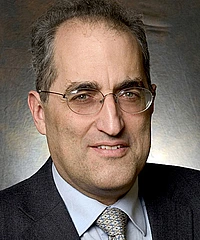
Richard P. Brent works on computational mathematics, including arithmetic algorithms, integer factorization and numerical methods. His ANU publication and software pages document these interests.[ref]
His 1980 factorization paper improves cycle detection in iterated sequences and applies it to a Monte Carlo factorization method. A collision modulo an unknown prime divisor can be exposed through a greatest common divisor, even when the iterates do not coincide modulo the whole integer. Batching computations and improving cycle finding reduce the work required.[ref]
An improved Monte Carlo factorization algorithm by Richard P. Brent. Sections 2–7, cycle finding and factorization
Pinned article: Introduction to the OurBigBook Project
Welcome to the OurBigBook Project! Our goal is to create the perfect publishing platform for STEM subjects, and get university-level students to write the best free STEM tutorials ever.
Everyone is welcome to create an account and play with the site: ourbigbook.com/go/register. We belive that students themselves can write amazing tutorials, but teachers are welcome too. You can write about anything you want, it doesn't have to be STEM or even educational. Silly test content is very welcome and you won't be penalized in any way. Just keep it legal!
Intro to OurBigBook
. Source. We have two killer features:
- topics: topics group articles by different users with the same title, e.g. here is the topic for the "Fundamental Theorem of Calculus" ourbigbook.com/go/topic/fundamental-theorem-of-calculusArticles of different users are sorted by upvote within each article page. This feature is a bit like:
- a Wikipedia where each user can have their own version of each article
- a Q&A website like Stack Overflow, where multiple people can give their views on a given topic, and the best ones are sorted by upvote. Except you don't need to wait for someone to ask first, and any topic goes, no matter how narrow or broad
This feature makes it possible for readers to find better explanations of any topic created by other writers. And it allows writers to create an explanation in a place that readers might actually find it.
Figure 1. Screenshot of the "Derivative" topic page. View it live at: ourbigbook.com/go/topic/derivativeVideo 2. OurBigBook Web topics demo. Source. - local editing: you can store all your personal knowledge base content locally in a plaintext markup format that can be edited locally and published either:This way you can be sure that even if OurBigBook.com were to go down one day (which we have no plans to do as it is quite cheap to host!), your content will still be perfectly readable as a static site.
- to OurBigBook.com to get awesome multi-user features like topics and likes
- as HTML files to a static website, which you can host yourself for free on many external providers like GitHub Pages, and remain in full control

Figure 2. You can publish local OurBigBook lightweight markup files to either OurBigBook.com or as a static website.
Figure 3. Visual Studio Code extension installation.
Figure 5. . You can also edit articles on the Web editor without installing anything locally. Video 3. Edit locally and publish demo. Source. This shows editing OurBigBook Markup and publishing it using the Visual Studio Code extension. 
- Infinitely deep tables of contents:



All our software is open source and hosted at: github.com/ourbigbook/ourbigbook
Further documentation can be found at: docs.ourbigbook.com
Feel free to reach our to us for any help or suggestions: docs.ourbigbook.com/#contact