Topics (384k) Articles (398k) Users (410) Discussions (242) Comments (383) Files (13k) New article

P. W. Oeller investigated molecular control of plant development, including the role of Ethylene in fruit ripening. A 1991 study with colleagues used Antisense RNA to reduce production of 1-aminocyclopropane-1-carboxylate synthase, an enzyme in Ethylene biosynthesis, in tomato plants.[ref]
Reversible inhibition of tomato fruit senescence by antisense RNA by P. W. Oeller and others. Science 254, pp. 437–439; primary byline and abstract
The modified tomatoes showed inhibited ripening, and supplying Ethylene externally reversed the inhibition. This paired intervention and rescue connected a molecular perturbation to a developmental process: reducing the signal delayed the process, while restoring the signal restored it. The result supplied causal evidence for Ethylene control in this experimental system, beyond a correlation between rising Ethylene and maturing fruit.[ref]
Reversible inhibition of tomato fruit senescence by antisense RNA by P. W. Oeller and others. Abstract; antisense inhibition and rescue by exogenous ethylene or propylene
G. L. Hammond investigated how circulating binding proteins influence access to steroid hormones. A 1990 study examined corticosteroid-binding globulin, a blood plasma protein that binds cortisol, and its interaction with neutrophil elastase.[ref]
A role for corticosteroid-binding globulin in delivery of cortisol to activated neutrophils by G. L. Hammond and others. Journal of Clinical Endocrinology and Metabolism 71, pp. 34–39; Abstract
In the assay, neutrophil elastase cleaved corticosteroid-binding globulin near its terminal region and released more than 80% of its bound cortisol. The cleavage did not inhibit the enzyme. The work supplied a molecular mechanism by which a hormone-binding carrier can change local hormone availability, while the proposed physiological delivery role requires distinguishing an experimental mechanism from its magnitude in living tissue.[ref]
A role for corticosteroid-binding globulin in delivery of cortisol to activated neutrophils by G. L. Hammond and others. Abstract; proteolytic cleavage, steroid release and lack of elastase inhibition

L. Xu studied genetic control of meiosis in budding yeast. A 1995 study characterized the NDT80 gene through mutations that prevented progression beyond pachytene.[ref]
NDT80, a meiosis-specific gene required for exit from pachytene in Saccharomyces cerevisiae by L. Xu and others. Molecular and Cellular Biology 15, pp. 6572–6581; Abstract and primary byline
The arrested cells retained full-length synaptonemal complexes, while much meiotic genetic recombination still occurred. This separated progression to later stages from successful execution of every earlier molecular event: a cell can recombine DNA yet fail to complete meiosis.[ref]
NDT80, a meiosis-specific gene required for exit from pachytene in Saccharomyces cerevisiae by L. Xu and others. Abstract; mutant arrest, chromosome morphology and recombination assays
S. Chu investigated how gene expression coordinates meiosis and formation of reproductive cells in budding yeast. A 1998 study identified Ndt80 as a transcription factor activating a set of genes needed for these processes.[ref]
Gametogenesis in yeast is regulated by a transcriptional cascade dependent on Ndt80 by S. Chu and others. Molecular Cell 1, pp. 685–696; Abstract and primary byline
Producing Ndt80 in vegetatively growing cells activated normally developmentally regulated genes; purified experimental Ndt80 also bound a conserved upstream DNA sequence. These complementary experiments connected a regulatory protein to both DNA recognition and a change in transcription, rather than relying only on correlated timing of gene expression.[ref]
Gametogenesis in yeast is regulated by a transcriptional cascade dependent on Ndt80 by S. Chu and others. Abstract; ectopic synthesis and DNA-binding experiments
D. O. Adams investigated the biochemical pathway by which plants convert methionine into Ethylene. Work with S. F. Yang in 1979 tested the role of 1-aminocyclopropane-1-carboxylate using labelled precursors in apple tissue.[ref]
Unlabelled 1-aminocyclopropane-1-carboxylate reduced conversion of labelled methionine to labelled Ethylene, whereas unlabelled methionine had little effect on conversion from labelled cyclic intermediate. This asymmetric dilution comparison supported a directed pathway: an upstream label passes through the downstream intermediate pool, while a supplied downstream intermediate need not return through the upstream pool.[ref]
S. F. Yang studied the biosynthesis of Ethylene, a plant hormone involved in fruit ripening. A 1979 study with D. O. Adams established 1-aminocyclopropane-1-carboxylate as an intermediate between methionine and Ethylene.[ref]
In apple tissue, labelled methionine produced Ethylene in air but accumulated the cyclic intermediate under nitrogen. Supplying labelled 1-aminocyclopropane-1-carboxylate and comparing responses to an inhibitor helped establish the order of the reactions. The design used both precursor tracing and bypass of a blocked upstream step, rather than assuming that correlated concentrations reveal pathway order.[ref]
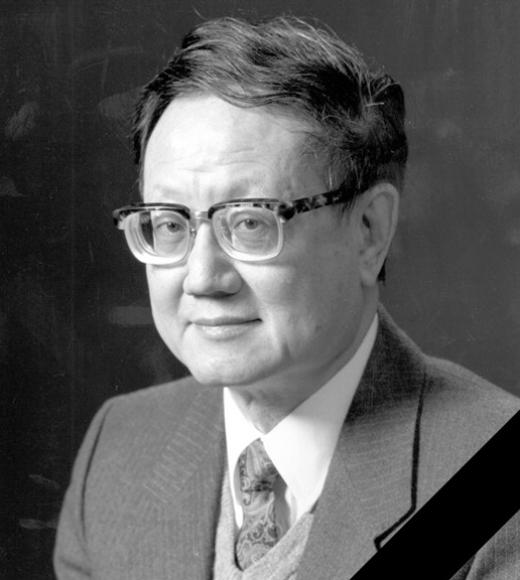
Kimie Nakagawa investigated Vitamin K metabolism, including how cells make menaquinone-4. A 2010 study identified UBIAD1 as a human biosynthetic enzyme using complementary perturbation and expression experiments.[ref]
Identification of UBIAD1 as a novel human menaquinone-4 biosynthetic enzyme by Kimie Nakagawa and others. Nature468, pp.117–121; Abstract and primary byline
Reducing UBIAD1 expression with siRNA decreased formation of isotope-labelled menaquinone-4 in human cells. Expression in insect cells provided a second test, and deuterium nuclear magnetic resonance checked the product's identity. Combining altered production with chemical identification is stronger evidence for a biosynthetic role than similarity of protein sequences alone.[ref]
Identification of UBIAD1 as a novel human menaquinone-4 biosynthetic enzyme by Kimie Nakagawa and others. Abstract and Figures2–3; knockdown, expression and labelled-product analysis
T. Miyake led the byline of a 1977 report, with C. K. Kung and E. Goldwasser, describing purification of human erythropoietin. Ion-exchange chromatography, gel filtration and other separations yielded an active hormone preparation with -fold purification and activity recovery.[ref]
Purification of human erythropoietin by T. Miyake and others. Abstract; seven-step purification and activity yield
C. K. Kung coauthored the 1977 purification of human erythropoietin with T. Miyake and E. Goldwasser. The preparation was tested by gel electrophoresis under several chemical conditions as well as by biological activity.[ref]
Purification of human erythropoietin by T. Miyake and others. Abstract; electrophoretic characterization and primary byline
The study illustrates complementary evidence in protein purification: activity establishes that a fraction retains the sought biological effect, while separation methods examine its composition. A single band is useful evidence of apparent purity, but it does not by itself identify the mechanism of a hormone's action.
E. Goldwasser investigated erythropoietin, the hormone supporting red blood cell production. A 1977 study with T. Miyake and C. K. Kung purified human erythropoietin from urine through seven separation steps.[ref]
Purification of human erythropoietin by T. Miyake and others. Journal of Biological Chemistry252, pp.5558–5564; Abstract and byline
The work coupled protein purification to biological activity measurements. Following activity is essential when the desired protein is initially a tiny part of a complex sample: the largest protein peak need not contain the active hormone. The resulting preparation enabled experiments on an identified active material rather than an unexplained effect of crude urine.

E. Goldwasser
. Portrait identified in UChicago Medicine's research-history account, beside its description of erythropoietin purification.J. F. Young studied genetic variation in Influenza A virus. In a 1979 paper with P. Palese, RNA oligonucleotide fingerprints and peptide mapping were used to compare circulating strains.[ref]
The important comparison was between individual genetic segments, not just whole-strain labels. Different inferred parental origins within A/Cal/10/78 supported reassortment rather than explaining every difference by successive mutations. The evidence was comparative: the paper inferred ancestry from molecular patterns, rather than directly filming the historical exchange inside a cell.[ref]
Evolution of human influenza A viruses in nature: recombination contributes to genetic variation of H1N1 strains by J. F. Young and P. Palese. Abstract; oligonucleotide and peptide maps and inferred H1N1/H3N2 ancestry
P. Palese investigated the genetic evolution of Influenza A virus. A 1979 study with J. F. Young compared RNA fingerprints and peptide mapping to infer the origins of different parts of a viral genome.[ref]
Evolution of human influenza A viruses in nature: recombination contributes to genetic variation of H1N1 strains by J. F. Young and P. Palese. PNAS76, pp.6547–6551; Abstract and primary byline
The strain A/Cal/10/78 retained the H1N1 designation, yet the analysis suggested that some internal genetic segments came from an H3N2 parent. The result supported reassortment: a surface subtype need not describe the ancestry of every segment in a segmented genome. This distinction lets a scientist ask two different questions about the same virus: what surface antigens it carries, and where its complete genetic material came from.[ref]

P. Palese
. Portrait identified by the Icahn School of Medicine at Mount Sinai profile.J. O. Bullock studied how Colicin E1 forms ion-conducting channels in lipid bilayers. A 1983 study compared the complete protein with a fragment from its C-terminus, measuring both individual-channel and aggregate electrical behaviour.[ref]
Comparison of the macroscopic and single channel conductance properties of colicin E1 and its COOH-terminal tryptic peptide by J. O. Bullock and others. Journal of Biological Chemistry258, pp.9908–9912; Abstract and byline
The fragment retained properties very similar to those of the complete Colicin E1. Both forms could bind a lipid bilayer before a suitable membrane potential permitted conduction. Fragmentation therefore helped locate a functional region, while electrical measurements distinguished attachment from pore opening. These are separate experimental questions even though both involve the same protein at the same membrane.[ref]
Comparison of the macroscopic and single channel conductance properties of colicin E1 and its COOH-terminal tryptic peptide by J. O. Bullock and others. Abstract; terminal fragment and potential-dependent channel formation
B. J. Worton developed statistical methods for estimating animal space use. A 1989 paper applied kernel density estimation to the utilization distribution, comparing fixed and adaptive kernels and choices of smoothing parameter.[ref]
A location sample is a collection of points, while a utilization distribution describes how use varies across a region. Smoothing connects those descriptions, but the choice changes the resulting map. A very narrow kernel around each recorded location emphasizes isolated peaks; a broader kernel can merge nearby clusters. Neither choice creates additional observations.
The contribution matters because a home range outline alone cannot express every difference in intensity of use. Estimating a spatial probability density function makes those differences quantitative, while keeping assumptions about observation times and sampling visible. The methodological paper supplies a reusable estimator, not a guarantee that every recorded movement sample is independent or representative.
John Krebs investigated animal behaviour through experiments connecting signals with ecological outcomes. With Ruth Ashcroft and Mike Webber, he examined birdsong and territory maintenance in great tits. Their 1978 paper describes removing resident pairs and occupying the vacated areas with loudspeakers; new pairs settled faster in controls than in song-occupied areas.[ref]
Song repertoires and territory defence in the great tit by John Krebs and others. Abstract; resident removal, playback and settlement comparison
The experiment makes an invisible social boundary testable: physical space remains after the owners leave, while an acoustic cue can still influence newcomers. It supports a signalling role in territorial exclusion without requiring an observer to witness a fight at every boundary. The same paper tested the effectiveness of varied song repertoires, illustrating the use of controlled signal manipulation to study animal communication.
Institutional profile: www.biology.ox.ac.uk/people/john-krebs .
Ruth Ashcroft coauthored experimental research with John Krebs and Mike Webber on the role of birdsong in great tit territory defence. Their 1978 paper tested whether variation in a male's song repertoire improves its effectiveness as a territorial display.[ref]
Song repertoires and territory defence in the great tit by John Krebs and others. Byline and Abstract; three repertoire experiments
The methodological question is how to distinguish a song's possible functions. Sound associated with a territory could influence competitors, prospective mates, or both. A test measuring settlement by competitors addresses a different outcome from a test measuring mate attraction. The study's experimental framing therefore links an observable acoustic pattern to a specified behavioural response, rather than treating every elaborate signal as evidence for a single function.
Mike Webber coauthored a 1978 experimental study with John Krebs and Ruth Ashcroft on birdsong and territory defence in the great tit. The paper compared aspects of song repertoires as signals used in maintaining territories.[ref]
Song repertoires and territory defence in the great tit by John Krebs and others. Primary byline and Abstract; repertoire experiments
A central design feature was playback: a loudspeaker can reproduce an acoustic cue while separating it from the presence of a resident animal. This makes a sound signal experimentally manipulable. A difference in settlement after playback is evidence about the signal's effect in the tested situation; it does not by itself show how an arriving bird internally represents the singer. The contribution verified here is the joint experiment rather than a separately documented division of labour among its authors.
Kasper van Gelderen investigates how developmental signals shape plants. He coauthored a 2016 study of INDEHISCENT, auxin response and formation of the separation layer in Arabidopsis thaliana fruits. Comparing normal and altered fruits connected a regulatory gene with the local cell divisions that establish a controlled opening site.[ref]
The study distinguished early tissue specification from later fruit dehiscence. Altering auxin transport during early stages prevented the normal developmental outcome, showing why the time of a perturbation matters as well as its location.[ref]
An INDEHISCENT-Controlled Auxin Response Specifies the Separation Layer in Early Arabidopsis Fruit by Kasper van Gelderen and others. Abstract; tissue-targeted transport perturbations during stages14–16
A signal that has one role while a tissue is forming need not have the same role when the mature tissue opens.Institutional research profile: www.uu.nl/en/organisation/working-at-the-faculty-of-science/kasper-van-gelderen .
Allan H. Brown investigated plant physiology, including how plants respond to gravity and how accurately a clinostat simulates altered gravitational stimulation. His 1976 paper with colleagues tested a central assumption behind using continuous rotation as a gravity compensator.[ref]
Limitation on the Use of the Horizontal Clinostat as a Gravity Compensator by Allan H. Brown and others. Plant Physiology58,127–130; byline, affiliation and Abstract
The apparatus combined a clinostat with centrifugation: plants rotated while experiencing an additional chronic acceleration transverse to the rotation axis. If the rotation removed the relevant directional information completely, changing this imposed acceleration should not change the tested developmental outcomes. Several morphological endpoints nevertheless depended on its magnitude, demonstrating incomplete compensation under those conditions.[ref]
The reasoning distinguishes an apparatus's intended function from a validated approximation. Rotation changes the direction of the imposed stimulus relative to a specimen; it does not remove gravity itself. Brown's experiment therefore motivates testing each biological readout against an actual change in acceleration, rather than assigning weightlessness to every rotating preparation.
Q. Gu is the first-listed author of the 1998 study identifying the developmental role of FRUITFULL in Arabidopsis thaliana. The paper connected a disrupted MADS-box transcription factor gene with defective cell differentiation in fruit valves. Its indexed byline gives Q. Gu; an expanded given name is not established here.[ref]
The FRUITFULL MADS-box gene mediates cell differentiation during Arabidopsis fruit development by Q. Gu and others. Development125,1509–1517; byline and Abstract
The experiment made the mutation informative in two ways. An enhancer trap insertion disrupted the gene, while its reporter gene marked expression in valve tissues. In the mutant, valve cells failed to elongate and differentiate normally; the mature fruit consequently remained short and its tissues grew without normal coordination.[ref]
The FRUITFULL MADS-box gene mediates cell differentiation during Arabidopsis fruit development by Q. Gu and others. Abstract, ful-1 insertion, GUS localization and valve phenotype
The combination is more revealing than organ length alone: a local expression pattern and a tissue-specific defect connect a regulatory gene to development at the cell level. They support a role in the process without demonstrating that every downstream growth gene is a direct transcriptional target.
Pinned article: Introduction to the OurBigBook Project
Welcome to the OurBigBook Project! Our goal is to create the perfect publishing platform for STEM subjects, and get university-level students to write the best free STEM tutorials ever.
Everyone is welcome to create an account and play with the site: ourbigbook.com/go/register. We belive that students themselves can write amazing tutorials, but teachers are welcome too. You can write about anything you want, it doesn't have to be STEM or even educational. Silly test content is very welcome and you won't be penalized in any way. Just keep it legal!
Intro to OurBigBook
. Source. We have two killer features:
- topics: topics group articles by different users with the same title, e.g. here is the topic for the "Fundamental Theorem of Calculus" ourbigbook.com/go/topic/fundamental-theorem-of-calculusArticles of different users are sorted by upvote within each article page. This feature is a bit like:
- a Wikipedia where each user can have their own version of each article
- a Q&A website like Stack Overflow, where multiple people can give their views on a given topic, and the best ones are sorted by upvote. Except you don't need to wait for someone to ask first, and any topic goes, no matter how narrow or broad
This feature makes it possible for readers to find better explanations of any topic created by other writers. And it allows writers to create an explanation in a place that readers might actually find it.
Figure 1. Screenshot of the "Derivative" topic page. View it live at: ourbigbook.com/go/topic/derivativeVideo 2. OurBigBook Web topics demo. Source. - local editing: you can store all your personal knowledge base content locally in a plaintext markup format that can be edited locally and published either:This way you can be sure that even if OurBigBook.com were to go down one day (which we have no plans to do as it is quite cheap to host!), your content will still be perfectly readable as a static site.
- to OurBigBook.com to get awesome multi-user features like topics and likes
- as HTML files to a static website, which you can host yourself for free on many external providers like GitHub Pages, and remain in full control

Figure 2. You can publish local OurBigBook lightweight markup files to either OurBigBook.com or as a static website.
Figure 3. Visual Studio Code extension installation.
Figure 5. . You can also edit articles on the Web editor without installing anything locally. Video 3. Edit locally and publish demo. Source. This shows editing OurBigBook Markup and publishing it using the Visual Studio Code extension. 
- Infinitely deep tables of contents:


All our software is open source and hosted at: github.com/ourbigbook/ourbigbook
Further documentation can be found at: docs.ourbigbook.com
Feel free to reach our to us for any help or suggestions: docs.ourbigbook.com/#contact