Topics (384k) Articles (398k) Users (410) Discussions (242) Comments (383) Files (13k) New article

A researcher who coauthored methods for functional assessment of isolated mitochondria, relating respiration measurements to preparation yield and integrity.[ref]
Functional Assessment of Isolated Mitochondria In Vitro. 2009, author roster; Mitochondrial yield and integrity; Mitochondrial respiration
A physiologist who coauthored intracellular recordings of action potentials in giant axons. Recording inside the axon against an external reference showed the membrane potential during excitation rather than only the external electrical signal.[ref]
Action Potentials Recorded from Inside a Nerve Fibre by Alan Hodgkin and Andrew Huxley. 1939, intracellular recording in giant axons

Portrait of Andrew Huxley
. Photographer unknown; Nobel Foundation archive, Nobel Prize in Physiology or Medicine 1963. Public domain in Sweden (Commons PD-Sweden); U.S. tag absent on file. Source and usage information on the linked Wikimedia file page. Source.A physiologist who coauthored intracellular recordings of action potentials in giant axons. Recording inside the axon against an external reference showed the membrane potential during excitation rather than only the external electrical signal.[ref]
Action Potentials Recorded from Inside a Nerve Fibre by Alan Hodgkin and Andrew Huxley. 1939, intracellular recording in giant axons
Institutional biography: www.physoc.org/blog/prize-lecture-memoria-alan-hodgkin/

Portrait of Alan Hodgkin
. Photographer unknown; Nobel Foundation archive, Nobel Prize in Physiology or Medicine 1963; existing crop. Public domain in Sweden (Commons PD-Sweden); U.S. tag absent on file. Source and usage information on the linked Wikimedia file page. Source.A researcher who coauthored high-speed measurements resolving rotational substeps of F1-ATPase. The experiment connected molecular motion with steps in an enzyme’s catalytic cycle rather than treating rotation as a smooth average.[ref]
Resolution of distinct rotational substeps by submillisecond kinetic analysis of F1-ATPase by Ryohei Yasuda and others. study design and results; author roster
Molecular biologist studying transport of proteins across membranes. With Günter Blobel, Dobberstein reconstructed steps of the secretory pathway, connecting information in a nascent polypeptide with membrane-associated targeting.[ref]
Transfer of Proteins across Membranes I by Günter Blobel and Bernhard Dobberstein. Title, author list and reported study

Microbiologist studying bacterial genome maintenance. Stewart and collaborators compared maintenance functions of linear and circular plasmids in Borrelia burgdorferi, testing how different DNA structures can share inheritance mechanisms.[ref]
Researcher in microbial genetics. With Joshua Lederberg, Lederberg coauthored the replica-plating study, which preserved colony patterns across growth conditions to distinguish pre-existing mutants from changes caused by selection.[ref]
Replica plating and indirect selection of bacterial mutants by Joshua Lederberg and Esther Lederberg. Title, author list and reported study

Portrait of Esther Lederberg
. Source. A mechanical engineer whose work connected gas lighting to automatic operation. Chalmers records his mechanical-engineering qualification in 1896.[ref]
https://www.chalmers.se/en/about-chalmers/alumni/wall-of-fame/. Gustaf Dalén, Mechanical Engineering 1896: qualification and engineering career
After an accident left him blind in 1912, he returned to AGA in 1913 and continued leading the company.[ref]Gustaf Dalén – Beacon Lighting by Tekniska museet. The accident; Willpower and optimism: loss of sight, return and subsequent engineering work
The sun valve links radiometric absorptance, thermal expansion and mechanical motion to a useful decision: whether a beacon should receive its main gas supply. The Dalén light combines this daylight response with repeated flashes. The Nobel Prize in Physics in 1912 recognized his automatic regulators for lighthouse and buoy lighting.
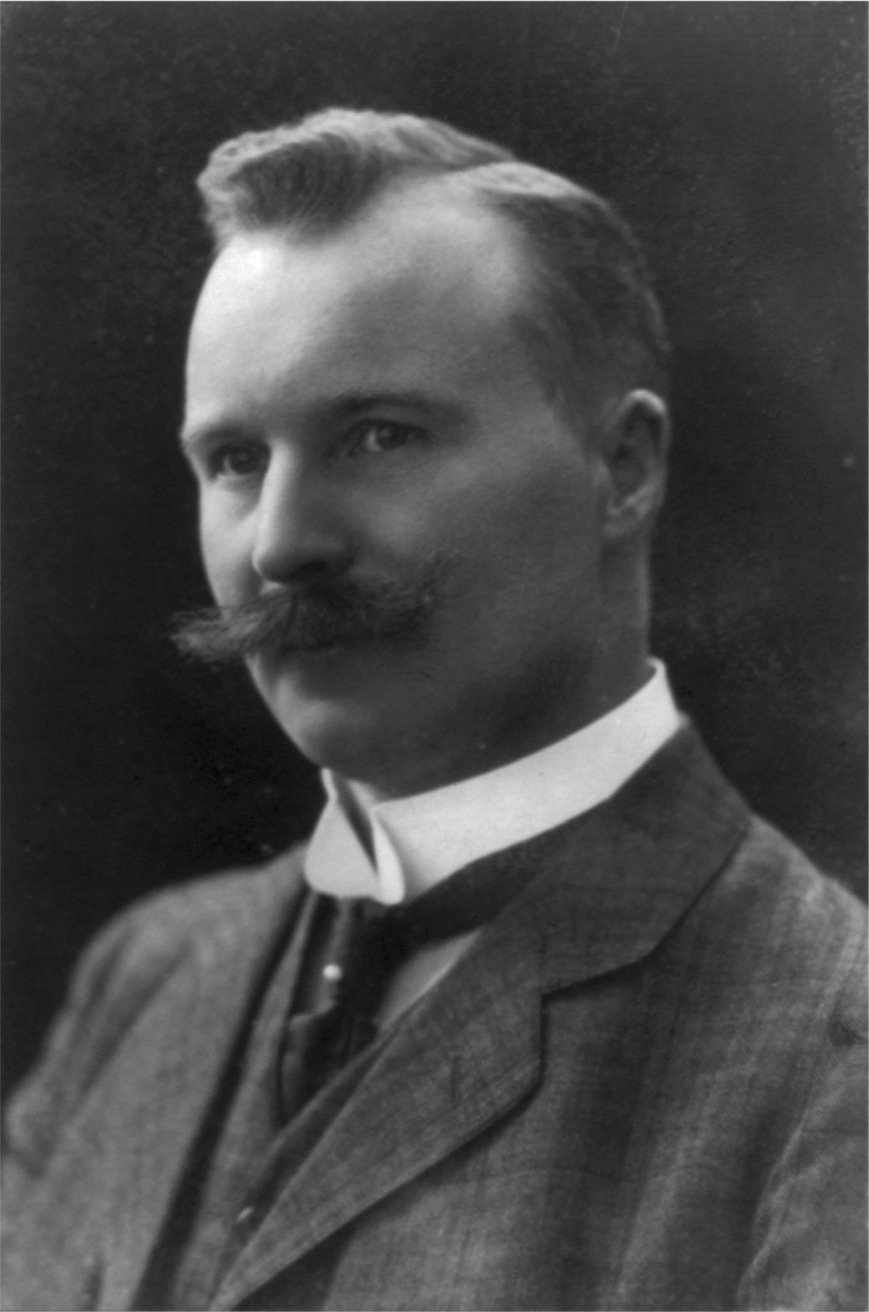
Portrait of Gustaf Dalén, via Wikimedia Commons
. Source. A mechanical engineer and emeritus professor whose research concerns boundary layer separation and fluid mechanics.[ref]
Leon van Dommelen: Biography. Opening appointment paragraph and subsequent fluid-mechanics research paragraphs
A materials scientist who studied semiconductor growth at Santa Barbara.[ref]
Professional profile of Arthur Gossard. Independent professional identity
A historian of physics.[ref]
https://www.einstein.caltech.edu/who-we-are/a-j-kox. Independent professional biography and identity
Geneticist studying bacterial genome maintenance. Patricia Rosa coauthored research comparing maintenance functions of linear and circular plasmids in Borrelia burgdorferi, connecting unusual genome architecture with inheritance of extrachromosomal DNA.[ref]
Researcher in molecular cloning. Cohen’s account of the field’s early development describes the experiments that made recombinant plasmids useful for propagating and studying selected DNA sequences.[ref]
DNA cloning: A personal view after 40 years by Stanley Norman Cohen. Title, author list and reported study
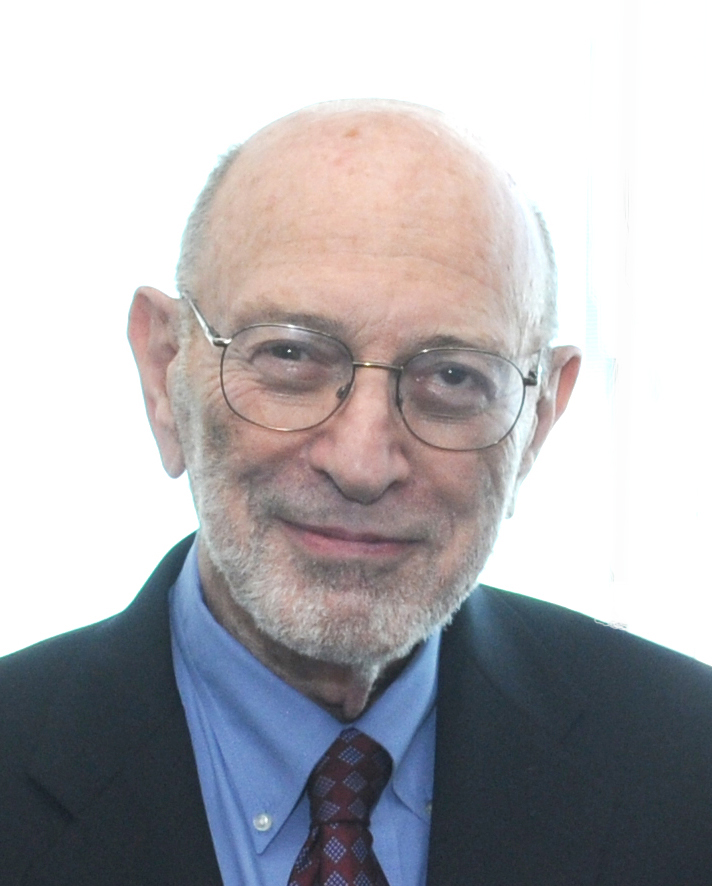
Geneticist who, with Esther Lederberg, developed replica plating to investigate bacterial mutants. Preserving the spatial pattern of colonies allowed selection to reveal variants that already existed before exposure.[ref]
Replica plating and indirect selection of bacterial mutants by Joshua Lederberg and Esther Lederberg. Title, author list and reported study

Portrait of Joshua Lederberg
. Source. A medical entomologist who developed methods for control of mosquitoes and eye gnats. His work connected insect population management with reduction of vector-associated health problems, combining field investigations with applied disease-prevention research.[ref]
https://entomology.ucr.edu/news/2023/02/09/entomologists-remember-distinguished-professor-emeritus-dr-mir-s-mulla. Institutional memorial, research contributions

Portrait of Mir Subhan Mulla
. Externally hosted portrait identified at news.ucr.edu/articles/2025/03/01/carrying-on-a-scientific-legacy.An ecologist who investigated ecological field-experiment design and pseudoreplication, clarifying why repeated measurements within one treatment unit do not create independent treatment replicates.[ref]
Pseudoreplication and the Design of Ecological Field Experiments by Stuart H. Hurlbert. Authorship and research contribution
Portrait of Stuart H. Hurlbert
. Externally hosted portrait identified at biology.sdsu.edu/emeritus/.A civil engineer who researches the mechanical properties of soils.[ref]
John Germaine by Tufts University. Biography: research professor in Civil and Environmental Engineering; experimental geotechnical analysis
A chemical engineer who has worked on separation processes. He is credited as publisher of the Hyper-TVT teaching site; that role does not establish authorship of its individual chapters.
Institutional profile: mavt.ethz.ch/news-and-events/d-mavt-news/2024/11/an-applied-mathematician.html
Site imprint: www.hyper-tvt.ethz.ch/tvt_imprint.html
Researcher in protein targeting and membrane biogenesis. With Sichen Shao, Hegde analyzed insertion of membrane proteins at the endoplasmic reticulum, connecting protein properties with the machinery that handles them.[ref]
Membrane Protein Insertion at the Endoplasmic Reticulum by Sichen Shao and Ramanujan S. Hegde. Title, author list and reported study
Pinned article: Introduction to the OurBigBook Project
Welcome to the OurBigBook Project! Our goal is to create the perfect publishing platform for STEM subjects, and get university-level students to write the best free STEM tutorials ever.
Everyone is welcome to create an account and play with the site: ourbigbook.com/go/register. We belive that students themselves can write amazing tutorials, but teachers are welcome too. You can write about anything you want, it doesn't have to be STEM or even educational. Silly test content is very welcome and you won't be penalized in any way. Just keep it legal!
Intro to OurBigBook
. Source. We have two killer features:
- topics: topics group articles by different users with the same title, e.g. here is the topic for the "Fundamental Theorem of Calculus" ourbigbook.com/go/topic/fundamental-theorem-of-calculusArticles of different users are sorted by upvote within each article page. This feature is a bit like:
- a Wikipedia where each user can have their own version of each article
- a Q&A website like Stack Overflow, where multiple people can give their views on a given topic, and the best ones are sorted by upvote. Except you don't need to wait for someone to ask first, and any topic goes, no matter how narrow or broad
This feature makes it possible for readers to find better explanations of any topic created by other writers. And it allows writers to create an explanation in a place that readers might actually find it.
Figure 1. Screenshot of the "Derivative" topic page. View it live at: ourbigbook.com/go/topic/derivativeVideo 2. OurBigBook Web topics demo. Source. - local editing: you can store all your personal knowledge base content locally in a plaintext markup format that can be edited locally and published either:This way you can be sure that even if OurBigBook.com were to go down one day (which we have no plans to do as it is quite cheap to host!), your content will still be perfectly readable as a static site.
- to OurBigBook.com to get awesome multi-user features like topics and likes
- as HTML files to a static website, which you can host yourself for free on many external providers like GitHub Pages, and remain in full control

Figure 2. You can publish local OurBigBook lightweight markup files to either OurBigBook.com or as a static website.
Figure 3. Visual Studio Code extension installation.
Figure 5. . You can also edit articles on the Web editor without installing anything locally. Video 3. Edit locally and publish demo. Source. This shows editing OurBigBook Markup and publishing it using the Visual Studio Code extension. 
- Infinitely deep tables of contents:




All our software is open source and hosted at: github.com/ourbigbook/ourbigbook
Further documentation can be found at: docs.ourbigbook.com
Feel free to reach our to us for any help or suggestions: docs.ourbigbook.com/#contact