Topics (384k) Articles (398k) Users (410) Discussions (242) Comments (383) Files (13k) New article

Meng Cui and Changhuei Yang demonstrated digital optical phase conjugation through a multiple scattering sample. A charge-coupled device measured a transmitted light field by wave interference with a reference. A calibrated spatial light modulator then imposed the opposite spatial wave phase on the returning beam. Comparing this return with a zero-phase control showed recovery of the original optical mode. The method separated field measurement from playback and made finite sampling and phase-only control explicit limits on reconstruction.[ref]
Implementation of a digital optical phase conjugation system and its application to study the robustness of turbidity suppression by phase conjugation by Meng Cui and Changhuei Yang. 2010 apparatus, phase-stepped measurement, modulator playback and zero-phase control
An optical physicist and coauthor of the digital optical phase conjugation experiment described there.[ref]
https://engineering.purdue.edu/ECE/People/ptProfile?resource_id=121778. Institutional biography: physics PhD in atomic, molecular and optical physics, and optical research
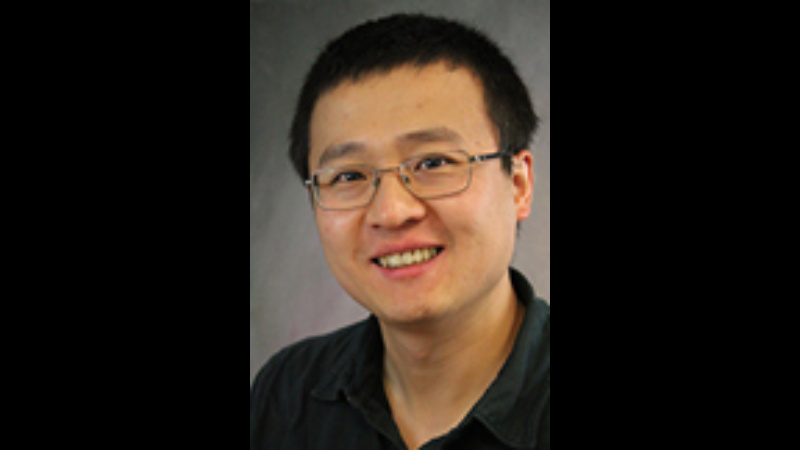
Portrait of Meng Cui
. Institutional portrait identified on the Purdue University biological sciences profile.An experimental physicist known for measurements of electron charge and the photoelectric effect. The Millikan photoelectric experiment describes the apparatus and stopping-voltage measurements behind his 1916 test.[ref]
Robert Andrews Millikan Collection by National Archives and Records Administration. Collection description: full name, 1868–1953 and experimental-physics work

Portrait of Robert Andrews Millikan
. Unknown photographer; Smithsonian Institution Libraries, Dibner Library, Scientific Identity collection, SIL14-M004-03. No known copyright restrictions, as supplied by Smithsonian through Flickr Commons and reviewed on Commons., via Wikimedia Commons. Source.Otto Robert Frisch and Lise Meitner interpreted the barium found after uranium bombardment as evidence that a heavy atomic nucleus could divide into two large fragments. Their 1939 paper related the available energy to nuclear mass differences and the electrical repulsion of the fragments. This supplied a physical account of nuclear fission, connecting a chemical identification of the products with a new type of nuclear transformation and its large energy release.[ref]
Disintegration of Uranium by Neutrons: a New Type of Nuclear Reaction by Lise Meitner and Otto Robert Frisch. 1939 Nature paper, interpretation of barium and energy estimate
A physicist who worked with Lise Meitner on the interpretation of nuclear fission.[ref]
Lise Meitner im Porträt. Treffpunkt der Nobelpreisträger. Das Harnack-Haus in Berlin-Dahlem by Susanne Kiewitz; Early-January 1939 discussion: Otto Robert Frisch identified as a physicist and Meitner's collaborator

Portrait of Otto Robert Frisch
. Photograph by Emilio Segrè, courtesy AIP Emilio Segrè Visual Archives, Segrè Collection. CC BY 4.0, via Wikimedia Commons. Source.A physicist who helped explain nuclear fission. Lise Meitner and Otto Robert Frisch interpreted the energy release associated with the chemical findings of Otto Hahn and Fritz Strassmann. Following these contributions together distinguishes the identification of reaction products from their physical explanation.[ref]
Lise Meitner im Porträt. Treffpunkt der Nobelpreisträger. Das Harnack-Haus in Berlin-Dahlem by Susanne Kiewitz; Susanne Kiewitz, final paragraphs: Hahn–Strassmann chemical findings, Meitner–Frisch interpretation and contributions to fission
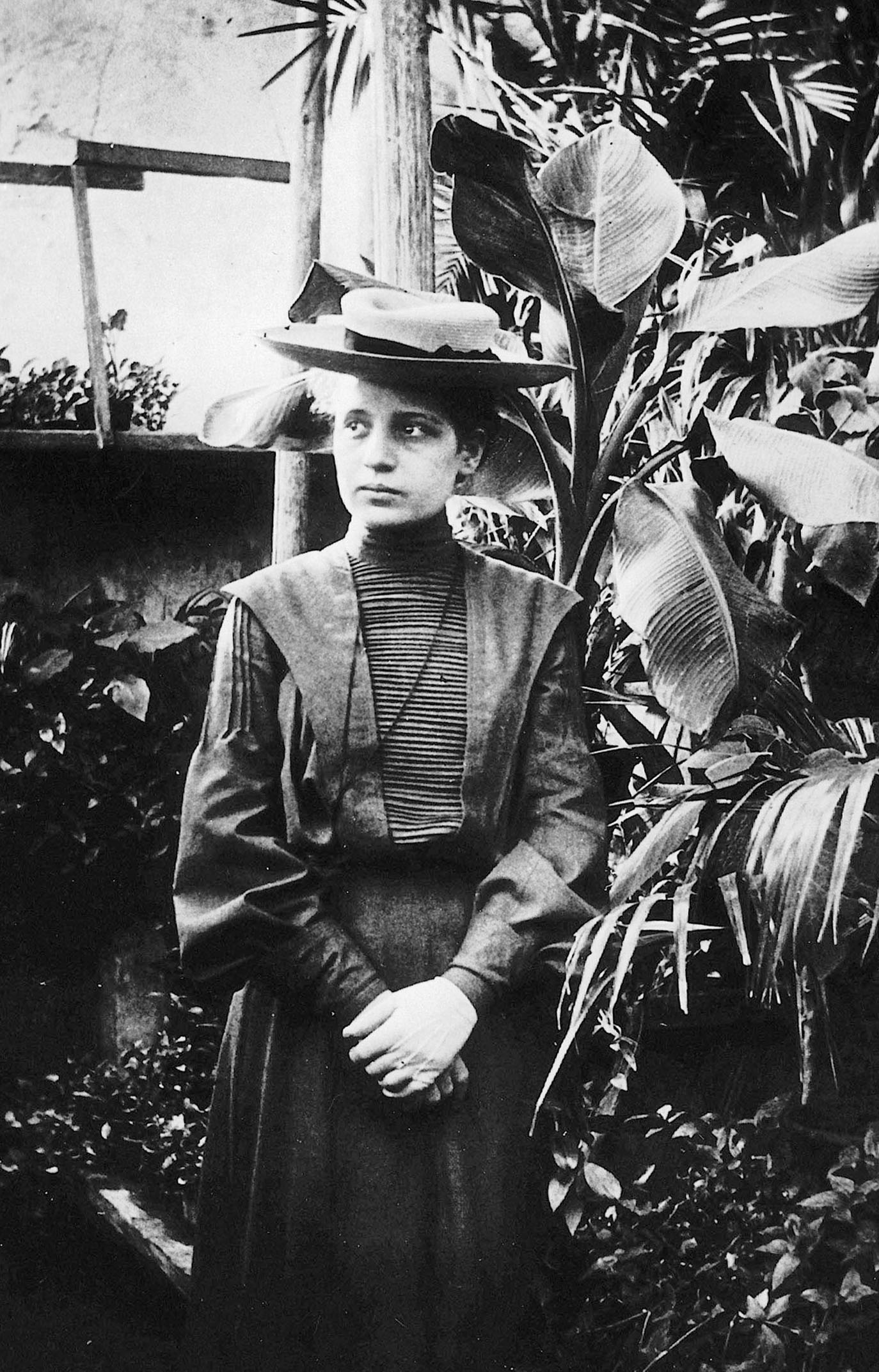
A physicist associated with the Bohr model of the chemical atom. His 1922 Nobel Prize in Physics concerned atomic structure and radiation.[ref]
The Nobel Prize (Niels Bohr) by Niels Bohr Institute. The Nobel Prize: atomic theory and the 1922 award
[ref]
Portrait of Niels Bohr
. Bain News Service, publisher; Library of Congress, George Grantham Bain Collection, ggbain.35303; restoration credited on the File to Bammesk. Library of Congress: no known copyright restrictions; Commons additionally records origin/life-plus-70-or-shorter and pre-1931 United States public-domain grounds., via Wikimedia Commons. Source.Max Planck introduced energy elements proportional to frequency, , in his statistical treatment of thermal resonators. This led to a mean resonator energy and the corresponding black-body radiation spectrum, connecting entropy counting with measured radiation. For , expanding the exponential gives ; at high frequency the denominator suppresses the energy exponentially. The energy-element argument was a step toward quantum theory, without yet being the later light-quantum account of a free photon.[ref]
On the Law of Distribution of Energy in the Normal Spectrum by Max Planck. 1901 paper, section 10, equations (11)–(12); modern temperature notation
A physicist whose work on black-body radiation led to Planck's law and the use of the Planck constant. He received the 1918 Nobel Prize in Physics.[ref]
Max Planck by Lorenz Friedrich Beck. Biographical account: theoretical-physics appointments, radiation work, 1858 birth and 1947 death

Portrait of Max Planck
. Unknown photographer; Nationaal Archief / gahetna.nl source recorded on Commons. Public domain (anonymous historical photograph, as declared on Commons). Source and usage information on the linked Wikimedia file page. Source.Paul Dirac sought a relativistic quantum mechanics whose evolution equation remained first order in both time and spatial derivatives. A free-particle Hamiltonian reproduces the relativistic relation when its coefficient matrices satisfy suitable anticommutator identities. The required multi-component wave function incorporates electron spin within the relativistic dynamics. His 1928 paper used this construction to address the doubling of atomic states that earlier theories had treated by adding spin separately.[ref]
The Quantum Theory of the Electron by Paul Dirac. Introduction and construction of four coefficient matrices; modern notation used here
A physicist who developed a relativistic theory of the electron. He shared the Nobel Prize in Physics in 1933 with Erwin Schrödinger.[ref]
Paul A.M. Dirac, Facts by Nobel Prize Outreach. Facts: life dates, joint prize and the 1928 relativistic electron theory

Portrait of Paul Dirac in 1933
. Nobel Foundation, 1933, via Wikimedia Commons. The linked file supplies the original Nobel source and marks the anonymous photograph public domain under its stated term of protection. Source.A physicist who developed wave mechanics. In 1926, Erwin Schrödinger made the energies of chemical atoms an eigenvalue problem, rather than prescribing a separate quantization rule for each classical orbit. He shared the Nobel Prize in Physics in 1933 with Paul Dirac.[ref]
Erwin Schrödinger - Biographical. Nobel Lectures, Physics 1922–1941; Zurich period and 1926 wave-equation work; joint 1933 award; birth and death dates
The Schrödinger equation turns a proposed Hamiltonian operator into predictions for a wavefunction and its evolution. Boundary conditions can select discrete energy eigenvalues, while quantum superposition makes their relative quantum phases observable through interference. The infinite square well gives a transparent worked example; a hydrogen atom supplies a physical application with a different potential energy.
The Davisson–Germer experiment gives a complementary experimental route into matter waves: an accelerated electron beam scattered from a nickel crystal produces direction-dependent collected electric current. Its apparatus and angular scans make the wave prediction testable. Interpreting a wavefunction as a probability amplitude also requires the Born rule; that statistical interpretation deserves its own history alongside Erwin Schrödinger's dynamics.

Portrait of Erwin Schrödinger in 1933
. Nobel Foundation, 1933, via Wikimedia Commons. The linked file supplies the original Nobel biography source and marks the Swedish photograph public domain (PD-Sweden). Source.A physicist whose work connects special relativity, general relativity, Brownian motion and the photoelectric effect. He worked at the Institute for Advanced Study from 1933 until his death in 1955.[ref]
Albert Einstein (institutional profile) by Institute for Advanced Study. Institutional profile: physicist, life dates and Institute appointment
In 1905, Albert Einstein used the photoelectric effect to explore quantized light, related Brownian motion to molecular agitation, formulated special relativity, and connected changes in mass and energy. These problems link visible measurements to otherwise inaccessible structure: emitted electron energies, suspended-particle displacements and comparisons of clocks.[ref]
Albert Einstein: The Great Works by Center for History of Physics. March, May, June and September 1905: the four papers and their physical questions
The Millikan photoelectric experiment follows one of those predictions into the laboratory. Its stopping-voltage measurements test a quantitative relation; the experiment's apparatus, surface preparation and electrical corrections matter to that inference. The Einstein field equations and general relativity lead to a different set of tests involving gravity and spacetime.
The Nobel Prize in Physics in 1921 recognized his theoretical work, particularly the law of the photoelectric effect; the award was presented in 1922.[ref]
Albert Einstein, Facts by Nobel Prize Outreach. Prize motivation and the note that Einstein received the 1921 award in 1922

Portrait of Albert Einstein in 1947
. Photograph by Orren Jack Turner, Princeton, 1947; Library of Congress, cph.3b46036. Digital modifications credited to PM_Poon and Dantadd. The linked Wikimedia Commons file records U.S. public-domain status based on nonrenewal and links the original Library of Congress rights statement. Source.Karl Bergwitz made early balloon measurements of atmospheric ionization, comparing the detector response at altitude with observations nearer the ground. These experiments tested expectations for radiation originating in the terrestrial environment.[ref]
100 Years of Cosmic Rays by DESY. First panel: balloon electrometer measurements and detector limitations
The experiment's value lies in changing the material between a proposed source and the detector. Interpretation also depends on instrumental behaviour under changing conditions, so altitude dependence must be separated from leakage, calibration changes and the detector's own background.
Alessandro De Angelis coauthored calculations of the transparency of intergalactic space to gamma rays. The work connects an assumed background photon population with energy-dependent optical depth and the attenuation of distant sources.[ref]
Domenico Pacini tested the origin of atmospheric ionizing radiation by placing a sealed measuring instrument below the surface of water. His experiments compared the rate of discharge near the surface with that measured underwater.
A lower discharge rate underwater showed that part of the ionization came from radiation attenuated by the overlying water. Instrumental leakage and radiation from surrounding material also had to be considered. The result challenged explanations assigning all the penetrating radiation to local terrestrial sources, using shielding rather than altitude as the controlled comparison.[ref]
La radiazione penetrante alla superficie ed in seno alle acque by Domenico Pacini. Original 1912 report in translation: surface and underwater measurements, residual ionization and interpretation

Portrait of Domenico Pacini
. Pacini family, 25 April 1920. Public domain (PD-anon-70-EU). Source usage terms, via Wikimedia Commons. Source.Theodor Wulf developed a transportable electrometer for measuring atmospheric ionization. His design used fine fibres in place of delicate metal leaves, making outdoor measurements easier to calibrate. Comparisons at different heights, including the Eiffel Tower, tested whether radiation from the ground explained the ionization.[ref]
The method infers ion production from loss of stored electric charge. Leakage and instrument stability must therefore be controlled before a change in discharge rate is interpreted as a change in penetrating radiation.
Ernest Marsden and Hans Geiger observed alpha particles scattered through large angles by metal targets. Counting weak scintillations supplied an event-based readout even when only a small fraction of the incident beam returned toward its source. The observation challenged descriptions that attributed all deflections to many weak encounters. Their later measurements varied geometry and target conditions to test the single-scattering interpretation behind Rutherford scattering.[ref]
On a Diffuse Reflection of the Alpha-Particles by Hans Geiger and Ernest Marsden. 1909 paper, pp. 495–500, apparatus and reflected-particle counting
A physicist.[ref]
Marsden, Ernest by Ross Galbreath. Dictionary of New Zealand Biography; Independent biographical identity and professional specialization

Portrait of Ernest Marsden
. S. P. Andrew Ltd.; National Library of New Zealand collection, photograph dated 1921. The Commons File records expired-copyright public-domain status in the United States., via Wikimedia Commons. Source.Hans Geiger and Ernest Marsden counted large-angle deflections of alpha particles from metal targets. Their 1909 work used visible scintillations to register particles scattered back toward the incident side, establishing that rare strong deflections required explanation. Their 1913 measurements tested the angular dependence more systematically with thin targets. Comparing count rates with target thickness, incident energy and observation angle helped turn the concentrated-charge picture of Rutherford scattering into a quantitative experimental test.[ref]
The Laws of Deflexion of Alpha Particles through Large Angles by Hans Geiger and Ernest Marsden. 1913 paper, experimental angular and target-dependence tests
A physicist.[ref]
https://www.tu.berlin/en/about/history/people-portraits/hans-geiger. Independent biographical identity and professional specialization

Portrait of Hans Geiger
. Source. Ernest Rutherford's 1911 calculation explained rare large-angle alpha particle scattering by concentrating an atom's central electric charge into a region small compared with the atom. In the single-Rutherford scattering approximation, the predicted differential scattering cross-section varies as and as the inverse square of the incident kinetic energy. These dependencies make the model testable through angular counts and controlled changes of beam energy, beyond merely observing that occasional particles turn backward.[ref]
The Scattering of Alpha and Beta Particles by Matter and the Structure of the Atom by Ernest Rutherford. Sections on single scattering by a central charge and comparison with observed large-angle scattering
A physicist.[ref]
https://www.physics.manchester.ac.uk/about/history-and-heritage/. Independent biographical identity and professional specialization

Portrait of Ernest Rutherford
. Source. The Rutherford scattering model connects large-angle deflections to concentrated electric charge. The Geiger-Marsden experiment supplies the experimental context; a predicted angular distribution needs comparison with detector geometry and background counts.
Heike Kamerlingh Onnes liquefied helium, opening access to temperatures far below those reached with other common cryogenic liquids. This enabled electrical measurements through the low-temperature transition of metals and the discovery of superconductivity. His later liquid-helium experiments also investigated persistent currents, connecting the sharp resistance change with sustained electrical behavior in a closed circuit. The progression shows how a new cooling technique can expose phenomena that are inaccessible at higher temperatures.[ref]
The Liquefaction of Helium by Heike Kamerlingh Onnes. 1908 report, helium liquefaction and experimental access
[ref]Further Experiments with Liquid Helium, J (Continued) by Heike Kamerlingh Onnes. liquid-helium experiments on superconducting electrical behavior
A physicist.[ref]
https://actorenregister.nationaalarchief.nl/actor-persoon/kamerlingh-onnes-prof-h-te-leiden. Independent biographical identity and professional specialization
Helium liquefaction supplied a route to very low temperatures. The resistance-versus-temperature experiment for superconductivity and measurements of superconducting persistent current show how reaching those conditions opened new questions about electrical behavior.

Portrait of Heike Kamerlingh Onnes
. Nobel Foundation; individual photographer anonymous/not identified. Public domain in the European Union under the File’s anonymous-work publication rule. Source usage terms, via Wikimedia Commons. Source.Peter Debye explained the heat capacity of a solid by counting a spectrum of quantized elastic vibrations. In the Debye model, a cutoff ensures the correct number of modes, while the low-frequency acoustic spectrum gives heat capacity proportional to at sufficiently low temperature. At high temperature, the same construction approaches the classical Dulong-Petit law. Connecting elastic vibrations with quantum occupation explains why a solid stores much less thermal energy at low temperature than a classical mode count predicts.[ref]
Zur Theorie der spezifischen Wärmen by Peter Debye. Annalen der Physik 344, 789–839 (1912), vibrational-spectrum heat-capacity theory
A physicist.[ref]
https://chemistry.cornell.edu/peter-j-w-debye. Independent biographical identity and professional specialization

Portrait of Peter Debye
. Schmelhaus / ETH Zürich; ETH-Bibliothek Zürich, Bildarchiv, Portr 00836. CC BY-SA 3.0, via Wikimedia Commons. Source.An experimental condensed matter physicist who developed a low-temperature relaxation calorimeter for small samples. A sapphire platform is connected to a cold bath by a controlled thermal link; its temperature relaxation determines heat capacity. Explaining the platform's own thermal resistances is essential before interpreting a sample's small signal as a material property.[ref]
Development of a Relaxation Calorimeter for Temperatures between 0.05 and 4 K by Manuel Brando. Abstract: sapphire platform, permanent thermal link and small-sample heat capacity
An experimental physicist who coauthored the observation of X-ray diffraction by crystals. A photographic plate recorded direction-dependent spots from radiation transmitted through a crystal, linking the periodic arrangement of matter to interference of short-wavelength waves. The result made crystalline structure accessible through the geometry of a diffraction pattern.[ref]
Interferenz-Erscheinungen bei Röntgenstrahlen by Walther Friedrich, Paul Knipping and Max von Laue. Original report and photographic diffraction patterns
Pinned article: Introduction to the OurBigBook Project
Welcome to the OurBigBook Project! Our goal is to create the perfect publishing platform for STEM subjects, and get university-level students to write the best free STEM tutorials ever.
Everyone is welcome to create an account and play with the site: ourbigbook.com/go/register. We belive that students themselves can write amazing tutorials, but teachers are welcome too. You can write about anything you want, it doesn't have to be STEM or even educational. Silly test content is very welcome and you won't be penalized in any way. Just keep it legal!
Intro to OurBigBook
. Source. We have two killer features:
- topics: topics group articles by different users with the same title, e.g. here is the topic for the "Fundamental Theorem of Calculus" ourbigbook.com/go/topic/fundamental-theorem-of-calculusArticles of different users are sorted by upvote within each article page. This feature is a bit like:
- a Wikipedia where each user can have their own version of each article
- a Q&A website like Stack Overflow, where multiple people can give their views on a given topic, and the best ones are sorted by upvote. Except you don't need to wait for someone to ask first, and any topic goes, no matter how narrow or broad
This feature makes it possible for readers to find better explanations of any topic created by other writers. And it allows writers to create an explanation in a place that readers might actually find it.
Figure 1. Screenshot of the "Derivative" topic page. View it live at: ourbigbook.com/go/topic/derivativeVideo 2. OurBigBook Web topics demo. Source. - local editing: you can store all your personal knowledge base content locally in a plaintext markup format that can be edited locally and published either:This way you can be sure that even if OurBigBook.com were to go down one day (which we have no plans to do as it is quite cheap to host!), your content will still be perfectly readable as a static site.
- to OurBigBook.com to get awesome multi-user features like topics and likes
- as HTML files to a static website, which you can host yourself for free on many external providers like GitHub Pages, and remain in full control

Figure 2. You can publish local OurBigBook lightweight markup files to either OurBigBook.com or as a static website.
Figure 3. Visual Studio Code extension installation.
Figure 5. . You can also edit articles on the Web editor without installing anything locally. Video 3. Edit locally and publish demo. Source. This shows editing OurBigBook Markup and publishing it using the Visual Studio Code extension. 
- Infinitely deep tables of contents:




All our software is open source and hosted at: github.com/ourbigbook/ourbigbook
Further documentation can be found at: docs.ourbigbook.com
Feel free to reach our to us for any help or suggestions: docs.ourbigbook.com/#contact