Topics (384k) Articles (398k) Users (410) Discussions (242) Comments (383) Files (13k) New article

Martin Bauer coauthored a particle-physics treatment of dark matter with Tilman Plehn. Their calculations connect proposed particle interactions with four distinct tests: cosmological abundance, indirect radiation signals, direct scattering and collider production. A model must relate these through common masses and coupling constants, rather than treating each possible signal independently. The text makes that connection explicit, showing how the same hypothetical interaction can be constrained by very different measurements.[ref]
Yet Another Introduction to Dark Matter by Martin Bauer and Tilman Plehn. Abstract and organization: relic density, indirect/direct detection and collider searches
A physicist.[ref]
https://www.humboldt-foundation.de/vernetzen/recherche-im-humboldt-netzwerk/einzelansicht/1146579/prof-dr-martin-bauer. Biographical identity and professional specialization
Otto Stern developed molecular-beam methods that infer microscopic properties from controlled particle trajectories. With Walther Gerlach, he sent a neutral silver beam through a magnetic field gradient, producing discrete deposited components. The beam's translational motion carries information about its internal magnetic moment projection to a macroscopic detector. Changing the magnetic field geometry or the beam preparation changes that mapping, making the apparatus part of the interpretation of the Stern-Gerlach experiment.[ref]
Der experimentelle Nachweis der Richtungsquantelung im Magnetfeld by Walther Gerlach and Otto Stern. Original beam-splitting experiment
[ref]The Method of Molecular Rays by Otto Stern. Nobel lecture: trajectory methods and magnetic-moment measurements
A physicist.[ref]
Otto Stern - Facts by Nobel Prize Outreach. Biographical identity and professional specialization
The Stern-Gerlach experiment with Walther Gerlach tested the deflection of a neutral silver atomic beam in a nonuniform magnetic field.

Portrait of Otto Stern
. From Nobelprize.org; photographer not identified on the Commons file page. Public domain in Sweden under the conditions stated on the Commons file page. Source usage terms, via Wikimedia Commons. Source.A physicist.[ref]
Ernst Ruska by Technische Universität Berlin. Ernst Ruska: electron-optics research, microscope development and university career
The early two-stage electron microscope experiment investigates how magnetic electron lenses can form a magnified image. The electron microscope article distinguishes magnification from electron microscope resolution.

Statue of Ernst Ruska in Jena
. Statue of Ernst Ruska in Jena-Burgau, photographed by Adrio on 7 May 2024; the file does not identify the sculptor. Commons cites German freedom of panorama for the permanent public sculpture. Creative Commons Attribution-ShareAlike 4.0 International for photograph; Commons also cites German freedom of panorama for the permanent public sculpture., via Wikimedia Commons. Source.Pieter Zeeman observed changes in emitted light when its source was placed in a magnetic field. Resolving the components and their wave polarization connected the spectral pattern with the direction of observation. The magnetic field changes atomic energy levels, while selection rules determine which polarized components are visible. Comparing observations along and across the magnetic field therefore tests more than a simple increase in line width: it connects the Zeeman effect to both atomic structure and experimental geometry.[ref]
On the Influence of Magnetism on the Nature of the Light Emitted by a Substance (Part I) by Pieter Zeeman. Original observation and spectral changes
[ref]A physicist.[ref]
https://www.nobelprize.org/nomination/archive/show.php?id=7221. Biographical identity and professional specialization
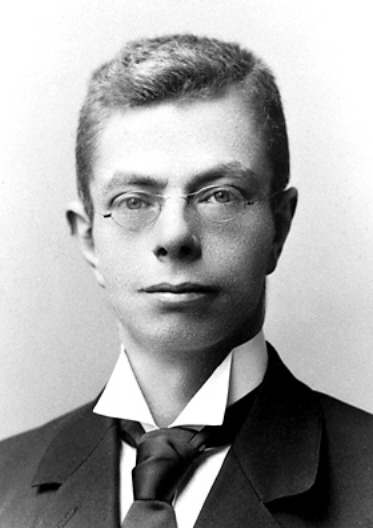
Portrait of Pieter Zeeman
. Source. The Zeeman effect connects a laboratory magnetic field to the frequencies and wave polarization of light emitted by chemical atoms. Its experimental history makes the viewing direction and spectral resolving power essential to the inference.
A physicist who investigated magnetism, piezoelectricity and radioactivity. He built delicate balances, electrometers and piezoelectric crystals; this work on instruments helped make weak electrical effects measurable. With Marie Curie, he investigated radioactive substances under difficult laboratory conditions. The Curie ionization-current measurement illustrates how such instrumentation can turn a small signal into a quantitative comparison.[ref]
Pierre Curie - Biographical. Nobel Lectures, Physics 1901–1921; Biographical identity and professional specialization

Portrait of Pierre Curie
. Source. A physicist and chemist whose investigation of radioactivity joined sensitive measurement to chemical separation. She moved from Warsaw to Paris to study, later becoming a professor of physics. The Curie ionization-current measurement shows the experimental craft behind the work: balancing a tiny electric current against a calibrated electric charge. She shared the 1903 Nobel Prize in Physics and received the 1911 prize in chemistry.[ref]
Marie Curie - Biographical. Nobel Lectures, Physics 1901–1921; Biographical identity and professional specialization

Portrait of Marie Curie
. Source. A physicist whose uranium experiments helped establish radioactivity. His 1896 photographic plate tests separated exposure to the material from immediate illumination; the cautious interpretation in his report is part of the story of Becquerel's uranium-radiation experiment. He held the chair of applied physics at the Paris Museum of Natural History.[ref]
Henri Becquerel - Biographical. Nobel Lectures, Physics 1901–1921; Biographical identity and professional specialization
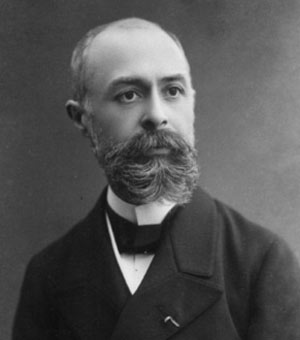
Portrait of Henri Becquerel
. Source. Walther Gerlach and Otto Stern sent a neutral silver atomic beam through a nonuniform magnetic field. Its deposited trace separated into discrete components instead of the continuous range expected from an elementary classical orientation model. The magnetic field gradient converts different magnetic moment projections into distinct trajectories; a uniform magnetic field lacks the required separating force. The Stern-Gerlach experiment thus makes the field geometry essential to the observation, while its modern spin interpretation differs from the original expectations.[ref]
Der experimentelle Nachweis der Richtungsquantelung im Magnetfeld by Walther Gerlach and Otto Stern. Original experiment and beam-deposition result
A physicist.[ref]
https://www.physik.lmu.de/de/quantenjahr-2025/geschichte-der-quantenphysik/. Biographical identity and professional specialization
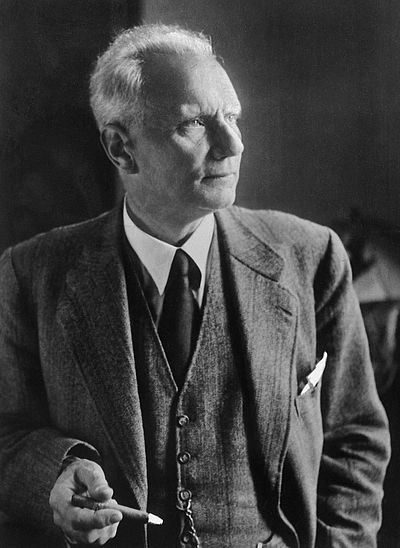
Portrait of Walther Gerlach
. The Stern-Gerlach experiment, with Otto Stern, sent a neutral silver atomic beam through a nonuniform magnetic field and recorded its deposition pattern.
A physicist.[ref]
https://www.nobelprize.org/prizes/physics/1906/thomson/biographical/. Biographical identity and professional specialization
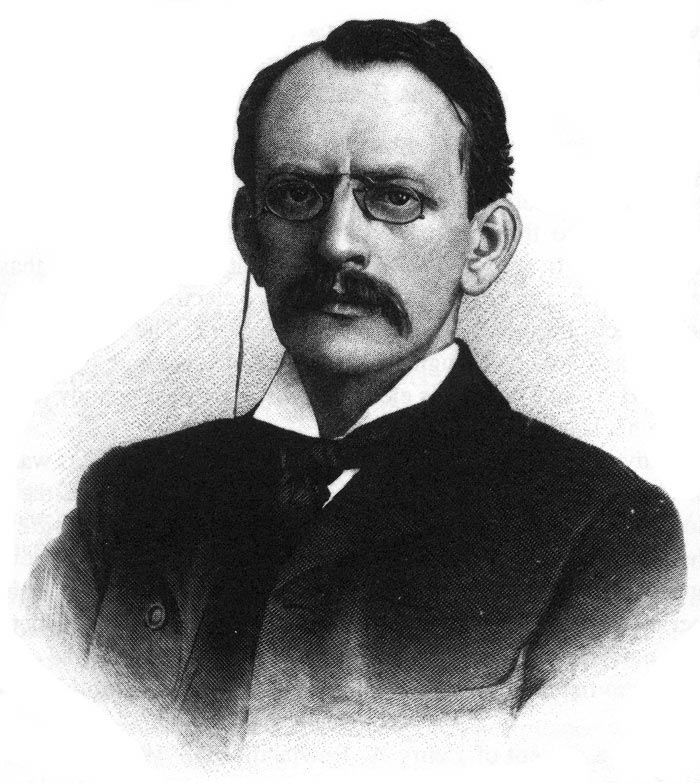
Portrait of Joseph John Thomson
. Source. The Thomson charge-to-mass experiment used electric and magnetic deflections of cathode rays to investigate their charged constituents. It determines a charge-to-mass ratio; separating electric charge from mass requires additional information.
Johannes Stark measured the splitting of atomic spectral lines in a strong electric field. The Stark effect connects that applied field with changes in atomic energy levels and therefore the frequencies of emitted light. Resolving the splitting requires control of the electric field, the emitting region and the spectral resolution. Different observed components need not shift equally: the pattern tests how the electric perturbation changes the available quantum states, rather than merely showing that the light source is affected.[ref]
Observation of the Separation of Spectral Lines by an Electric Field by Johannes Stark. 1913 experimental communication
[ref]Structural and Spectral Changes of Chemical Atoms by Johannes Stark. Nobel lecture: electric-field effects on spectra

Portrait of Johannes Stark
. A. B. Lagrelius & Westphal, Stockholm; Les Prix Nobel 1919 (1920), p. 121; Nobel Foundation source. Commons PD-Sweden photograph claim. File requests an additional United States public-domain tag; worldwide status is not asserted., via Wikimedia Commons. Source.Carl David Anderson identified the Positron through curved tracks in a cloud chamber. A lead plate changed a particle's momentum, helping determine its direction of travel from the curvature on either side. The combined curvature and range excluded a proton interpretation for the light positively charged particle. His 1933 paper separates the measured charge and mass constraints from speculative explanations then considered for the particle's origin.[ref]
The Positive Electron by Carl David Anderson. 1933, lead-plate photographs, direction of travel and range/curvature argument
A physicist.[ref]
Carl David Anderson by William Hayward Pickering. Biographical Memoirs: Volume 73; Independent professional biography and identity

Portrait of Carl David Anderson
. Unidentified photographer; Smithsonian Institution Libraries, Dibner Library, Scientific Identity portrait collection, SIL14-A5-01. No known copyright restrictions: Smithsonian / Flickr Commons institutional determination; not a Creative Commons license or a blanket public-domain assertion., via Wikimedia Commons. Source.A physicist.[ref]
https://www.nobelprize.org/nomination/archive/show.php?id=5348. Independent professional biography and identity

Portrait of James Chadwick
. Los Alamos National Laboratory. Unless otherwise indicated, this information has been authored by an employee or employees of the Los Alamos National Security, LLC (LANS), operator of the Los Alamos National Laboratory under Contract No. DE-AC52-06NA25396 with the U.S. Department of Energy. The U.S. Government has rights to use, reproduce, and distribute this information. The public may copy and use this information without charge, provided that this Notice and any statement of authorship are reproduced on all copies. Neither the Government nor LANS makes any warranty, express or implied, or assumes any liability or responsibility for the use of this information. Los Alamos National Laboratory attribution permission, via Wikimedia Commons. Source.Walther Bothe developed the coincidence counting for connecting signals from separate particle detectors. Requiring pulses within a short time window helps distinguish a common physical event from unrelated counts. For independent rates and , accidental coincidences scale with and the window duration; narrowing that duration therefore reduces a calculable background. The method turns timing information into evidence about particle paths and correlated processes, rather than relying on the count in one detector alone.[ref]
The Coincidence Method by Walther Bothe. Authored 1954 award lecture, printed pp. 271–275; accidental-rate scaling explained here
A physicist.[ref]
https://www.mpg.de/957380/10_person3-1954. Independent professional biography and identity

Portrait of Walther Bothe
. Nobel Foundation; individual photographer unidentified. Commons PD-Sweden photograph claim. File requests an additional United States public-domain tag; worldwide status is not asserted., via Wikimedia Commons. Source.Irène Joliot-Curie and Frédéric Joliot identified induced radioactivity by following the Positrons emitted from irradiated light elements after the source was removed. Their 1934 paper reports continuing activity in aluminium, boron and magnesium, with different decay times. The falling count rate is a readout of unstable products left in the material, connecting controlled irradiation with the creation and measurement of radioactive isotopes.[ref]
Artificial Production of a New Kind of Radio-Element by Frédéric Joliot and Irène Joliot-Curie. 1934 abstract, irradiated aluminium, boron and magnesium and their continuing activity
A physicist.[ref]
https://www.nobelprize.org/prizes/chemistry/1935/joliot-curie/biographical/?print=1. Independent professional biography and identity

Portrait of Irène Joliot-Curie
. Studio Harcourt / Wellcome Collection, via Wikimedia Commons. Public domain in France and the United States according to the actual File page’s PD-France and PD-1996 licensing declarations; attribution retained. Source usage terms, via Wikimedia Commons. Source.An experimental nuclear physicist who studied collisions of neutrons with nitrogen nuclei in 1932. Tracks in an expansion cloud chamber revealed both recoils and disintegration events, allowing charged reaction products to expose an otherwise invisible neutral projectile. The experiment established a concrete route to studying nuclear reactions initiated by neutrons.[ref]
The collisions of neutrons with nitrogen nuclei by Norman Feather. Introduction, cloud-chamber apparatus and analysis of disintegration tracks
Charles-Édouard Guillaume investigated iron-nickel alloys whose thermal changes are unusually small. Invar has low thermal expansion over a useful temperature range, making it valuable for dimensional references. Elinvar addresses a related metrological problem through a small temperature dependence of elasticity, useful when an instrument's behavior depends on an elastic element. These materials show why composition and magnetic behavior can matter as much as geometrical precision when building a stable measuring instrument.[ref]
Invar and Elinvar by Charles-Édouard Guillaume. Nobel lecture, alloy properties and precision-instrument applications
A physicist.[ref]
https://library.ethz.ch/en/collections-and-archives/short-portraits/guillaume-charles-edouard-1861-1938.html. Independent professional biography and identity
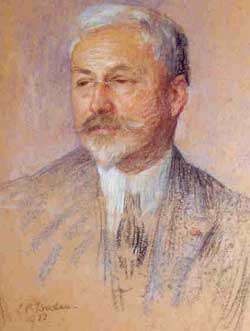
Portrait of Charles-Édouard Guillaume
. Source. An experimental nuclear physicist who, with Walther Bothe, investigated penetrating radiation produced by bombarding beryllium with alpha particles. Initially interpreted as gamma rays, the radiation motivated tests of the recoil it produced in other materials. James Chadwick's subsequent experiments identified the neutron, illustrating why observing penetrating radiation and correctly identifying its carrier were separate experimental steps.[ref]
The Existence of a Neutron by James Chadwick. Opening discussion of Bothe–Becker beryllium radiation and its interpretation
Owen Willans Richardson studied thermionic emission, the release of electrons from a heated surface. In the ideal Richardson form, the emitted current density is , where is a work function, is temperature and is an appropriate prefactor. A plot of against has slope under the model's surface and collection assumptions. This turns a strong temperature dependence into a way to infer the electronic escape barrier.[ref]
Thermionic Phenomena and the Laws which Govern Them by Owen Willans Richardson. Nobel lecture: temperature dependence and electron-emission laws
Physics.[ref]
https://makingscience.royalsociety.org/people/na7014/owen-willans-richardson. Independent professional profile
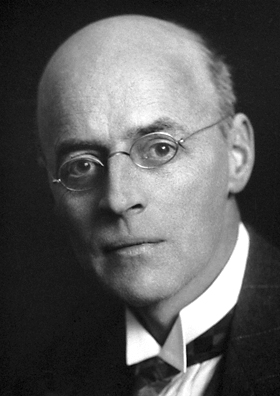
Portrait of Owen Willans Richardson
. Source. An experimental atomic physicist who coauthored measurements of the gravitational deflection of long atomic beams. Slower potassium and caesium chemical atoms spend longer in flight and fall farther; the beam's vertical intensity profile therefore reveals its velocity distribution. The experiment turned a small gravitational displacement into a measurement of thermal beam statistics.[ref]
The Free Fall of Atoms and the Measurement of the Velocity Distribution in a Molecular Beam of Cesium Atoms by Immanuel Estermann, Oliver Cecil Simpson, and Otto Stern. Abstract: gravitational deflection and modified Maxwellian velocity distribution
Oliver Cecil Simpson coauthored atomic-beam measurements using gravitational free fall to investigate the velocity distribution of cesium atoms. Gravity makes a particle's displacement depend on its travel time, so slower atoms are deflected more during a given path. For an ideal horizontal flight of length at speed , the downward displacement is . The measurement connects a beam's spatial distribution with its microscopic velocities, using gravity as a timing-dependent probe.[ref]
Physics and solid state science.[ref]
https://physicstoday.aip.org/obituaries/oliver-cecil-simpson. Independent professional profile
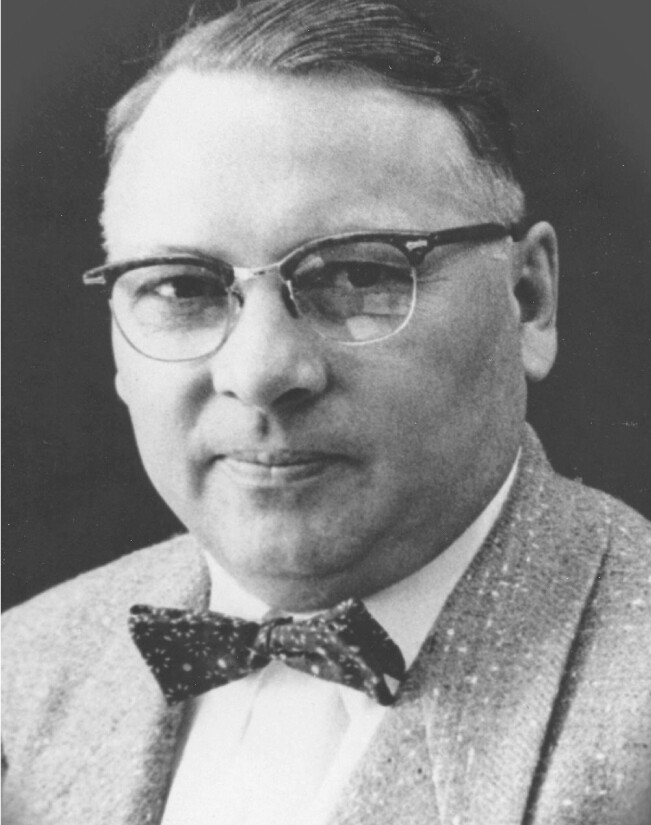
Portrait of Oliver Cecil Simpson
. Pinned article: Introduction to the OurBigBook Project
Welcome to the OurBigBook Project! Our goal is to create the perfect publishing platform for STEM subjects, and get university-level students to write the best free STEM tutorials ever.
Everyone is welcome to create an account and play with the site: ourbigbook.com/go/register. We belive that students themselves can write amazing tutorials, but teachers are welcome too. You can write about anything you want, it doesn't have to be STEM or even educational. Silly test content is very welcome and you won't be penalized in any way. Just keep it legal!
Intro to OurBigBook
. Source. We have two killer features:
- topics: topics group articles by different users with the same title, e.g. here is the topic for the "Fundamental Theorem of Calculus" ourbigbook.com/go/topic/fundamental-theorem-of-calculusArticles of different users are sorted by upvote within each article page. This feature is a bit like:
- a Wikipedia where each user can have their own version of each article
- a Q&A website like Stack Overflow, where multiple people can give their views on a given topic, and the best ones are sorted by upvote. Except you don't need to wait for someone to ask first, and any topic goes, no matter how narrow or broad
This feature makes it possible for readers to find better explanations of any topic created by other writers. And it allows writers to create an explanation in a place that readers might actually find it.
Figure 1. Screenshot of the "Derivative" topic page. View it live at: ourbigbook.com/go/topic/derivativeVideo 2. OurBigBook Web topics demo. Source. - local editing: you can store all your personal knowledge base content locally in a plaintext markup format that can be edited locally and published either:This way you can be sure that even if OurBigBook.com were to go down one day (which we have no plans to do as it is quite cheap to host!), your content will still be perfectly readable as a static site.
- to OurBigBook.com to get awesome multi-user features like topics and likes
- as HTML files to a static website, which you can host yourself for free on many external providers like GitHub Pages, and remain in full control

Figure 2. You can publish local OurBigBook lightweight markup files to either OurBigBook.com or as a static website.
Figure 3. Visual Studio Code extension installation.
Figure 5. . You can also edit articles on the Web editor without installing anything locally. Video 3. Edit locally and publish demo. Source. This shows editing OurBigBook Markup and publishing it using the Visual Studio Code extension. 
- Infinitely deep tables of contents:




All our software is open source and hosted at: github.com/ourbigbook/ourbigbook
Further documentation can be found at: docs.ourbigbook.com
Feel free to reach our to us for any help or suggestions: docs.ourbigbook.com/#contact