
Richard Rusby 2026-10-14
Jonathan Pearce Created 2026-10-14 Updated 2026-11-05
Jonathan Pearce is a metrologist whose research develops practical temperature measurement with contact sensors. His NPL work includes improved thermocouples, models of impurity effects during metal solidification, and methods for detecting or reducing sensor calibration drift. These connect the physics of materials with the reliability of measurements in industrial conditions.[ref]
https://www.npl.co.uk/our-people/jonathan-pearce. Research highlights: thermocouples, high-temperature standards, impurity modelling and self-validating sensors
In the coauthored Guide on Secondary Thermometry: Industrial Platinum Resistance Thermometers by Jonathan Pearce and others, an important measurement problem is resistance thermometer self-heating: the electrical measuring current heats the sensor whose temperature is being inferred. The guide describes estimating the zero-current resistance from measurements at different currents, while accounting for the surrounding medium. Its treatment of electrical resistance in the leads also explains why four-terminal sensing differs from two-wire measurements. These details show how measurement uncertainty arises from the complete sensor-and-readout arrangement.[ref]
Homepage: www.npl.co.uk/our-people/jonathan-pearce
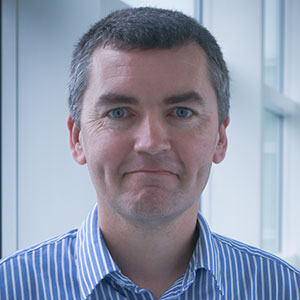
Portrait of Jonathan Pearce
. Portrait identified on the National Physical Laboratory profile. E. Y. Xu 2026-10-14
C. D. Vaughn 2026-10-14
Billy W. Mangum 2026-10-14
Gregory F. Strouse 2026-10-14
David J. Livigni Created 2026-10-14 Updated 2026-11-05
David J. Livigni coauthored a comparison of two cryogenic radiometers at NIST. Comparing independently realized optical-power measurements tests consistency and helps identify systematic contributions to measurement uncertainty.[ref]
Comparison of Two Cryogenic Radiometers at NIST by Jeanne M. Houston and others. author list and the described study’s abstract or introductory account
John H. Lehman 2026-10-14
Frank C. Maring 2026-10-14
Robert Lee (optical and force metrology) 2026-10-14
Joshua A. Hadler 2026-10-14
Paul A. Williams Created 2026-10-14 Updated 2026-10-31
Ah-Hyung Alissa Park Created 2026-10-14 Updated 2026-11-05
Ah-Hyung Alissa Park is a chemical engineer whose research concerns carbon capture and storage, together with carbon dioxide utilization and the development of materials and processes for more sustainable energy systems. Her UCLA profile describes nanohybrid materials for carbon dioxide capture and conversion, together with work on chemistry of carbonates, recovery of critical minerals and rare-earth elements.[ref]
The scientific connection is between material structure and a chemical process: the way a material binds or reacts with carbon dioxide determines how it can be separated, transformed or stored. Evaluating such a process also requires tracking material flows and energy use through the larger system. This links surface chemistry, chemical reaction engineering and the assessment of alternative process designs rather than treating capture alone as the complete objective.[ref]

Portrait of Ah-Hyung Alissa Park
. Institutional portrait identified on the UCLA Samueli faculty profile. Anthony E. Butterfield Created 2026-10-14 Updated 2026-11-05
Anthony E. Butterfield, also known as Tony Butterfield, is a chemical engineer whose work combines mathematical modeling, experimental measurement and education. His historical University of Utah biography describes a master's project on finite element simulation of cell cycle kinetics and doctoral work on model-based filtering and control of individual molecular motors.[ref]
Biography of Anthony E. Butterfield. University of Utah, historical biography: master's and doctoral research
These topics illustrate how chemical engineering can connect a small physical system with an inferred mathematical description: measurements are interpreted through a mathematical model, and a controller uses that description to influence the system. His outreach material also connects chemistry with measurements students can reason about; Carbon Captured Chalk by Tony Butterfield is one such educational contribution. The research and teaching examples concern the same general skill of relating a model to observable behaviour.

Portrait of Anthony E. Butterfield
. Institutional portrait identified on the University of Utah chemical engineering outreach website. Yannis G. Kevrekidis Created 2026-10-14 Updated 2026-11-05
Yannis G. Kevrekidis is a chemical engineer whose research connects dynamical systems, multiscale modeling and machine learning. His institutional research description emphasizes how interactions at small scales produce larger-scale patterns, instabilities and dynamics in physical, chemical and biological systems.[ref]
With collaborators he developed equation-free modeling, in which detailed simulations are used to investigate coarse-scale behaviour even when a closed equation for the coarse variables is unavailable. The motivating distinction is between possessing a simulator of microscopic dynamics and possessing a compact equation for a few large-scale observables. This places numerical analysis, the choice of state variables and the extraction of useful descriptions at the centre of multiscale modeling.[ref]
Research profile of Yannis G. Kevrekidis. Equation-free modeling and its connections with modern machine learning

Portrait of Yannis G. Kevrekidis
. Portrait identified on the Johns Hopkins University profile. W. Haase Created 2026-10-14 Updated 2026-11-05
Coauthor of experiments on inositol-trisphosphate effects in isolated pancreatic-cell fractions. The study connected a candidate intracellular messenger with responses in selected cellular components; the published initials are retained without an unverified identity expansion.[ref]
Kary Mullis Created 2026-10-14 Updated 2026-11-05
Kary Mullis developed the polymerase chain reaction, which amplifies a selected DNA region through repeated copying cycles. Primers delimit the copied region, and newly produced strands become templates in later cycles.
This recursive use of products can produce exponential amplification over an appropriate range. Detection still depends on target specificity and contamination controls, because amplification multiplies unintended templates as well.[ref]

Portrait of Kary Mullis
. Photograph by Dona Mapston, shown in the crop provided by Wikimedia Commons, under CC BY-SA 3.0. Source.
Eduard Buchner Created 2026-10-14 Updated 2026-11-05
Eduard Buchner demonstrated fermentation in a cell-free extract. Removing intact yeast cells while retaining activity showed that the biochemical transformation did not require the continued presence of an intact cell.
Filtration and residual-cell controls distinguish activity of the extract from activity of surviving cells. The result helped establish that a cellular process can be studied through its chemical components.[ref]
Cell-free fermentation by Eduard Buchner. Nobel lecture, pages 110–114: extraction, filtration, and residual-cell controls

Portrait of Eduard Buchner
. Photograph reproduced in Les Prix Nobel (1907), credited to the Nobel Foundation on Wikimedia Commons, which identifies it as public domain. Source.
R. F. Irvine Created 2026-10-14 Updated 2026-11-05
R. F. Irvine coauthored experiments on inositol trisphosphate and isolated pancreatic subcellular fractions. Calcium-release measurements were compared with fractionation and marker information.
This combination links a soluble second messenger to an intracellular calcium store. A response measured in a fraction needs localization evidence because the fraction can contain more than one membrane population.[ref]
Effect of inositol-1,4,5-trisphosphate on isolated subcellular fractions of rat pancreas by H. Streb and others. Abstract: release, separation, and marker correlations
Homepage: www.phar.cam.ac.uk/research/Irvine
Edwin G. Krebs Created 2026-10-14 Updated 2026-11-05
Edwin G. Krebs coauthored characterization of a cyclic-AMP-dependent protein kinase from skeletal muscle. The study links a small-molecule signal with phosphorylation of downstream protein targets.
A kinase cascade can amplify and organize regulation because one activated enzyme acts on multiple target molecules. The chemical event is transfer of phosphate, whereas the physiological effect depends on which target is modified.[ref]
An adenosine 3′,5′-monophosphate-dependant protein kinase from rabbit skeletal muscle by D. A. Walsh and others. 1968, Summary and introduction
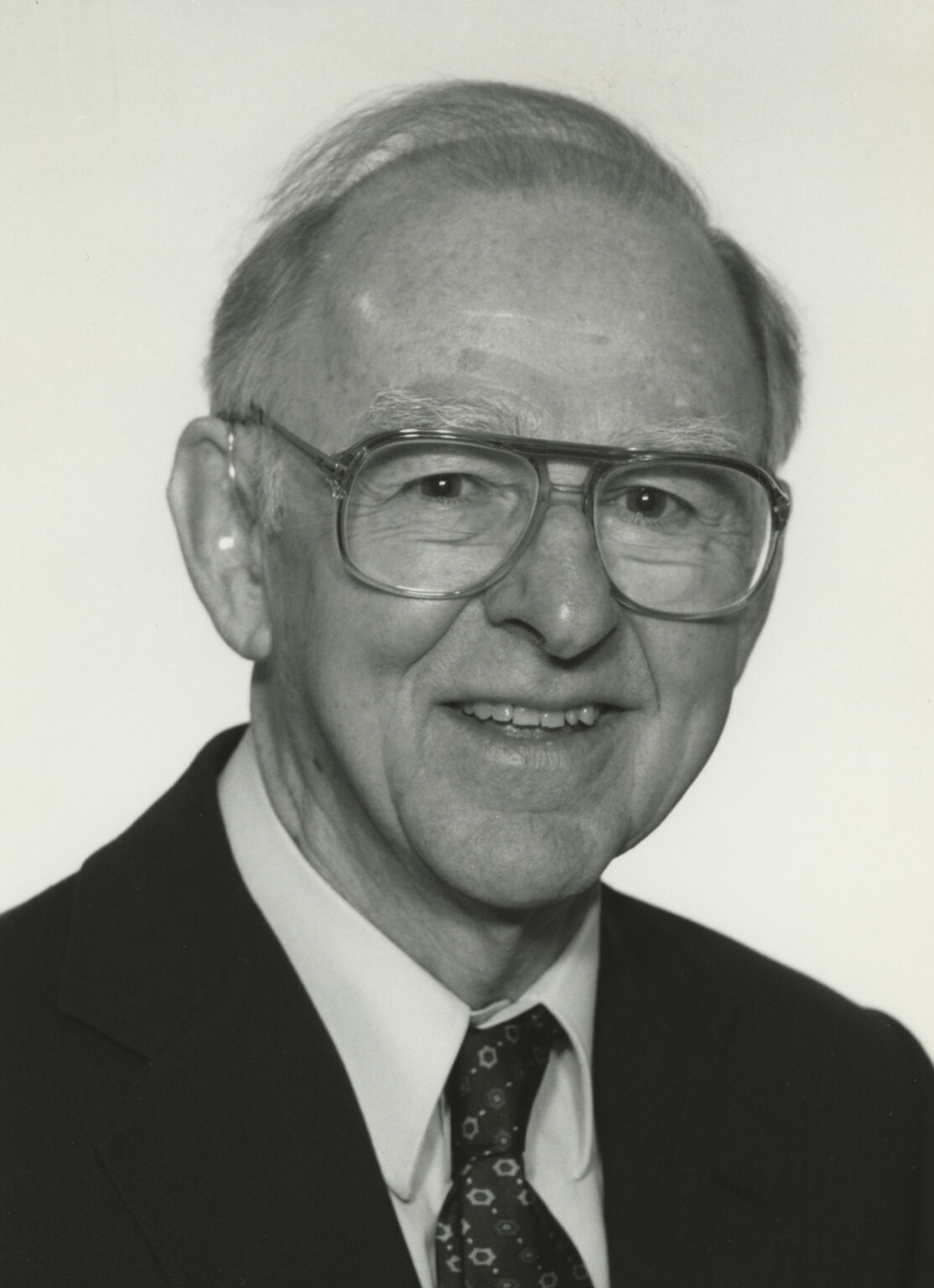
Portrait of Edwin G. Krebs
. Photograph identified on the named portrait page. There are unlisted articles, also show them or only show them.