
Guglielmo Marconi developed wireless telegraphy by coordinating the transmitter, propagation and receiver as one experimental system. His lecture describes a coherer containing nickel and silver filings, connected to a tuned circuit and a relay. The relay operates a recorder and a tapper that resets the detector, allowing successive signals to be registered. Long and short wave trains encode telegraphic signs. Improving detector reliability and resonance of electrical circuits therefore mattered alongside producing radiation at the transmitter.[ref]
Wireless Telegraphic Communication by Guglielmo Marconi. 1909 lecture, p. 197, Fig. 1 and receiver/reset description
A physicist.[ref]
https://magazines.hachettelearning.com/magazine/physics-review/19/2/the-nobel-prize-in-1909/. Independent biographical identity and professional specialization

Portrait of Guglielmo Marconi
. Source. 
Wireless telegraphy links the dynamics of a transmitter, propagation and the response of a receiver. A successful detector reading depends on that complete chain, rather than on the transmitter alone.
Philipp Lenard investigated cathode rays by allowing them to leave a discharge tube through a thin window. Studying their effects beyond the original discharge made their penetration, absorption and ability to ionize other material experimentally accessible. These measurements helped separate the properties of the rays from the particular gas discharge that generated them. His lecture describes the apparatus and the comparison of different materials, connecting an invisible beam with measurable fluorescence and electrical effects.[ref]
On Cathode Rays by Philipp Lenard. 1906 Nobel lecture, window apparatus and material-dependent effects
A physicist.[ref]
https://www.uni-heidelberg.de/en/university/history/heidelberg-university-nobel-laureates?menu=2. Independent biographical identity and professional specialization

Portrait of Philipp Lenard
. Photographer unidentified; AIP Emilio Segrè Visual Archives, via Encyclopaedia Britannica, as recorded on Commons. Commons claims expiry for an anonymous work under its European anonymous-work public-domain rationale., via Wikimedia Commons. Source.
A physicist.[ref]
https://www.uni-wuerzburg.de/uniarchiv/persoenlichkeiten/gelehrtentafeln/wilhelm-wien/. Independent biographical identity and professional specialization
Wien's displacement law connects a thermal spectrum's peak position to temperature. Specifying whether the spectrum is expressed per unit wavelength or per unit frequency is essential to stating which peak is meant.

Portrait of Wilhelm Wien
. Unknown photographer; Nobel Prize photograph, 1911, published in Les Prix Nobel (1912), p. 62. Public domain in Sweden (PD-Sweden photograph). Source usage terms, via Wikimedia Commons. Source.

A physicist.[ref]
A propos de Gabriel Lippmann by Centre de Recherche Public - Gabriel Lippmann. Independent biographical identity and professional specialization

Portrait of Gabriel Lippmann
. Source. 
Lippmann photography records colour through the depth structure of an exposed emulsion. Its account connects a standing wave to a reflected optical spectrum.
An experimental atomic physicist whose work concerns the Zeeman effect and the Paschen-Back effect. At sufficiently strong magnetic fields, magnetic coupling competes with the internal coupling of angular momenta, changing the pattern of spectral lines. His book with Alfred Landé joins this atomic interpretation to the practical apparatus and analysis needed to resolve the splittings.[ref]
Zeemaneffekt und Multiplettstruktur der Spektrallinien by Ernst Back and Alfred Landé. Contents: anomalous Zeeman structure, Paschen-Back effect pp. 62–82 and apparatus pp. 112–151
Friedrich Paschen investigated atomic spectra in strong magnetic fields. The Paschen-Back effect, associated with his work with Ernst Back, occurs when the external magnetic interaction competes with internal spin-orbit coupling. The weak-field description through total angular momentum then ceases to provide the simplest labels. Separate orbital angular momentum and spin projections become useful, changing the pattern of spectral lines. Comparing weak- and strong-field patterns tests the hierarchy of interactions within an atom.[ref]
A physicist.[ref]
https://uni-tuebingen.de/en/3260. Biographical identity and professional specialization

Portrait of Friedrich Paschen
. Source. 
Alfred Landé organized the magnetic response of coupled atomic angular momenta. The Landé g-factor relates a magnetic energy shift to the projection of total angular momentum, accounting for both orbital angular momentum and spin. For LS coupling, when , neglecting the small correction to the electron spin g-factor. For and , it gives . Different atomic terms therefore split differently in a weak magnetic field.[ref]
Zeemaneffekt und Multiplettstruktur der Spektrallinien by Ernst Back and Alfred Landé. Anomalous Zeeman structure and coupling interpretation
A physicist.[ref]
https://history.aip.org/history/catalog/icos/3959.html. Biographical identity and professional specialization

Portrait of Alfred Landé
. Unknown photographer; private collection of the Landé family; portrait dated 1940. Public domain (author life plus 70 years, PD-old as tagged on Commons). Source usage terms, via Wikimedia Commons. Source.
An atomic physicist who coauthored a NIST reference on atomic spectroscopy with William C. Martin. Its treatment of transition probabilities distinguishes the probability of an atomic transition from the population of its initial energy level. This matters because the strength of an observed spectral line depends on both atomic properties and the conditions of the emitting sample.[ref]
An atomic physicist who coauthored a NIST compendium of atomic spectroscopy with Wolfgang Wiese. It connects the labeling of energy levels with spectral lines, transition strengths and selection rules. These conventions allow a measured spectrum to be compared with tabulated atomic data without confusing a level designation, a wavelength and an intensity.[ref]
A radiation physicist who coauthored NIST reference tables for X-ray and gamma ray interactions with John H. Hubbell. The mass energy-absorption data use his calculations to account for how much photon energy is retained after interaction processes. This supports radiation-energy deposition calculations alongside the separate mass attenuation coefficient used for beam transmission.[ref]
Tables of X-Ray Mass Attenuation Coefficients and Mass Energy-Absorption Coefficients by John H. Hubbell and Stephen M. Seltzer. Database abstract: Seltzer calculations and distinction between coefficient tables
A radiation physicist who coauthored NIST tables of mass attenuation coefficients and mass energy-absorption coefficients with Stephen M. Seltzer. The tables connect X-ray and gamma ray photon energy to interactions in elements and mixtures. They distinguish removal of photons from a beam from absorption of their energy, a difference needed when calculating shielding or deposited radiation energy.[ref]
Tables of X-Ray Mass Attenuation Coefficients and Mass Energy-Absorption Coefficients by John H. Hubbell and Stephen M. Seltzer. Database abstract: attenuation and energy-absorption tables for elements and radiological mixtures
A particle physicist who wrote a historical analysis of the Stern-Gerlach experiment. It distinguishes the experiment's original proposal and interpretation from its later connection with electron spin, and discusses the different problem of performing an analogous measurement on free electrons. This helps prevent later quantum concepts from being read back into the original experimental argument.[ref]
The Stern-Gerlach Experiment and the Electron Spin by Sandip Pakvasa. Abstract: proposal, reception, interpretation and free-electron question
Martin Bauer coauthored a particle-physics treatment of dark matter with Tilman Plehn. Their calculations connect proposed particle interactions with four distinct tests: cosmological abundance, indirect radiation signals, direct scattering and collider production. A model must relate these through common masses and coupling constants, rather than treating each possible signal independently. The text makes that connection explicit, showing how the same hypothetical interaction can be constrained by very different measurements.[ref]
Yet Another Introduction to Dark Matter by Martin Bauer and Tilman Plehn. Abstract and organization: relic density, indirect/direct detection and collider searches
A physicist.[ref]
https://www.humboldt-foundation.de/vernetzen/recherche-im-humboldt-netzwerk/einzelansicht/1146579/prof-dr-martin-bauer. Biographical identity and professional specialization
Otto Stern developed molecular-beam methods that infer microscopic properties from controlled particle trajectories. With Walther Gerlach, he sent a neutral silver beam through a magnetic field gradient, producing discrete deposited components. The beam's translational motion carries information about its internal magnetic moment projection to a macroscopic detector. Changing the magnetic field geometry or the beam preparation changes that mapping, making the apparatus part of the interpretation of the Stern-Gerlach experiment.[ref]
Der experimentelle Nachweis der Richtungsquantelung im Magnetfeld by Walther Gerlach and Otto Stern. Original beam-splitting experiment
[ref]The Method of Molecular Rays by Otto Stern. Nobel lecture: trajectory methods and magnetic-moment measurements
A physicist.[ref]
Otto Stern - Facts by Nobel Prize Outreach. Biographical identity and professional specialization
The Stern-Gerlach experiment with Walther Gerlach tested the deflection of a neutral silver atomic beam in a nonuniform magnetic field.

Portrait of Otto Stern
. From Nobelprize.org; photographer not identified on the Commons file page. Public domain in Sweden under the conditions stated on the Commons file page. Source usage terms, via Wikimedia Commons. Source.
A physicist.[ref]
Ernst Ruska by Technische Universität Berlin. Ernst Ruska: electron-optics research, microscope development and university career
The early two-stage electron microscope experiment investigates how magnetic electron lenses can form a magnified image. The electron microscope article distinguishes magnification from electron microscope resolution.

Statue of Ernst Ruska in Jena
. Statue of Ernst Ruska in Jena-Burgau, photographed by Adrio on 7 May 2024; the file does not identify the sculptor. Commons cites German freedom of panorama for the permanent public sculpture. Creative Commons Attribution-ShareAlike 4.0 International for photograph; Commons also cites German freedom of panorama for the permanent public sculpture., via Wikimedia Commons. Source.
Pieter Zeeman observed changes in emitted light when its source was placed in a magnetic field. Resolving the components and their wave polarization connected the spectral pattern with the direction of observation. The magnetic field changes atomic energy levels, while selection rules determine which polarized components are visible. Comparing observations along and across the magnetic field therefore tests more than a simple increase in line width: it connects the Zeeman effect to both atomic structure and experimental geometry.[ref]
On the Influence of Magnetism on the Nature of the Light Emitted by a Substance (Part I) by Pieter Zeeman. Original observation and spectral changes
[ref]A physicist.[ref]
https://www.nobelprize.org/nomination/archive/show.php?id=7221. Biographical identity and professional specialization
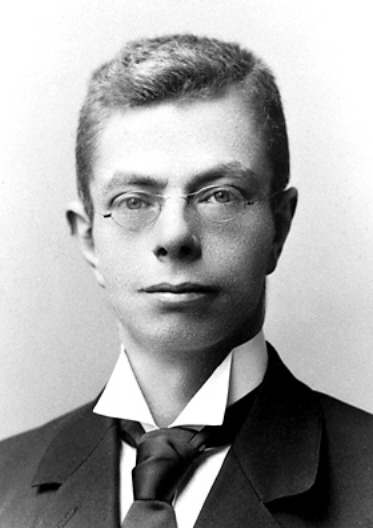
Portrait of Pieter Zeeman
. Source. 
The Zeeman effect connects a laboratory magnetic field to the frequencies and wave polarization of light emitted by chemical atoms. Its experimental history makes the viewing direction and spectral resolving power essential to the inference.
A physicist who investigated magnetism, piezoelectricity and radioactivity. He built delicate balances, electrometers and piezoelectric crystals; this work on instruments helped make weak electrical effects measurable. With Marie Curie, he investigated radioactive substances under difficult laboratory conditions. The Curie ionization-current measurement illustrates how such instrumentation can turn a small signal into a quantitative comparison.[ref]
Pierre Curie - Biographical. Nobel Lectures, Physics 1901–1921; Biographical identity and professional specialization

Portrait of Pierre Curie
. Source. 
A physicist and chemist whose investigation of radioactivity joined sensitive measurement to chemical separation. She moved from Warsaw to Paris to study, later becoming a professor of physics. The Curie ionization-current measurement shows the experimental craft behind the work: balancing a tiny electric current against a calibrated electric charge. She shared the 1903 Nobel Prize in Physics and received the 1911 prize in chemistry.[ref]
Marie Curie - Biographical. Nobel Lectures, Physics 1901–1921; Biographical identity and professional specialization

Portrait of Marie Curie
. Source. 
A physicist whose uranium experiments helped establish radioactivity. His 1896 photographic plate tests separated exposure to the material from immediate illumination; the cautious interpretation in his report is part of the story of Becquerel's uranium-radiation experiment. He held the chair of applied physics at the Paris Museum of Natural History.[ref]
Henri Becquerel - Biographical. Nobel Lectures, Physics 1901–1921; Biographical identity and professional specialization
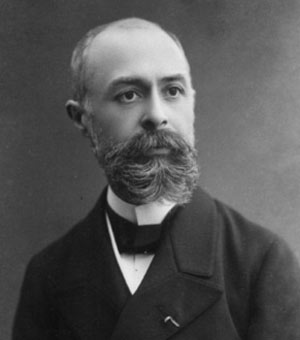
Portrait of Henri Becquerel
. Source. 
Walther Gerlach and Otto Stern sent a neutral silver atomic beam through a nonuniform magnetic field. Its deposited trace separated into discrete components instead of the continuous range expected from an elementary classical orientation model. The magnetic field gradient converts different magnetic moment projections into distinct trajectories; a uniform magnetic field lacks the required separating force. The Stern-Gerlach experiment thus makes the field geometry essential to the observation, while its modern spin interpretation differs from the original expectations.[ref]
Der experimentelle Nachweis der Richtungsquantelung im Magnetfeld by Walther Gerlach and Otto Stern. Original experiment and beam-deposition result
A physicist.[ref]
https://www.physik.lmu.de/de/quantenjahr-2025/geschichte-der-quantenphysik/. Biographical identity and professional specialization
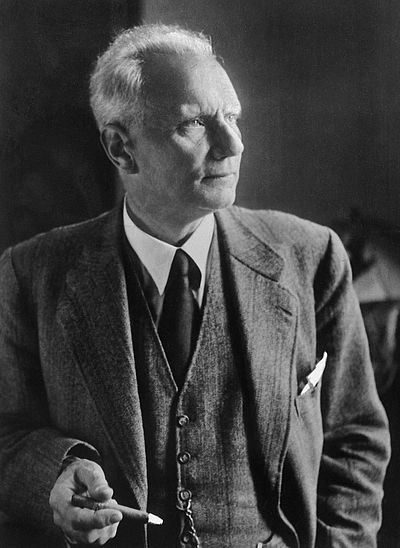
Portrait of Walther Gerlach
. The Stern-Gerlach experiment, with Otto Stern, sent a neutral silver atomic beam through a nonuniform magnetic field and recorded its deposition pattern.
There are unlisted articles, also show them or only show them.