
An experimental nuclear physicist who coauthored the 1957 test of parity conservation in cobalt-60 beta decay. Its directional counting measurement depended on orienting the nuclei at very low temperature. As the sample warmed and orientation was lost, the asymmetry disappeared, linking the observed signal to the nuclear orientation.[ref]

Portrait of Raymond Webster Hayward
. External portrait linked by the National Institute of Standards and Technology institutional exhibit. Source.An experimental nuclear physicist who coauthored the Wu experiment. Comparing beta decay from oriented cobalt-60 nuclei with the opposite orientation tested whether a mirror-reflected process would have the same probability. The observed directional asymmetry showed failure of parity conservation in the weak interaction.[ref]

Portrait of Dale D. Hoppes
. External portrait linked by the National Institute of Standards and Technology institutional exhibit. Source.An experimental nuclear physicist who coauthored the Wu experiment testing parity conservation in beta decay. The collaboration combined low-temperature nuclear orientation with directional radiation counting. Cooling the cobalt-60 sample made it possible to compare emitted electrons with a known nuclear orientation rather than average over random spins.[ref]
The Reversal of Parity Law in Nuclear Physics by National Institute of Standards and Technology. Collaboration list and account of low-temperature nuclear alignment

Portrait of Ralph Percy Hudson
. External portrait linked by the National Institute of Standards and Technology institutional exhibit. Source.An optical physicist who studied luminescence, including its quenching by impurities and concentration changes. His distinction between persistent excited-state emission and other light-generation mechanisms helped frame the analysis of radiation observed by Pavel Cherenkov. Measuring how emission changes with its environment thus served both as a probe of excited matter and as a way to distinguish different physical sources of light.[ref]
Sergey Ivanovich Vavilov by Russian Academy of Sciences. Scientific-work account: quenching, definition of luminescence and Cherenkov investigations
Owen Chamberlain helped establish the antiproton by distinguishing a rare massive negative particle from an intense background of lighter particles. Magnetic analysis fixed momentum, while time-of-flight and Cherenkov radiation measurements constrained speed. Together these quantities tested whether the inferred mass matched that of the proton. His lecture emphasizes both the apparatus and the inference drawn from the particle's existence, separating discovery from later studies of its interactions.[ref]
The early antiproton work by Owen Chamberlain. 1959 lecture, magnetic selection, velocity measurements and antiproton identification
A physicist.[ref]
https://www.nasonline.org/wp-content/uploads/2024/06/chamberlain-owen.pdf. Independent professional profile

Portrait of Owen Chamberlain
. Nobel Foundation; individual photographer unidentified. Commons PD-Sweden designation in primary File category and upload history. No independent United States or worldwide determination., via Wikimedia Commons. Source.
An experimental particle physicist who contributed to the discovery of the antiproton. A negative particle had to be distinguished from the much more abundant light particles with the same electric charge: momentum selection and velocity-sensitive detectors together established its large mass. Instrument design therefore formed part of identifying the new particle, alongside its production in an accelerator.[ref]
https://www2.lbl.gov/Science-Articles/Archive/Claude-Wiegand-obit.html. Berkeley Lab account: central role and contributions to the 1955 antiproton experiment
Robert Hofstadter investigated nuclear charge distributions through energetic electron scattering. His 1956 review compares electrons scattered from helium gas with predictions for point charges and several extended charge profiles. Beyond about , the elastic scattering was over a hundred times smaller than the point-charge prediction. The extracted nuclear charge form factor distinguishes candidate spatial profiles, connecting measured angular counts with a model of nuclear size and shape.[ref]
Electron Scattering and Nuclear Structure by Robert Hofstadter. pp. 237–238, Figs. 32–33, helium angular distribution and alternative charge-profile fits
A physicist.[ref]
https://physics.stanford.edu/people/robert-hofstadter. Independent professional profile

Portrait of Robert Hofstadter
. Nobel Foundation, 1961 Nobel portrait; individual photographer unspecified. Public domain in Sweden according to the Commons Swedish-photograph template. Source usage terms, via Wikimedia Commons. Source.
A particle physicist who coauthors reference material on the passage of particles through matter with Spencer Klein. Their review connects stopping power, radiation length and electromagnetic showers to practical detector calculations. These quantities translate a material thickness and incident particle energy into estimates of signal formation and shower development.[ref]
Passage of Particles Through Matter by Donald E. Groom and Spencer Klein. Sections 34.2, 34.4.2 and 34.5: stopping power, radiation length and cascades
An experimental particle physicist who coauthors the Particle Data Group review of particle passage through matter with Donald E. Groom. It relates energy loss, multiple scattering and radiation processes to the signals and limitations of particle detectors. The same relations let an experimenter estimate whether a charged track will be detectable, stopped or significantly deflected.[ref]
Passage of Particles Through Matter by Donald E. Groom and Spencer Klein. Sections 34.2–34.4: stopping, multiple scattering and photon/electron interactions
An experimental physicist who coauthored the 1966 zero sound propagation experiment with Ansel Cochran Anderson and John Charles Wheatley. Sound measurements in very cold helium-3 tested whether collective density motion survives in the collisionless regime predicted for a Fermi liquid.[ref]
Propagation of Zero Sound in Liquid He3 at Low Temperatures by William Russell Abel and others. Byline and zero-sound propagation study
An experimental condensed matter physicist who coauthored an observation of zero sound in helium-3. The experiment probed a collective density wave in a regime where quasiparticle collisions are slow compared with the oscillation. This distinguishes collisionless quantum-fluid dynamics from ordinary hydrodynamic sound.[ref]
Propagation of Zero Sound in Liquid He3 at Low Temperatures by William Russell Abel and others. Byline and low-temperature propagation experiment
An experimental physicist who coauthored measurements of zero sound in liquid helium-3. At sufficiently low temperature, collisions become too infrequent to maintain ordinary local equilibrium during an acoustic cycle. The resulting collective response tests the theory of a Fermi liquid through propagation of a density disturbance.[ref]
Propagation of Zero Sound in Liquid He3 at Low Temperatures by William Russell Abel and others. Original 1966 low-temperature sound-propagation report
Maria Goeppert Mayer helped explain nuclear magic numbers using a nuclear shell model with strong spin-orbit coupling. Coupling a nucleon's orbital angular momentum and spin gives levels with and different energies. A large splitting changes the order and capacity of the shells, producing closures that a simple central potential alone fails to explain. For example, lowering the member of an level supplies eight states, accounting for the step from the closure at to the one at .[ref]
On Closed Shells in Nuclei. II by Maria Goeppert Mayer. 1949 letter, spin–orbit splitting and shell closures
A physicist.[ref]
https://www.universityofcalifornia.edu/news/discoveries-changed-world-meet-ucs-women-nobel-laureates. Independent professional profile

Portrait of Maria Goeppert Mayer
. US Department of Energy / ENERGY.GOV, HD.3A.050; individual photographer unidentified. Commons PD-USGov-DOE designation; ENERGY.GOV Flickr government-work status confirmed by review on 6 October 2014., via Wikimedia Commons. Source.
A physicist who coauthored the ammonia maser work with Herbert Jack Zeiger and Charles Hard Townes. An excited molecular beam transfers energy to a microwave cavity by stimulated emission. The same controlled transition can act as an oscillator, amplifier or spectroscopic reference, showing why a new radiation source could also become a precision measurement tool.[ref]
The Maser—New Type of Microwave Amplifier, Frequency Standard, and Spectrometer by James Power Gordon and others. Original maser paper: beam selection, microwave cavity and applications
Vadim Kaplunovsky calculated quantum corrections to gauge-coupling relations in string theory. His work shows how the first corrections in perturbation theory modify simple classical relations among the coupling constants of low-energy gauge theories. The calculation connects an assumed string vacuum with quantities such as the weak mixing angle and the scale of quantum chromodynamics. His corrected complete paper also distinguishes the revised calculation from a separately published erratum, which matters when using its numerical normalization.[ref]
One-Loop Threshold Effects in String Unification by Vadim Kaplunovsky. Corrected complete preprint hep-th/9205070, abstract; original 1988 paper and separate 1992 errata distinguished

Portrait of Vadim Kaplunovsky
. Alfred Kastler developed optical pumping, using selective absorption and emission of light to redistribute populations among atomic Zeeman sublevels. Angular momentum selection rules make some transitions accessible and others forbidden, so repeated illumination can produce a strongly unequal population. A subsequent magnetic resonance changes that distribution and therefore the detected light. Optical preparation and optical readout connect a weak radio frequency excitation with a sensitive optical signal.[ref]
Optical methods for studying Hertzian resonances by Alfred Kastler. Nobel lecture: population redistribution, optical pumping and optical detection of resonance
A physicist.[ref]
https://www.lkb.fr/en/laboratory/presentation/history/alfred-kastler-2/. Independent professional profile

Portrait of Alfred Kastler
. Unknown photographer; scan from Problemy, April 1967, p. 221. Public domain per Commons PD-Poland: qualifying Polish publication without clear copyright notice before 23 May 1994; File also states U.S. non-restoration conditions. Source usage terms, via Wikimedia Commons. Source.
Jean Brossel and Alfred Kastler developed optical preparation and detection of atomic magnetic resonance. Selectively absorbed light creates unequal populations among Zeeman sublevels; a radio frequency transition redistributes those populations. The resulting change in absorption or fluorescence supplies a visible signal of the resonance. The light thus has two distinct jobs: optical pumping prepares the initial quantum state distribution, while optical detection reads out the effect of a much weaker magnetic excitation.[ref]
Création optique d’une inégalité de population entre les sous-niveaux Zeeman de l’état fondamental des atomes by Jean Brossel and others. Population preparation and optical observation of magnetic transitions
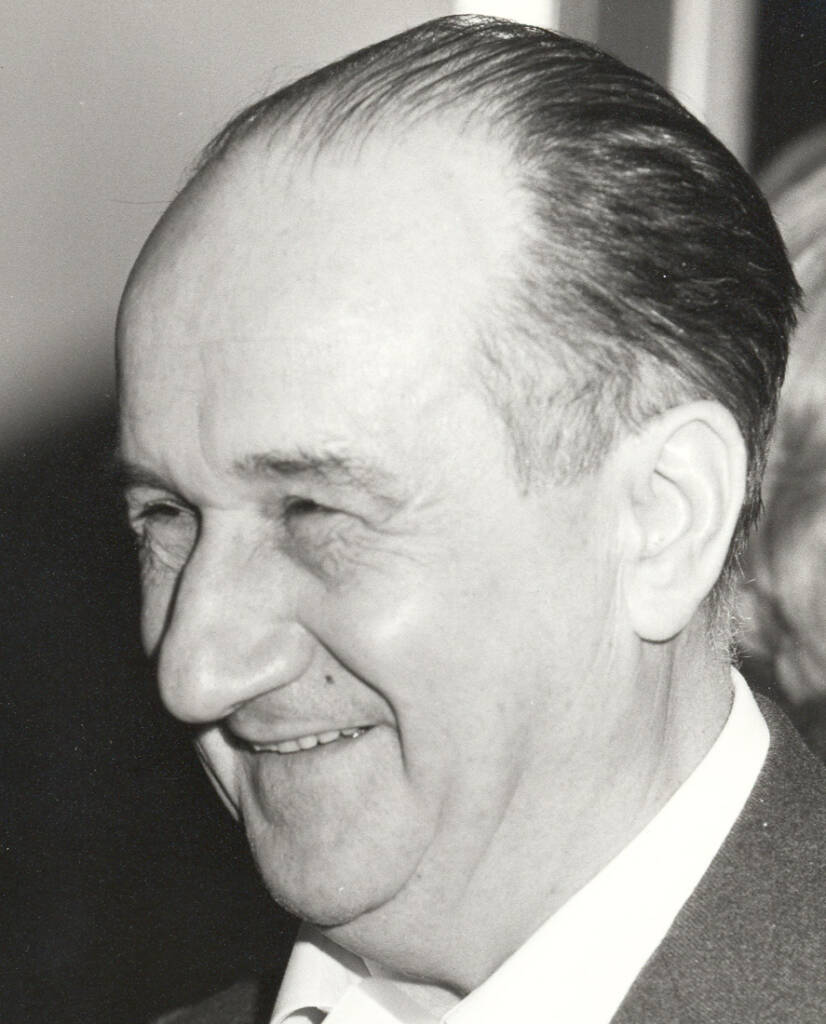
Portrait of Jean Brossel
. An experimental atomic physicist who coauthored a 1952 report on optical pumping with Jean Brossel and Alfred Kastler. Selective absorption of light redistributes population among ground-state Zeeman effect sublevels, preparing an atomic ensemble whose magnetic-state populations differ from thermal equilibrium. This connects control of incident light to preparation and readout of atomic angular momentum.[ref]
Création optique d’une inégalité de population entre les sous-niveaux Zeeman de l’état fondamental des atomes by Jean Brossel and others. Publisher byline, title and optical-pumping classification
Hans Bethe connected laboratory nuclear reactions with the sustained power of stars. With Charles Critchfield, he calculated the slow two-proton reaction that begins the proton–proton chain, treating both barrier penetration and the nuclear transition.[ref]
The Formation of Deuterons by Proton Combination by Hans Albrecht Bethe and Charles Louis Critchfield. 1938 abstract, reaction probability and solar-energy comparison
His 1939 analysis also developed hydrogen-burning reactions in which carbon and nitrogen nuclei act as intermediate carriers and are regenerated. The net conversion releases energy by turning hydrogen into helium; the intermediate nuclei provide a cycle rather than a fuel supply that is consumed once.[ref]A physicist.[ref]
https://news.cornell.edu/stories/2005/03/hans-bethe-titan-physics-and-conscience-science-dies-age-98. Independent professional profile
[ref]https://physics.cornell.edu/bethe-lectures. Independent professional profile
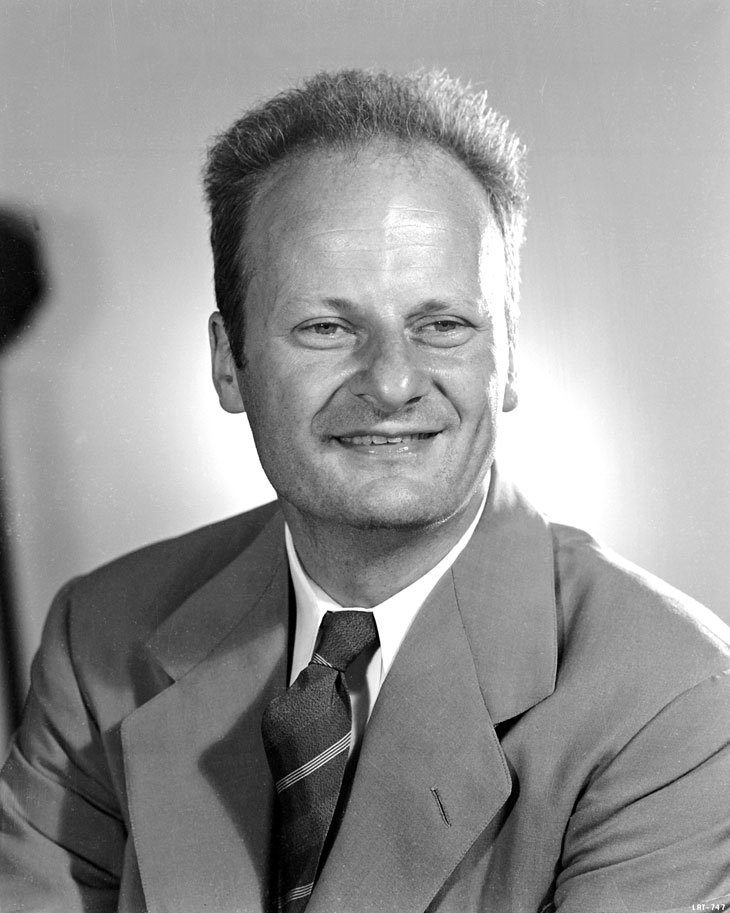
Portrait of Hans Albrecht Bethe
. Source. 
Carl Friedrich von Weizsäcker developed a semi-empirical description of nuclear masses and mass defects. The semi-empirical mass formula connects nuclear binding energy with the number and arrangement of protons and neutrons, rather than treating every measured mass as an unrelated datum. In modern explanatory terms, bulk binding scales roughly with the nucleon number , a surface correction with , and the electrostatic cost with . These competing scalings explain why increasing nuclear size does not improve the binding per nucleon indefinitely.[ref]
Zur Theorie der Kernmassen by Carl Friedrich von Weizsäcker. 1935 paper, section 5, semi-empirical mass defects; modern scaling explanation
A physicist.[ref]
https://www.mpg.de/12268010/trauerfeier-weizacker.pdf. Independent professional profile
[ref]https://www.mpp.mpg.de/en/about-us/history/time-line. Independent professional profile

Portrait of Carl Friedrich von Weizsäcker
. Source. 
There are unlisted articles, also show them or only show them.