Topics (384k) Articles (398k) Users (410) Discussions (242) Comments (383) Files (13k) New article

A researcher in statistical mechanics associated with the Crooks fluctuation theorem. His 1999 derivation relates probability distributions of work in a driven process and its reversed protocol to an equilibrium free energy difference. For example, repeated compression and expansion of a small gas sample give fluctuating work values; the relation extracts equilibrium information from those irreversible runs.[ref]
The Entropy Production Fluctuation Theorem and the Nonequilibrium Work Relation for Free Energy Differences by Gavin E. Crooks. Introduction: gas-and-piston example; Eqs. (10)–(11): nonequilibrium work relation
A physicist whose work develops stochastic thermodynamics: thermodynamic bookkeeping for individual random trajectories. His 2005 paper assigns entropy production both to a fluctuating system and to its surroundings, and derives an integral fluctuation theorem for their sum. A driven particle undergoing Brownian motion provides a concrete example: an individual trajectory can consume entropy even though the mean total entropy production is nonnegative.[ref]
Entropy production along a stochastic trajectory and an integral fluctuation theorem by Udo Seifert. Abstract and Eqs. (17)–(18): integral relation and mean inequality

Portrait of Udo Seifert
. Source. An astrophysicist who worked with Heinz Neckel on precision measurements of solar limb darkening. Their wavelength-dependent coefficients summarize how brightness falls from the disk center toward its edge. Repeated scans and averages distinguish a reproducible brightness profile from fluctuations between observations. Such measurements constrain the atmospheric layers sampled by escaping light, connecting the apparent face of the Sun with radiative transfer through its atmosphere.[ref]
Solar limb darkening 1986–1990 (λλ303 to 1099 nm) by Heinz Neckel and Dietrich Labs. Abstract and §§2–3: repeated scans, mean limb-darkening coefficients and measurement variability
An astrophysicist whose work with Dietrich Labs measured solar limb darkening across a broad wavelength range. They repeatedly compared brightness at different positions on the solar disk between activity minimum and maximum. Their 1994 paper found no detectable systematic variation tied to activity in the measured continuum and broad bands, while reporting smaller irregular changes. The measurements provide an empirical test of models of the stellar atmosphere.[ref]
Solar limb darkening 1986–1990 (λλ303 to 1099 nm) by Heinz Neckel and Dietrich Labs. Abstract: repeated 1986–1990 observations, absence of a systematic activity trend and irregular variations
An astrophysicist whose work includes interpreting planetary crossings of stellar disks. With Kaisey Mandel, he derived analytic light curve formulas that include limb darkening. The model combines the area blocked by a planet with the star’s nonuniform surface brightness, allowing a measured dimming to constrain the planet-to-star radius ratio and the path across the disk. This connects a time series of brightness measurements to physical system parameters.[ref]
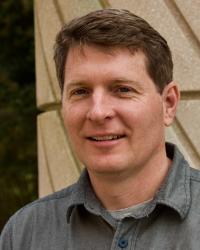
A researcher who, with Eric Agol, derived analytic models of the light curves produced when a planet crosses a star. The 2002 calculation includes limb darkening, so the brightness hidden by a planet depends on where it lies on the stellar disk. Fast, accurate light curve models make repeated comparisons with observations practical, helping infer the planet’s size and the geometry of the crossing.[ref]
An astrophysicist whose teaching explains how radiative transfer turns conditions in a stellar atmosphere into an observable spectrum. His treatment of the Eddington-Barbier relation connects emergent brightness with conditions around an optical depth of order unity along a viewing direction. It gives a physical explanation for limb darkening: an oblique line of sight samples different atmospheric layers from a view toward the center of the stellar disk.[ref]
An atomic-physics researcher whose joint work demonstrated a sensitive gravity-gradient instrument. Two atom interferometers measured acceleration at separate positions; comparison of their signals separated the spatial gravity variation from much of the apparatus vibration.[ref]
Sensitive absolute-gravity gradiometry using atom interferometry by J. M. McGuirk and others. Abstract: instrument geometry, sensitivity and noise characterization
A researcher whose team used light-pulse atom interferometry to measure a gravity gradient. Operating two sensors together made their differential signal less sensitive to common disturbances, a practical advantage for measuring weak gravitational effects.[ref]
Sensitive absolute-gravity gradiometry using atom interferometry by J. M. McGuirk and others. Abstract: light-pulse method and differential instrument
A researcher whose joint gravity gradiometry experiment compared two atomic acceleration measurements. Their difference probes how gravity changes with position, turning coherent atomic motion into a measurement of a field gradient.[ref]
Sensitive absolute-gravity gradiometry using atom interferometry by J. M. McGuirk and others. Abstract: two absolute accelerometers operated differentially
An experimental researcher whose joint work measured differences in gravitational acceleration with atom interferometry. The paired-instrument arrangement allowed the team to detect nearby masses even in a vibrationally noisy environment.[ref]
Sensitive absolute-gravity gradiometry using atom interferometry by J. M. McGuirk and others. Abstract: nearby-mass detection and differential acceleration
A researcher whose team built gravity gradiometry from two simultaneous atom interferometers. Comparing their measured accelerations isolates spatial variations in gravity while reducing sensitivity to vibration shared by both instruments.[ref]
Sensitive absolute-gravity gradiometry using atom interferometry by J. M. McGuirk and others. Abstract: differential absolute accelerometers and vibration rejection
Satoshi Watanabe analyzed dependence among many random variables using information theory. The total correlation compares the sum of individual Shannon entropy values with the joint entropy, measuring information stored in their dependence: independent variables give zero difference, while correlated variables can share information. The multivariable construction goes beyond checking one pair at a time, helping distinguish a collective statistical structure from a collection of unrelated observations.[ref]
Information Theoretical Analysis of Multivariate Correlation by Satosi Watanabe. 1960 paper, entropy-based analysis of multivariate dependence

Portrait of Satoshi Watanabe
. Asahi Shimbun; Asahi Graph, 4 May 1949. Public domain in Japan and United States, as file states (old Japanese photograph; copyright expired before 1970; no URAA restoration). Source and usage information on the linked Wikimedia file page. Source.A researcher who developed an integral method for estimating thermal diffusivity from laser flash analysis. A short heat pulse strikes the front of a sample, and the rear-surface temperature is recorded as heat spreads through it. Instead of locating only the time to reach half the final temperature rise, his method uses the area between the measured curve and its final value. The derivation shows how a full transient curve can contain more robust information than a single crossing time.[ref]
Rear-surface integral method for calculating thermal diffusivity from laser flash experiments by Elliot J. Carr. Abstract: rear-surface temperature integral, adiabatic derivation and synthetic-data comparison
A researcher whose joint flash-heating study measured thermal properties from short temperature transients. Their apparatus used a thermocouple to record the rear-face response after front-face illumination. The technique made rapid measurements possible on relatively small specimens, including measurements at elevated temperature.[ref]
A researcher whose team related a specimen’s response to flash heating to its thermal diffusivity and heat capacity. Combining these measurements with density yields thermal conductivity, connecting the rate of heat spreading with the amount of energy stored as the sample warms.[ref]
Flash Method of Determining Thermal Diffusivity, Heat Capacity, and Thermal Conductivity by W. J. Parker and others. Theory and experimental method, pp. 1680–1683
A researcher whose joint work developed pulse measurements of thermal diffusivity. The time required for the rear surface to reach half its final temperature rise determines the diffusivity when the specimen thickness is known. This avoids waiting for a steady temperature gradient to become established.[ref]
Flash Method of Determining Thermal Diffusivity, Heat Capacity, and Thermal Conductivity by W. J. Parker and others. Theory, pp. 1680–1681: transient solution and half-rise method
A researcher whose team introduced a flash-heating method for measuring thermal diffusivity. A short pulse heats one face of a specimen, and the temperature rise on the opposite face reveals how quickly heat spreads through its thickness. The method extracts a material property from a transient signal.[ref]
Flash Method of Determining Thermal Diffusivity, Heat Capacity, and Thermal Conductivity by W. J. Parker and others. pp. 1679–1681, Eq. (7): rear-face temperature and half-rise time
Pinned article: Introduction to the OurBigBook Project
Welcome to the OurBigBook Project! Our goal is to create the perfect publishing platform for STEM subjects, and get university-level students to write the best free STEM tutorials ever.
Everyone is welcome to create an account and play with the site: ourbigbook.com/go/register. We belive that students themselves can write amazing tutorials, but teachers are welcome too. You can write about anything you want, it doesn't have to be STEM or even educational. Silly test content is very welcome and you won't be penalized in any way. Just keep it legal!
Intro to OurBigBook
. Source. We have two killer features:
- topics: topics group articles by different users with the same title, e.g. here is the topic for the "Fundamental Theorem of Calculus" ourbigbook.com/go/topic/fundamental-theorem-of-calculusArticles of different users are sorted by upvote within each article page. This feature is a bit like:
- a Wikipedia where each user can have their own version of each article
- a Q&A website like Stack Overflow, where multiple people can give their views on a given topic, and the best ones are sorted by upvote. Except you don't need to wait for someone to ask first, and any topic goes, no matter how narrow or broad
This feature makes it possible for readers to find better explanations of any topic created by other writers. And it allows writers to create an explanation in a place that readers might actually find it.
Figure 1. Screenshot of the "Derivative" topic page. View it live at: ourbigbook.com/go/topic/derivativeVideo 2. OurBigBook Web topics demo. Source. - local editing: you can store all your personal knowledge base content locally in a plaintext markup format that can be edited locally and published either:This way you can be sure that even if OurBigBook.com were to go down one day (which we have no plans to do as it is quite cheap to host!), your content will still be perfectly readable as a static site.
- to OurBigBook.com to get awesome multi-user features like topics and likes
- as HTML files to a static website, which you can host yourself for free on many external providers like GitHub Pages, and remain in full control

Figure 2. You can publish local OurBigBook lightweight markup files to either OurBigBook.com or as a static website.
Figure 3. Visual Studio Code extension installation.
Figure 5. . You can also edit articles on the Web editor without installing anything locally. Video 3. Edit locally and publish demo. Source. This shows editing OurBigBook Markup and publishing it using the Visual Studio Code extension. 
- Infinitely deep tables of contents:



All our software is open source and hosted at: github.com/ourbigbook/ourbigbook
Further documentation can be found at: docs.ourbigbook.com
Feel free to reach our to us for any help or suggestions: docs.ourbigbook.com/#contact