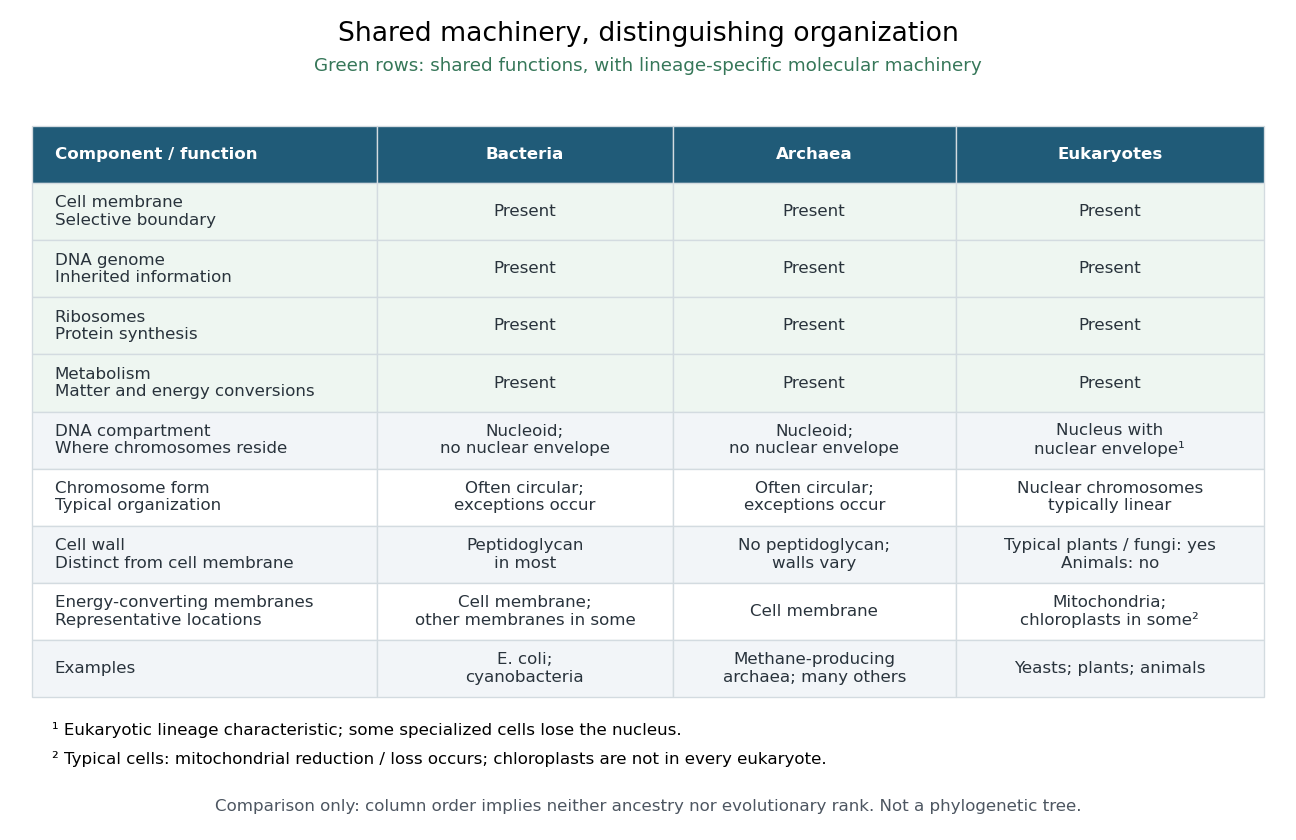
Power, Sex, Suicide by Nick Lane (2006) page 53 suggests that one tremendous advantage of eukaryotes over bacteria is their ability to change shape due to the presence of the cytoskeleton, and the lack of a rigid bacterial cell wall.
Imagine in a world where there are only bacteria, and you can eat entire bacteria in one go, what a huge advantage that is!
But one thing you should really know, as often mentioned in Power, Sex, Suicide by Nick Lane (2006): they are all eukaryotes.
Because prokaryotes are fundamentally unable to do phagocytosis, because they have a rigid cell wall. Changing cell shape at will requires a cytoskeleton.
Formal name: "animalia".
It is quite mind blowing that this is polyphyletic on mammals and birds, what can't parallel evolution achieve??

Phylogenetic tree of the vertebrates
. Source. Highlights how birds should obviously be classified as reptiles.Good phylogenetic tree as usual: en.wikipedia.org/w/index.php?title=Animal&oldid=1053478004#Phylogeny
Now that's some basal shit! It's basically a fucking blob!!! Except that it is flat. No nervous system. Not even tissues. It is basically a multicellular


Together with Janelia Research Campus.
Paper: www.biorxiv.org/content/10.1101/2024.03.11.584515v1 Whole-body simulation of realistic fruit fly locomotion with deep reinforcement learning (2024)
Using MuJoCo.
You read the name and think: hmm, neural cords!
But then you see that his is one of its members:

Yup. That's your cousin. And it's a much closer cousin than something like arthropods, which at least have heads eyes and legs like you.
Convergent evolution is crazy!
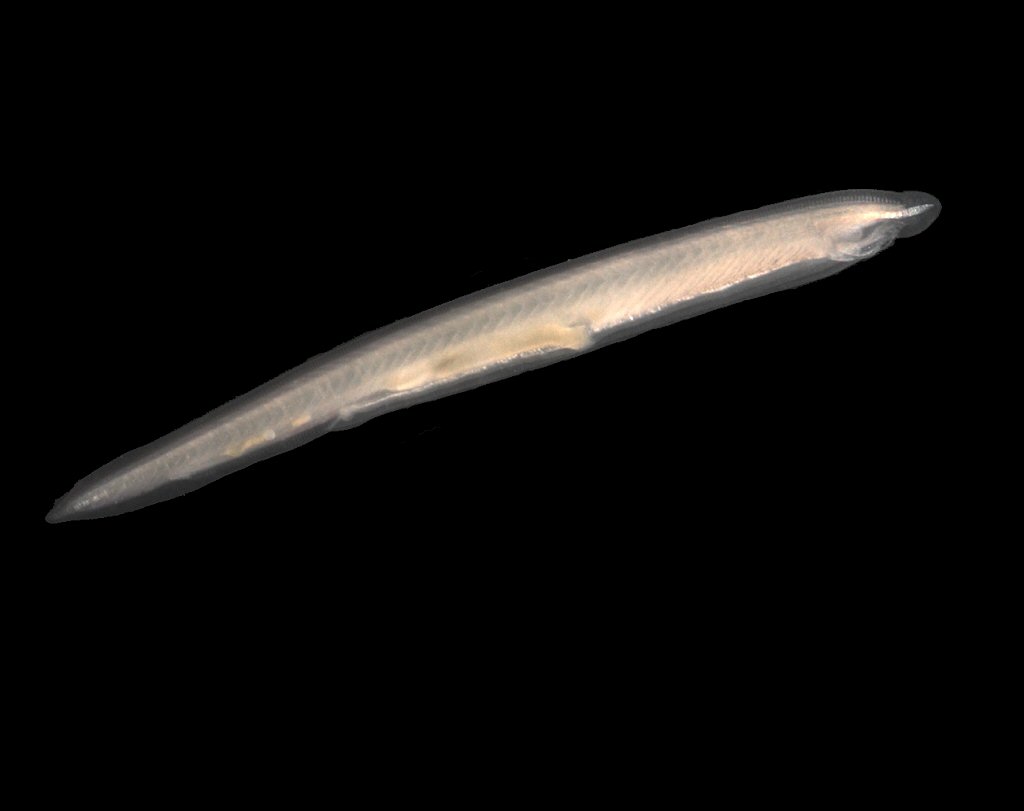
The big breakthrough of the vertebrates appears to be the ability to swim around in a straight line and eat smaller species that are floating about.
It is likely the most efficient design to travel long distances. Be thin and wiggle your tail around.
Perhaps smaller animals can skip the bone thing. Maybe a notable example are the lancelets, which look a bit like small fish. But they only go up to 8 cm.
Vertebrates minus tetrapods.
This paraphyletic subgroup is easy to form the "acquatic only" (fishes) vs "things that come out of water" (tetrapods). Though mudfishes make that distinction harder.
Includes:
- amphibians
- amniotes, which includes:
- sauropsida: reptiles and birds, which really are reptiles
- mammals
The exact relationships between those clades is not very clear as there's a bunch of extinct species in the middle we are not sure exactly where they go exactly, some hypothesis are listed at: en.wikipedia.org/w/index.php?title=Tetrapod&oldid=1053601110#Temnospondyl_hypothesis_(TH)
Includes:
Does not include amphibians. If you include them, you have the tetrapods.
This being a class is bullshit because it is not a clade, notably birds are not considered reptiles, but they are clearly in the clade.
Good phylogenetic tree: en.wikipedia.org/w/index.php?title=Mammal&oldid=1052295685#Molecular_classification_of_placentals
Eggs are basal: they simply didn't evolve out of what other reptiles do. From which we conclude that milk came before eggs stopped.
So this is the most basal subclade of mammals.
Etymology: means "single hole" in Greek, because like other reptiles it has a single hole for shit, pee and fucking: the cloaca.
The name is completely random, "wild beast". Are platypuses not "wild beasts"? They have a freaking poison!!
They split up from the rest of the mammals after the monotremes.
As of 2020, account for about 20% of the known mammal species!!! www.sciencefocus.com/nature/why-are-there-so-many-species-of-bat/ mentions some reasons:
- they can fly, so they can move out further
- their eating habits are highly specialized
Exciting... sometimes cruel. But too exciting not to do:
Databases and projects:
- www.ncbi.nlm.nih.gov/pmc/articles/PMC2716027/ The Knockout Mouse Project (2004)
This is the level at which human and all extinct siblings lie, with no other extant species, all others were killed or fucked to death: Section "Interbreeding between archaic and modern humans".
wget ftp://ftp.ncbi.nlm.nih.gov/refseq/H_sapiens/annotation/GRCh38_latest/refseq_identifiers/GRCh38_latest_genomic.fna.gz
gunzip --keep GRCh38_latest_genomic.fna.gzThe key cladograms:
- Hominoidea level for extant species separation
- Australopithecine level for extinct species separation: en.wikipedia.org/w/index.php?title=Homo&oldid=1155900663#Phylogeny
Frozen and cut on Microtome at 1mm intervals.


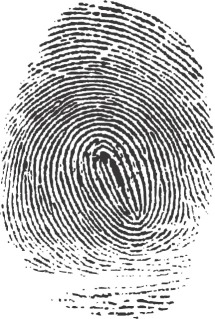
They actually use fingerprint minutiae, not raw images, which is cool.
Bibliography:
- stackoverflow.com/questions/37147480/convert-fingerprint-bitmap-to-iso-iec-19794-2-template
- stackoverflow.com/questions/33412977/how-to-convert-a-byte-array-of-fingerprint-image-to-iso-19794-2-in-java-basica
- stackoverflow.com/questions/43937986/convert-png-image-fingerprint-to-minutiae-xyt-fingerprint-format
Bibliography:
Possibly not made not possible from userland due to privacy issues. Apparently not even kernelland can see it, only
Bibliography:
- Stack Overflow:
- stackoverflow.com/questions/35934729/capture-fingerprint-from-smartphone-and-save-to-a-file
- stackoverflow.com/questions/63257762/how-to-save-and-compare-2-fingerprints-on-android
- stackoverflow.com/questions/67104186/can-we-use-android-fingerprint-scanner-to-get-finger-pattern-and-store-that-patt
- stackoverflow.com/questions/41632225/android-where-and-how-securely-is-fingerprint-information-stored-in-a-device
- android.stackexchange.com/questions/161780/where-does-android-store-fingerprint-data
- Reddit:
The point of these is that they are good for transfection apparently.
Articles were limited to the first 100 out of 153 total.
Articles by others on the same topic



A eukaryote is an organism belonging to the lineage characterized by a membrane-bounded cell nucleus and extensive cellular compartmentalization. A nuclear envelope surrounds the nuclear genome; nuclear chromosomes are typically linear. Ribosomes perform biological translation outside the cell nucleus. See OpenStax Microbiology, 3.4: nuclear organization and protein synthesis. Specialized biological cells can lose their cell nucleus, as mature mammalian red blood cells do, while remaining parts of eukaryotic organisms; see OpenStax Biology 2e, 40.2: mature red blood cells.
Yeasts, plants and animals are all eukaryotes. Typical cells in these groups have mitochondria, but chloroplasts belong to photosynthetic plant and algae lineages, not to every eukaryote. A cell wall occurs in typical plant and fungus cells but is absent from animal cells. These are comparisons of representative cells, not a checklist every specialized cell must satisfy. See OpenStax Biology 2e, 4.3: nucleus, organelles and representative cells.
The interesting feature is controlled separation: cell membranes and organelle membranes let different cellular processes occupy distinct compartments while membrane transport connects them. The evolution of eukaryotes also involved partnership: mitochondria descend from a bacterial endosymbiosis. Modern phylogenetics supports an archaeal ancestry for the nuclear lineage, alongside this bacterial contribution; see two-domain system. Thus the history of a whole eukaryote cannot be read as the history of just one of its genes.