Topics (384k) Articles (398k) Users (410) Discussions (242) Comments (383) Files (13k) New article

Maria Goeppert Mayer helped explain nuclear magic numbers using a nuclear shell model with strong spin-orbit coupling. Coupling a nucleon's orbital angular momentum and spin gives levels with and different energies. A large splitting changes the order and capacity of the shells, producing closures that a simple central potential alone fails to explain. For example, lowering the member of an level supplies eight states, accounting for the step from the closure at to the one at .[ref]
On Closed Shells in Nuclei. II by Maria Goeppert Mayer. 1949 letter, spin–orbit splitting and shell closures
A physicist.[ref]
https://www.universityofcalifornia.edu/news/discoveries-changed-world-meet-ucs-women-nobel-laureates. Independent professional profile

Portrait of Maria Goeppert Mayer
. US Department of Energy / ENERGY.GOV, HD.3A.050; individual photographer unidentified. Commons PD-USGov-DOE designation; ENERGY.GOV Flickr government-work status confirmed by review on 6 October 2014., via Wikimedia Commons. Source.A physicist who coauthored the ammonia maser work with Herbert Jack Zeiger and Charles Hard Townes. An excited molecular beam transfers energy to a microwave cavity by stimulated emission. The same controlled transition can act as an oscillator, amplifier or spectroscopic reference, showing why a new radiation source could also become a precision measurement tool.[ref]
The Maser—New Type of Microwave Amplifier, Frequency Standard, and Spectrometer by James Power Gordon and others. Original maser paper: beam selection, microwave cavity and applications
Vadim Kaplunovsky calculated quantum corrections to gauge-coupling relations in string theory. His work shows how the first corrections in perturbation theory modify simple classical relations among the coupling constants of low-energy gauge theories. The calculation connects an assumed string vacuum with quantities such as the weak mixing angle and the scale of quantum chromodynamics. His corrected complete paper also distinguishes the revised calculation from a separately published erratum, which matters when using its numerical normalization.[ref]
One-Loop Threshold Effects in String Unification by Vadim Kaplunovsky. Corrected complete preprint hep-th/9205070, abstract; original 1988 paper and separate 1992 errata distinguished

Portrait of Vadim Kaplunovsky
. Alfred Kastler developed optical pumping, using selective absorption and emission of light to redistribute populations among atomic Zeeman sublevels. Angular momentum selection rules make some transitions accessible and others forbidden, so repeated illumination can produce a strongly unequal population. A subsequent magnetic resonance changes that distribution and therefore the detected light. Optical preparation and optical readout connect a weak radio frequency excitation with a sensitive optical signal.[ref]
Optical methods for studying Hertzian resonances by Alfred Kastler. Nobel lecture: population redistribution, optical pumping and optical detection of resonance
A physicist.[ref]
https://www.lkb.fr/en/laboratory/presentation/history/alfred-kastler-2/. Independent professional profile

Portrait of Alfred Kastler
. Unknown photographer; scan from Problemy, April 1967, p. 221. Public domain per Commons PD-Poland: qualifying Polish publication without clear copyright notice before 23 May 1994; File also states U.S. non-restoration conditions. Source usage terms, via Wikimedia Commons. Source.Jean Brossel and Alfred Kastler developed optical preparation and detection of atomic magnetic resonance. Selectively absorbed light creates unequal populations among Zeeman sublevels; a radio frequency transition redistributes those populations. The resulting change in absorption or fluorescence supplies a visible signal of the resonance. The light thus has two distinct jobs: optical pumping prepares the initial quantum state distribution, while optical detection reads out the effect of a much weaker magnetic excitation.[ref]
Création optique d’une inégalité de population entre les sous-niveaux Zeeman de l’état fondamental des atomes by Jean Brossel and others. Population preparation and optical observation of magnetic transitions
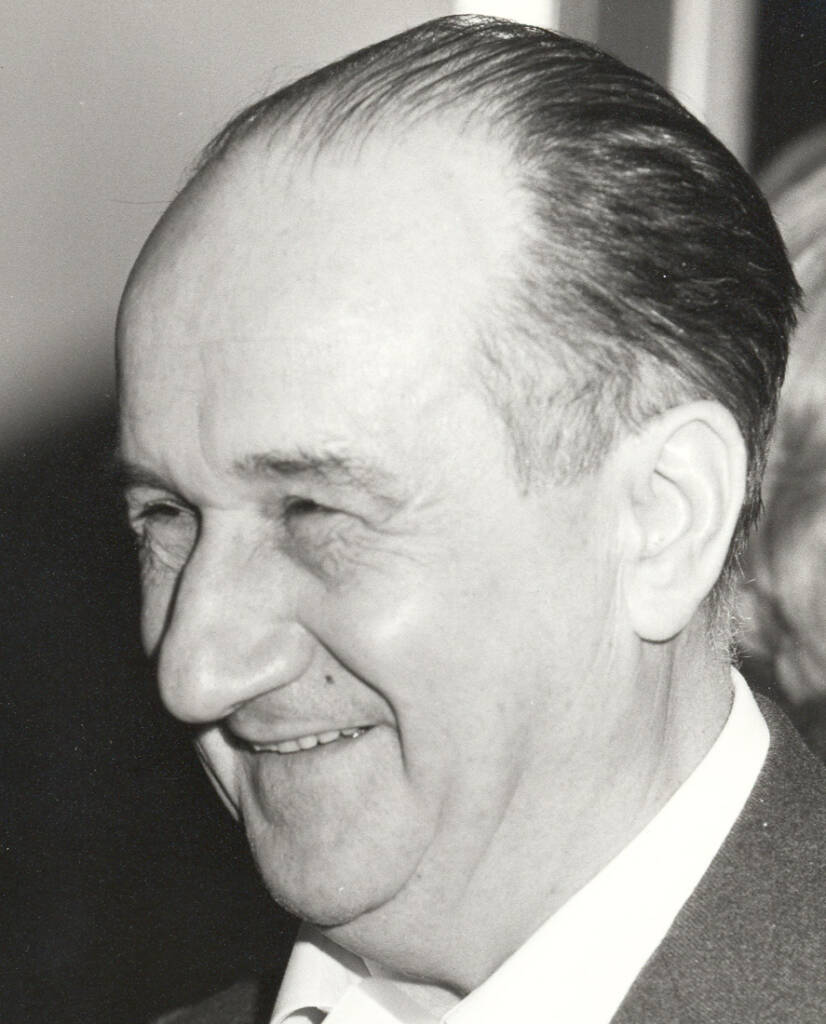
Portrait of Jean Brossel
. An experimental atomic physicist who coauthored a 1952 report on optical pumping with Jean Brossel and Alfred Kastler. Selective absorption of light redistributes population among ground-state Zeeman effect sublevels, preparing an atomic ensemble whose magnetic-state populations differ from thermal equilibrium. This connects control of incident light to preparation and readout of atomic angular momentum.[ref]
Création optique d’une inégalité de population entre les sous-niveaux Zeeman de l’état fondamental des atomes by Jean Brossel and others. Publisher byline, title and optical-pumping classification
Hans Bethe connected laboratory nuclear reactions with the sustained power of stars. With Charles Critchfield, he calculated the slow two-proton reaction that begins the proton–proton chain, treating both barrier penetration and the nuclear transition.[ref]
The Formation of Deuterons by Proton Combination by Hans Albrecht Bethe and Charles Louis Critchfield. 1938 abstract, reaction probability and solar-energy comparison
His 1939 analysis also developed hydrogen-burning reactions in which carbon and nitrogen nuclei act as intermediate carriers and are regenerated. The net conversion releases energy by turning hydrogen into helium; the intermediate nuclei provide a cycle rather than a fuel supply that is consumed once.[ref]A physicist.[ref]
https://news.cornell.edu/stories/2005/03/hans-bethe-titan-physics-and-conscience-science-dies-age-98. Independent professional profile
[ref]https://physics.cornell.edu/bethe-lectures. Independent professional profile
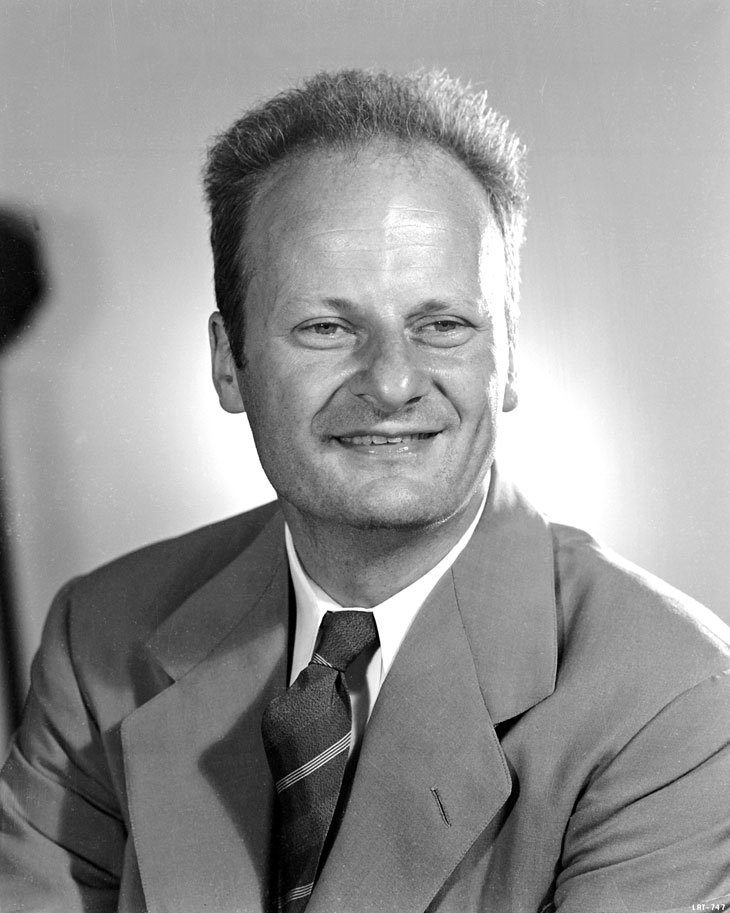
Portrait of Hans Albrecht Bethe
. Source. Carl Friedrich von Weizsäcker developed a semi-empirical description of nuclear masses and mass defects. The semi-empirical mass formula connects nuclear binding energy with the number and arrangement of protons and neutrons, rather than treating every measured mass as an unrelated datum. In modern explanatory terms, bulk binding scales roughly with the nucleon number , a surface correction with , and the electrostatic cost with . These competing scalings explain why increasing nuclear size does not improve the binding per nucleon indefinitely.[ref]
Zur Theorie der Kernmassen by Carl Friedrich von Weizsäcker. 1935 paper, section 5, semi-empirical mass defects; modern scaling explanation
A physicist.[ref]
https://www.mpg.de/12268010/trauerfeier-weizacker.pdf. Independent professional profile
[ref]https://www.mpp.mpg.de/en/about-us/history/time-line. Independent professional profile

Portrait of Carl Friedrich von Weizsäcker
. Source. Charles Louis Critchfield and Hans Bethe calculated the rate at which two protons can form a deuteron, initiating the proton–proton chain. In modern notation the reaction is : one proton changes into a neutron through the weak interaction. Their 1938 calculation combined penetration of the repulsive potential barrier with the probability of the nuclear transition. This joins two physically different obstacles to stellar nuclear fusion: getting the charged particles close together and converting their nuclear composition.[ref]
The Formation of Deuterons by Proton Combination by Hans Albrecht Bethe and Charles Louis Critchfield. Abstract, barrier penetration and Fermi-theory positron-emission calculation
A physicist.[ref]
https://www.ias.edu/scholars/charles-louis-critchfield. Independent professional profile
[ref]https://ahf.nuclearmuseum.org/ahf/profile/charles-critchfield/. Independent professional profile

Portrait of Charles Louis Critchfield
. Source. Ramamurti Shankar organized the low-energy physics of interacting fermions using the renormalization group. The construction retains momentum modes in a thin region around the Fermi surface, integrates out part of that region, and asks how the remaining interactions change as the energy scale decreases. Classifying the interactions as relevant, irrelevant or marginal explains why many microscopic details disappear from low-energy predictions, while selected channels can grow and destabilize the starting description.[ref]
Renormalization Group Approach to Interacting Fermions by Ramamurti Shankar. Abstract and introduction, cutoff around the Fermi surface and classification of perturbations
A physicist.[ref]
https://physics.yale.edu/profile/ramamurti-shankar. Independent professional profile

Portrait of Ramamurti Shankar
. AllenTalk. CC BY 3.0, via Wikimedia Commons. Source.An experimental physicist who coauthored the ammonia maser. Selecting molecules in an excited state and passing them through a resonant microwave cavity allowed stimulated emission to sustain a coherent signal. The device made population preparation and resonator feedback into an oscillator, connecting molecular spectroscopy to frequency generation and amplification.[ref]
The Maser—New Type of Microwave Amplifier, Frequency Standard, and Spectrometer by James Power Gordon and others. Abstract and molecular state selection, cavity and oscillation mechanism
Murray Gell-Mann proposed the quark model as a compact organization of mesons and baryons. In his 1964 construction, the lowest baryon states use three quarks, while the lowest meson states use a quark-antiquark pair. Assigning fractional electric charges to the constituents reproduces integer charges for these combinations. The proposal connects the observed flavor symmetry multiplets with constituent quantum numbers, making a crowded particle spectrum intelligible through a small set of underlying states.[ref]
A Schematic Model of Baryons and Mesons by Murray Gell-Mann. 1964 original note, fractional-charge triplet and lowest baryon/meson configurations
A physicist who organized hadrons through flavor symmetry and the quark model.[ref]
Caltech Mourns the Passing of Murray Gell-Mann (1929–2019). Independent professional identity: institutional description of actual research and specialization

Portrait of Murray Gell-Mann
. World Economic Forum / swiss-image.ch; photograph by Michael Wuertenberg. CC BY-SA 2.0, via Wikimedia Commons. Source.George Zweig proposed a constituent organization of hadrons in 1964, calling the constituents aces. Combining their quantum numbers accounts for patterns among mesons and baryons, connecting the larger observed particle families to a smaller set of building blocks. His model supplied a physical way to interpret flavor symmetry and the relative suppression of some reactions, rather than treating the multiplets only as numerical classifications. The constituent proposal was independent of the later experimental identification of quark substructure.[ref]
A physicist whose research includes mathematical models of wave propagation and experimental tests of those models.[ref]
George Zweig: Research Interests. Independent professional identity: institutional description of actual research and specialization

Portrait of George Zweig
. Peacearth. CC BY-SA 4.0, via Wikimedia Commons. Source.Luis Walter Alvarez developed liquid-hydrogen bubble chambers for particle. A particle crossing a superheated liquid leaves ionization along which bubbles can grow, making its trajectory photographable. Using hydrogen supplies a comparatively simple proton target as well as the track-recording medium. His 1956 report describes the development that established observable tracks in liquid hydrogen, connecting detector engineering with measurements of particle interactions.[ref]
Liquid Hydrogen Bubble Chambers by Luis Walter Alvarez. 1956 report, early liquid-hydrogen chamber development and observation of tracks
A physicist.[ref]
Nomination archive identity record of Luis Walter Alvarez. Independent professional profile
[ref]https://www.nobelprize.org/prizes/physics/1968/alvarez/biographical/. Independent professional profile

Portrait of Luis Walter Alvarez
. Donald Cooksey / Lawrence Berkeley National Laboratory, as credited on the File; Dutch National Archives, ANEFO collection. Public domain in the United States, as Commons records publication there in 1931–1977 without a copyright notice. Source usage terms, via Wikimedia Commons. Source.A physicist who studied how to observe magnetohydrodynamic waves in the laboratory. His 1949 paper solved the wave equations for a cylindrical experimental geometry and identified a finite useful frequency range: electrical electrical conductivity, magnetic field strength and apparatus dimensions restrict which waves can propagate in the intended regime. The analysis selected liquid sodium as a promising conducting fluid and reported a preliminary experiment, connecting astrophysical wave theory with achievable laboratory conditions.[ref]
Experimental Investigations of Magneto-Hydrodynamic Waves by Stig Lundquist. Abstract: cylindrical waves, frequency limits, liquid sodium and preliminary experiment
Dennis Gabor devised holography as a way to record and reconstruct a wavefront. Recording the wave interference between an object field and a known reference field preserves information about relative wave phase in an intensity pattern. Illuminating that pattern with the reference field can reconstruct an image-bearing field. His early motivation was improved electron microscopy; his Nobel lecture explains how later laser sources and tilted-reference arrangements overcame practical limitations of the original in-line geometry.[ref]
Holography, 1948-1971 by Dennis Gabor. Reference-wave reconstruction, early electron-microscopy proposal and later skew-reference geometry

Portrait of Dennis Gabor
. Source. Juris Upatnieks and Emmett Leith developed laser holography, publicly demonstrating a three-dimensional hologram in 1964. A tilted reference light field records wave interference with the field scattered by an object. During reconstruction, its angle helps separate the desired image from the other reconstructed components. The long coherence length of a laser made this geometry practical, allowing the reference path to go around the object.[ref]
Professional profile of Juris Upatnieks. Optica account: collaboration with Leith, 1962–1964 papers and 1964 demonstration
[ref]Holography, 1948-1971 by Dennis Gabor. Skew reference wave and angular separation of reconstructed images
A physicist.[ref]
Professional profile of Juris Upatnieks. Independent professional profile
[ref]https://www.researchlatvia.gov.lv/en/memoriam-juris-upatnieks-07051936-17052026. Independent professional profile

Portrait of Juris Upatnieks
. University of Michigan. News and Information Services. CC BY 4.0, via Wikimedia Commons. Source.John Robert Schrieffer coauthored the microscopic BCS theory of conventional superconductivity. Its many-electron ground state coherently combines configurations in which states of opposite spin and momentum are paired. An attractive interaction mediated by lattice vibrations can lower the energy of this collective state, while its excitations have a gap. The theory relates that construction to a phase transition, specific heat, magnetic-field penetration and other measurable properties of a superconductor.[ref]
Theory of Superconductivity by John Bardeen and others. Physical Review 108, 1175 (1957), paired ground state and observable predictions

Portrait of John Robert Schrieffer
. Unknown author; Nationaal Archief / Spaarnestad Photo, ANEFO collection. CC BY-SA 3.0, via Wikimedia Commons. Source.Ivar Giaever used electron tunnelling through a thin insulating barrier to measure the superconducting energy gap. The available electronic states on either side determine which tunnelling processes contribute at a given voltage. A gap suppresses low-energy current, so the current-voltage curve becomes a spectroscopic probe of the superconducting state. Following the feature with temperature connects an electrical measurement with a microscopic excitation energy, rather than merely demonstrating low resistance.[ref]
Energy Gap in Superconductors Measured by Electron Tunneling by Ivar Giaever. Physical Review Letters 5, 147 (1960), tunnelling measurement of the excitation gap
A physicist.[ref]
Professional profile of Ivar Giaever. Independent professional profile
[ref]https://archives.rpi.edu/institute-history/commencement-speakers-honorary-degree-recipients?page=5. Independent professional profile

Portrait of Ivar Giaever
. Bruce Sampson / NTNU Vitenskapsmuseet; 12 March 2010; existing Commons crop by TommyG. CC BY 2.0, via Wikimedia Commons. Source.Louis Néel developed models of magnetism with interacting magnetic sublattices. In an antiferromagnet, opposing moments can cancel the net magnetization while maintaining ordered internal structure. In a ferrimagnet, unequal opposing contributions leave a net moment. The distinction explains why magnetic order cannot be identified with one uniform alignment of every moment. His molecular-field treatment connects interactions between sublattices with measurable magnetic response and the behavior of magnetic oxides.[ref]
Magnetism and the local molecular field by Louis Néel. Nobel lecture, antiferromagnetism, ferrimagnetism and sublattice fields
A physicist who developed models of antiferromagnetism.[ref]
Louis Néel: institutional research history. Independent professional research and appointment; see profile text

Portrait of Louis Néel
. Farabola; existing Commons cleanup by Materialscientist. Public domain per Commons PD-Italy and PD-1996: Italian simple-photograph term and U.S. non-restoration conditions stated on File. Source usage terms, via Wikimedia Commons. Source. Pinned article: Introduction to the OurBigBook Project
Welcome to the OurBigBook Project! Our goal is to create the perfect publishing platform for STEM subjects, and get university-level students to write the best free STEM tutorials ever.
Everyone is welcome to create an account and play with the site: ourbigbook.com/go/register. We belive that students themselves can write amazing tutorials, but teachers are welcome too. You can write about anything you want, it doesn't have to be STEM or even educational. Silly test content is very welcome and you won't be penalized in any way. Just keep it legal!
Intro to OurBigBook
. Source. We have two killer features:
- topics: topics group articles by different users with the same title, e.g. here is the topic for the "Fundamental Theorem of Calculus" ourbigbook.com/go/topic/fundamental-theorem-of-calculusArticles of different users are sorted by upvote within each article page. This feature is a bit like:
- a Wikipedia where each user can have their own version of each article
- a Q&A website like Stack Overflow, where multiple people can give their views on a given topic, and the best ones are sorted by upvote. Except you don't need to wait for someone to ask first, and any topic goes, no matter how narrow or broad
This feature makes it possible for readers to find better explanations of any topic created by other writers. And it allows writers to create an explanation in a place that readers might actually find it.
Figure 1. Screenshot of the "Derivative" topic page. View it live at: ourbigbook.com/go/topic/derivativeVideo 2. OurBigBook Web topics demo. Source. - local editing: you can store all your personal knowledge base content locally in a plaintext markup format that can be edited locally and published either:This way you can be sure that even if OurBigBook.com were to go down one day (which we have no plans to do as it is quite cheap to host!), your content will still be perfectly readable as a static site.
- to OurBigBook.com to get awesome multi-user features like topics and likes
- as HTML files to a static website, which you can host yourself for free on many external providers like GitHub Pages, and remain in full control

Figure 2. You can publish local OurBigBook lightweight markup files to either OurBigBook.com or as a static website.
Figure 3. Visual Studio Code extension installation.
Figure 5. . You can also edit articles on the Web editor without installing anything locally. Video 3. Edit locally and publish demo. Source. This shows editing OurBigBook Markup and publishing it using the Visual Studio Code extension. 
- Infinitely deep tables of contents:




All our software is open source and hosted at: github.com/ourbigbook/ourbigbook
Further documentation can be found at: docs.ourbigbook.com
Feel free to reach our to us for any help or suggestions: docs.ourbigbook.com/#contact