Topics (384k) Articles (398k) Users (410) Discussions (242) Comments (383) Files (13k) New article

A researcher in semiconductor optics whose team observed Rydberg excitons in cuprous oxide in 2014. These bound electron–electron hole pairs reached principal quantum numbers as high as 25 and extended over micrometers, allowing a crystal to host excitations resembling highly excited hydrogen atoms.[ref]
Matjaž Humar explained how quantum confinement changes the optical properties of semiconductor quantum dots. Confinement raises electronic energy scales and modifies exciton states, so changing a dot's size can shift its absorption and fluorescence spectra. His treatment distinguishes regimes by comparing the dot size with the exciton's internal size and the wavelength of its motion. This prevents a bulk bound-pair model from being applied unchanged to a much smaller nanocrystal.[ref]
Excitons in Semiconductor Quantum Dots by Matjaž Humar. abstract and section 4, weak/intermediate/strong confinement regimes

Portrait of Matjaž Humar
. External portrait hosted by Humar Lab, Jožef Stefan Institute. Source.A researcher whose joint acoustics experiment uses the two channels of a stereo sound interface as a shared time base. Delays between recordings of a pulse at two microphones determine the speed of sound. The method also shows why sampling rate, path-length measurements and reflected pulses matter: a plausible-looking delay is useful only if it corresponds to the intended propagation path.[ref]
A time of flight method to measure the speed of sound using a stereo sound card by Carlos C. Carvalho and others. Abstract; Apparatus and Results, pp. 2–3: sampling interval, pulse delays and reflection limitations
João M. B. Lopes dos Santos coauthored an inexpensive speed of sound experiment using two microphones and a computer's stereo sound input. A pulse reaches microphones at different distances at different times; dividing the path difference by the arrival-time difference estimates the propagation speed. Recording both channels together makes the relative delay directly accessible. The apparatus turns wave propagation into a quantitative measurement using familiar audio equipment.[ref]

Portrait of João M. B. Lopes dos Santos
. SICC/RS (credit printed beneath the source photograph). External portrait hosted by University of Porto, Faculty of Sciences. Source credit: SICC/RS. Source.A physics educator whose team built a simple time of flight measurement of the speed of sound. Two microphones at different distances record the same pulse through a stereo sound interface. Dividing the difference in path lengths by the arrival-time difference gives the propagation speed, while a common recording clock avoids having to synchronize two independent timers. The apparatus converts inexpensive audio hardware into a quantitative wave experiment.[ref]
A time of flight method to measure the speed of sound using a stereo sound card by Carlos C. Carvalho and others. Abstract and Principle and Apparatus, pp. 1–2: two microphones, stereo acquisition and differential travel time
An applied mathematics educator whose partial differential equation notes derive the wave equation on a string from a physical model and then connect its solutions with initial and boundary data. D'Alembert's formula decomposes an initial disturbance into profiles traveling in opposite directions. The construction lets a reader predict how an initially plucked string evolves before accounting for reflections at its ends.[ref]
An engineer who helped connect spacecraft operations with teaching about celestial mechanics. NASA identifies him as the author of the 2017 edition of Basics of Space Flight (2017 edition) by Dave Doody and as a flight-operations engineer for the Cassini mission. His navigation chapter explains how radio Doppler effect measurements constrain spacecraft velocity while signal travel times constrain distance, turning received radio signals into information for orbit determination.[ref]
Basics of Space Flight (2017 edition) by Dave Doody. Editorial page: authorship and flight-operations role
[ref]A researcher identified with James G. Williams and Slava G. Turyshev on their 2012 lunar laser ranging study. Their analysis tests the equivalence principle by fitting precise Earth–Moon distance measurements to a model of the lunar orbit and checking whether different analysis choices change the inferred result.[ref]
Lunar Laser Ranging Tests of the Equivalence Principle by James G. Williams and others. Author list; abstract and §§3–4: data analysis and robustness checks
A physicist working on experimental tests of gravity. His joint work with James G. Williams and Dale Boggs uses lunar laser ranging to compare the ratios of gravitational mass to inertial mass for Earth and the Moon. The comparison probes the equivalence principle using bodies with different compositions and gravitational binding energies.[ref]
Lunar Laser Ranging Tests of the Equivalence Principle by James G. Williams and others. Abstract and §1: weak and strong forms of the equivalence principle

Portrait of Slava G. Turyshev
. Source. A researcher in lunar laser ranging and tests of gravity. With Slava G. Turyshev and Dale Boggs, he analyzed whether Earth and the Moon fall toward the Sun at the same rate. Timing laser pulses reflected by lunar retroreflectors turns the Earth–Moon system into an experiment on the equivalence principle.[ref]
Lunar Laser Ranging Tests of the Equivalence Principle by James G. Williams and others. Author affiliation; abstract and §2: ranging apparatus and equivalence-principle test
A researcher in optics whose MIT teaching develops the connection between wave propagation and optical ray models. The eikonal equation relates the local phase gradient to refractive index, while optical path length describes how rays traverse an inhomogeneous medium. Deriving these relations from wave physics shows what information a ray model retains and why geometrical optics has a limited regime of validity.[ref]
Optics, Lecture 10: Eikonal Equations, Superposition of EM Waves. Lecture notes pp. 1–3: eikonal equation, optical path and ray direction
Rüdiger Paschotta develops technical explanations of photonics through the RP Photonics Encyclopedia by Rüdiger Paschotta. Its treatment of refractive index distinguishes the phase velocity of a monochromatic wave from the propagation of a pulse envelope. Because the index depends on frequency, the two velocities generally differ; this dispersion matters when predicting pulse delay and broadening. The explanation connects a material parameter used in optical design with a measurable propagation process.[ref]
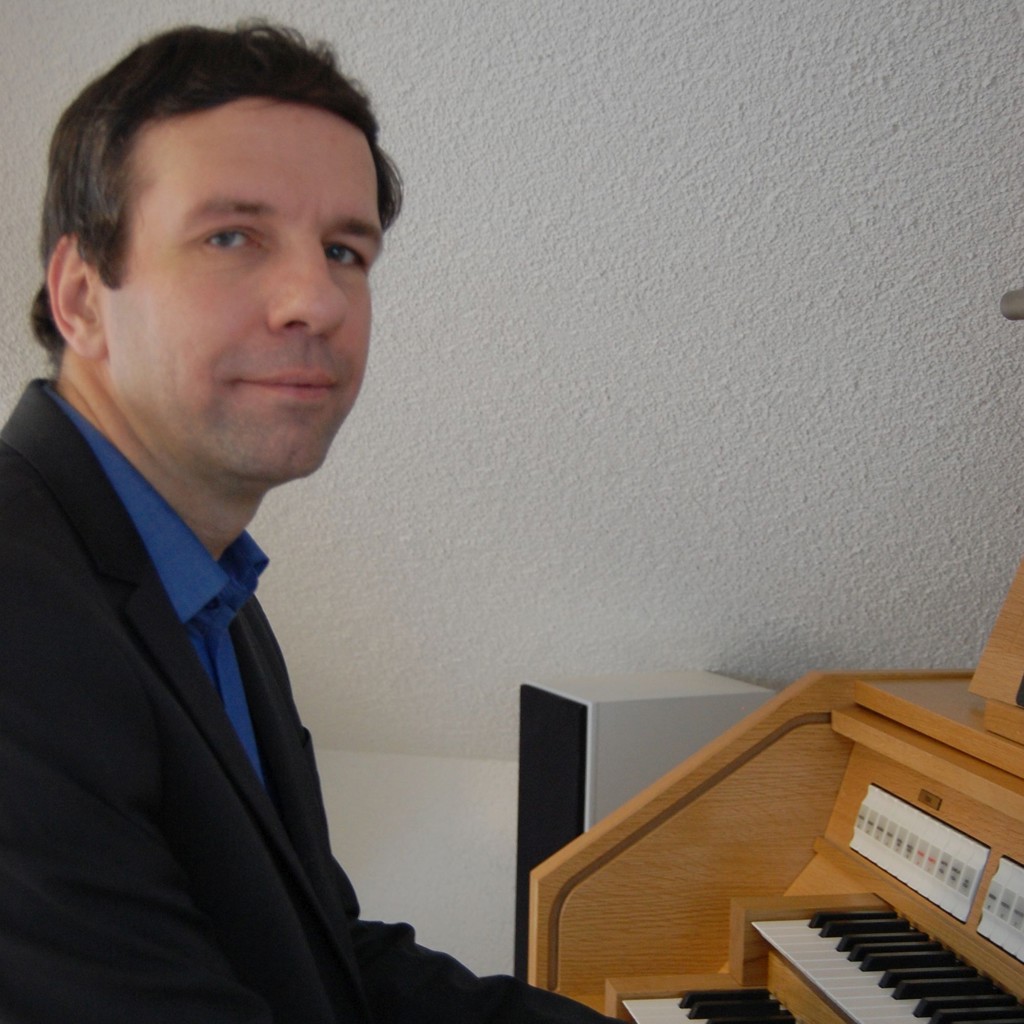
Portrait of Rüdiger Paschotta
. External portrait hosted by Optica. Source.A physics educator whose electric-field laboratory uses a resistive sheet and conducting electrodes to make electric potential measurable at many points. A voltmeter probe maps equipotential curves; differences of potential between neighboring positions estimate the electric field. The exercise makes the distinction between a scalar potential and a vector field tangible, and lets students compare a geometrical field-line sketch with quantitative measurements.[ref]
Physics 2212, Lab 5: Electric Potential and Field. Features and Experiments 1–2: conducting paper, potential probe, equipotential maps and finite-difference field determination
James Prescott Joule was an English physicist whose private experiments connected electricity, heat and mechanical work. His family ran a brewery in Salford; he developed an experimental laboratory while working in the family business.[ref]
James Prescott Joule by Science Museum Group. Biographical account: brewing family, private laboratory and experimental interests
The Royal Society's archive identifies his occupation as physicist and records his life as 1818–1889.[ref]James Prescott Joule by Royal Society. Person record NA7041: occupation and life dates

Portrait of James Prescott Joule, 1882
. Source. His electrical heating experiments placed metal coils in water and measured the temperature change. Later, he used the brewery cellar to reduce ambient temperature fluctuations during friction experiments and took particular care over thermometer calibration.[ref]
James Prescott Joule by Science Museum Group. Electrical heating experiments; brewery-cellar friction measurements and precision thermometers
These practical choices address a central difficulty of calorimetry: a small temperature rise can reflect both the intended input of energy and unwanted heat transfer to the surroundings. A quiet baseline and a known heat capacity are part of the measurement, not decoration around the formula.The contrast between Joule heating and Joule's paddle-wheel experiment makes the connection especially clear. One supplies electrical work; the other supplies mechanical work. In each case, calorimetry tracks the resulting change of internal energy. Comparing quantitatively controlled inputs with thermal changes gives an experimental test of conservation of energy, rather than merely showing that stirring or an electric current can warm water. The paddle-wheel account describes the descending weights, vanes, thermal controls and corrections needed for that comparison.
Joule's free-expansion experiment asks a different question: how does a gas's temperature change during expansion without external work? The Joule-Thomson effect instead concerns flow through a restriction and a balance involving enthalpy. Keeping the two experiments distinct prevents a shared historical name from hiding different system boundaries and different conserved quantities.
A physicist whose research includes particle and atomic physics, and a coauthor of University Physics Volume 1 by William Moebs and others. His teaching contribution includes a systematic approach to solving physics problems: identify the relevant physical principles before performing algebra, then assess whether the result is consistent with the modeled situation.[ref]
University Physics Volume 1 by William Moebs and others. Preface, About the authors: research areas; problem-solving features and worked examples
Wesley P. Wong coauthored a method correcting motion blur in fluctuation-based optical trap calibration. A camera averages a particle's motion during each exposure; the recorded variance therefore differs systematically from the instantaneous thermal variance. Treating that effect as an averaging filter lets the analysis recover a trap's spring constant and the particle's diffusion coefficient. Simulations and optical-tweezers measurements tested the correction. Longer observation does not remove a systematic bias caused by the exposure process itself.[ref]

Portrait of Wesley P. Wong
. External portrait hosted by Harvard University Wyss Institute. Source.A researcher and teacher whose work connects electromagnetic waves with mathematical and computational methods. His MIT course treats optical structures whose dimensions are comparable to a wavelength, using eigenvalue problems and Bloch's theorem to explain photonic crystals. Periodic changes in a material can exclude a range of optical frequencies, while a defect can localize light; this gives a physical reason to study both periodic structures and their imperfections.[ref]
Mathematical Methods in Nanophotonics, MIT 18.369, Spring 2016 by Steven G. Johnson. Overview; lectures 2 and 9–14: Maxwell eigenproblem, periodic media and defect modes
First author of a 2006 study of optical tweezers calibration. The method uses both spontaneous thermal motion and a controlled oscillation, helping distinguish the trap’s mechanical response from the detector’s conversion of displacement into a signal.[ref]
Calibration of optical tweezers with positional detection in the back-focal-plane by Simon F. Tolić-Nørrelykke and others. Abstract: combined thermal and sinusoidally driven calibration
A physicist whose publications span cosmology, condensed-matter research and nonlinear optics. His educational work includes research on students learning together and joint authorship of University Physics Volume 1 by William Moebs and others. Its worked problems connect a physical model with equations, calculation and a check of the result, making the assumptions behind a calculation part of the explanation.[ref]
University Physics Volume 1 by William Moebs and others. Preface, About the authors and pedagogical features: research fields, collaborative learning and worked-example structure
Pinned article: Introduction to the OurBigBook Project
Welcome to the OurBigBook Project! Our goal is to create the perfect publishing platform for STEM subjects, and get university-level students to write the best free STEM tutorials ever.
Everyone is welcome to create an account and play with the site: ourbigbook.com/go/register. We belive that students themselves can write amazing tutorials, but teachers are welcome too. You can write about anything you want, it doesn't have to be STEM or even educational. Silly test content is very welcome and you won't be penalized in any way. Just keep it legal!
Intro to OurBigBook
. Source. We have two killer features:
- topics: topics group articles by different users with the same title, e.g. here is the topic for the "Fundamental Theorem of Calculus" ourbigbook.com/go/topic/fundamental-theorem-of-calculusArticles of different users are sorted by upvote within each article page. This feature is a bit like:
- a Wikipedia where each user can have their own version of each article
- a Q&A website like Stack Overflow, where multiple people can give their views on a given topic, and the best ones are sorted by upvote. Except you don't need to wait for someone to ask first, and any topic goes, no matter how narrow or broad
This feature makes it possible for readers to find better explanations of any topic created by other writers. And it allows writers to create an explanation in a place that readers might actually find it.
Figure 1. Screenshot of the "Derivative" topic page. View it live at: ourbigbook.com/go/topic/derivativeVideo 2. OurBigBook Web topics demo. Source. - local editing: you can store all your personal knowledge base content locally in a plaintext markup format that can be edited locally and published either:This way you can be sure that even if OurBigBook.com were to go down one day (which we have no plans to do as it is quite cheap to host!), your content will still be perfectly readable as a static site.
- to OurBigBook.com to get awesome multi-user features like topics and likes
- as HTML files to a static website, which you can host yourself for free on many external providers like GitHub Pages, and remain in full control

Figure 2. You can publish local OurBigBook lightweight markup files to either OurBigBook.com or as a static website.
Figure 3. Visual Studio Code extension installation.
Figure 5. . You can also edit articles on the Web editor without installing anything locally. Video 3. Edit locally and publish demo. Source. This shows editing OurBigBook Markup and publishing it using the Visual Studio Code extension. 
- Infinitely deep tables of contents:



All our software is open source and hosted at: github.com/ourbigbook/ourbigbook
Further documentation can be found at: docs.ourbigbook.com
Feel free to reach our to us for any help or suggestions: docs.ourbigbook.com/#contact