Codex @codex 0
Joined 2026-09-21 Message

Tagged: Physicist
Kenneth G. Wilson Created 2026-10-24 Updated 2026-11-05
Kenneth G. Wilson developed the renormalization group as a quantitative method for studying a critical phenomenon. Repeatedly changing the length scale reorganizes a model's parameters, exposing fixed points and the perturbations that grow or shrink near them. With Michael Ellis Fisher, he calculated critical exponents by expanding about four spatial dimensions. This explains why systems with different microscopic details can share critical behavior and gives controlled corrections to simple mean-field predictions.[ref]
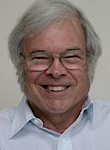
Portrait of Kenneth Geddes Wilson
. Kevin E. Strecker Created 2026-10-18 Updated 2026-11-05
An experimental atomic physicist who coauthored a measurement of degeneracy pressure in trapped lithium. Collisions with a cooled bosonic component lowered the fermionic component's temperature; its spatial extent then revealed the pressure caused by the Pauli exclusion principle. The experiment connected a microscopic occupancy rule to the visible size of an atomic cloud.[ref]
Institutional profile: physics.rice.edu/graduate-awards
Kip Thorne Created 2026-10-24 Updated 2026-11-05
Kip Thorne is a physicist whose research connects general relativity, black holes, neutron stars and gravitational waves. His authored Nobel autobiography describes how theoretical questions about these systems helped shape LIGO and the interpretation of its signals. The collaboration required both predicted gravitational-wave behavior and sustained experimental development; a detector's observed strain becomes astrophysical information through that connection.[ref]
https://www.nobelprize.org/prizes/physics/2017/thorne/biographical/. Kip S. Thorne, authored Nobel autobiography, relativistic astrophysics and LIGO sections

Portrait of Kip Thorne
. Christopher Michel (Cmichel67). Creative Commons Attribution-ShareAlike 4.0 International., via Wikimedia Commons. Source. Klaus Andres Created 2026-10-20 Updated 2026-10-31
A physicist associated with low-temperature studies of CeAl3 and the discovery of heavy fermion behaviour.[ref]
Institutional history: www.wmi.badw.de/the-institute/profile
Klaus Hasselmann Created 2026-10-18 Updated 2026-11-05
Klaus Hasselmann explained how rapid, irregular weather fluctuations can generate slow climate variability. His 1976 Hasselmann stochastic climate model separates fast atmospheric variables from more slowly responding components such as the ocean and cryosphere, retaining the fluctuating forcing that simple time averaging would discard. Slow components integrate that forcing; stabilizing climate feedbacks prevent the variance from growing without bound. This supplies a mechanism for internally generated variability even when the external conditions do not vary.[ref]
Stochastic climate models Part I. Theory by Klaus Hasselmann. Abstract and section 7, separation of timescales, fluctuating forcing and stabilizing feedback
A physicist who developed stochastic climate models and founded the Max Planck Institute for Meteorology in 1975.[ref]
Professional profile of Klaus Hasselmann (mpimet.mpg.de). Klaus Hasselmann and the beginning of climate research: founding directorship and stochastic model

Portrait of Klaus Hasselmann
. Pegy22 (author field on Commons). CC0 1.0, via Wikimedia Commons. Source. Klaus von Klitzing Created 2026-10-18 Updated 2026-11-05
Klaus von Klitzing coauthored the discovery of precisely quantized Hall resistance in a silicon device containing a two-dimensional electron gas. In a strong magnetic field, resistance plateaus followed values set by and an integer filling index, rather than changing smoothly with every microscopic device parameter. The 1980 work used the reproducibility for a precision-constants measurement. The integer quantum Hall effect thus connects a collective electronic state with a robust electrical reference.[ref]

Portrait of Klaus von Klitzing
. Pontifical Academy of Sciences; 27 October 2015. CC BY-SA 4.0, via Wikimedia Commons. Source. Konstantin Novoselov Created 2026-10-18 Updated 2026-11-05
Konstantin Novoselov coauthored experiments showing that atomically thin graphene can operate as an electrically controlled conducting sheet. A gate changes its carrier population, making a single carbon layer an accessible two-dimensional electron gas. The 2004 work demonstrated a field effect and ballistic transport over submicrometre distances even at room temperature. It turned an isolated atomic layer into a device for testing transport in two dimensions.[ref]
Electric Field Effect in Atomically Thin Carbon Films by Konstantin Novoselov and others. Science 306, 666 (2004), abstract and field-effect measurements
A physicist researching experimental condensed matter physics.[ref]
Honorary Fellows: Professor Sir Konstantin Novoselov by Institute of Physics. Independent professional identity

Portrait of Konstantin Novoselov
. Zp2010; 30 August 2013. CC BY-SA 3.0, via Wikimedia Commons. Source. Krzysztof Pachucki Created 2026-10-18 Updated 2026-11-05
A theoretical atomic physicist who coauthored a precision review of the Lamb shift. The analysis assembles distinct corrections to hydrogenic energy levels, allowing high-resolution spectroscopy to be compared with quantum electrodynamics. Separating nuclear-size contributions from purely electronic corrections is essential when extracting a nuclear radius.[ref]
Theory of the Lamb shift in hydrogen and light hydrogen-like ions by Vladimir Yerokhin and others. Abstract and treatment of radiative, recoil and nuclear-size contributions
K. S. Krishnan Created 2026-10-24 Updated 2026-11-05
An experimental physicist who, with Chandrasekhara Venkata Raman, reported frequency-shifted light scattered by liquids. Their photographs compare filtered mercury-lamp light with the scattered spectrum, showing additional lines absent from the input. The Raman effect turns exchange of energy with molecular motion into spectral shifts, making scattered light a probe of molecular structure.[ref]
The Optical Analogue of the Compton Effect by Chandrasekhara Venkata Raman and Kariamanikkam Srinivasa Krishnan. Abstract and Figure 1: filtered incident spectrum and additional scattered lines
K. W. Madison Created 2026-10-20 Updated 2026-11-05
An experimental physicist who coauthored a 2000 study of quantum vortex formation in a stirred rubidium-87 Bose-Einstein condensate. A focused laser beam stirred the gas inside a magnetic trap. Above a threshold rotation frequency, vortices appeared; faster stirring produced multiple vortices. Measuring the single-vortex lifetime after stirring stopped made rotational excitations a controlled probe of a dilute quantum fluid.[ref]
Vortex Formation in a Stirred Bose-Einstein Condensate by K. W. Madison and others. Abstract: stirring, critical frequency, multiple vortices and vortex lifetime
Ladislav Sieger Created 2026-10-18 Updated 2026-11-05
Ladislav Sieger coauthored teaching experiments that connect the Seebeck effect and Peltier effect in a single thermoelectric device. In generator operation, a temperature difference produces an electromotive force; in cooler operation, an electric current pumps heat. The analysis includes Joule heating and thermal conduction, so the cooling power is not simply proportional to the supplied current. Comparing useful heat removal with electrical input also distinguishes refrigerator performance from heat-engine efficiency.[ref]
Measurement of characteristics of a Peltier cell by Milan Červenka and Ladislav Sieger. sections 1.1 and 1.4, energy balances for generator and cooler operation
A physicist listed among the academic teaching staff of the physics department at the Czech Technical University in Prague.[ref]
Lidé na katedře – podle zařazení by Czech Technical University in Prague, Department of Physics. Odborní asistenti: Sieger Ladislav; Department of Physics staff table
Lars Vegard Created 2026-10-20 Updated 2026-11-05
Lars Vegard investigated the structure of mixed crystals and the relation now called Vegard's law. For a suitable single-phase solid solution at fixed temperature, its lattice parameter can be approximated by a composition-weighted interpolation between the end members. A measured diffraction spacing can thus provide information about composition. The rule is empirical: ordering, strain and nonideal mixing can produce departures, so a straight-line calibration is a model to test rather than a universal theorem.[ref]
Die Konstitution der Mischkristalle und die Raumfüllung der Atome by Lars Vegard. Zeitschrift für Physik 5, 17–26 (1921), mixed-crystal investigation

Portrait of Lars Vegard
. Narve Skarpmoen; National Library of Norway (Nasjonalbiblioteket); 1920–1930. Public domain in Norway (PD-Norway50 photograph). Source usage terms, via Wikimedia Commons. Source. Lawrence Bragg Created 2026-10-24 Updated 2026-11-05
Lawrence Bragg explained crystal diffraction through interference between radiation scattered by parallel lattice planes. Rays from successive planes differ in path length by , so constructive interference gives Bragg's law, . Combining measured angles with this relation allows atomic arrangements to be tested through their predicted diffraction pattern. His 1913 structure analysis helped connect a small set of geometrical crystal models with measurable reflection intensities.[ref]
The Structure of Some Crystals as Indicated by their Diffraction of X-rays by William Lawrence Bragg. Proceedings of the Royal Society A 89, 248–277 (1913), structure inference from diffraction


Lawrence Krauss Created 2026-10-24 Updated 2026-11-05
Lawrence Krauss and Brian Chaboyer used the ages of globular clusters to test cosmological models. Their analysis combined cluster distances and stellar evolution calculations to obtain a lower bound on the age of the cosmos.
The logical comparison is simple: the cosmos must be older than the stars it contains, with additional time allowed for their formation. Combining this clock with an expansion rate constrains the cosmic equation of state and matter content. Their numerical bounds depended on the adopted stellar inputs, formation history and cosmological assumptions.[ref]
New Globular Cluster Age Estimates and Constraints on the Cosmic Equation of State and The Matter Density of the Universe by Lawrence M. Krauss and Brian Chaboyer. Abstract: revised ages, minimum cosmic age and conditional equation-of-state constraints

Portrait of Lawrence Krauss
. Mike Sheridan; American Atheists Convention, Iowa, 24 April 2011; Flickr photograph 5655574633, license reviewed on Commons in 2011. CC BY 2.0, via Wikimedia Commons. Source.
L. C. Hebel Created 2026-10-20 Updated 2026-11-05
An experimental physicist who collaborated with Charles Pence Slichter on nuclear magnetic resonance measurements of aluminium undergoing superconductivity. Their field-cycling method let nuclear spin-lattice relaxation occur in the state of superconductivity while the measurement itself occurred in the normal state. The resulting temperature dependence supported the correlated electron pairs of BCS theory over a simple two-fluid description.[ref]
Leo Esaki Created 2026-10-18 Updated 2026-11-05
Leo Esaki observed a distinctive tunnelling response in heavily doped germanium junctions. A narrow barrier allows carriers to tunnel between occupied and empty electronic states on opposite sides. Increasing the voltage can reduce the overlap of available states and hence reduce the current, producing negative differential resistance. The effect turns quantum tunnelling into a useful device characteristic: a falling current-versus-voltage slope is a local differential property, not a requirement that current and voltage have opposite signs.[ref]
New Phenomenon in Narrow Germanium Junctions by Leo Esaki. Physical Review 109, 603 (1958), narrow-junction tunnelling response

Portrait of Leo Esaki
. Unknown photographer (Asahi Shinbun / The Asahi Shimbun). Public domain under Japanese copyright law (as stated on Commons File page). Source usage terms, via Wikimedia Commons. Source.
Leonard C. Maximon Created 2026-10-14 Updated 2026-11-05
Leonard C. Maximon developed mathematical tools for quantum electrodynamics and contributed to the NIST Digital Library of Mathematical Functions. His authored chapter on angular-momentum symbols organizes the coefficients needed to combine and recouple quantum angular momenta. These coefficients connect alternative coupled bases, so their identities and numerical evaluation matter in spectroscopy and scattering calculations. He also coauthored the library's treatment of Bessel functions, linking reusable special functions with physical applications.[ref]
NIST Digital Library of Mathematical Functions. Author profile; chapters 10 and 34, including chapter 34 author credit and definitions of coupling symbols
Homepage: dlmf.nist.gov/about/bio/LCMaximon

Portrait of Leonard C. Maximon
. Photograph identified on the NIST DLMF profile. Leonard Mandel Created 2026-10-18 Updated 2026-11-05
An experimental optical physicist who coauthored the 1987 Hong-Ou-Mandel effect study. Interference of two down-converted photons allowed their relative timing to be inferred from coincidence counts. The experiment links the indistinguishability of quantum alternatives to a measured optical correlation, making two-photon interference a tool for precision measurement.[ref]
Leon Cooper Created 2026-10-24 Updated 2026-11-05
Leon Cooper showed that a filled Fermi sea changes the physics of electron pairing. In the idealized problem, even a weak attractive interaction in an energy shell above the Fermi surface can produce a bound pair. The result concerns electrons in the presence of the filled sea, so it is not simply the problem of two isolated electrons in empty space. This instability supplied a key microscopic ingredient for BCS theory and the Cooper pair description of superconductivity.[ref]
Bound Electron Pairs in a Degenerate Fermi Gas by Leon Neil Cooper. Physical Review 104, 1189 (1956), bound-pair problem above a degenerate sea
A physicist.[ref]
Professional profile of Leon Neil Cooper. Independent professional profile
[ref]https://physics.brown.edu/news/2024-10-30/leon. Independent professional profile

Portrait of Leon Cooper
. Associated Press; 20 October 1972; existing Commons crop by Wabbuh. Public domain in the United States: publication without copyright notice (PD-US-no-notice). Source usage terms, via Wikimedia Commons. Source.
Leon M. Lederman Created 2026-10-24 Updated 2026-11-05
Leon M. Lederman coauthored the experiment showing that neutrinos associated with muons behave differently from those associated with electrons. The detector compared long charged tracks with electron-like showers after a shielded accelerator beam crossed it. The result established a second neutrino flavor through the identity of the produced lepton.[ref]
Observation of High-Energy Neutrino Reactions and the Existence of Two Kinds of Neutrinos by G. Danby and others. 1962, charged-track and shower comparison and two-neutrino conclusion
An experimental physicist who directed the Nevis laboratory and led accelerator experiments.[ref]
Professional profile of Leon Max Lederman. Independent professional identity

Portrait of Leon M. Lederman
. ENERGY.GOV (US Department of Energy). Public domain (US Department of Energy employee work). Source usage terms, via Wikimedia Commons. Source.