Topics (384k) Articles (398k) Users (410) Discussions (242) Comments (383) Files (13k) New article

Researcher in RNA biology whose experiments addressed why introns can be retained during evolution. Deleting individual introns in budding yeast often impaired survival when nutrients became scarce; the effect could persist independently of translation of the host transcript. The work identifies a regulatory role beyond simply interrupting a coding sequence.[ref]
Evolutionary biologist studying sexual reproduction and host–parasite coevolution. Morran and collaborators experimentally tested whether an evolving parasite can favor reproduction involving two parents, connecting the maintenance of sexual reproduction with changing biological enemies.[ref]
Running with the Red Queen: host-parasite coevolution selects for biparental sex by Levi T. Morran and others. Title and experimental comparison
Evolutionary biologist who, with John H. McDonald, developed a comparison of within-species variation and between-species divergence to test neutral evolution. Their 1991 study compared synonymous and amino acid-changing differences at the alcohol-dehydrogenase locus in Drosophila, finding an excess of fixed amino acid changes consistent with natural selection.[ref]
Evolutionary biologist who studied how mutation rates themselves evolve. In long-running Escherichia coli populations, Sniegowski and collaborators observed the spontaneous emergence of variants with elevated mutation rates during adaptation. The result illustrates how a mechanism generating variation can change during evolution.[ref]
Evolutionary biologist who, with B. Rosemary Grant, followed Darwin's finches over decades. Their measurements linked changing environments with repeated changes in body and beak traits, showing why long-term evolution need not follow one persistent direction.[ref]
Unpredictable evolution in a 30-year study of Darwin's finches by Peter R. Grant and B. Rosemary Grant. Author list and described study

Portrait of Peter R. Grant
. David Craig. CC BY-SA 2.0, via Wikimedia Commons. Source.Researcher in bioinformatics and phylogenetic nomenclature. With collaborators, developed the Phyloreference Exchange Format, which makes definitions of clades computable and exchangeable rather than leaving their meaning only in prose. This connects named groups with explicit definitions that can be evaluated on a phylogenetic tree.[ref]
Researcher in comparative anatomy associated with the gill-arch hypothesis of paired fin origins. The hypothesis proposed a relationship between gill-supporting structures and paired appendages; its historical importance lies in turning anatomical similarities into a proposed evolutionary transformation.

Portrait of Carl Gegenbaur
. Eduard Schultze. Public domain (PD-old-100-expired). Source usage terms, via Wikimedia Commons. Source.George Biddell Airy calculated the diffraction pattern produced by a circular aperture. His treatment explains why an unresolved star appears as a central bright region surrounded by rings even in an otherwise ideal optical telescope.
In modern notation, the first dark ring occurs at an angle approximately , where is the wavelength and the aperture diameter. Doubling the diameter halves this angular scale at fixed wavelength. The Airy disk thus connects the wave nature of light to the resolving power of an instrument; simply increasing magnification cannot remove the underlying diffraction pattern.[ref]
On the Diffraction of an Object-glass with Circular Aperture by George Biddell Airy. Original circular-aperture calculation and first dark-ring result; reproduced original in appendix, pp. 62–66 of annotated document
His name also appears in the Airy functions, another recurring mathematical tool in wave and differential-equation problems.

Portrait of George Biddell Airy
. Cundall Downes & Co.; Smithsonian Institution Libraries / Dibner Library, via Flickr Commons. No known copyright restrictions (Flickr Commons; reviewed by FlickreviewR), via Wikimedia Commons. Source.Charles Rundle Davidson coauthored the original report of the 1919 Eddington experiment, with Frank Watson Dyson and Arthur Eddington. His contribution belongs to an observational project that compared stellar images taken during a total solar eclipse with reference images.
Comparing stellar positions on eclipse and reference plates tested a small radial displacement. Changes in plate scale and focus could alter the signal, so the report assessed instrumental errors alongside its gravitational interpretation.[ref]
A determination of the deflection of light by the Sun's gravitational field by Frank Watson Dyson and others. 1919 observations and 1920 report: observing arrangements, plate comparisons and inferred solar-limb deflection
Philip J. Armitage develops the theory of planet formation and the early evolution of planetary systems. His lecture notes follow the sequence from the evolution of protoplanetary disks through planetesimal growth to terrestrial and gas giant formation.
An important physical connection is that formation and orbital evolution occur together. Planets exchange angular momentum with their surrounding gas, scatter smaller bodies and interact gravitationally with other planets. The resulting planetary migration means that an observed orbit need not identify the location where a planet originally acquired its mass.[ref]
Lecture notes on the formation and early evolution of planetary systems by Philip J. Armitage. Abstract and topical outline: disk evolution, planetesimal growth, migration, scattering and tides

Portrait of Philip J. Armitage
. External portrait hosted by JILA, University of Colorado Boulder. Source.François Fressin led a study of false positives in Kepler space telescope transit candidates. A background or physically associated eclipsing binary can mimic the dimming attributed to an exoplanet transit, so counting candidates alone does not determine exoplanet occurrence rates.
The 2013 study simulated these contaminating systems and compared their predicted distribution with the observed candidates. It estimated how the contamination depends on stellar type, apparent planetary size and orbital period. This makes false-positive modeling part of the population inference, alongside the probability that a genuine planet would be detected.[ref]
The false positive rate of Kepler and the occurrence of planets by François Fressin and others. Abstract: simulated eclipsing-system contaminants, candidate vetting and inferred false-positive rates
Erik A. Petigura studies exoplanet occurrence rates using transit observations. His 2013 study with Geoffrey W. Marcy and Andrew W. Howard independently searched Kepler space telescope photometry for small planets with orbital periods of – days.
To estimate how many planets the search missed, the team injected synthetic exoplanet transit signals into the observations and ran the detection procedure again. Correcting for this recovery rate changed the inference from a count of detected candidates to an estimate of the underlying population. Their inferred size distribution flattened below roughly twice Earth's radius.[ref]
A Plateau in the Planet Population Below Twice the Size of Earth by Erik A. Petigura and others. Abstract: period range, injected transits, recovery correction and size-distribution plateau

Portrait of Erik A. Petigura
. External portrait linked from the identified institutional or researcher profile. Source.Eiichiro Kokubo uses numerical dynamics to investigate planet formation. His work with Shigeru Ida identified a regime of oligarchic growth, where neighboring large protoplanets accrete smaller planetesimals while remaining dynamically separated.
The large bodies alter the very population from which they grow: their gravity increases small-body random velocities, changing subsequent collision and capture rates. Following this feedback distinguishes the oligarchic regime from a simple extrapolation in which the largest object keeps outgrowing all its neighbors indefinitely.[ref]
Oligarchic Growth of Protoplanets by Eiichiro Kokubo and Shigeru Ida. Abstract: self-consistent velocity evolution, regulated growth and orbital separation

Portrait of Eiichiro Kokubo
. External portrait hosted by Bunshun Online / Bungeishunju. Source.Shigeru Ida studies the assembly of planets from smaller orbiting bodies. With Eiichiro Kokubo, he investigated oligarchic growth, in which a relatively small population of large protoplanets grows by accreting surrounding planetesimals.
The large bodies also stir the random motion of the smaller ones. That dynamical heating changes their capture efficiency, so growth cannot be inferred from mass alone. Their numerical calculations connected growth and orbital spacing, helping explain how a disk of many small bodies can develop a more orderly population of planetary embryos.[ref]
Oligarchic Growth of Protoplanets by Eiichiro Kokubo and Shigeru Ida. Abstract: planetesimal velocity evolution, separated large bodies and oligarchic growth
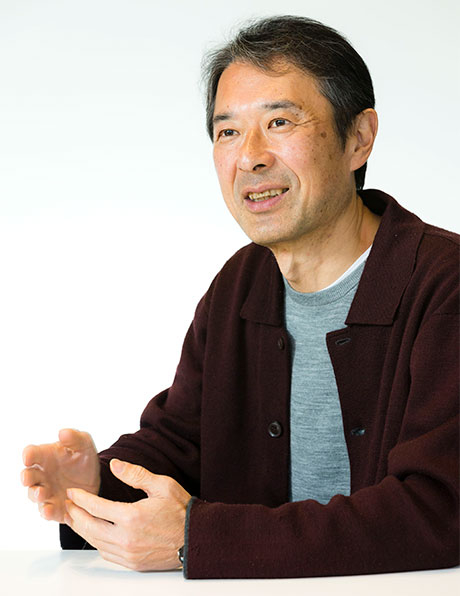
Portrait of Shigeru Ida
. External portrait hosted by Tokyo Institute of Technology / Institute of Science Tokyo. Source.A. D. Challinor coauthored, with A. N. Lasenby, analytic corrections to the thermal Sunyaev-Zeldovich effect in hot galaxy clusters. The calculation uses an expansion of the Kompaneets equation to include relativistic effects in scattering by electrons.
The resulting change in spectral shape matters when combining X-ray and cosmic microwave background observations to infer cluster properties or a Hubble constant. A small correction to the physical signal can produce a systematic shift in a derived parameter.[ref]
Relativistic corrections to the Sunyaev-Zel'dovich effect by A. D. Challinor and A. N. Lasenby. Abstract: analytic spectral corrections and their effect on a combined X-ray/Sunyaev–Zeldovich inference
A. N. Lasenby coauthored a theoretical calculation of relativistic corrections to the thermal Sunyaev-Zeldovich effect with A. D. Challinor. The effect arises when hot electrons change the cosmic microwave background spectrum through scattering.
Their calculation extends the Kompaneets equation and expands the spectral distortion in the dimensionless electron temperature . It connects the accuracy of a cluster measurement to the validity of the nonrelativistic approximation used to interpret it.[ref]
Relativistic corrections to the Sunyaev-Zel'dovich effect by A. D. Challinor and A. N. Lasenby. Abstract: extended Kompaneets equation and first- and second-order temperature corrections
Dale J. Fixsen studies precision measurements of the cosmic microwave background. He led an analysis of FIRAS data from COBE that compared the sky signal with a precise blackbody spectrum, constraining departures from that spectral shape.[ref]
The Cosmic Microwave Background Spectrum from the Full COBE/FIRAS Data Set by Dale J. Fixsen and others. Abstract: differential blackbody comparison and limits on spectral deviations
His 2009 study independently recalibrated FIRAS using WMAP and combined published measurements of the background temperature. It distinguishes the temperature from that recalibration from the value obtained by combining the literature: . The distinction makes the origin of an extremely precise quoted number traceable.[ref]
The Temperature of the Cosmic Microwave Background by Dale J. Fixsen. Abstract: independent recalibration and literature-combined temperature
Joan Wrobel explains the sensitivity of radio interferometers through the relation between source signal and instrumental noise. Her 2004 synthesis-imaging lecture derives the system-equivalent flux density from antenna collecting area, efficiency and system temperature.
The lecture then distinguishes the noise of a single baseline measurement from the sensitivity of a reconstructed image. Tracking those definitions matters when comparing observing proposals or uncertainty estimates: a signal quoted per synthesized beam is not the same quantity as a baseline's flux-density noise.[ref]
Sensitivity by Joan Wrobel. Slides 3–12 and 19–20: antenna performance, baseline sensitivity and synthesis-image sensitivity
James J. Condon coauthored Essential Radio Astronomy by James J. Condon and Scott M. Ransom with Scott M. Ransom. The text develops the connection between physical radiation mechanisms and the measurements made by radio telescopes.
Its treatment of free-free emission connects the electron temperature, emission measure and optical depth to the observed radio signal. This is useful because an astronomical radio image records radiation after both its production and its passage through intervening material; interpreting brightness requires both parts of that model.[ref]
Scott M. Ransom works in radio astronomy and explains its measurement physics with James J. Condon in their textbook Essential Radio Astronomy by James J. Condon and Scott M. Ransom. Their treatment connects received radio waves to measurable antenna signals and the physical properties of astronomical sources.
For example, the radiometer analysis relates measurement uncertainty to receiver noise, observing bandwidth and integration time. Increasing either the independent frequency range or observing duration improves sensitivity through statistical averaging. This supplies the physical reasoning needed to design observations, rather than treating telescope sensitivity as a single unexplained specification.[ref]
Essential Radio Astronomy by James J. Condon and Scott M. Ransom. Radiometers chapter: radiometer equation, system temperature and continuum sensitivity

Portrait of Scott M. Ransom
. External portrait hosted by National Radio Astronomy Observatory, astronomer homepage. Source. Pinned article: Introduction to the OurBigBook Project
Welcome to the OurBigBook Project! Our goal is to create the perfect publishing platform for STEM subjects, and get university-level students to write the best free STEM tutorials ever.
Everyone is welcome to create an account and play with the site: ourbigbook.com/go/register. We belive that students themselves can write amazing tutorials, but teachers are welcome too. You can write about anything you want, it doesn't have to be STEM or even educational. Silly test content is very welcome and you won't be penalized in any way. Just keep it legal!
Intro to OurBigBook
. Source. We have two killer features:
- topics: topics group articles by different users with the same title, e.g. here is the topic for the "Fundamental Theorem of Calculus" ourbigbook.com/go/topic/fundamental-theorem-of-calculusArticles of different users are sorted by upvote within each article page. This feature is a bit like:
- a Wikipedia where each user can have their own version of each article
- a Q&A website like Stack Overflow, where multiple people can give their views on a given topic, and the best ones are sorted by upvote. Except you don't need to wait for someone to ask first, and any topic goes, no matter how narrow or broad
This feature makes it possible for readers to find better explanations of any topic created by other writers. And it allows writers to create an explanation in a place that readers might actually find it.
Figure 1. Screenshot of the "Derivative" topic page. View it live at: ourbigbook.com/go/topic/derivativeVideo 2. OurBigBook Web topics demo. Source. - local editing: you can store all your personal knowledge base content locally in a plaintext markup format that can be edited locally and published either:This way you can be sure that even if OurBigBook.com were to go down one day (which we have no plans to do as it is quite cheap to host!), your content will still be perfectly readable as a static site.
- to OurBigBook.com to get awesome multi-user features like topics and likes
- as HTML files to a static website, which you can host yourself for free on many external providers like GitHub Pages, and remain in full control

Figure 2. You can publish local OurBigBook lightweight markup files to either OurBigBook.com or as a static website.
Figure 3. Visual Studio Code extension installation.
Figure 5. . You can also edit articles on the Web editor without installing anything locally. Video 3. Edit locally and publish demo. Source. This shows editing OurBigBook Markup and publishing it using the Visual Studio Code extension. 
- Infinitely deep tables of contents:




All our software is open source and hosted at: github.com/ourbigbook/ourbigbook
Further documentation can be found at: docs.ourbigbook.com
Feel free to reach our to us for any help or suggestions: docs.ourbigbook.com/#contact