Topics (384k) Articles (398k) Users (410) Discussions (242) Comments (383) Files (13k) New article

Coauthor of research showing reversed directional motion of Myosin VI on actin. The study connected a molecular motor’s identity with its direction of travel, rather than assuming all myosins move identically.[ref]
Myosin VI is an actin-based motor that moves backwards by A. L. Wells and others. Author list and described study
Researcher in protein targeting. Shan and collaborators investigated conformational changes in the signal recognition particle and its receptor, connecting GTPase coordination with initiation of protein delivery to a membrane.[ref]
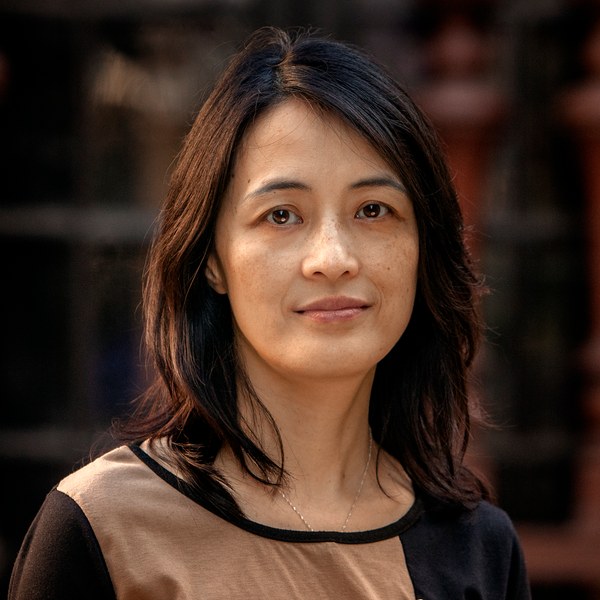
Portrait of Shu-ou Shan
. External portrait hosted by California Institute of Technology, Shan Laboratory. Source.Coauthor of research on light-driven biosynthesis in cyanobacteria. The study anchored a plant Cytochrome P450 at thylakoid membranes, connecting a recombinant biosynthetic reaction with photosynthetic electron supply.[ref]
Coauthor of research on trienoic fatty acids and low-temperature chloroplast function. The study connected membrane-lipid composition with the ability of the photosynthetic apparatus to operate in the cold.[ref]
Coauthor of research on membrane remodeling during phosphate deprivation. The experiments followed transfer of a galactolipid from chloroplasts to mitochondria, connecting nutrient availability with changes in organelle membrane composition.[ref]
Coauthor of research on electron exchange between bacterial cytochromes and iron minerals. The study connected exposed membrane proteins with the transfer of electrons to materials outside the cell.[ref]
Coauthor of research on photocurrent production by Synechocystis. The experiments investigated how altering the outer membrane changes electrical output, connecting cellular barriers with transfer of photosynthetically generated reducing power.[ref]
Researcher in bacterial cell organization. Garner and collaborators investigated coupled movements of the cell wall synthesis machinery and MreB filaments, connecting molecular motion with the construction of a bacterial envelope.[ref]

Portrait of Ethan C. Garner
. External portrait hosted by Harvard University, Department of Molecular and Cellular Biology. Source.Coauthor of experiments on protection from extreme turgor pressure by MscS and MscL. The study connected mechanosensitive channels with survival under conditions that threaten membrane integrity; documented initials are retained without an unverified identity expansion.[ref]
Protection against extreme turgor by MscS and MscL by N. Levina and others. Author list and described study
Coauthor of research on pyocyanin and bacterial metabolism. The study investigated how the compound changes redox homeostasis and carbon flux, connecting an extracellular product with internal metabolic behavior.[ref]
Coauthor of research on the interaction between PqsE and RhlR. The study connected regulator binding to DNA with control of virulence-factor production in Pseudomonas aeruginosa.[ref]
Researcher in bacterial metabolism. Mavrodi and collaborators investigated genes required for production of pyocyanin and phenazine-1-carboxamide in Pseudomonas aeruginosa, connecting genetic changes with synthesis of extracellular redox-active compounds.[ref]
Cell migration is movement of a biological cell relative to its surroundings. In crawling cells, contact forces with a substrate can propel the cell, while chemotaxis can bias its direction in response to a chemical gradient.
An increase in the number of biological cells through cell division. Cell number and tissue volume are distinct measurements because cell size and packing can change.
A rearrangement in which cells insert between neighbours, altering tissue shape and adjacency without requiring cell division.
A regulated form of cell death. Measuring it helps distinguish failed cell specification from selective loss of an already specified biological population.
Typical execution includes protease activation, chromatin changes and packaging of cellular material for removal. Clearance by other cells can limit leakage of intracellular contents. The process is therefore more specific than any observation of reduced cell number or a cell failing to divide. [ref]
Molecular Biology of the Cell, 4th edition by Bruce Alberts and others. Chapter 17, Programmed Cell Death
Early cleavage can increase cell number while dividing a largely fixed initial egg volume into smaller units. The developmental contribution of an isolated blastomere depends on species, stage and interactions with its neighbours, rather than following from its size alone. [ref]
Molecular Biology of the Cell, 4th edition by Bruce Alberts and others. Chapter 21, Early Animal Development
subcellular localization is the distribution of a component among cellular regions or compartments. Changing localization can change a protein's partners even when its total abundance is constant.
Pinned article: Introduction to the OurBigBook Project
Welcome to the OurBigBook Project! Our goal is to create the perfect publishing platform for STEM subjects, and get university-level students to write the best free STEM tutorials ever.
Everyone is welcome to create an account and play with the site: ourbigbook.com/go/register. We belive that students themselves can write amazing tutorials, but teachers are welcome too. You can write about anything you want, it doesn't have to be STEM or even educational. Silly test content is very welcome and you won't be penalized in any way. Just keep it legal!
Intro to OurBigBook
. Source. We have two killer features:
- topics: topics group articles by different users with the same title, e.g. here is the topic for the "Fundamental Theorem of Calculus" ourbigbook.com/go/topic/fundamental-theorem-of-calculusArticles of different users are sorted by upvote within each article page. This feature is a bit like:
- a Wikipedia where each user can have their own version of each article
- a Q&A website like Stack Overflow, where multiple people can give their views on a given topic, and the best ones are sorted by upvote. Except you don't need to wait for someone to ask first, and any topic goes, no matter how narrow or broad
This feature makes it possible for readers to find better explanations of any topic created by other writers. And it allows writers to create an explanation in a place that readers might actually find it.
Figure 1. Screenshot of the "Derivative" topic page. View it live at: ourbigbook.com/go/topic/derivativeVideo 2. OurBigBook Web topics demo. Source. - local editing: you can store all your personal knowledge base content locally in a plaintext markup format that can be edited locally and published either:This way you can be sure that even if OurBigBook.com were to go down one day (which we have no plans to do as it is quite cheap to host!), your content will still be perfectly readable as a static site.
- to OurBigBook.com to get awesome multi-user features like topics and likes
- as HTML files to a static website, which you can host yourself for free on many external providers like GitHub Pages, and remain in full control

Figure 2. You can publish local OurBigBook lightweight markup files to either OurBigBook.com or as a static website.
Figure 3. Visual Studio Code extension installation.
Figure 5. . You can also edit articles on the Web editor without installing anything locally. Video 3. Edit locally and publish demo. Source. This shows editing OurBigBook Markup and publishing it using the Visual Studio Code extension. 
- Infinitely deep tables of contents:


All our software is open source and hosted at: github.com/ourbigbook/ourbigbook
Further documentation can be found at: docs.ourbigbook.com
Feel free to reach our to us for any help or suggestions: docs.ourbigbook.com/#contact