Topics (384k) Articles (398k) Users (410) Discussions (242) Comments (383) Files (13k) New article

Luca Sorriso-Valvo is a physicist who studies turbulence in space plasmas, particularly the solar wind. His CNR institutional profile lists these specialties and publications connecting spacecraft observations to the statistical transfer of energy between scales.[ref]
Luca Sorriso-Valvo research profile by CNR ISTP. competencies and selected publications
His 1999 first-authored paper examined the probability density functions of solar wind speed and magnetic field increments. Small-scale fluctuations departed strongly from a Gaussian distribution. The team fitted a model that mixes Gaussian distributions whose variances follow a log-normal distribution; a scale-dependent width then quantified how the distribution changed.[ref]
The idea has a simple interpretation. Many quiet intervals mixed with occasional highly variable intervals can produce a distribution with more extreme events than one Gaussian predicts. A good fit does not uniquely prove the underlying mechanism, but following its parameter across scales makes intermittency quantitatively testable. Together with his later work on the energy cascade, this connects the visible irregularity of a time series to specific statistical questions about the flow.
Raffaele Marino is a physicist whose research includes turbulence in space plasmas and fluids with density stratification. A first-authored study investigated intense vertical drafts using direct numerical simulation of equations with the Boussinesq approximation. In some simulated regimes, roughly of the volume accounted for as much as of the total dissipation.[ref]
These figures concern the modeled flows, rather than a universal measured fraction of the ocean. They illustrate why the average can hide strong spatial concentration. Dividing the two fractions gives : the active region's mean dissipation density is five times the whole-volume mean. The remaining supplies the other half, so its mean is only times the whole-volume mean. The contrast between the two regions is consequently ninefold.
The result gives an illuminating connection between intermittency and physical mixing: a relatively small region can dominate energy conversion. The simulations test a proposed mechanism for variability; identifying the same mechanism in a particular environment also requires observations of that environment.
Vincenzo Carbone is a physicist whose work connects magnetohydrodynamic turbulence, the solar wind and nonlinear statistical models. The European Geosciences Union's official 2025 medal citation identifies contributions to models of the energy cascade, the multiscale organization of fluctuations and shell models of turbulence applied to solar phenomena.[ref]
Lewis Fry Richardson Medal 2025: Vincenzo Carbone by European Geosciences Union. scientific citation, cascade and shell-model contributions
The modeling strategy represents interacting ranges of scale with a smaller dynamical system, making it possible to test how transfer toward smaller structures produces uneven dissipation. A useful question is whether a model matches several kinds of observations simultaneously: the distribution of event strengths, their timing and their scale dependence. His coauthored work with Pierluigi Veltri on solar flare timing supplies one such comparison.[ref]
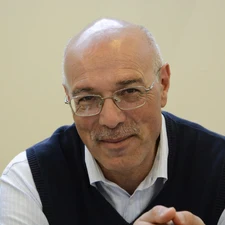
Fabio Lepreti is a physicist who studies statistical and dynamical models of turbulence. A paper with Vincenzo Carbone and Pierluigi Veltri, published in 2006 and archived in 2007, constructed a model for the spatial and temporal unevenness of turbulent dissipation. The model combined a shell model of turbulence for transfer between scales with rules for distributing the dissipated energy across space.[ref]
A control parameter adjusted the strength of intermittency, and numerical simulations tested the resulting scaling. This addresses a physical distinction: an average dissipation rate can be steady even when individual locations undergo rare intense bursts. A model that reproduces the average alone has not yet explained that concentration in space and time.[ref]
Model for the spatio-temporal intermittency of the energy dissipation in turbulent flows by Fabio Lepreti and others. abstract, spatial redistribution and numerical validation
Fabio Lepreti, identified in the INAF CAESAR team directory
. External portrait linked beside Fabio Lepreti's name in CAESAR Team by INAF.Pierluigi Veltri is a physicist whose publications develop and test models of magnetohydrodynamic turbulence. With Vincenzo Carbone and colleagues, he coauthored a 1999 study comparing the waiting times between solar flares with predictions of proposed mechanisms for impulsive energy release. The study analyzed twenty years of observations and found a power law in quiescent times, rather than the Poisson-like timing predicted by the particular models being tested.[ref]
Power Laws in Solar Flares: Self-Organized Criticality or Turbulence? by Guido Boffetta and others. abstract, observational interval and model comparison
The scientific point is that a burst-size distribution alone may leave competing explanations plausible. Measuring the time between bursts adds another test. The investigators also compared the observations with a shell model of turbulence, in which interacting bands of scales represent an energy cascade. Agreement across several distributions gives a more demanding comparison than matching one fitted exponent.[ref]
Power Laws in Solar Flares: Self-Organized Criticality or Turbulence? by Guido Boffetta and others. abstract, quiescent-time scaling and shell-model comparison
These are collective results, rather than evidence that one author performed every part of the analysis. They illustrate Veltri's work at the interface between nonlinear models and observable statistics of space plasmas.
Alain Noullez is a physicist whose documented work combines fluid and magnetohydrodynamic turbulence, statistical physics and numerical methods. His historical CV in an ISSI team proposal records research at the Observatoire de la Côte d'Azur, together with interests in statistics, signal processing and numerical analysis.[ref]
Dispersive cascade and dissipation in collisionless space plasma turbulence: observations and simulations. PDF page18, Alain Noullez CV, Research section
He coauthored the 2007 Ulysses spacecraft study of an energy cascade in the solar wind. The investigators formed mixed third-order structure function statistics from Elsässer variables, which combine velocity and magnetic field fluctuations. A roughly linear dependence on separation supplied evidence of transfer across scales. The analysis used high-speed polar-wind observations and explicitly related a time lag to a spatial separation through the assumption that the flow carries structures past the spacecraft.[ref]
Observation of inertial energy cascade in interplanetary space plasma by Luca Sorriso-Valvo and others. byline; equations3 and analysis of the first seven months of1996
This makes a useful distinction between an instrument's output and a physical conclusion. A spacecraft samples a time series at one moving location; interpreting the separation dependence requires a stated mapping from observation time to spatial structure. The statistical method and the physical assumption are both part of the result.
Roberto Bruno is a physicist who studies the solar wind as a natural laboratory for turbulence. INAF's 2018 institutional interview documents his work on nonlinear processes in space plasmas and the American Geophysical Union's recognition of that work.[ref]
I geofisici americani premiano Roberto Bruno by Marco Malaspina. 6 August 2018, research discussion and prize announcement
His 2024 first-authored study examined proton and alpha particle populations measured by Solar Orbiter. Instead of characterizing all particles by one bulk value, the team used clustering to separate core and beam populations within the velocity distribution. That distinction changed the interpretation of temperature and its directional dependence, because two populations moving relative to one another can appear broader when combined.[ref]
Comparative study of the kinetic properties of proton and alpha beams in the Alfvénic wind observed by SWA-PAS onboard Solar Orbiter by Roberto Bruno and others. abstract, separation method and physical interpretation
An illustrative calculation shows the issue. Two equally populated, individually narrow groups moving at and have combined mean , but their relative drift contributes to the combined variance. Treating that whole width as random thermal motion would hide the organized relative motion. Measurements of a full velocity distribution can therefore reveal physics that one average speed cannot.
Bruno Bavassano is a solar wind researcher whose publications connect spacecraft observations with the statistical behavior of magnetohydrodynamic turbulence. A 2003 study with Roberto Bruno, Vincenzo Carbone and Luca Sorriso-Valvo compared velocity and magnetic field fluctuations between and astronomical unit from the Sun. It separated fast from slow solar wind, and changes in field magnitude from changes in field direction.[ref]
Radial evolution of solar wind intermittency in the inner heliosphere by Roberto Bruno and others. byline and abstract, observing intervals and comparisons
The diagnostic was scale-dependent kurtosis. For a fluctuation with mean zero, weights rare large events strongly. A Gaussian distribution has ; a rising value as the separation shrinks indicates that small-scale changes are becoming more unevenly distributed. The study found stronger intermittency in compressive magnetic fluctuations than in the corresponding velocity fluctuations, and a radial increase in fast-wind intermittency.[ref]
Ermanno Pietropaolo is a physicist whose research at the University of L'Aquila links observations of the Sun to measurements of the solar wind and the environment around Earth. His institutional research profile describes studies of dynamics in the photosphere and chromosphere, Alfvén wave fluctuations at different distances from the Sun, and instrumentation for ground-based observations relevant to space weather.[ref]
He coauthored the 2007 study that tested an energy cascade using solar wind measurements from the Ulysses spacecraft.[ref]
Observation of inertial energy cascade in interplanetary space plasma by Luca Sorriso-Valvo and others. byline and abstract
The scientific connection is between a physical flow and a measurement procedure: instruments record velocity and magnetic field, and statistical analysis asks whether changes at different separations agree with magnetohydrodynamic turbulence. His profile's emphasis on apparatus and observing conditions is relevant because a change in a measured fluctuation must be distinguished from a change introduced by the observing system itself.Guido Boffetta is a physicist whose research includes turbulence and nonlinear dynamical systems. His University of Turin profile identifies work in turbulence research groups and projects on extreme events in turbulent convection.[ref]
A 1999 first-authored paper with Vincenzo Carbone, Pierluigi Veltri and other collaborators tested models of solar flares using the time between successive bursts. Twenty years of observations showed a power law in those intervals, with an exponent near . The comparison challenged the Poisson-like timing predicted by particular models and tested a shell model of turbulence against several observed distributions.[ref]
The methodological point is that matching burst sizes is different from matching burst timing. In an ideal constant-rate Poisson process, the probability of waiting longer than is ; a persistent power-law tail has a different pattern. This supplies an additional observable with which to distinguish models. It does not mean that a fitted exponent alone uniquely identifies the physical mechanism.
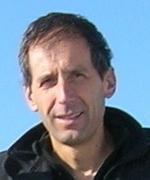
Guido Boffetta, identified portrait on his University of Turin profile
. External image from Guido Boffetta profile by the University of Turin.Marco Malaspina is a science writer and interviewer whose signed work for Media INAF communicates research in astronomy and space physics. In a 2018 interview with Roberto Bruno, he discussed the physical questions behind measurements of the solar wind and turbulence, alongside the researcher's professional recognition.[ref]
I geofisici americani premiano Roberto Bruno by Marco Malaspina. 6 August2018, verified byline and interview
The article is a communication contribution, rather than a claim that Malaspina performed the spacecraft experiment. It gives readers access to the researcher's account of why irregular plasma fluctuations are scientifically interesting. Keeping that distinction explicit separates the writer who explains an observation from the investigators who measured and analyzed it. His bylined interview is also a useful identified source for Bruno's discussion of his research, with its original date preserved.
Douglas Magde is a physical and analytical chemist whose research includes fluorescence and chemical kinetics. His UC San Diego profile documents studies of fluorescence lifetimes and reaction processes; an important earlier contribution was the development of fluorescence correlation spectroscopy with collaborators.[ref]
The team's 1972 experiment measured fluorescence fluctuations in an equilibrium reacting system. Molecules moving into and out of the observed region, and changes associated with binding, alter the recorded light signal. Correlating that signal with itself at later times supplies information about molecular motion and reaction rates even when the average signal remains steady. The reported system involved DNA and a fluorescent binding molecule.[ref]
Thermodynamic Fluctuations in a Reacting System—Measurement by Fluorescence Correlation Spectroscopy by Douglas Magde and others. abstract, equilibrium fluctuations, diffusion and chemical rates
For a toy illustration, a correlation falls to at lag . Two samples can have equal mean brightness and different , revealing different dynamics. This exponential is an explanatory model rather than the complete fitting function for the original experiment: diffusion geometry and chemical reactions determine the appropriate autocorrelation model.
Justin M. Brown is the first author, with Pascale Garaud and Stephan Stellmach, of a study of chemical mixing by fingering convection in stars. The 2013 paper developed a physically motivated transport model, tested it with three-dimensional direct numerical simulation, and supplied a method for incorporating the results into one-dimensional stellar calculations.[ref]
Fingering convection is a form of double-diffusive convection: heat and composition affect buoyancy but spread at different rates. A background that resists ordinary overturning can therefore admit smaller-scale mixing when the compositional arrangement is destabilizing. The paper also investigated when layered structures could form, rather than assuming that every unstable region develops a staircase.[ref]
Chemical Transport and Spontaneous Layer Formation in Fingering Convection in Astrophysics by Justin M. Brown and others. abstract, physical regime and layer-formation question
A simple scaling comparison helps explain why unequal diffusion matters. In time , a diffusing disturbance spreads a distance proportional to . If the thermal diffusivity is one hundred times the diffusion coefficient for composition, thermal changes spread roughly ten times farther in the same time. The calculation is illustrative, not a measured universal ratio for stars. Brown's coauthored work connects such local processes to the much larger problem of predicting chemical transport through a stellar interior.
Stephan Stellmach is a researcher in geophysics and fluid dynamics. His University of Münster profile records work on density stratification, convective turbulence and magnetic field generation, alongside publications on rotating convection.[ref]
Research profile of Stephan Stellmach by University of Münster. Projects Effects of Density Stratification on Convective Turbulence and Dynamo Action, and publication list
His 2013 work with collaborators on fingering convection connects small-scale fluid dynamics to chemical transport inside stars. A stabilizing temperature gradient and an opposing composition gradient can have a stable combined mass density profile while still permitting fingers, because thermal diffusion and molecular diffusion act at different rates. Their paper develops a transport model supported by three-dimensional direct numerical simulations, with a prescription usable in one-dimensional models of stellar evolution.[ref]
Chemical Transport and Spontaneous Layer Formation in Fingering Convection in Astrophysics by Justin M. Brown and others. Abstract, three-dimensional direct numerical simulations and use in one-dimensional stellar codes; §1, differential-diffusion mechanism
The bridge between dimensions is the practical point: a one-dimensional calculation of a star's evolution cannot explicitly resolve every three-dimensional finger. Estimating their average transport from local numerical simulations supplies a model for that unresolved motion. It is a physically tested approximation within the modeled parameter regime, not a direct observation of all mixing inside a star.

Stephan Stellmach; portrait credited to Stephan Stellmach on the LMU DeepDyn team page
. Victor S. L'vov is a researcher in theoretical physics whose work includes turbulence, wave turbulence and nonlinear dynamical systems. His Weizmann Institute of Science research homepage identifies wave and hydrodynamic turbulence as central interests.[ref]
Research profile of Victor S. L'vov by Weizmann Institute of Science. Homepage research heading and identified portrait
In 1998 he and collaborators introduced an improved shell model of turbulence designed to reduce spurious correlations and oscillations between model scales. A shell model of turbulence replaces a spatially resolved velocity field by amplitudes , which are complex numbers attached to wavenumbers , . Nonlinear interactions transfer energy between shells, while forcing and viscosity supply and dissipate it. With , ten shell steps cover a factor of in wavenumber: a small collection of variables can investigate an energy cascade spanning widely separated scales.[ref]
Improved shell model of turbulence by Victor S. L'vov and others. Abstract and §§I–II, model motivation, equation 1 and logarithmic shells
This research makes a useful distinction between reproducing scale statistics and reproducing the full spatial geometry of a turbulent flow. The paper tests scaling and shell correlations in a deliberately reduced dynamical system; that success does not make it an exact replacement for the Navier-Stokes equations in arbitrary apparatus.

W. M. Goodall reported an experimental speech-transmission system in the 1947 paper Telephony by Pulse Code Modulation by W. M. Goodall. The study concerned pulse-code modulation: sampled speech amplitudes are represented by a multi-unit code of on-or-off pulses, then decoded to reconstruct an output waveform. It connected a coding principle to an operating communications experiment.[ref]
Telephony by Pulse Code Modulation by W. M. Goodall. Printed p. 395, abstract and introduction, speech-transmission experiment and coded amplitude samples
The basic engineering tradeoff can be illustrated independently of the paper's hardware settings. If a sample is assigned one of codes, increasing creates more distinguishable amplitude levels but requires more transmitted bits. At sampling rate , a fixed-length code needs raw payload bit rateFor example, eight bits per sample at require before synchronization, framing or other overhead. These are illustrative choices, not a claim about Goodall's exact experimental format.
A uniform quantization of a one-volt input range into 256 equal-width bins has step size . With midpoint reconstruction and no overload, its maximum amplitude error is half that step. A receiver can reproduce the selected code exactly while still retaining this finite amplitude approximation. More code levels and more transmitted pulses therefore address different parts of the design from the analog signal-to-noise ratio.
Goodall's scientific contribution in the cited record is a documented experimental implementation of coded speech transmission. The byline's initials are retained here; a broader personal identity is not needed to explain the experiment's quantitative principle.
Cathal Cummins is an applied mathematician whose research combines fluid mechanics, mathematical models and experiments on environmental, biological and engineering flows. His university profile identifies him as an associate professor of applied mathematics at Heriot-Watt University. His work on seed flight connects a familiar biological object with a precise question about how flow through a porous structure generates aerodynamic forces. [ref]
https://www.hw.ac.uk/profiles/uk/school/macs/faculty/cathal-cummins. University profile: biography and research areas, checked November 2026
In the 2018 study A separated vortex ring underlies the flight of the dandelion by Cathal Cummins and others, the team investigated the pappus, the bristly structure that helps a dandelion seed remain aloft. Flow visualization and numerical analysis revealed a separated vortex ring held downstream of the porous bristle assembly. Comparisons with manufactured porous disks tested how porosity affects that flow pattern, rather than explaining the seed as merely a tiny solid parachute.[ref]
The paper's contribution statement attributes the wind-tunnel design and setup, numerical analyses, flight assay and flow visualization to Cummins, with stated assistance for the latter experiments. It also credits him with designing the silicon disks. This identifies concrete experimental and modeling contributions without assigning the whole collaborative discovery to one author.[ref]
A separated vortex ring underlies the flight of the dandelion by Cathal Cummins and others. Author Contributions: C.C.'s wind tunnel, numerical analysis, flight/visualization work and disk design.
The scientific lesson is that empty space in a structure can be an active design variable. Changing how air passes through the pappus changes the surrounding flow and drag; the relevant mechanism is not determined by the outer outline alone.

Gisela Höflinger is an author on electron microscopy specimen preparation. Her manufacturer-hosted profile identifies a background in industrial engineering and responsibility for a coating-instrument line at Leica Microsystems. Her 2014 tutorial Brief Introduction to Freeze Fracture and Etching by Gisela Höflinger explains the physical preparation steps behind images of frozen specimens.[ref]
https://www.leica-microsystems.com/science-lab/authors/detail/gisela-hoeflinger/. Originating author profile: identity, industrial-engineering background and EM-sample-preparation role
The tutorial distinguishes freeze-fracture microscopy, which exposes an internal face by breaking a frozen specimen, from freeze-etching, which removes surface ice by sublimation. It describes angled heavy-metal deposition for topographic contrast, followed by a supporting carbon layer, and distinguishes viewing a block face by scanning electron microscopy from viewing a replica by transmission electron microscopy.[ref]
Brief Introduction to Freeze Fracture and Etching by Gisela Höflinger. Definition; Sublimation and condensation of water; Freeze fracture to generate images.
A geometrical example explains why coating angle matters. For a narrow deposition beam at angle above a flat surface, an ideal step of height casts a shadow of length . With and , that length is about 23 nm. This is a simplified shadow construction, not a reconstruction of data from the tutorial. It connects Höflinger's preparation topic to a practical problem: the recorded contrast depends on both specimen structure and the way its surface was coated.
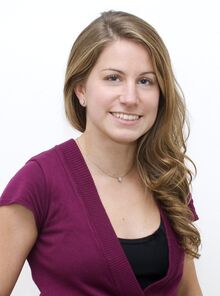
R. M. Cotts is a credited coauthor of Pulsed field gradient stimulated echo methods for improved NMR diffusion measurements in heterogeneous systems by R. M. Cotts and others, published in 1989. The joint work develops stimulated echo sequences for measuring the translational diffusion of resonant atomic nuclei in materials whose internal magnetic environment is not uniform.[ref]
Pulsed field gradient stimulated echo methods for improved NMR diffusion measurements in heterogeneous systems by R. M. Cotts and others. Publisher abstract and byline: Journal of Magnetic Resonance83(2),252–266,15June1989
Pulsed field gradient NMR relates the attenuation of a stimulated echo to motion. In heterogeneous materials, components with different magnetic susceptibilities can produce background magnetic field gradients, which add attenuation and can bias the inferred diffusion coefficient. The paper describes three modified sequences that reduce these effects; under the stated conditions, bipolar gradient pulses cancel a problematic cross term. Two sequences were tested using proton signals in both a homogeneous liquid and a heterogeneous granular solid.[ref]
Pulsed field gradient stimulated echo methods for improved NMR diffusion measurements in heterogeneous systems by R. M. Cotts and others. Abstract: background-gradient and cross-term effects; tests in bulk glycerol and granular TaH0.73
The experimental comparison makes a useful measurement principle concrete: an apparatus can respond to both molecular motion and an unwanted background field variation. A sequence designed to separate these contributions improves the interpretation of a diffusion coefficient measurement.
Charlotte Py has investigated elasto-capillarity, including how surface tension deforms an elastic sheet. She is the first author of the 2007 study introducing capillary origami: spontaneous wrapping of a liquid droplet by a flexible sheet.[ref]
Capillary Origami: Spontaneous Wrapping of a Droplet with an Elastic Sheet by Charlotte Py and others. Page156103-1: full author byline, problem and experiments
The experiment used thin polydimethylsiloxane sheets cut into different shapes. As water evaporated, surface tension progressively curved the sheet around the diminishing droplet. Square and triangular cuts followed different folding sequences, while sufficiently small or stiff sheets reopened rather than completely enclosing the liquid. This connected an accessible observation with a competition between surface energy and elastic bending.[ref]
Capillary Origami: Spontaneous Wrapping of a Droplet with an Elastic Sheet by Charlotte Py and others. Pages156103-1–2; Figure1: wrapping sequences and reopening comparison
A complementary loop experiment measured the elastocapillary length: a wetting meniscus held a long strip in a loop whose shape could be compared with an elastic calculation. The resulting length scale helped organize the threshold for enclosure across sheet thicknesses and geometries.[ref]
Capillary Origami: Spontaneous Wrapping of a Droplet with an Elastic Sheet by Charlotte Py and others. Page156103-2; Equation1 and Figure2: characteristic length and loop calibration
Pinned article: Introduction to the OurBigBook Project
Welcome to the OurBigBook Project! Our goal is to create the perfect publishing platform for STEM subjects, and get university-level students to write the best free STEM tutorials ever.
Everyone is welcome to create an account and play with the site: ourbigbook.com/go/register. We belive that students themselves can write amazing tutorials, but teachers are welcome too. You can write about anything you want, it doesn't have to be STEM or even educational. Silly test content is very welcome and you won't be penalized in any way. Just keep it legal!
Intro to OurBigBook
. Source. We have two killer features:
- topics: topics group articles by different users with the same title, e.g. here is the topic for the "Fundamental Theorem of Calculus" ourbigbook.com/go/topic/fundamental-theorem-of-calculusArticles of different users are sorted by upvote within each article page. This feature is a bit like:
- a Wikipedia where each user can have their own version of each article
- a Q&A website like Stack Overflow, where multiple people can give their views on a given topic, and the best ones are sorted by upvote. Except you don't need to wait for someone to ask first, and any topic goes, no matter how narrow or broad
This feature makes it possible for readers to find better explanations of any topic created by other writers. And it allows writers to create an explanation in a place that readers might actually find it.
Figure 1. Screenshot of the "Derivative" topic page. View it live at: ourbigbook.com/go/topic/derivativeVideo 2. OurBigBook Web topics demo. Source. - local editing: you can store all your personal knowledge base content locally in a plaintext markup format that can be edited locally and published either:This way you can be sure that even if OurBigBook.com were to go down one day (which we have no plans to do as it is quite cheap to host!), your content will still be perfectly readable as a static site.
- to OurBigBook.com to get awesome multi-user features like topics and likes
- as HTML files to a static website, which you can host yourself for free on many external providers like GitHub Pages, and remain in full control

Figure 2. You can publish local OurBigBook lightweight markup files to either OurBigBook.com or as a static website.
Figure 3. Visual Studio Code extension installation.
Figure 5. . You can also edit articles on the Web editor without installing anything locally. Video 3. Edit locally and publish demo. Source. This shows editing OurBigBook Markup and publishing it using the Visual Studio Code extension. 
- Infinitely deep tables of contents:


All our software is open source and hosted at: github.com/ourbigbook/ourbigbook
Further documentation can be found at: docs.ourbigbook.com
Feel free to reach our to us for any help or suggestions: docs.ourbigbook.com/#contact