Topics (384k) Articles (398k) Users (410) Discussions (242) Comments (383) Files (13k) New article

Roger M. Wartell is a biophysicist whose research connects nucleic-acid structure with physical measurements of folding and association. His Georgia Tech profile traces his training through physics degrees at Stevens and Rochester and identifies research on DNA melting, RNA-binding proteins and small RNA molecules in ice.[ref]
Roger Wartell profile at Georgia Tech. Biographical summary and research interests; linked CV, education and fields of interest
With Xueguang Sun and J. Michael Li, Wartell investigated a stable RNA hairpin that could form a metastable RNA dimer in frozen solution. Their study combined gel electrophoresis, sedimentation equilibrium and temperature-dependent absorbance to distinguish structures and their interconversion.[ref]
The scientific issue is broader than the existence of two gel bands. A band's electrophoretic mobility depends on molecular shape and experimental conditions as well as size. Independent measurements of association and thermal response help test whether the bands represent two folds of one strand or complexes containing different numbers of strands. Wartell's work illustrates how complementary physical measurements can constrain an otherwise ambiguous structural interpretation.
Neocles B. Leontis studied RNA structure and molecular recognition at Bowling Green State University. His institutional profile identifies him as a chemistry professor and biology adjunct working on nucleic acids.[ref]
Neocles Leontis lifetime-achievement profile at BGSU. Research description and professional affiliation
With E. Westhof, Leontis proposed a systematic classification of RNA base-pair geometry using three possible interacting RNA base-pair edges and two relative glycosidic-bond orientations.[ref]
A small counting argument explains the12basic families. Write for the Watson–Crick, Hoogsteen and Sugar edges. Treating interchange of the two bases as the same edge-family givesThere are6unordered choices with repetition. Each can have cis or trans relative glycosidic-bond orientation, giving . This counts geometric families, not nucleotide sequences or the number of hydrogen bonds in every individual interaction.
The classification provides a way to annotate noncanonical base pairs and compare structural motifs. The2001 paper also explains how geometric families can reveal RNA base-pair isostericity, connecting observed structures to plausible substitutions in related sequences.[ref]
Geometric nomenclature and classification of RNA base pairs by N. B. Leontis and E. Westhof. Abstract, automated annotation and isosteric relationships

Neocles Leontis
. Externally hosted photograph supplied with Bowling Green State University's named research profile.Eric Westhof is a structural biochemist whose research concerns the architecture and molecular interactions of RNA. His institutionally hosted CV identifies work at Strasbourg's IBMC and a professorship in structural biochemistry.[ref]
Eric Westhof curriculum vitae at IBMC. Professional cursus and institutional affiliation
With N. B. Leontis, Westhof developed a geometric nomenclature for RNA base-pair geometry. The classification records the interacting RNA base-pair edges and the relative orientations of the two glycosidic bonds, allowing noncanonical base pairs to be described systematically.[ref]
Geometric nomenclature and classification of RNA base pairs by N. B. Leontis and E. Westhof. Abstract, edge-based classification and cis/trans orientations
An important distinction is between two kinds of orientation. The glycosidic torsion angle describes how one base rotates relative to its own sugar, giving syn glycosidic conformation or anti glycosidic conformation. The pair's cis/trans descriptor instead relates the two glycosidic bonds across the base-pair interaction. Reporting one descriptor does not automatically report the other.
A geometric family also leaves room for different base identities. The question of RNA base-pair isostericity is whether substitutions can preserve the relevant relative placement and shape sufficiently to support a similar structural role. This makes geometry useful when comparing homologous RNA structures even when their sequences differ.[ref]
Geometric nomenclature and classification of RNA base pairs by N. B. Leontis and E. Westhof. Abstract, isosteric relationships and recurrent three-dimensional motifs
Westhof's contribution helped connect structural observations with a reusable language for comparing RNA folds, rather than restricting descriptions to the familiar sequence letters or canonical base pairs.
Clement Howe studied the melting and refolding dynamics of RNA hairpins and related DNA structures using infrared spectroscopy. His2023 University of York thesis identifies N. T. Hunt as supervisor and examines the influence of sequence and structure on these dynamics.[ref]
Howe was the first author of the2022 study combining a rapid temperature jump with a thin sample's rapid cooling to observe both melting and refolding of a UNCG tetraloop RNA hairpin and its DNA analogue.[ref]
A numerical comparison from that study separates forward and recovery dynamics. At70degrees Celsius, the reported melting times were microseconds for the RNA hairpin and microseconds for the DNA analogue, a ratio of about7.5. Their refolding occurred on similar timescales of roughly200microseconds. Similar recovery times therefore did not require similar melting times.[ref]
Gregory M. Greetham, known professionally as Greg Greetham, develops ultrafast spectroscopic instrumentation at the Central Laser Facility. His institutional profile describes work on the Ultra laser laboratories and their control systems, including two-dimensional infrared spectroscopy and femtosecond stimulated Raman spectroscopy.[ref]
Greg Greetham profile at the Central Laser Facility. Professional background and Ultra development
This instrumentation makes controlled pump-probe spectroscopy possible: one pulse initiates a change, and another probes the sample after a chosen delay. Pulse generation, timing, sample handling and acquisition all affect which molecular dynamics can be resolved. A faster probe alone cannot compensate for an initiating perturbation whose timing is poorly defined.
Greetham coauthored the2022 RNA hairpin refolding study, in which thin sample geometry enabled fast cooling as well as an initial temperature jump.[ref]
Measuring RNA UNCG Tetraloop Refolding Dynamics Using Temperature-Jump/Drop Infrared Spectroscopy by C. P. Howe and others. Byline; experimental description of sample geometry and cooling
The study illustrates the scientific role of instrument design. Following recovery toward the starting structure requires the thermal perturbation to relax on a useful timescale; a setup that only heats quickly can obscure the later folding dynamics.
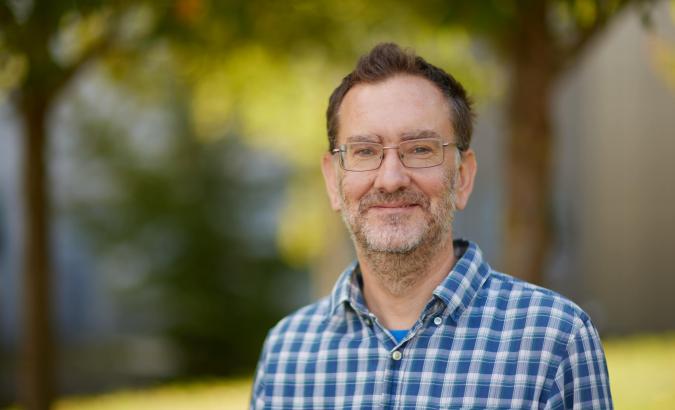
Greg Greetham
. Externally hosted profile photograph linked from the Central Laser Facility's named staff page.Barbara Procacci is a chemist whose work includes time-resolved nuclear magnetic resonance and infrared spectroscopy of photochemical reactions. Her University of York profile identifies mechanistic studies of light-induced transformations in metal complexes and development of NMR methods for following fast reactions.[ref]
The experimental strategy couples an initiating event to a later structural probe. A light pulse can perturb a molecular system; a measurement at a controlled delay then asks which products or intermediates are present. Repeating the measurement over delays connects spectral assignments with a reaction time course. A single final spectrum would lose that ordering information.
Procacci coauthored the2022 RNA hairpin refolding paper, which combines an infrared temperature jump with delayed spectroscopic observations during melting and cooling.[ref]
Measuring RNA UNCG Tetraloop Refolding Dynamics Using Temperature-Jump/Drop Infrared Spectroscopy by C. P. Howe and others. Title-page byline; Abstract; experimental method
Her contribution thus sits at the interface between a physical perturbation and a chemical interpretation of the response. An observed transient band must be related to a molecular change and to the measurement's timing; its occurrence after a pulse alone does not identify a unique reaction mechanism.
Anthony W. Parker, professionally known as Tony Parker, works on time-resolved spectroscopy of chemical and biological systems at the Central Laser Facility. His institutional profile describes Raman spectroscopy, infrared spectroscopy, two-dimensional infrared spectroscopy and development of spatially offset Raman spectroscopy.[ref]
One aim of time-resolved spectroscopy is to identify short-lived reaction intermediates rather than observe only the final products. A structural assignment comes from the spectrum; its changing amplitude can then constrain a kinetic model. Those two kinds of information support each other but are not interchangeable.
For an original idealized example, suppose an intermediate disappears in a first-order reaction and its baseline-corrected band amplitude is proportional to its concentration. ThenAt delay , the amplitude is , about36.8% of its starting value. A series of delayed measurements can estimate , whereas a single steady-state spectrum cannot determine that decay time. The model assumes a fixed band strength and a sufficiently fast measurement response.
Parker also coauthored the2022 study of RNA hairpin melting and refolding using a temperature jump and time-resolved infrared observation.[ref]
Measuring RNA UNCG Tetraloop Refolding Dynamics Using Temperature-Jump/Drop Infrared Spectroscopy by C. P. Howe and others. Byline and Abstract
This illustrates how a spectroscopic technique developed for transient chemistry can be applied to structural dynamics of nucleic acids.Neil T. Hunt is a physical chemist who uses ultrafast infrared spectroscopy to study molecular structure and dynamics. His York profile describes applications of two-dimensional infrared spectroscopy to proteins, DNA and their interactions, together with instrument development at the Central Laser Facility.[ref]
In two-dimensional infrared spectroscopy, a sequence of pulses distributes the response over two frequency axes. Diagonal and off-diagonal features reveal different information; correlations between vibrational modes can help distinguish structures whose ordinary absorption bands overlap. Hunt's account discusses this approach for proteins in water, where solvent absorption complicates observation of the protein bands.[ref]
Hunt also coauthored the2022 RNA hairpin study using a rapid temperature jump followed by sufficiently fast cooling to observe refolding directly.[ref]
The distinction is experimentally useful: an equilibrium spectrum records the population-weighted response after relaxation, while a time-resolved measurement follows how that response changes after a perturbation. Measuring the dynamics requires a known time reference and a sufficiently fast instrumental response, not merely a spectrum with narrow frequency bins.
Jesse Stombaugh has contributed to the geometric analysis of RNA structures. His 2002 paper with Neocles B. Leontis and Eric Westhof classifies noncanonical base pairs and organizes their geometric compatibility in RNA isostericity matrices. The paper's byline associates Stombaugh with Bowling Green State University's chemistry and biomolecular-sciences research.[ref]
The non-Watson-Crick base pairs and their associated isostericity matrices by Neocles B. Leontis and others. Title-page byline and affiliation; isostericity matrices, Tables 3–5
The underlying problem is that nucleotide sequence alone does not specify which edges of two nucleobases contact or how their attached backbones are arranged. A replacement can preserve a contact's geometry while changing its chemical composition. Stombaugh's coauthored classification provides a framework for testing such replacements, rather than treating every base pair with the same two letters as the same structure.
Stombaugh is first author of the 2009 study Frequency and isostericity of RNA base pairs by Jesse Stombaugh and others, with Craig L. Zirbel, Eric Westhof and Neocles B. Leontis. It introduces the RNA IsoDiscrepancy Index and compares geometrically aligned ribosomal RNA structures with sequence variation.[ref]
Frequency and isostericity of RNA base pairs by Jesse Stombaugh and others. Abstract and Results, definition and application of the index
An original comparison illustrates the question. The standard cis Watson–Crick A–U and G–C contacts are geometrically compatible, even though they have two and three hydrogen bonds, respectively. Replacing A–U by G–C can therefore preserve the approximate backbone scaffold without preserving every contribution to free energy or recognition by a protein. Conversely, simply reversing the order of a wobble pair need not preserve its geometry. Geometry, contact chemistry and local sequence context must be assessed separately.
These studies combine structural coordinates with comparative analysis; they do not infer a unique three-dimensional fold from a short sequence alone. A correlated substitution can support a structural hypothesis, but actual contacts and model errors still need checking against experimental structures.
Rupak M. Rajachar is a biomedical engineer working across biomaterials and biomechanics. His University of Washington profile records an undergraduate degree in materials science at the University of Michigan in 1994, followed by biomedical-engineering graduate degrees in 2003 and postdoctoral work at Washington. Its research interests include biomaterials, mechanics of cells and tissues, and device design.[ref]

Rupak M. Rajachar, from his University of Washington profile
. Rajachar coauthored the study with M. D. Morris, W. F. Finney and David H. Kohn that tracked mineral responses in hydrated bone during elastic deformation. A mechanical tester mounted on a Raman microprobe stage allowed Raman spectroscopy and mechanical loading to be compared during the same experiment. The observed mineral response occurred below yield, so changes in the Raman spectrum were not confined to a specimen that had already failed.[ref]
Bone tissue ultrastructural response to elastic deformation probed by Raman spectroscopy by Michael D. Morris and others. Abstract: coupled loading/spectroscopy and elastic-regime response
The composite material perspective explains why this is a useful combination. Constituent volume fractions by themselves do not specify how load passes through a heterogeneous specimen. An original two-phase rod calculation illustrates the point without modeling an actual bone. Give the constituents Young's moduli and , and first-constituent volume fraction .
If equally long, perfectly connected constituent bars sit side by side and undergo the same axial strain, their forces add. The longitudinal rule of mixtures givesIf equal-area constituent segments instead lie in series along the loading direction, they carry the same axial stress and their extensions add. The isostress rule of mixtures givesThe same constituent Young's moduli and volume fractions produce very different axial responses because their arrangement changes. These exact one-dimensional rod models assume small elastic deformation and compatible connections; they do not account for the geometry, interfaces or full elastic tensors of biological tissue.
The lesson for interpreting a coupled experiment is that a molecular measurement and a macroscopic stress-strain curve answer complementary questions. A Raman spectrum can reveal changes in a particular vibrating component, while mechanical loading probes the response of the assembled composite material. A credible interpretation has to explain their relation instead of treating either as a complete description of material quality. This provides a concrete materials-mechanics connection to the biomaterials and tissue-mechanics interests documented in Rajachar's institutional profile.[ref]
David H. Kohn is a biomedical engineer whose research connects biomineralization, biomaterials and biomechanics. His University of Michigan profile describes two related questions: how the organization of mineralized tissue produces its mechanical behavior, and how understanding natural material formation can inform engineered biomaterials. This is an example of biomimetics: learning design principles from biological structures rather than merely copying their chemical ingredients.[ref]

David H. Kohn, from his University of Michigan faculty profile
. His joint work with M. D. Morris, W. F. Finney and Rupak M. Rajachar used Raman spectroscopy to investigate bone during elastic deformation. Their custom mechanical tester fitted the stage of a Raman microprobe and accepted hydrated specimens. The experiment paired loading of murine femora in tension with measurements of mineral phosphate-band shifts, while keeping loading below yield.[ref]
Bone tissue ultrastructural response to elastic deformation probed by Raman spectroscopy by Michael D. Morris and others. Abstract: mechanical tester, hydrated specimens and elastic-regime mineral response
The combination asks how a local molecular response accompanies the deformation of an entire composite material.An original idealized calculation explains why the two measurements are complementary. For a harmonic oscillator with effective bond force constant and reduced mass , the vibrational wavenumber iswhere is the speed of light. Holding fixed gives the first-order relation . A hypothetical band moving from to would correspond to approximately a decrease in this model's effective bond force constant. This Raman shift as a probe of bond stiffness is a local vibration model; the chosen numbers are not measurements from Kohn's paper.
A specimen's Young's modulus instead relates its macroscopic stress to its strain in a specified loading direction and regime. It cannot be read directly from one vibrational wavenumber. Composite material geometry, phase interactions and orientation mediate the connection between a local bond force constant and a bulk elastic modulus. Even a large local spectral response need not imply an equally large change in bulk stiffness.
This distinction gives the experiment its interest: a tensile testing apparatus and a spectroscopic probe observe different levels of the same loaded material. Their agreement or disagreement can discriminate structural explanations that a single bulk measurement would leave unresolved. Repeating both measurements during unloading would additionally test whether the changes reverse. Kohn's institutional description places this multiscale mechanics question alongside the development of new biomaterials.[ref]
David Kohn profile at the University of Michigan. Research Interests: tissue organization, mechanical competence and material design
Laura E. Niklason is a physician and biomedical engineer whose research develops methods for constructing functional vascular and lung tissues. The Yale profile describes this research, and the full author byline of the follow-up artery paper verifies the E. initial.[ref]
Laura Niklason profile by Yale School of Medicine. Biography and research headings; linked follow-up byline
Niklason led the author list of the 1999 report of functional arteries grown in vitro.[ref]
Functional arteries grown in vitro by L. E. Niklason and others. Primary byline
Its scientific aim goes beyond producing a tube of cells: cultured tissue must acquire organized structure and measurable function. The approach connects vascular cell culture with a controlled bioreactor environment, then asks how the resulting construct performs.Two useful distinctions follow. First, a vessel’s mechanical response depends on its geometry and the extracellular matrix formed during culture, not only on the starting tissue-engineering scaffold. Second, the presence of viable cells is different from evidence that they have the intended differentiated function. Measuring organization, transport and mechanical behavior together helps connect a culture method to the biological task. These are testable engineering questions rather than conclusions that follow from tissue appearance alone.
Jinming Gao is a biomedical engineer whose institutional curriculum vitae links him directly to the early artery-engineering collaboration and polymer-surface experiments.[ref]
A primary study with Laura E. Niklason and Robert S. Langer examined surface hydrolysis of polyglycolic acid meshes. The treated meshes supported a higher initial cell seeding density of vascular smooth muscle cells; control experiments associated the difference with protein adsorption at the modified surface.[ref]
This is an illuminating tissue-engineering scaffold problem because the solid’s bulk identity alone does not determine its interaction with cells. Two meshes can have similar gross geometry but different attachment environments. Measuring initial cell seeding density tests one stage of construct preparation; subsequent cell viability, matrix formation and mature mechanical function remain separate outcomes. Gao’s CV also records the joint report of functional arteries grown in vitro, connecting surface preparation to the larger tissue-engineering system.[ref]
S. Houser is a coauthor of the 1999 tissue-engineered artery report. Its experimental evaluation combined structural and mechanical observations with evidence of contractile cell behavior and differentiation.[ref]
Functional arteries grown in vitro by L. E. Niklason and others. Primary byline and abstract
The study illustrates why tissue engineering needs several kinds of evidence. Histology describes how biological cells and extracellular matrix are arranged, whereas a mechanical loading test measures a force or deformation response. A specimen can look organized in a thin histological section without having the same mechanical behavior throughout its volume. Conversely, a strong material can contain cells that have not developed the intended biological function.
A useful experimental comparison therefore pairs location-specific structural observations with an explicitly defined functional test. For example, counting viable cells in several regions and measuring the whole construct’s pressure response answers more than either measurement alone. The shared artery study is an example of connecting biological state with material function, rather than treating tissue appearance as a complete performance measure.
R. Marini is a coauthor of the 1999 report Functional arteries grown in vitro, a primary study of engineered vascular tissue. The paper combined cultured-vessel measurements with implantation in an animal model.[ref]
Functional arteries grown in vitro by L. E. Niklason and others. Primary byline and abstract
This work connects two distinct questions in tissue engineering: whether a construct tolerates mechanical loading and whether it functions in a biological setting. Pressure resistance, attachment at a surgical connection and the maintenance of an open flow path are different observations. Success in one test does not logically establish the others.
An illustrative biomechanics calculation makes the distinction concrete. For a thin cylindrical vessel wall, a force balance gives circumferential stress , with internal pressure , radius and wall thickness . Chosen values , and give . This is a model calculation, not a reported result or an operating recommendation. Geometry and pressure must be specified before comparing a vessel’s material response.
Robert S. Langer is a chemical engineer whose work connects biomaterials, drug delivery and tissue engineering. His MIT departmental profile identifies these as research areas, linking the chemical properties of a material to the biological task it is intended to perform.[ref]
Langer coauthored the primary artery-engineering report and work on surface treatment of polymer meshes for vascular cell culture.[ref][ref]
Surface hydrolysis of poly(glycolic acid) meshes increases the seeding density of vascular smooth muscle cells by Jinming Gao and others. Printed p. 417, byline and abstract
The mesh study illustrates an interface problem: changing a polymer surface can change initial cell attachment without requiring the whole material to have a different macroscopic shape.The broader engineering idea is to treat a biological function as a design problem with several interacting constraints. A material intended to support a developing tissue must permit transport and cell adhesion as well as supply mechanical support. A drug delivery material additionally has a release history: the initial amount loaded does not specify how much becomes available at each time. These distinctions explain why material chemistry, geometry and the biological environment are studied together.
Michael J. Moore is a coauthor of the 2004 quantitative study of interconnectivity in porous biodegradable scaffolds. The primary institutional publication record verifies his full given name and the paper’s use of micro-computed tomography to assess scaffold architecture.[ref]
Quantitative analysis of interconnectivity of porous biodegradable scaffolds with micro-computed tomography by Michael J. Moore and others. University publication record and primary indexed abstract
The scientific problem is that porosity alone does not determine access through a tissue-engineering scaffold. Isolated cavities and a connected channel can contribute the same void volume while supporting very different transport. A three-dimensional image allows the solid and void regions to be segmented and their communicating pathways examined. The analysis therefore connects imaging to a property relevant to tissue engineering, rather than treating an image as only a visual illustration.
For an illustrative segmentation, suppose 36 of 40 units of void volume are connected to the chosen exterior boundary. The accessible fraction is . If a different image threshold gives 39 connected units out of 44 void units, the result is about . Neither number is a result from Moore’s paper; they show why reporting the threshold, image resolution and boundary definition is part of interpreting a connectivity measurement. A flow experiment supplies complementary evidence about the resulting intrinsic permeability.
Jorge Hernan Jimenez is a biomedical-engineering researcher whose primary publications investigate the mechanics of the mitral valve and its supporting chordae tendineae. His 2005 first-author study lists the Wallace H. Coulter Department of Biomedical Engineering at Georgia Tech and Emory as the affiliation for that work.[ref]
Effects of papillary muscle position on chordal force distribution: an in-vitro study by Jorge Hernan Jimenez and others. Primary byline and affiliation
The experiment connected valve geometry to measured forces. Jimenez and colleagues placed six human and five porcine mitral valves in a physiological left-heart simulator, recorded cardiac output and transmitral pressure, and fitted force transducers to six chordae. They tested eight papillary-muscle positions constructed from vector displacements from the normal position. The tension response depended on chordal type: marginal chords were comparatively insensitive, while other classes showed larger changes.[ref]
The scientific point is that moving a support does not change every tether's load in the same way. In an idealized mechanical representation, a chordal force is , with tension and direction . Moving its attachment can change both. A change in one measured tension therefore does not, by itself, determine the complete resultant load or leaflet motion; several forces and the valve geometry must be considered together.
The simulator allowed a controlled geometric perturbation while observing forces during the cardiac cycle. It supports an in-vitro mechanical relationship under the stated conditions, rather than a universal prediction of clinical outcome from one displacement. The verified full byline is retained without attaching an unverified career history or namesake portrait.
E. Rinderknecht is the first-listed author of primary studies with R. E. Humbel that chemically characterized serum polypeptides with insulin-like and growth-promoting activity. Their 1976 amino-terminal sequencing paper compared two preparations then called NSILA I and II and proposed the designation insulin-like growth factor from their biological properties and resemblance to insulin.[ref]
Of the first thirty-one residue positions examined, twenty-two were identical between the two polypeptides. That is about identity over the measured segment: substantial similarity, but not identity of the entire molecules. The measured segment and the comparison being made must therefore accompany any percentage. The later complete sequence of insulin-like growth factor 1 supplied a more extensive chemical description.[ref]
The scientific contribution is a shift from classifying preparations by their effects to distinguishing specific related proteins. Shared biological activity, shared amino-terminal residues and a complete molecular sequence are progressively different kinds of evidence; none should be silently substituted for another.
R. E. Humbel coauthored experimental work identifying the chemical structure of human insulin-like growth factors with E. Rinderknecht. Their 1978 study determined the complete sequence of serum-derived insulin-like growth factor 1: a single chain of seventy amino acid residues connected by three disulfide bonds.[ref]
The comparison with proinsulin connected a biological activity to a molecular relationship. Corresponding regions resembled the insulin chains, while an intervening connecting segment remained in the growth factor. Conserved residues were compatible with a related folded structure; sequence similarity was evidence for that inference, not an atomic structure determination.[ref]
The amino acid sequence of human insulin-like growth factor I and its structural homology with proinsulin by E. Rinderknecht and R. E. Humbel. Abstract: insulin-chain correspondence, connecting segment and structural interpretation
Pinned article: Introduction to the OurBigBook Project
Welcome to the OurBigBook Project! Our goal is to create the perfect publishing platform for STEM subjects, and get university-level students to write the best free STEM tutorials ever.
Everyone is welcome to create an account and play with the site: ourbigbook.com/go/register. We belive that students themselves can write amazing tutorials, but teachers are welcome too. You can write about anything you want, it doesn't have to be STEM or even educational. Silly test content is very welcome and you won't be penalized in any way. Just keep it legal!
Intro to OurBigBook
. Source. We have two killer features:
- topics: topics group articles by different users with the same title, e.g. here is the topic for the "Fundamental Theorem of Calculus" ourbigbook.com/go/topic/fundamental-theorem-of-calculusArticles of different users are sorted by upvote within each article page. This feature is a bit like:
- a Wikipedia where each user can have their own version of each article
- a Q&A website like Stack Overflow, where multiple people can give their views on a given topic, and the best ones are sorted by upvote. Except you don't need to wait for someone to ask first, and any topic goes, no matter how narrow or broad
This feature makes it possible for readers to find better explanations of any topic created by other writers. And it allows writers to create an explanation in a place that readers might actually find it.
Figure 1. Screenshot of the "Derivative" topic page. View it live at: ourbigbook.com/go/topic/derivativeVideo 2. OurBigBook Web topics demo. Source. - local editing: you can store all your personal knowledge base content locally in a plaintext markup format that can be edited locally and published either:This way you can be sure that even if OurBigBook.com were to go down one day (which we have no plans to do as it is quite cheap to host!), your content will still be perfectly readable as a static site.
- to OurBigBook.com to get awesome multi-user features like topics and likes
- as HTML files to a static website, which you can host yourself for free on many external providers like GitHub Pages, and remain in full control

Figure 2. You can publish local OurBigBook lightweight markup files to either OurBigBook.com or as a static website.
Figure 3. Visual Studio Code extension installation.
Figure 5. . You can also edit articles on the Web editor without installing anything locally. Video 3. Edit locally and publish demo. Source. This shows editing OurBigBook Markup and publishing it using the Visual Studio Code extension. 
- Infinitely deep tables of contents:


All our software is open source and hosted at: github.com/ourbigbook/ourbigbook
Further documentation can be found at: docs.ourbigbook.com
Feel free to reach our to us for any help or suggestions: docs.ourbigbook.com/#contact