Topics (384k) Articles (398k) Users (410) Discussions (242) Comments (383) Files (13k) New article

M. Sym led a study identifying Zip1 as a component required for the synaptonemal complex in budding yeast. In the reported mutants, homologous chromosomes could become associated, but normal assembly of the connecting synaptonemal structure failed.[ref]
ZIP1 is a synaptonemal complex protein required for meiotic chromosome synapsis by M. Sym and others. 1993, abstract: paired homologues and defective synaptonemal-complex assembly
The experiment distinguished initial chromosome association from completion of chromosome synapsis. Those steps need not fail together. Combining a defined mutation with observations of chromosome structure made it possible to assign a role to a particular protein within a larger process of meiosis. The indexed byline is retained without guessing a full name.
Thomas Wollert investigates how proteins reshape cell membranes. In a 2009 study, Wollert and colleagues reconstructed membrane cutting using purified ESCRT-III components and large artificial vesicles. Fluorescence microscopy revealed the formation and detachment of smaller vesicles into their interiors. This reduced a process normally embedded in a complex biological cell to components that could be added and omitted separately.[ref]
Three ESCRT-III components sufficed for detachment in this system. Additional machinery, including an ATPase, was needed to recycle the protein assembly and sustain further rounds. The distinction is illuminating: the minimum machinery for one cutting event need not be the minimum machinery for repeated operation. The purified system established sufficiency under its experimental conditions, without showing that all processes in living biological cells use exactly that minimal sequence. The paper credits Wollert with preparing artificial vesicles, purifying and labeling proteins, and performing microscopy.[ref]

Thomas Wollert
. Portrait used by the Max Planck Institute of Biochemistry for its 2015 award announcement.Salah Amasheh studies the selective barrier formed by epithelium. A 2002 study led by Amasheh tested whether claudin-2, a tight junction protein, could change the passage of ions between neighboring biological cells. The investigators introduced Complementary DNA encoding claudin-2 into a normally resistant cultured kidney epithelium, checked where the protein appeared, and compared electrical measurements with control cultures.[ref]
Claudin-2 expression increased conductivity through the spaces between biological cells by a factor of 5.6 and favored cations over anions. Transport of several larger test substances did not increase. The result illustrates a selective channel rather than an indiscriminate hole: greater passage of one class of ions need not mean greater passage of every dissolved substance. Combining localization, controls and measurements of different solutes made the interpretation stronger than an electrical measurement alone.[ref]
Claudin-2 expression induces cation-selective channels in tight junctions of epithelial cells by Salah Amasheh and others. abstract, conductivity, ion selectivity and unchanged marker fluxes

Salah Amasheh
. Portrait identified on his institutional profile; image credited there as private.S. Nielsen is the first author of a 1995 study connecting vasopressin-regulated water permeability to the movement of water-channel proteins. The investigators perfused isolated rat collecting ducts, measured their permeability to water, and used labeled electron microscopy to locate the channels in the same tubules. During vasopressin exposure, permeability and channel labeling at the exposed cell membrane increased; removing vasopressin reversed both changes.[ref]
The study supported redistribution of channels from internal vesicles to the cell membrane, rather than treating a physiological response as evidence of new protein synthesis. The channel is known as aquaporin-2. For a conceptual example, a fixed pool of 100 channels can change from 20 at the surface to 40 at the surface by moving channels from internal stores. The total is unchanged even though the surface pool doubles. This distinction between total abundance, subcellular location and measured function makes trafficking a testable explanation for a rapid hormonal response.
S. D. Wright investigated how receptors of phagocytes connect recognition of coated targets with distinct cellular responses. With S. C. Silverstein, Wright compared hydrogen peroxide release from granulocytes, monocytes and macrophages spreading on surfaces coated with different ligands. The 1983 study found strong release on IgG-coated surfaces but little on surfaces carrying C3b or iC3b, historically written C3bi.[ref]
The useful mechanistic distinction was between engulfment and an oxidative response. Under conditions combining fibronectin with complement ligands, the cultured monocytes showed a strong phagocytosis response without measurable hydrogen peroxide release.[ref]
Receptors for C3b and C3bi promote phagocytosis but not the release of toxic oxygen from human phagocytes by S. D. Wright and S. C. Silverstein. Abstract; fibronectin/C3-coated surfaces and dissociation of the two outcomes
Thus receptor engagement does not specify one indivisible activation state. Measuring only uptake would miss a difference revealed by measuring a second output.S. C. Silverstein studied the experimental cell biology of phagocytosis. Joint work with S. D. Wright showed that complement system receptor-mediated uptake and release of hydrogen peroxide could be separated by comparing ligand-coated culture surfaces.[ref]
A 1984 study asked a further physical question: how accessible is the interface between a macrophage and its target? The authors compared access of soluble proteins beneath macrophages spread on glass with access beneath macrophages on surfaces coated with ligands promoting phagocytosis. The first interface admitted proteins with molecular mass as large as , whereas the ligand-coated interface excluded even tested proteins of molecular mass .[ref]
This supported formation of a seal around the contact region, helping explain why an external scavenging enzyme might fail to reach locally released material. It is a compartment-access experiment: exclusion of the tested proteins does not establish impermeability to every small molecule. The example connects a cellular process with a measurable physical boundary.
Hitoshi Nakatogawa is a researcher in molecular biology and biochemistry. His work includes ribosome stalling and the membrane changes involved in autophagy. A named institutional laboratory profile identifies both his autophagy research and his earlier joint SecM papers with Koreaki Ito.[ref]
Hitoshi Nakatogawa laboratory spotlight at Tokyo Institute of Technology. Research interest and Selected publications, especially the 2001 and 2002 SecM papers
Nakatogawa and Koreaki Ito investigated how the sequence of an emerging nascent chain affects translation. Their 2002 paper identified an arrest sequence in SecM and suppressor mutations at the constriction of the ribosomal exit tunnel. The finding helped establish that a growing protein can influence the machinery synthesizing it.[ref]
The ribosomal exit tunnel functions as a discriminating gate by Hitoshi Nakatogawa and Koreaki Ito. Abstract: arrest motif, 23S-rRNA and L22 suppressors
To see a quantitative consequence of pausing, consider an invented steady-input example. If ribosomes per second enter a segment and each normally spends seconds there, its mean occupancy is ribosome. A pause increasing the mean residence time to seconds would predict an occupancy of , provided that the arrival rate remains unchanged and crowding can be neglected. A strong local accumulation can therefore reflect longer residence time, rather than faster production of completed proteins. At high occupancy, queues and collisions invalidate the independent-flow approximation; that failure is itself experimentally meaningful.
The connection with autophagy is methodological rather than a claim that these are one pathway: both questions ask how local molecular interactions produce a larger cellular behavior. His laboratory's stated autophagy questions concern where the membranes forming an autophagosome originate and how their assembly proceeds.[ref]
Hitoshi Nakatogawa laboratory spotlight at Tokyo Institute of Technology. Research interest: membrane sources, autophagosome formation and experimental approaches
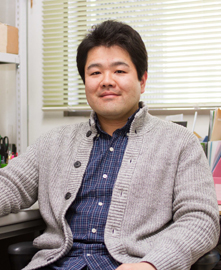
Hitoshi Nakatogawa
. Named portrait in the institutional Nakatogawa Laboratory spotlight.Francis Darwin (1848–1925) was a botanist who collaborated with Charles Darwin on experimental plant physiology. The title page of The Power of Movement in Plants by Charles Darwin, published in 1880, explicitly credits his assistance.
Their phototropism experiments compared seedlings with transparent versus opaque coverings over their tips. Blocking light at the tip greatly reduced bending below it, whereas transparent coverings allowed bending. The comparison separated the location of light perception from the region that curved, suggesting transmission of an influence down the growing structure. It did not identify the chemical nature of that influence.[ref]
The Power of Movement in Plants by Charles Darwin. Chapter IX, Phalaris canariensis, pp. 469–474: glass tubes, opaque caps and transparent controls

Jianhong Hu is a plant researcher credited as first author of a 2018 study connecting auxin and gibberellin signalling during tomato fruit initiation. The paper lists a Department of Biology affiliation at Duke University.
Hu and colleagues combined protein-protein interaction assays with single and double mutants. They found interactions between DELLA repressors and auxin-response regulators, and additive effects on parthenocarpy. The combination of biochemical interaction and whole-plant phenotypes linked molecular signalling to whether an unfertilized ovary begins growing into a fruit.[ref]
John Doebley studies the genetics of changes in plant form, especially the domestication of maize from teosinte. His own research profile describes quantitative genetics as a principal approach.[ref]
In 1997, Doebley and colleagues identified teosinte branched1 as a regulator associated with the stronger apical dominance of maize. Higher expression in maize connected altered gene regulation to reduced lateral branching. This work made a major crop difference experimentally approachable as a change in a developmental programme rather than an inexplicable difference between two plant forms.[ref]
The evolution of apical dominance in maize by John Doebley and others. Abstract, Nature 386, pp. 485–488
Marçal Soler is a plant researcher credited as first author of a 2007 study of suberin synthesis and cork differentiation in Quercus suber. The paper identifies an affiliation with the cork laboratory in the Department of Biology at the University of Girona.
The team enriched for RNA associated with cork formation and used a microarray to compare expression in cork and xylem. The comparison identified candidate genes for the protective suberin barrier. Differential gene expression narrows a list of candidates; it does not alone prove that every enriched gene catalyses a particular biosynthetic step. This is a concrete example of using genomics to turn a conspicuous plant material into testable molecular questions.[ref]
A Genomic Approach to Suberin Biosynthesis and Cork Differentiation by Marçal Soler and others. 2007, author affiliations, abstract and experimental comparison of cork and wood
Imtiyaz Khanday investigates seed development and ways of preserving useful crop genotypes through asexual seed production. His UC Davis research programme connects embryo initiation, seed dormancy and clonal crop propagation.[ref]
https://agronomy.ucdavis.edu/people/imtiyaz-khanday. Institutional research profile
In work published online in 2018 and in a 2019 issue, Khanday and colleagues redirected the rice embryogenesis regulator BABY BOOM1 into the egg cell. Combining embryo initiation without fertilization with altered meiosis produced clonal seeds in an engineered system. The two components address different requirements: starting an embryo and retaining the maternal genotype.[ref]
A male-expressed rice embryogenic trigger redirected for asexual propagation through seeds by Imtiyaz Khanday and others. Abstract and publication metadata: online 12 December 2018, Nature 565, pp. 91–95 (2019)

Guen Tae Park is a plant researcher credited as first author of a 2014 study of MOS7, a nuclear pore complex component, in Arabidopsis thaliana. The paper lists a Department of Biological Sciences affiliation at Seoul National University; its contribution statement credits Park with research design, experiments, data analysis and writing.
The team connected loss of MOS7 to defective microtubule organization during mitosis, impaired pollen and ovule development, and arrest of embryos. Introducing a functional tagged MOS7 copy rescued the reproductive defects, linking the phenotype to the disrupted gene. This established a role for nuclear-pore machinery in reproductive cell division, beyond its familiar transport setting.[ref]
Nucleoporin MOS7/Nup88 is required for mitosis in gametogenesis and seed development in Arabidopsis by Guen Tae Park and others. 2014, affiliations, author contributions and Results: mos7-5 phenotypes and complementation
Michael G. Mason is a plant researcher credited as first author of a 2014 study of sugar supply and apical dominance. The paper lists an affiliation with the School of Biological Sciences at the University of Queensland and credits Mason with research design, experiments, analysis and writing.
The team measured the timing of pea bud growth after removal of the shoot tip, alongside changes in stem auxin and sugar supply. Buds began to grow before the measured local decline in auxin; supplying sucrose also promoted release from inhibition. The result challenged a simple account in which depletion of apically supplied auxin must be the immediate trigger. Its strength is the combination of time-resolved observations and a direct resource manipulation, rather than correlation between branching and sugar abundance alone.[ref]
Sugar demand, not auxin, is the initial regulator of apical dominance by Michael G. Mason and others. 2014, affiliations, author contributions, abstract and sucrose-feeding experiments
W. Barthlott, or Wilhelm Barthlott, investigated the structure and function of plant surfaces using scanning electron microscopy. His group connected microscopic surface features with water repellency and self-cleaning, giving the lotus effect an experimental basis and motivating technical surface designs.[ref]
Wilhelm Barthlott curriculum at Lotus-Salvinia. Curriculum, plant-surface microscopy and research program
With C. Neinhuis, Barthlott compared plant surfaces after adding particles and applying controlled artificial rinsing. The measured function was particle removal by rolling droplets, interpreted together with surface microrelief and water repellency.[ref]
Purity of the sacred lotus, or escape from contamination in biological surfaces by W. Barthlott and C. Neinhuis. Abstract, contamination/rinsing experiment and mechanism
The later team interview describes how botanical observations motivated materials research rather than beginning from an already specified industrial design.[ref]Unverschmutzbare Werkstoffe: Team 1 1998 by Deutscher Zukunftspreis. interview, plant-surface microscopy and transfer to technical materials
An original force-balance illustration explains why easy rolling matters. Model a droplet of mass on an inclined surface as having a fixed retention force . Downhill motion can begin when , where is the tilt. For stipulated , and , the threshold isThis simplified threshold is not a measured value for a lotus leaf. It shows that droplet mass and retention both affect motion; a high static contact angle alone does not supply the needed force balance. Real retention also depends on surface defects, droplet geometry and wetting history.

C. Neinhuis, identified as Christoph Neinhuis in the Bonn team's 1998 nomination profile, investigated how plant surfaces repel water and shed contamination with W. Barthlott. Their work connected plant structure with biomimetics.[ref]
Unverschmutzbare Werkstoffe: Team 1 1998 by Deutscher Zukunftspreis. team identities, Bonn affiliation and project description
The 1997 experiment compared smooth and rough water-repellent plant surfaces. After artificial contamination, the specimens were rinsed using a sprinkler or fog generator; rolling droplets removed particles from the water-repellent leaves. This supplied a functional test of the lotus effect, beyond simply imaging an unusual surface.[ref]
Purity of the sacred lotus, or escape from contamination in biological surfaces by W. Barthlott and C. Neinhuis. Abstract, comparison surfaces, artificial contamination and rinsing
An original quantitative comparison would count retained particles over equal sampled areas. Suppose two surfaces each begin with 1000 particles; after matched rinsing one retains 50 and the other 400. The respective removal fractions are and . These hypothetical counts illustrate a measurable cleaning outcome, not data from Neinhuis's paper.
The comparison needs controls for particle type, initial loading, water delivery and how the sampled area is selected. A surface can have a large static contact angle yet pin droplets through contact-angle hysteresis. Measuring water repellency, droplet motion and contamination removal separately therefore tests more of the proposed mechanism than a single photograph of a rounded droplet.

Wilhelm Barthlott at left and Christoph Neinhuis at right, identified in the 1998 Deutscher Zukunftspreis nomination profile; photograph by Ansgar Pudenz
. Julius Marmur was a biochemist whose work included DNA isolation, strand reassociation and DNA hybridization. His institutional biography at Albert Einstein College of Medicine identifies his collaboration with P. Doty at Harvard and his later research in yeast genetics.[ref]
Julius Marmur profile at Albert Einstein College of Medicine. About Dr.Julius Marmur
Marmur's contribution linked preparing intact DNA with testing its physical behavior. Purification makes it possible to compare changes in the nucleic acid itself rather than changes caused by a heterogeneous cell extract. DNA melting and subsequent pairing experiments then ask whether separated complementary strands can recover an associated structure. Isolation, strand separation and sequence-dependent reassociation are distinct experimental questions.
In the1962 thermal-denaturation study with Doty, the apparatus measured absorbance as a function of sample temperature. The authors used the midpoint of the hyperchromic effect and compared it with GC content determined independently. They corrected for thermal expansion of the solution, an example of separating a molecular absorption change from the changing concentration during heating.[ref]
Determination of the base composition of deoxyribonucleic acid from its thermal denaturation temperature by J. Marmur and P. Doty. Printedpp.109–110, abstract and Materials and Methods
The resulting approach made bulk optical measurements informative about DNA composition and structural transitions. It did not directly read the order of bases along a strand: composition, pairing behavior and nucleic acid sequence remain different descriptions.
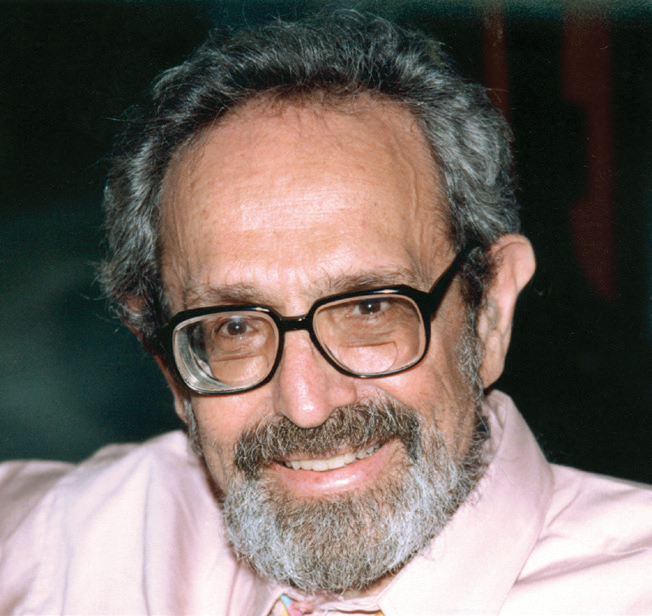
Julius Marmur
. Externally hosted portrait explicitly identified in Albert Einstein College of Medicine's institutional biography.Paul Doty was a biochemist and biophysicist who studied the physical properties of proteins and nucleic acids. Harvard's memorial identifies DNA melting and reassociation of separated strands among his scientific contributions. His research helped make DNA structure accessible through measurable physical transitions rather than chemical composition alone.[ref]
Paul Doty memorial at Harvard. Departmental memorial, scientific contributions
With J. Marmur, Doty studied how DNA thermal-denaturation temperature relates to GC content. Their1962 paper followed260nm absorbance through the hyperchromic effect accompanying the transition and compared melting measurements with independently known base compositions.[ref]
An original calculation using the paper's empirical relation illustrates its quantitative purpose. Under the stated solvent condition of about0.2molar sodium ions, the reported fit iswith expressed numerically in degrees Celsius and the percentage GC content. A measured midpoint of89.8degrees Celsius corresponds toThis inference depends on the solution conditions and the empirical fit; it is not a universal temperature-to-composition conversion for every DNA sample.[ref]
Determination of the base composition of deoxyribonucleic acid from its thermal denaturation temperature by J. Marmur and P. Doty. Abstract; Results, dependence on ionic strength and base composition

Xueguang Sun studied the structure and RNA-binding properties of the bacterial protein Hfq. His Georgia Tech doctoral thesis, dated May2006, identifies Roger M. Wartell as his committee chair and documents structural analysis, binding experiments and studies of RNA association.[ref]
Characterization of E coli Hfq structure and its RNA binding properties by Xueguang Sun. Title and approval pages; chaptersII–IV
The thesis combines predicted protein structure with experiments probing RNA binding, including gel electrophoresis and fluorescence anisotropy. That combination tests a structural hypothesis against binding behavior rather than treating a predicted surface as sufficient evidence of its function.[ref]
Characterization of E coli Hfq structure and its RNA binding properties by Xueguang Sun. ChapterIII, sections on gel mobility shift, fluorescence anisotropy and mutant binding
Sun later coauthored the2007 frozen-solution study with J. Michael Li and Wartell, showing that a stable RNA hairpin could convert efficiently into a metastable RNA dimer under freezing conditions.[ref]
These projects connect molecular recognition with competing structures: a protein can present alternative binding surfaces, and an RNA strand can pair internally or associate with another strand. Experiments are needed to distinguish those possibilities; a sequence or a mobility band alone does not specify the resulting complex.
J. Michael Li is a coauthor, with Xueguang Sun and Roger M. Wartell, of the2007 study of frozen-solution conversion between an RNA hairpin and a metastable RNA dimer. The paper identifies the authors with Georgia Tech's School of Biology and gives Li's byline in this form.[ref]
Conversion of stable RNA hairpin to a metastable dimer in frozen solution by Xueguang Sun and others. Title-page byline and affiliation
The study examined a79-nucleotide RNA with two bands in native gel electrophoresis but one in denaturing conditions. Sedimentation equilibrium supported monomer and dimer assignments. Experiments on shorter segments implicated the first21nucleotides in dimer formation.[ref]
Conversion of stable RNA hairpin to a metastable dimer in frozen solution by Xueguang Sun and others. Abstract and Results, monomer/dimer identification and21-nucleotide segment
A useful distinction follows: two native gel bands alone do not count the number of strands in each structure. Changing the folding state can change electrophoretic mobility without changing strand mass. Combining a mobility observation with an independent association measurement addresses that ambiguity, which is central to interpreting this contribution.
Pinned article: Introduction to the OurBigBook Project
Welcome to the OurBigBook Project! Our goal is to create the perfect publishing platform for STEM subjects, and get university-level students to write the best free STEM tutorials ever.
Everyone is welcome to create an account and play with the site: ourbigbook.com/go/register. We belive that students themselves can write amazing tutorials, but teachers are welcome too. You can write about anything you want, it doesn't have to be STEM or even educational. Silly test content is very welcome and you won't be penalized in any way. Just keep it legal!
Intro to OurBigBook
. Source. We have two killer features:
- topics: topics group articles by different users with the same title, e.g. here is the topic for the "Fundamental Theorem of Calculus" ourbigbook.com/go/topic/fundamental-theorem-of-calculusArticles of different users are sorted by upvote within each article page. This feature is a bit like:
- a Wikipedia where each user can have their own version of each article
- a Q&A website like Stack Overflow, where multiple people can give their views on a given topic, and the best ones are sorted by upvote. Except you don't need to wait for someone to ask first, and any topic goes, no matter how narrow or broad
This feature makes it possible for readers to find better explanations of any topic created by other writers. And it allows writers to create an explanation in a place that readers might actually find it.
Figure 1. Screenshot of the "Derivative" topic page. View it live at: ourbigbook.com/go/topic/derivativeVideo 2. OurBigBook Web topics demo. Source. - local editing: you can store all your personal knowledge base content locally in a plaintext markup format that can be edited locally and published either:This way you can be sure that even if OurBigBook.com were to go down one day (which we have no plans to do as it is quite cheap to host!), your content will still be perfectly readable as a static site.
- to OurBigBook.com to get awesome multi-user features like topics and likes
- as HTML files to a static website, which you can host yourself for free on many external providers like GitHub Pages, and remain in full control

Figure 2. You can publish local OurBigBook lightweight markup files to either OurBigBook.com or as a static website.
Figure 3. Visual Studio Code extension installation.
Figure 5. . You can also edit articles on the Web editor without installing anything locally. Video 3. Edit locally and publish demo. Source. This shows editing OurBigBook Markup and publishing it using the Visual Studio Code extension. 
- Infinitely deep tables of contents:


All our software is open source and hosted at: github.com/ourbigbook/ourbigbook
Further documentation can be found at: docs.ourbigbook.com
Feel free to reach our to us for any help or suggestions: docs.ourbigbook.com/#contact